

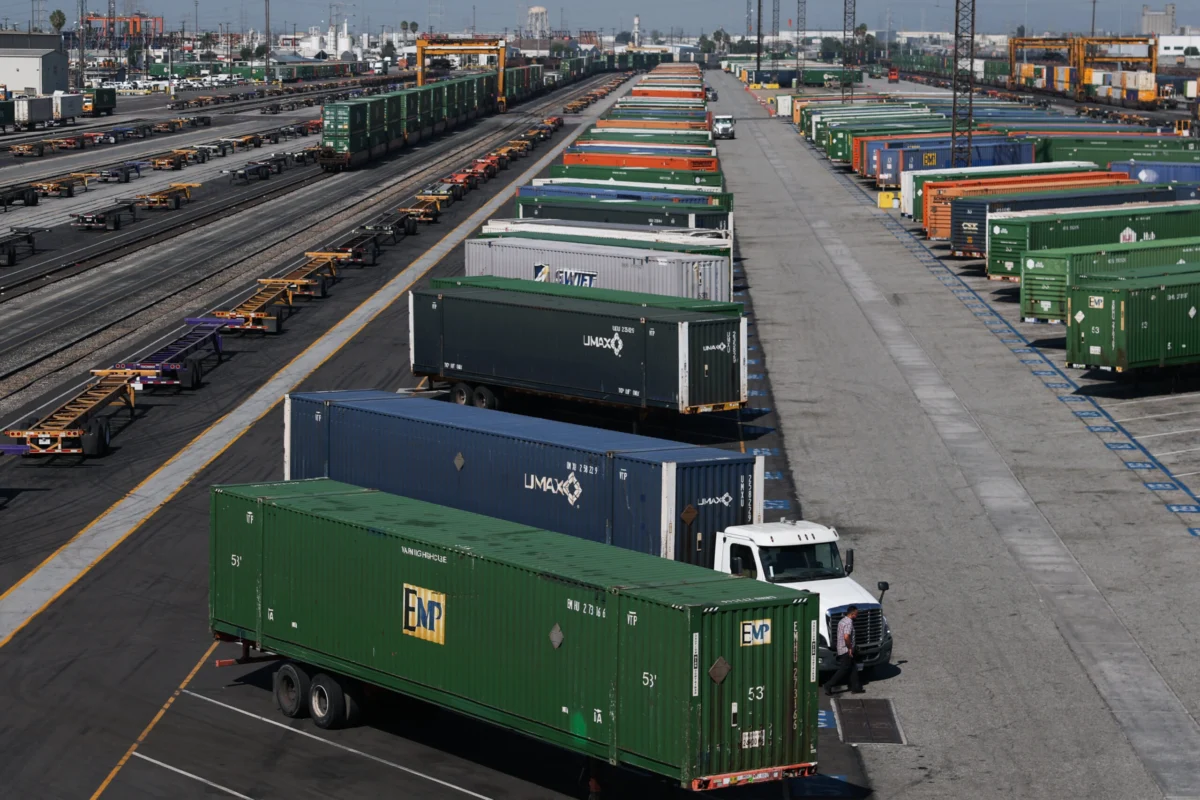
Transportation companies, the vital arteries of the United States economy, are issuing stark warnings as diesel fuel costs reach unprecedented historical highs, threatening to disrupt supply chains and impact consumers nationwide. The surge in diesel prices, a critical fuel for the nation’s trucking and rail networks, has been attributed by analysts to a significant supply shock stemming from ongoing geopolitical tensions, particularly the U.S. involvement in conflicts in the Middle East.
On Wednesday, the national average price for a gallon of diesel fuel climbed to an all-time high of approximately $6.31, according to data compiled by AAA. This represents a staggering increase of over 70% compared to the same period in the previous year. This dramatic escalation has sent shockwaves through the transportation industry, prompting significant concern among industry leaders and investors alike.
"We have seen some of the most radical and abnormal swings in fuel prices that I think we’ve ever seen," stated Brad Delco, finance chief at J.B. Hunt, a prominent trucking company, during an industry conference hosted by Morgan Stanley. Delco’s assessment underscores the unprecedented nature of the current fuel price environment, which is unlike anything experienced in recent memory.
The financial ramifications for transportation companies are immediate and substantial. J.B. Hunt, a bellwether for the industry, has already projected a decline in earnings between 5% and 10% from the second to the third quarter, directly attributable to the escalating fuel expenses. The market has reacted swiftly and severely to these projections, with J.B. Hunt’s stock price plummeting by more than 13% in Wednesday’s trading session, marking one of its worst daily performances since its initial public offering in 1983. This sharp decline in share value reflects the market’s apprehension about the long-term impact of sustained high fuel costs on the company’s profitability and the broader sector.
The ripple effects of this diesel price crisis extend beyond individual companies, impacting the broader transportation market. The Dow Jones Transportation Average, a key index that tracks the performance of publicly traded companies in the transportation sector, experienced a significant downturn, falling more than 2% in midday trading on Wednesday. J.B. Hunt emerged as the largest decliner within this index, which encompasses a diverse range of transportation providers, including rideshare companies and airlines, highlighting the pervasive nature of the fuel cost challenge across the sector.
Escalating Fuel Costs and Projected Price Hikes
Industry experts are forecasting a further intensification of these diesel-related price pressures in the immediate future. Patrick De Haan, head of petroleum analysis at price tracking service GasBuddy, warned that the national average price for diesel could eclipse $6.50 within the next two days. His analysis indicates that certain Midwestern states, including Michigan, Ohio, and Illinois, may witness per-gallon diesel prices approaching $7 in the coming days.
The situation is particularly acute in California, where AAA data reveals that the average price for a gallon of diesel has already surged past the $8 mark. Within the last month alone, diesel prices in the Golden State have climbed by nearly 20%, underscoring the severity of the regional impact.
Claude Elkins, chief commercial officer at railway transporter Norfolk Southern, expressed his astonishment at the prevailing prices, describing the situation as "like science fiction." Speaking at the same Morgan Stanley conference in Laguna Beach, California, Elkins noted the stark contrast between the national average and the prices observed in regions like California, where diesel fuel has already reached significantly higher thresholds.
Economic Implications and Sector Contributions
The transportation services sector plays a monumental role in the U.S. economy, contributing an estimated $1.9 trillion in 2024 alone, which represents more than 6% of the nation’s total gross domestic product, according to the Bureau of Transportation Statistics. The current fuel price crisis poses a significant threat to this vital economic engine.
Elkins emphasized the need for a "very cautious eye" on these developments and stressed the importance of understanding their broader implications for the economy. He articulated that sustained high fuel costs are likely to exert downward pressure on consumer spending over time, as individuals and households face increased costs for goods and services.
Historical Context and Contributing Factors
The current surge in diesel prices is not an isolated event but rather the culmination of several compounding factors, with the U.S. war with Iran cited as a primary catalyst for the recent supply shock. The conflict has disrupted established oil supply routes and created significant uncertainty in global energy markets, leading to a sharp and sustained increase in crude oil prices, which directly influences diesel fuel costs.
The timeline of these price increases reveals a dramatic acceleration. While diesel prices were significantly lower a year ago, the recent months have witnessed an unprecedented spike. This rapid escalation has caught many businesses off guard, as their operational budgets and pricing strategies were not designed to accommodate such extreme fuel cost fluctuations.
The disruption in the Middle East has had a cascading effect on global energy supply chains. Geopolitical instability in a region that is a major producer of crude oil inevitably leads to market volatility. Sanctions, trade disruptions, and the potential for further escalation all contribute to a climate of uncertainty, driving up prices for oil and its derivatives, including diesel.
Industry Responses and Future Outlook
In response to the escalating costs, transportation companies are exploring various strategies to mitigate the financial impact. Some companies are attempting to absorb a portion of the increased costs to avoid immediate price hikes for their customers. However, the magnitude of the price increases suggests that such absorption will be unsustainable in the long run.
Jacob Aiken-Phillips, head of consumer and retail research at Melius Research, highlighted that the collision of record diesel prices with the fall harvest season will inevitably lead to ballooning costs for agricultural producers, impacting the prices of staple crops like corn and wheat. This will likely translate into higher food prices for consumers, contributing to broader inflationary pressures.
While economists have warned of potential "sticker shock" for consumers at grocery stores and restaurants, Aiken-Phillips suggests that the initial impact of these fuel-related inflationary pressures will be absorbed by farmers, transporters, and retailers before being fully passed on to the end consumer. The extent and timing of this price transmission remain a critical concern.
The Drive Towards Alternative Technologies
The current crisis is also serving as a catalyst for accelerated interest in alternative transportation technologies. George Gianarikas, an analyst at Canaccord Genuity, pointed out that rising fuel prices could significantly drive demand for autonomous trucking and electric freight solutions. As the economic viability of traditional diesel-powered fleets diminishes, investment and adoption of these emerging technologies are likely to accelerate.
The development and deployment of autonomous trucking technology offer the potential for increased efficiency and reduced labor costs, while electric freight vehicles present a path towards eliminating reliance on fossil fuels altogether. However, the widespread adoption of these technologies faces its own set of challenges, including high initial investment costs, infrastructure development, and regulatory hurdles.
Broader Economic Ramifications and Consumer Impact
The sustained high cost of diesel fuel poses a significant risk to the broader economic recovery. While recent retail sales data has shown some resilience, with a 1.2% increase from July to August despite energy-related inflationary pressures, the ongoing fuel shock could dampen consumer spending in the coming months. Excluding spending on autos and gasoline, retail sales did grow at their highest level in over a year, indicating that consumer demand remains robust in some sectors. However, the increasing cost of essential goods and services, driven by transportation expenses, could erode consumer confidence and purchasing power.
The intricate web of the U.S. economy means that disruptions in the transportation sector have far-reaching consequences. From the delivery of raw materials to manufacturing facilities to the distribution of finished goods to consumers, every stage of the supply chain is dependent on efficient and affordable transportation. The current diesel price crisis threatens to unravel these carefully orchestrated processes, leading to potential delays, shortages, and increased costs for a wide range of products and services.
The government and regulatory bodies are closely monitoring the situation, seeking to understand the full scope of the crisis and identify potential interventions. However, the complexities of global energy markets and geopolitical factors make immediate solutions challenging. The focus remains on understanding the long-term implications and fostering the transition towards more sustainable and resilient transportation solutions. The coming months will be critical in determining how effectively the U.S. economy can navigate this unprecedented fuel price challenge and mitigate its impact on businesses and consumers alike.
