

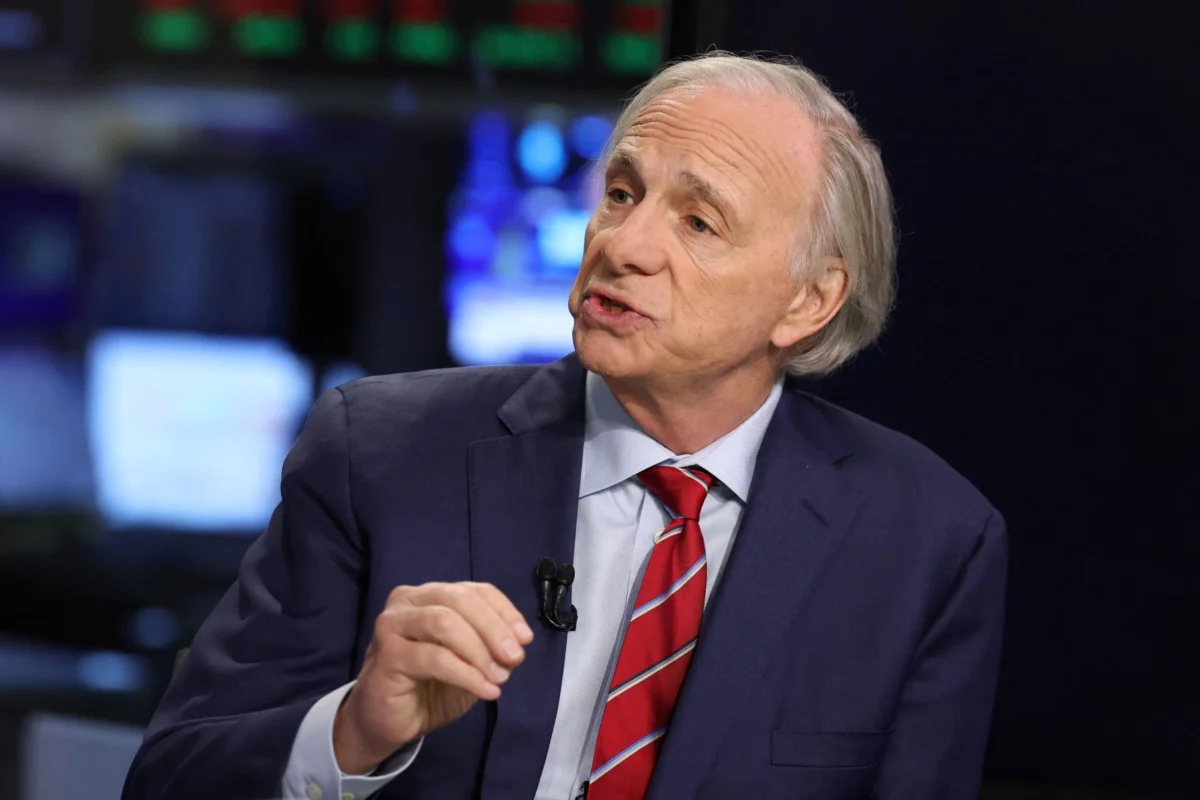
Billionaire investor Ray Dalio, the influential founder of Bridgewater Associates, has issued a stark warning regarding the United States’ fiscal trajectory, asserting that Treasury Secretary Scott Bessent’s recent debt buyback announcement signals a broader pattern indicative of a forthcoming crisis. Speaking from the floor of the New York Stock Exchange (NYSE) on April 27, 2026, and further elaborating in a detailed LinkedIn post on Friday, Dalio articulated profound concerns about the nation’s burgeoning debt and its potential to trigger severe economic trauma if left unaddressed. His analysis comes as the U.S. Treasury implements an upscaled operation to purchase longer-term debt, a move Bessent indicated could exceed $4 billion, intended to "make a market" and manage liquidity.
Dalio’s Dire Warning: An Inflection Point for U.S. Finances
Dalio’s central thesis is that the U.S. government’s financial condition has reached a critical "inflection point." He posited that the current fiscal path is unsustainable, leading to an accumulation of debts that will eventually become unmanageable without significant and potentially painful adjustments. "I am confident that the government’s financial condition is at an inflection point," Dalio wrote, emphasizing the urgency. "If this is not dealt with now, the debts will build up to levels where they can’t be managed without great trauma." This assessment from one of the world’s most respected macroeconomic thinkers immediately resonated across financial markets, prompting investors to reassess their strategies.
The alarm raised by Dalio is not merely a theoretical exercise; it is grounded in observable trends. His concerns are amplified by the confluence of several factors: the Treasury’s increasing government debt purchases, a noticeable reduction in the Japanese government’s exposure to the U.S. bond market, and the persistent surge in long-dated American bond yields. These elements, when viewed collectively through Dalio’s lens, paint a picture of an economy under significant fiscal strain, prompting his recommendation for investors to fortify their portfolios with alternative assets like cryptocurrencies and gold to hedge against increased risk.
The Treasury’s Buyback Strategy: A Band-Aid on a Deeper Wound?
Treasury Secretary Scott Bessent’s announcement earlier this week, detailing plans to increase government debt purchases, was ostensibly aimed at improving market functioning and liquidity. Bessent indicated to CNBC on Thursday that his team would "make a market" for longer-term debt, with purchases likely surpassing $4 billion. Such buyback operations are not uncommon; they typically involve the Treasury buying back older, less liquid bonds to replace them with newer, more liquid issues, or to manage the overall maturity profile of the national debt. The intent is often to enhance efficiency in the Treasury market, which is crucial for global finance.
However, Dalio views this action within a broader, more troubling context. He suggests that while seemingly a technical measure, the buyback signals an underlying stress in the government’s ability to manage its financial obligations through conventional means. He noted that the Treasury Department possesses "only limited capacity" to conduct such buybacks, implying that these operations, while perhaps necessary in the short term, do not address the root cause of the burgeoning debt. The question becomes whether these tactical maneuvers are merely delaying an inevitable reckoning with the structural imbalance between government spending and revenue.
Mounting Fiscal Pressures: A Deeper Dive into the Deficit
The core of Dalio’s concern lies in the burgeoning U.S. budget deficit, which he highlighted as a symptom of the government spending approximately 40% more than it generates in revenue. This structural imbalance has led to a dramatic escalation in the national debt. In July 2026 alone, the U.S. budget deficit reportedly topped $432 billion, a figure that marked the highest level since March 2021, underscoring the rapid acceleration of government borrowing. While Secretary Bessent expressed optimism, stating that the deficit had likely "peaked" under President Donald Trump’s administration, Dalio remains unconvinced about the government’s ability to significantly curtail spending.
Historical context reveals the magnitude of this challenge. The U.S. national debt has been on an upward trajectory for decades, exacerbated by major events such as the 2008 financial crisis, the COVID-19 pandemic response, and various tax cuts and increased spending initiatives. As of 2026, the total national debt has swelled to unprecedented levels, pushing the debt-to-GDP ratio to figures not seen since World War II. This massive accumulation means that a growing portion of the federal budget is now allocated merely to servicing this debt. Dalio starkly illustrated this point by likening the U.S. government to a business, calculating that its debt service payments alone would amount to roughly $11 trillion – approximately 200% of its annual revenue. Such a ratio in a private enterprise would signal imminent bankruptcy, highlighting the precariousness of the nation’s financial standing. Dalio, at 77, warned that the cost of repaying principal and servicing this immense debt would only escalate with time, creating a compounding challenge.
External Factors Exacerbating Risk
Beyond domestic fiscal issues, Dalio pointed to external pressures that are intensifying the U.S. debt challenge. A significant concern is the Japanese government’s reduction in its exposure to the U.S. bond market. Japan has historically been one of the largest foreign holders of U.S. Treasury securities, playing a crucial role in financing American debt. A sustained reduction in Japanese holdings, driven by factors such as domestic economic needs, yield differentials between Japanese and U.S. bonds, or currency hedging strategies, signals a shrinking pool of foreign buyers willing to absorb U.S. debt. This decreased demand can put upward pressure on U.S. bond yields, making it more expensive for the U.S. government to borrow.
Indeed, the surging long-dated American bond yields are another critical indicator of market stress. Yields on long-term Treasuries, such as the 30-year bond, have been climbing, reflecting investor concerns about inflation, the sheer volume of new debt issuance, and the creditworthiness of the U.S. government over the long haul. Higher yields translate directly into higher interest payments for the Treasury, further widening the budget deficit and creating a feedback loop where more borrowing is needed to service existing debt, leading to even higher yields. This dynamic poses a significant threat not only to government finances but also to the broader economy, as long-term rates influence everything from mortgage rates to corporate borrowing costs, potentially stifling economic growth.
Dalio’s Prescribed Remedy: A Three-Pronged Approach
To avert the impending crisis, Dalio proposed a comprehensive, three-part strategy aimed at bringing the U.S. budget deficit down to a sustainable 3% of gross domestic product (GDP). This approach requires a delicate balance and simultaneous implementation across several fronts:
- Reduce Government Spending: Dalio emphasized the need for substantial cuts to federal expenditures. However, he acknowledged the immense political difficulty, noting that "very little ability" exists to significantly reduce spending, as much of it is either legally committed (e.g., Social Security, Medicare) or deemed essential (e.g., defense, infrastructure). Deep spending cuts often face strong resistance from various constituencies and can have immediate negative impacts on economic activity or social welfare.
- Raise Tax Revenue: The second pillar involves increasing tax revenue. This could manifest through various mechanisms, such as raising income tax rates, implementing new taxes, or closing tax loopholes. While seemingly straightforward, tax increases are politically contentious and can be argued to dampen economic growth or disproportionately affect certain income groups or businesses. The challenge lies in finding the optimal balance that generates sufficient revenue without stifling economic dynamism.
- Lower Interest Rates: Finally, Dalio called for lower interest rates. This is a complex proposition, as interest rates are primarily managed by the independent Federal Reserve to control inflation and promote full employment. Forcing interest rates down "unnaturally," as Dalio cautioned, could lead to significant distortions in financial markets, fuel inflation, or undermine the Fed’s credibility. The implication is that a sustainable reduction in rates would ideally come from market forces reacting to improved fiscal health, rather than direct intervention.
Dalio stressed the importance of implementing all three components concurrently and carefully. "All three need to happen concurrently so as to prevent any one from being too large," he stated, warning that "If any one is too large, the adjustment will be traumatic." He underscored the necessity of taking these steps now, while the economy remains relatively healthy, as a recession would necessitate increased government spending, further complicating efforts to reduce the deficit.
Investment Implications in a Volatile Landscape
In light of his dire forecast, Dalio offered specific advice for investors to prepare their portfolios for increased risk and uncertainty. He recommended that investors be "underweight debt assets, such as bonds," reflecting his view that fixed-income securities, particularly long-duration bonds, will perform poorly in an environment of rising yields and fiscal instability.
Instead, Dalio advocated for diversification into alternative assets. He suggested allocating "as much as 10% to 15% of a portfolio" to gold, a traditional safe-haven asset that has historically performed well during periods of economic turmoil, inflation, and currency debasement. Furthermore, he included "a bit" of bitcoin, acknowledging the growing role of cryptocurrencies as a potential hedge against traditional financial system risks and inflation, albeit with a recognition of their higher volatility. This advice reflects a strategic pivot away from conventional debt instruments towards assets perceived to hold their value or even appreciate during times of systemic stress.
Dalio’s LinkedIn post came at the tail end of a particularly volatile week for U.S. financial markets. Rising long-term Treasury yields had exerted significant downward pressure on stocks, leading the S&P 500 to snap a three-week-long advance, signaling broader market anxiety over interest rates and economic stability.
The Looming Timeline and Potential Triggers
While confident in the inevitability of a crisis if the current course is maintained, Dalio admitted that pinpointing the exact timing is challenging, as it can be swayed by various external variables. These include geopolitical events like military conflicts, significant political changes, or unforeseen economic shocks. On its current trajectory, Dalio projected that the U.S. could enter such a debt crisis in as early as one year or as late as five years. Making a self-professed "bad guess," he offered a median estimate: "My guess, which I suppose will be a bad one, is that it will come in three years, give or take two, if the course we’re on is not changed." This timeline underscores the urgency for policymakers to act decisively.
Official Responses and Broader Economic Ramifications
While Dalio’s warnings are stark, official responses from the Treasury Department often convey a more measured optimism. Secretary Bessent, for instance, indicated a belief that the budget deficit had peaked, suggesting confidence in the administration’s ability to manage fiscal affairs. He also noted that a team was actively exploring ways to shrink spending by hundreds of billions of dollars, implying that internal efforts are underway to address the fiscal imbalance. However, Dalio’s skepticism about the "very little ability" to cut essential spending highlights the political gridlock and difficult choices inherent in such endeavors.
Economists and policymakers frequently debate the severity and imminence of a U.S. debt crisis. Some argue that the unique status of the U.S. dollar as the world’s primary reserve currency provides an "exorbitant privilege," allowing the U.S. to sustain higher debt levels than other nations. Others point to the resilience of the U.S. economy and its capacity for innovation as factors that can overcome fiscal challenges. Yet, a growing chorus, led by figures like Dalio, warns that ignoring the fundamental arithmetic of debt and revenue is a perilous path.
The implications of a U.S. debt crisis would extend far beyond national borders. The stability of the U.S. dollar, the bedrock of global finance, would be severely tested. Investor confidence worldwide would erode, potentially triggering a flight from dollar-denominated assets and causing significant disruptions in international trade and capital flows. A crisis in the world’s largest economy and financial system could precipitate a global recession, with profound geopolitical ramifications as economic power shifts and international alliances are tested.
In conclusion, Ray Dalio’s unequivocal warning serves as a potent reminder of the escalating fiscal challenges confronting the United States. His analysis, rooted in the observable patterns of government debt management, foreign investor behavior, and market dynamics, points to a critical juncture. While the precise timing remains uncertain, the urgency of addressing the structural imbalance between spending and revenue is undeniable. For investors, Dalio’s counsel to reconsider traditional portfolio allocations and embrace alternative assets like gold and cryptocurrencies reflects a growing sentiment of caution in an increasingly uncertain economic landscape, underscoring the imperative for both policymakers and individuals to prepare for a potentially tumultuous future.
