

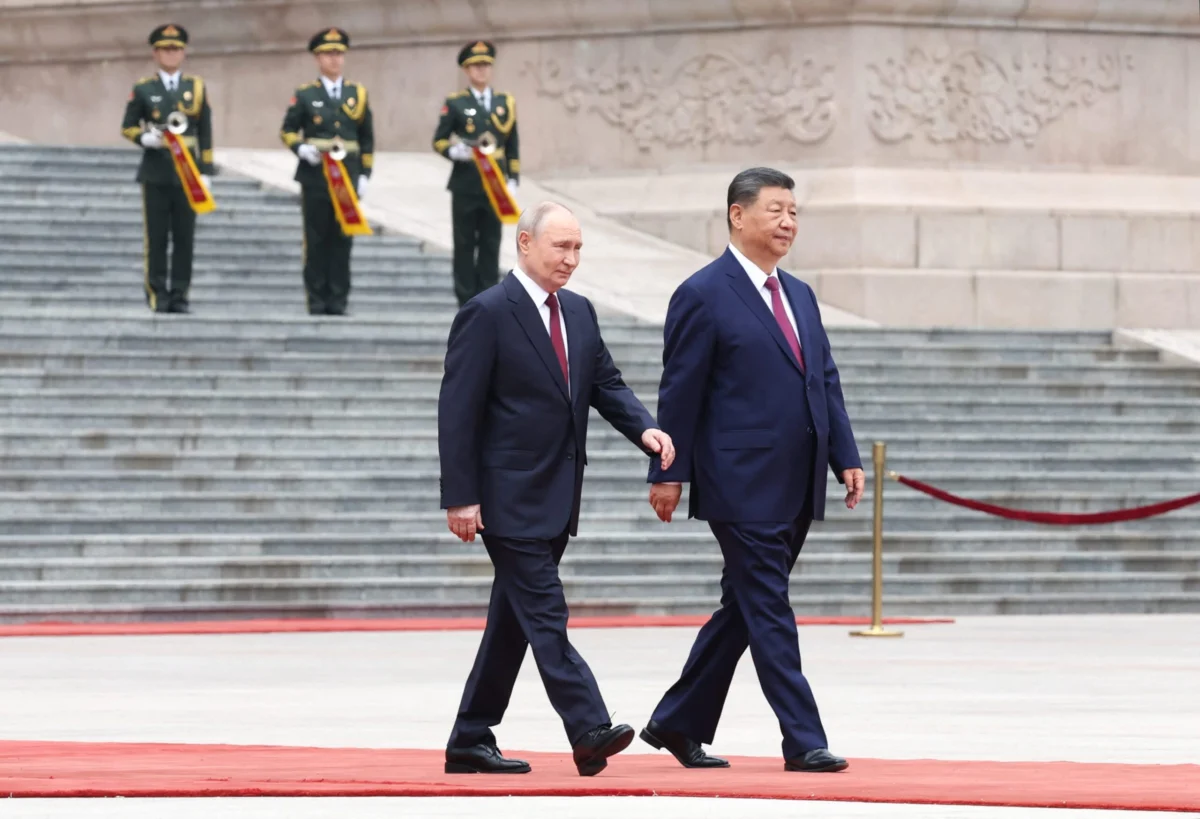
Beijing, China – Russian President Vladimir Putin and Chinese leader Xi Jinping convened in Beijing on Wednesday, with the highly anticipated and long-delayed Power of Siberia 2 natural gas pipeline project taking center stage in their discussions. The meeting occurs at a critical juncture for global energy markets, exacerbated by the ongoing U.S.-Iran war, which has significantly disrupted vital maritime energy supply routes.
Kremlin foreign policy aide Yuri Ushakov confirmed on Tuesday that the ambitious pipeline project would be a focal point of the leaders’ discussions, stating it would be “discussed in great detail.” The proposed 2,600-kilometer pipeline is designed to transport an impressive 50 billion cubic meters of natural gas annually from Russia’s vast Yamal fields to China, traversing through Mongolia. While Moscow and Beijing officially signed a legally binding memorandum of understanding to advance the construction of Power of Siberia 2 in September 2025, key commercial and logistical hurdles, including pricing, financing terms, and a definitive delivery timeline, have yet to be fully resolved.
Sources indicate that China has been pushing for pricing terms for the new pipeline that would align with Russia’s domestic rates, estimated to be around $120-$130 per 1,000 cubic meters. Conversely, Russia is reportedly seeking terms closer to those of the existing Power of Siberia 1 pipeline, a figure that industry analysts estimate could more than double the price for Beijing. This divergence in pricing expectations represents a significant sticking point in the negotiations.
China has emerged as a crucial and increasingly important market for Russian energy exports. Official customs data reveals a substantial increase in Chinese imports of Russian oil, with shipments jumping by an impressive 35% year-over-year in the first quarter of the current year. This burgeoning demand underscores the strategic importance of energy cooperation between the two nations.
The proposed Power of Siberia 2 pipeline is envisioned as a significant expansion and complement to the existing Power of Siberia 1 system. The current pipeline, which has been operational since 2019, delivers approximately 38 billion cubic meters of gas to China annually. Both nations have previously agreed to further expand the capacity of this existing infrastructure, signaling a commitment to a long-term energy partnership.
Joint Energy Ventures and Strategic Alignment
At a joint press conference held on Wednesday, President Putin articulated Russia’s readiness to sustain and increase its energy supplies to China, highlighting the "big potential in joint renewable energy projects." In remarks translated by Reuters, Putin stated, "Russia and China are actively cooperating in the energy sector. Our country is one of the largest exporters of oil, natural gas, including liquefied gas, and coal to China. We are, of course, ready to continue to reliably ensure uninterrupted supplies of all these fuels to the rapidly growing Chinese market." These comments, as reported by the Russian state news agency TASS, emphasized a shared vision for robust energy collaboration.
Earlier in the day, the leaders signed a joint statement on strengthening their "comprehensive strategic partnership," a document that also advocated for a "multipolar world and a new type of international relations," according to the state-run Xinhua news agency. This political alignment further solidifies the backdrop against which energy discussions are taking place.
While President Putin did not explicitly mention the Power of Siberia 2 pipeline during the press conference, Kremlin Press Secretary Dmitry Peskov later announced that Russia and China had "reached an understanding on the project’s main parameters." However, Peskov cautioned that "some nuances remain to be ironed out," and that there is no clear timeframe for the project’s commencement, as reported by RIA Novosti. This statement suggests progress has been made, but significant details still require resolution.

Geopolitical Undercurrents and Energy Security Imperatives
The recent escalation of the U.S.-Iran conflict, which began in late February, has had a profound impact on global energy flows. The closure of the Strait of Hormuz, a vital maritime chokepoint, has effectively disrupted approximately half of China’s oil imports and nearly a third of its liquefied natural gas (LNG) supply. This severe disruption to maritime routes underscores China’s vulnerability to geopolitical instability in critical shipping lanes.
This energy shock has undoubtedly amplified Beijing’s interest in securing additional, diversified energy sources. An overland pipeline like Power of Siberia 2, which bypasses maritime chokepoints entirely, presents a compelling strategic alternative for China. However, analysts remain cautiously optimistic about whether this immediate pressure will fundamentally alter China’s negotiating position.
China currently maintains substantial reserves of crude oil, estimated by Kpler senior oil analyst Muyu Xu to be around 1.23 billion barrels in onshore inventories, sufficient for approximately 92 days of refining needs. Furthermore, the country’s domestic gas output has seen a modest increase, rising by 2.7% in the first four months of the year. Complementing these domestic resources are existing pipeline supplies from Central Asian countries, providing an additional layer of energy security independent of Russian sources.
Historical Context and Shifting Energy Landscapes
The geopolitical ramifications of Russia’s 2022 invasion of Ukraine have significantly reshaped its energy export landscape. Russian gas exports to Europe, once a cornerstone of its energy strategy, have plummeted dramatically. State-owned energy giant Gazprom reportedly saw its shipments to Europe decline by 44% last year, reaching their lowest levels in decades. This decline has pushed Russia to seek new markets and reinforce its energy ties with Asian partners, particularly China.
The Power of Siberia 2 project, given its immense scale, carries significant implications for both participating nations. For Russia, a substantial commitment to this single pipeline could create a dangerous level of dependence on a single buyer, making its energy exports vulnerable to Beijing’s policy decisions. Conversely, China, while mitigating maritime risks, would be increasing its reliance on energy controlled by Russia.
Michael Feller, chief strategist at Geopolitical Strategy, offered a perspective on the potential implications of a finalized deal. "A deal would signal not just trust, but a decision that co-dependency is safer than the alternative," Feller stated. "For the rest of the world, it would make the Sino-Russian relationship harder to unpick." This suggests that a successful Power of Siberia 2 deal would not only represent an energy agreement but also a further solidification of the increasingly intertwined geopolitical and economic relationship between Moscow and Beijing, potentially reshaping the global geopolitical order.
A Timeline of the Power of Siberia 2 Initiative
The concept of expanding gas transit routes from Russia to China has been discussed for years, with Power of Siberia 2 emerging as the primary vehicle for such an expansion. The project’s timeline, while marked by significant political will, has been characterized by protracted negotiations over commercial terms.
- Early Discussions: Initial feasibility studies and high-level discussions regarding a second major gas pipeline from Russia to China began well before 2022, reflecting a long-term strategic vision for energy cooperation.
- Post-2022 Acceleration: Following the significant disruption of Russia’s energy exports to Europe after the 2022 invasion of Ukraine, the impetus to finalize projects like Power of Siberia 2 with China intensified considerably.
- September 2025 Memorandum: A legally binding memorandum of understanding to advance the construction of Power of Siberia 2 was signed in September 2025. This agreement signaled a commitment from both sides to move forward, though it did not resolve all outstanding commercial issues.
- May 2026 Beijing Summit: The meeting between President Putin and President Xi in May 2026 represents a crucial moment for the project, with the pipeline being a central topic of discussion. The outcome of these talks will determine the immediate future of this significant energy infrastructure initiative.
The negotiations over Power of Siberia 2 are emblematic of the complex interplay between energy security, economic interests, and geopolitical strategy in the 21st century. As the world grapples with evolving energy landscapes and the consequences of international conflicts, the decisions made by leaders like Putin and Xi regarding such critical infrastructure projects will have far-reaching implications. The successful resolution of the pricing, financing, and delivery terms for Power of Siberia 2 will not only shape the future of energy trade between Russia and China but also contribute to the broader recalibration of global energy dynamics.
The ongoing discussions highlight the strategic importance of energy as a tool of foreign policy and economic leverage. As both nations navigate the complexities of international relations and energy market volatility, their ability to forge mutually beneficial agreements, particularly on projects of this magnitude, will be closely watched by the global community. The partnership between Russia and China in the energy sector is a developing narrative with significant consequences for energy security and geopolitical stability worldwide.
