

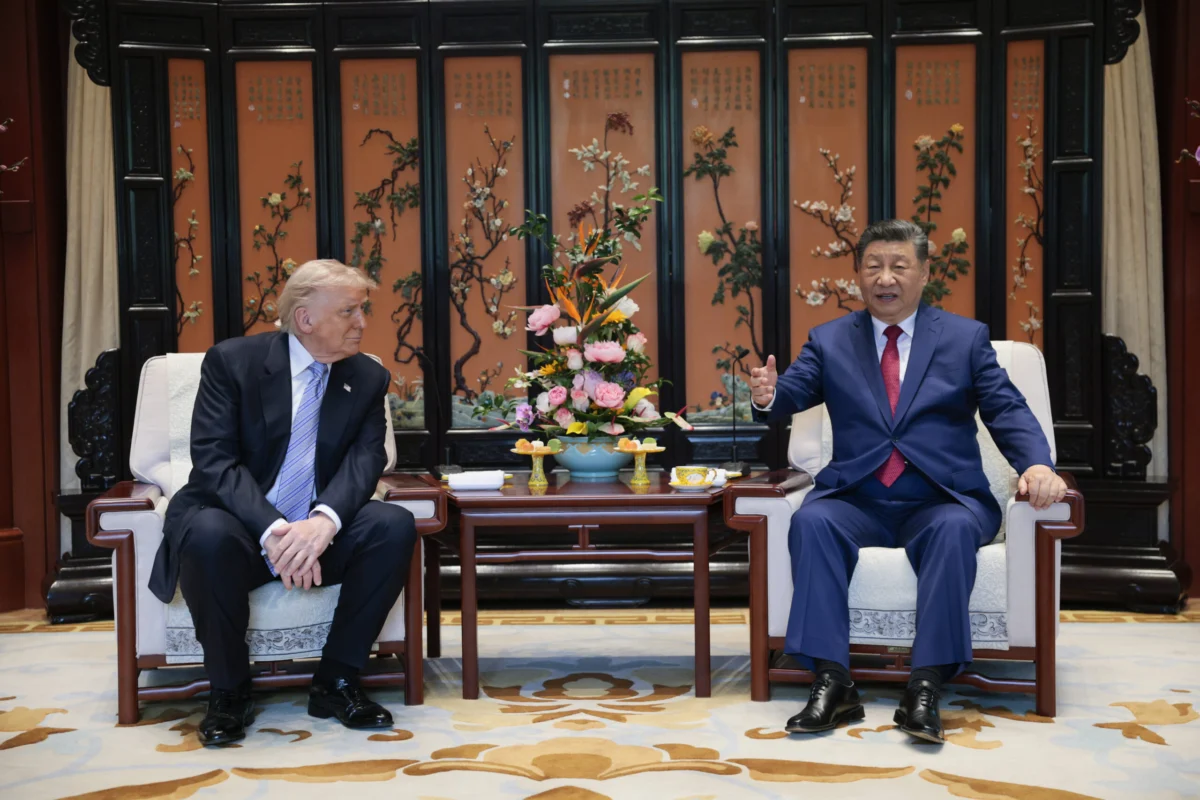
BEIJING – United States President Donald Trump has formally extended an invitation to Chinese President Xi Jinping for a visit to the White House on September 24, a significant diplomatic overture that signals an ongoing, high-level engagement between the world’s two largest economies. This invitation, announced by President Trump during a state dinner on Thursday evening following a bilateral summit in Beijing, underscores the expectation that crucial trade negotiations and broader strategic discussions will extend well beyond the immediate two-day gathering in the Chinese capital. The White House shared a video of the announcement, cementing the public record of this pivotal development.
The Beijing Summit: A Foundation for "Strategic Stability"
The invitation emerged from the backdrop of intensive discussions held on May 15, 2026, where the two leaders met on the sidelines of a visit to Zhongnanhai Garden, Beijing’s historic leadership compound. Following their extensive dialogue, President Xi Jinping conveyed through state media that both the U.S. and China had agreed upon "strategic stability" as a guiding framework for their relationship over the next three years. This pronouncement suggests a concerted effort to manage inherent tensions and foster a more predictable, if not entirely harmonious, bilateral dynamic. The concept of "strategic stability" is understood by analysts as an attempt to de-escalate potential flashpoints across economic, technological, and geopolitical spheres, creating a more structured dialogue mechanism.
Ryan Fedasiuk, a distinguished fellow at the American Enterprise Institute, commented on the immediate outcomes of the Beijing summit, stating, "The main question for the outcome of the summit will be ‘which of the deals the president would like to strike are ripe enough’ to see through. Frankly, a lot will be left on the tree to ripen further." His assessment highlights the complex, multi-faceted nature of the issues at play, suggesting that while progress may have been made, comprehensive resolutions often require sustained diplomatic effort and multiple rounds of negotiation. The White House invitation for a September meeting thus appears to be a direct acknowledgement of this ongoing process, setting the stage for further, deeper discussions.
A History of High-Stakes Diplomacy: Contextualizing US-China Relations
The relationship between the United States and China has been characterized by a delicate balance of cooperation and competition for decades. From the historic opening to China by President Nixon in the 1970s, through periods of economic integration and strategic partnership, to more recent years marked by heightened trade disputes, technological rivalry, and geopolitical tensions, the trajectory has rarely been linear.
In the years leading up to the 2026 Beijing summit, the bilateral relationship had navigated through several critical phases. The late 2010s saw the initiation of a significant trade war, resulting in tariffs on hundreds of billions of dollars worth of goods, impacting global supply chains and economic stability. While a "Phase One" trade deal in 2020 offered a temporary reprieve, addressing some agricultural purchases and intellectual property protections, many structural issues, such as state subsidies for Chinese industries and market access for American firms, remained unresolved.
By the mid-2020s, the focus had broadened beyond mere trade imbalances to encompass a more holistic strategic rivalry. This included intense competition in cutting-edge technologies like artificial intelligence, 5G networks, semiconductors, and quantum computing. Concerns over intellectual property theft, cyber espionage, and the weaponization of economic dependencies further strained relations. Geopolitically, flashpoints such as the South China Sea, Taiwan, and human rights issues in Xinjiang and Hong Kong consistently presented challenges to diplomatic stability. The agreement on a framework of "strategic stability" therefore represents a potential shift towards acknowledging these enduring points of contention while seeking mechanisms to prevent them from spiraling into direct conflict.
Economic Dimensions: Trade, Technology, and Investment
The economic stakes in US-China relations are colossal. In 2025, bilateral trade in goods and services exceeded $800 billion, with the U.S. reporting a trade deficit of approximately $350 billion with China. While U.S. exports to China, particularly in agriculture, energy, and high-tech manufacturing, have grown, the structural imbalances persist. American businesses frequently cite issues such as forced technology transfers, lack of reciprocal market access, and an uneven playing field as significant barriers.
The September White House visit, if accepted, is anticipated to focus heavily on these economic disparities. Discussions are likely to revolve around potential new trade agreements, commitments on intellectual property protection, and mechanisms to ensure fair competition. For instance, U.S. negotiators are expected to push for more robust enforcement of existing agreements and verifiable commitments to reduce state-sponsored industrial policies that disadvantage foreign companies. Conversely, China often emphasizes the importance of open markets and mutual respect, while pushing back against what it views as protectionist measures or attempts to stifle its technological advancement. The concept of "strategic stability" could, in an economic context, imply a commitment to avoid sudden, disruptive policy shifts or the weaponization of economic tools without prior consultation, thereby reducing market volatility.
Geopolitical Undercurrents: Regional Security and Global Influence
Beyond economics, the strategic stability framework is critically relevant to geopolitical dynamics. Both nations are vying for influence in various regions and international organizations. In the Indo-Pacific, the U.S. has strengthened alliances and partnerships (e.g., AUKUS, Quad) to counterbalance China’s growing military and economic assertiveness. Issues like freedom of navigation in the South China Sea, the status of Taiwan, and North Korea’s nuclear program remain central to regional security discussions.
The agreement on "strategic stability" could pave the way for more consistent communication channels between the two militaries, reducing the risk of miscalculation in sensitive areas. It might also involve renewed dialogue on arms control, cybersecurity, and space security, areas where both nations possess significant capabilities but often lack robust, transparent communication protocols. A successful implementation of such a framework could lead to a more predictable international environment, benefiting global stability and potentially freeing up resources that are currently allocated to defensive posturing. However, skeptics note that fundamental ideological differences and conflicting national interests in critical regions will continue to pose significant challenges to any long-term "stability."
The Road Ahead: A Packed Diplomatic Calendar
China has yet to formally confirm President Xi’s acceptance of the White House invitation. However, the timing aligns with a busy international diplomatic calendar for both leaders, suggesting ample opportunities for high-level engagements regardless of the specific September 24 date.
The 81st session of the United Nations General Assembly (UNGA) is scheduled for earlier in September in New York. This event traditionally brings together world leaders, offering a natural platform for bilateral meetings on the sidelines. A potential meeting in New York, while less formal than a state visit, could serve as a precursor or alternative venue for further discussions between Trump and Xi.
Looking further ahead, the two leaders could also converge around the Asia-Pacific Economic Cooperation (APEC) meeting in Shenzhen, China, in November. APEC summits are key forums for discussing regional economic integration and trade policies. Finally, the G20 meeting in Florida in December presents another significant opportunity for a bilateral encounter, focusing on global economic coordination and major international challenges. This series of potential engagements highlights the sustained, high-frequency diplomatic efforts expected to characterize US-China relations in the latter half of 2026.
Official Responses and Expert Perspectives
Following President Trump’s invitation, a White House spokesperson, speaking anonymously, stated, "The President believes that direct, high-level dialogue is paramount to managing the complexities of the U.S.-China relationship. This invitation reflects our commitment to sustained engagement on issues critical to American prosperity and security."
From Beijing, a statement from the Chinese Foreign Ministry reiterated the importance of "mutual respect and win-win cooperation" in advancing bilateral ties. While not directly confirming President Xi’s acceptance of the September invitation, the statement emphasized China’s willingness to "maintain high-level strategic communication" with the U.S. and work towards a "stable and healthy development of relations."
Analysts are cautiously optimistic about the implications of the "strategic stability" framework. Dr. Eleanor Vance, a professor of international relations at Georgetown University, observed, "The agreement on strategic stability is a crucial development. It’s an acknowledgement that despite deep disagreements, neither side benefits from outright confrontation. It’s a pragmatic recognition of interdependence, even in areas of competition. The challenge, however, will be defining the practical parameters of this stability—what specific actions are considered destabilizing, and how will violations be addressed?"
Financial markets, often sensitive to US-China tensions, responded with modest optimism. Stock futures ticked up slightly on news of the invitation, reflecting a hope that continued dialogue might reduce uncertainty for businesses and investors. However, many remain wary, remembering past instances where apparent breakthroughs quickly dissipated amid renewed friction. The consensus among market watchers is that concrete policy outcomes, not just diplomatic gestures, will ultimately dictate long-term market sentiment.
Challenges and Opportunities for Future Engagements
The path forward is fraught with both significant challenges and substantial opportunities. The challenges include managing persistent trade imbalances, addressing concerns over intellectual property and cybersecurity, navigating geopolitical competition in the Indo-Pacific, and dealing with fundamental ideological differences regarding governance and human rights. Each of these issues represents a potential derailment for the newly proposed framework of strategic stability.
However, opportunities also abound. Sustained high-level dialogue offers a chance to de-escalate tensions, build trust, and identify areas for cooperation on global issues such as climate change, pandemic preparedness, and nuclear non-proliferation. A successful White House visit and follow-up engagements could lead to a more predictable and rules-based international environment, benefiting not only the U.S. and China but also the global community. The September invitation, therefore, is not merely a diplomatic formality; it is a critical step in a protracted and complex dance between two global superpowers, each navigating a future where their destinies are inextricably linked.
