

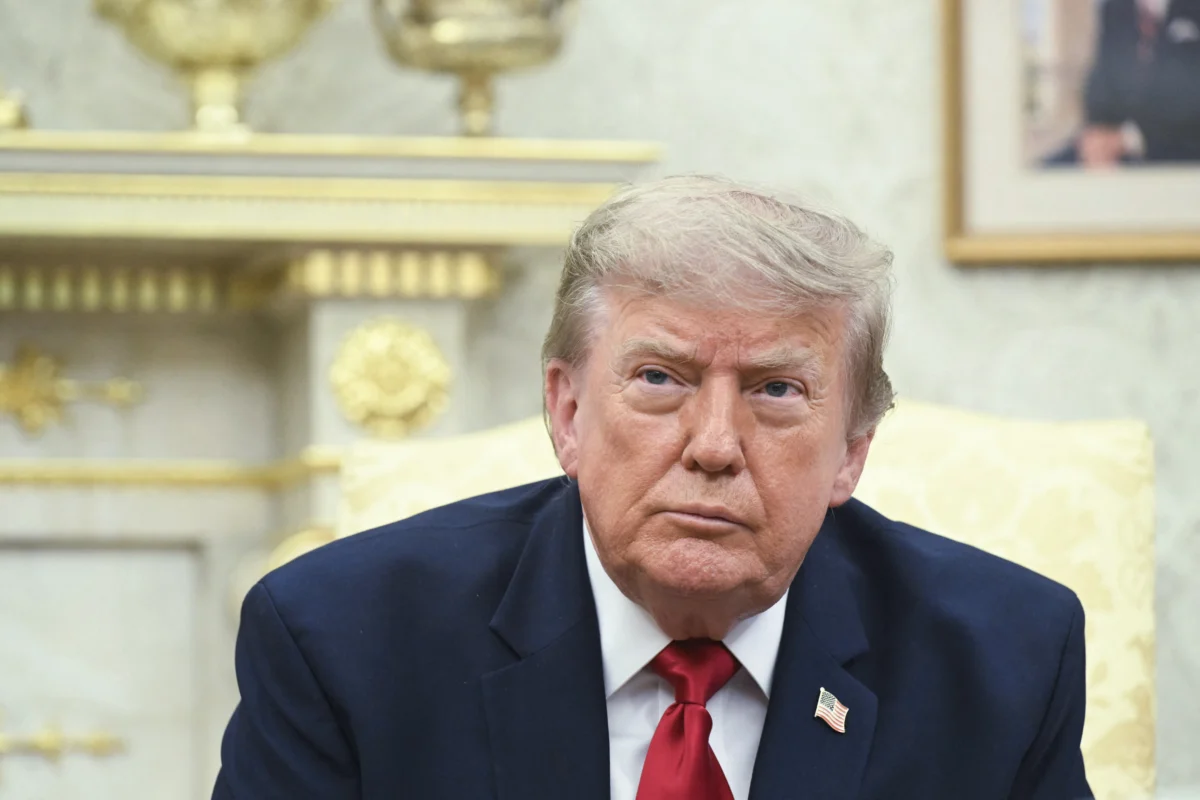
United States President Donald Trump has dramatically reversed course on his proposal to levy a 20 percent transit fee on vessels navigating the strategically vital Strait of Hormuz, opting instead for a strategy centered on securing significant trade and investment deals from regional Gulf states. This swift pivot, announced on Tuesday, comes amidst a dangerous escalation in hostilities between the United States and Iran, casting a long shadow over maritime security in one of the world’s most critical energy chokepoints.
A Swift Policy Reversal
The initial announcement of a proposed 20 percent transit fee surfaced on Monday, disseminated by President Trump via his Truth Social platform. At the time, Trump characterized the fee as a "reimbursement" for "any and all costs necessary to do the job of providing safety and security to this very volatile section of the World." This declaration, made without accompanying details or a clear policy framework, immediately raised questions about its legality under international maritime law and the practicalities of its implementation, given that the United States does not exert sovereign control over the international waterway. The administration remained silent on how it intended to enforce such a charge or guarantee safe passage.
However, less than 24 hours later, President Trump publicly retracted the fee proposal. In a subsequent statement, also released on Truth Social, he declared that the concept of a direct transit fee would be replaced with "Trade and Investment Deals that the various Gulf States will be making with the United States." He attributed this decision to "highly productive conversations with Middle East leadership," signaling a diplomatic shift following apparent consultations with regional allies. Speaking to reporters on Tuesday, Trump further solidified his revised stance, stating, "I don’t like the concept of a fee," a direct contradiction to his position from just the previous day. He vowed that the investments from Gulf countries would be "massive," though he provided no specific figures or timelines for these anticipated economic commitments.
Escalation of Conflict and Regional Instability
This policy volte-face unfolds against a backdrop of rapidly deteriorating security in the Middle East. The initial "war" between the United States and Israel, and Iran, commenced on February 28, marking a new, perilous chapter in their long-standing animosity. For a brief period in mid-June, a preliminary memorandum of understanding (MoU) offered a glimmer of hope, leading to a temporary cessation of hostilities, the lifting of a US military blockade on Iran, and the reopening of the Strait of Hormuz for unimpeded passage. This fragile agreement, however, has now been unequivocally shattered by a fresh surge of attacks across the region.
Reports from Iranian media outlets detail a series of recent strikes targeting critical infrastructure and strategic locations within Iran, including Bushehr, Bandar Abbas, Mahshahr, and Abadan. Explosions were also reported on Tuesday on the significant Qeshm and Kish islands, further highlighting the widespread nature of the assaults. Beyond Iranian borders, the conflict has reverberated across the Gulf and broader Middle East. Kuwait’s armed forces reported engaging with multiple aerial targets, indicating an active defense posture. Iran, in turn, has publicly vowed to retaliate, pledging to continue attacks on US assets situated throughout the region. Further incidents have been reported in Bahrain and Jordan, alongside attacks on commercial and possibly military vessels transiting the Strait of Hormuz itself. These escalating incidents directly precede the scheduled restart of a US military blockade of Iran, set to resume just hours after President Trump’s announcement on Tuesday, further intensifying an already volatile situation.
The Indispensable Strait of Hormuz: A Global Lifeline
The Strait of Hormuz is not merely a regional waterway; it is a critical artery for global commerce and energy supply, making any disruption or attempt to control it a matter of international concern. This narrow sea passage, separating Iran from the United Arab Emirates and Oman, connects the Persian Gulf to the Arabian Sea and beyond. Approximately one-third of the world’s seaborne oil, and a significant portion of its liquefied natural gas (LNG), transits through this chokepoint daily. Major oil producers such as Saudi Arabia, Iran, the UAE, Kuwait, Iraq, and Qatar rely almost entirely on the Strait for their energy exports. Any impediment to its free flow has immediate and profound implications for global energy prices, supply chains, and the stability of the international economy.
The Strait is roughly 21 miles (33 kilometers) wide at its narrowest point, with the shipping lanes themselves only two miles (3 kilometers) wide in each direction. This geographical constraint, combined with its strategic importance, makes it highly susceptible to disruption during periods of geopolitical tension. Historically, the Strait has been a flashpoint for conflict, from the "Tanker War" during the Iran-Iraq War in the 1980s to more recent confrontations involving Iranian Revolutionary Guard Corps vessels and international shipping. The constant presence of international naval forces, including the U.S. Fifth Fleet based in Bahrain, underscores the ongoing efforts to ensure its security and freedom of navigation.
International Law and US Stance on Transit Fees
President Trump’s brief flirtation with a transit fee directly challenged long-established principles of international maritime law. The United Nations Convention on the Law of the Sea (UNCLOS), though not ratified by the United States, is widely accepted as customary international law governing transit passage through international straits. This principle guarantees all ships and aircraft the right of "transit passage" through such straits for the purpose of continuous and expeditious transit between one part of the high seas or an exclusive economic zone and another. Crucially, coastal states are generally prohibited from impeding transit passage or levying charges on it.
The United States has historically been a staunch defender of freedom of navigation and the principle of transit passage. This commitment was starkly demonstrated when the Trump administration itself, through then-Secretary of State Marco Rubio, previously rejected the notion of Iran charging any fees for transiting ships. Rubio had explicitly stated that such an action in an international waterway would directly undermine international law. Trump’s immediate proposal for a US-imposed fee, therefore, represented a significant departure from both international legal norms and his own administration’s previously articulated stance. His swift reversal, stating he does not "like the concept of a fee," suggests a recalibration back towards adherence to these established legal frameworks, likely influenced by the "highly productive conversations" with regional leaders who would undoubtedly raise concerns about the precedent such a fee would set.
The New Strategy: Security for Investment
The pivot from a direct transit fee to securing "Trade and Investment Deals" represents a distinct shift in the US approach to leveraging its security presence in the Gulf. Rather than imposing a direct financial burden on maritime traffic, which would have been contentious and legally fraught, the new strategy seeks to monetize US security commitments through broader economic partnerships. Trump’s assertion that these investments would be "massive" echoes previous instances where Gulf states have pledged substantial sums to the US economy. Indeed, several countries in the region had already announced multibillion-dollar pledges to invest in the United States even prior to the outbreak of the current conflict with Iran on February 28. These investments often take the form of direct foreign investment in US companies, infrastructure projects, or purchases of US goods and services, including advanced military hardware.
For Gulf states, this arrangement may be a more palatable alternative than a direct transit fee. While still a form of paying for security, framing it as "trade and investment" allows these nations to strengthen their economic ties with a key strategic partner, potentially gaining influence and access to US markets and technology, rather than simply paying a toll for passage through a shared international waterway. From the US perspective, this strategy could provide an economic stimulus, create jobs, and foster deeper bilateral relationships, all while maintaining its security presence and influence in a volatile region. It transforms a potentially confrontational and legally questionable revenue stream into a mutually beneficial, albeit transactionally oriented, economic partnership tied to security guarantees.
Regional Reactions and Implications
While specific official reactions from Gulf states to the reversal have not been publicly detailed, the mention of "highly productive conversations with Middle East leadership" strongly implies that these regional partners played a significant role in influencing President Trump’s decision. For countries like Saudi Arabia, the UAE, and Qatar, who depend heavily on the Strait for their economic lifelines and rely on US security assurances, a US-imposed transit fee would have been deeply problematic. It would have added an unwelcome cost to their exports, potentially destabilized global oil markets, and set a precedent that could have been exploited by other actors, including Iran. An investment-for-security model offers a more cooperative and less disruptive pathway.
However, the underlying instability remains. The renewed US blockade of Iran and the ongoing exchange of attacks signal a dangerous escalation that could still severely impact maritime traffic regardless of any fee structure. The prospect of "massive" investments from Gulf countries will likely be contingent on the US’s ability to effectively provide the promised "safety and security" in an increasingly perilous environment. The credibility of these security assurances is now being tested daily by the escalating conflict.
Broader Impact and Future Outlook
The implications of this policy shift and the surrounding regional escalation are multifaceted:
- Economic Impact: The immediate withdrawal of the fee likely prevented an upward spike in global oil prices that would have resulted from increased shipping costs. However, the escalating conflict itself poses a far greater threat to energy markets, with potential disruptions to supply routes or direct damage to infrastructure capable of causing severe price volatility and economic uncertainty. The "massive investments", if they materialize, could offer a significant economic boost to the US, particularly in sectors targeted by Gulf state sovereign wealth funds.
- Geopolitical Ramifications: The rapid policy reversal could be interpreted in various ways – as a sign of presidential pragmatism and responsiveness to allied concerns, or as an indicator of policy inconsistency and impulsive decision-making. It underscores the transactional nature of current US foreign policy in the region, where security guarantees are explicitly linked to economic returns. This approach could solidify alliances but also risks alienating partners who prefer a less quid-pro-quo relationship. The renewed blockade and conflict escalation, meanwhile, threaten to further destabilize the Middle East, potentially drawing more regional and international actors into the fray.
- Legal Precedent: By abandoning the fee, the US has avoided setting a controversial legal precedent that would have challenged established international maritime law and likely faced widespread condemnation from the international community. This retreat reaffirms the principle of freedom of navigation through international straits, even if the US is not a signatory to UNCLOS.
The coming weeks will be critical. The effectiveness of the new investment-for-security strategy will depend entirely on the ability of the United States to de-escalate the current conflict or, at the very least, effectively secure the Strait of Hormuz amidst ongoing hostilities. The promise of "massive" investments provides an economic incentive, but the primary concern for global commerce remains the fundamental safety and stability of this indispensable waterway. The quick policy U-turn highlights the immense pressures and complex dynamics at play in the Middle East, where economic leverage, military might, and international law intersect in a precarious balance.
