


Canada stands at a pivotal crossroads in its journey toward a sustainable future, facing an infrastructure challenge of unprecedented scale. While the nation currently boasts an electricity grid that is approximately 80% emissions-free—largely due to a robust foundation of hydroelectric power and nuclear energy—the path to total decarbonization requires a radical expansion of capacity. According to recent federal projections and industry analyses, the Canadian electricity grid must double its output in less than 25 years to meet the surging demand driven by the electrification of transportation, home heating, and heavy industry. This transition, while essential for meeting climate targets, carries a staggering price tag of approximately $2.17 trillion in capital investments over the next quarter-century.
The urgency of this expansion is underscored by the 2026 levelized-cost-of-energy (LCOE) report from the global accounting firm Lazard, which confirms that wind and solar remain the most cost-effective sources of new electricity generation. However, the transition is not merely a matter of building more turbines and panels; it requires a fundamental reimagining of how energy is generated, transmitted, and financed across a vast and geographically diverse landscape.
The Trillion-Dollar Investment Gap
The financial requirements for Canada’s energy transition are detailed in the "Climate Dollars" analysis by Corporate Knights, a comprehensive study of the capital needed to decarbonize every sector of the Canadian economy. Of the total $2.17 trillion required over 25 years, approximately $1.26 trillion must be directed toward the grid itself—encompassing generation, storage, and transmission upgrades—while $915 billion is needed for end-use sectors, such as retrofitting buildings and scaling electric vehicle (EV) infrastructure.
On an annual basis, this translates to a requirement of $50 billion in grid investment every year. Current spending levels, while rising, still fall short of this target. In 2024, capital investments in the grid totaled $32 billion, increasing to $34 billion in 2025. While this makes the power sector the second-largest area of capital expenditure in the country—trailing only oil and gas extraction at $42 billion—the gap remains significant. To bridge this $16 billion annual shortfall, policymakers are increasingly looking beyond traditional government funding to private utilities, institutional investors, and a burgeoning sector of community-led finance.
A Chronology of Policy and Progress
The evolution of Canada’s energy strategy has been marked by both ambitious legislative leaps and significant regulatory hurdles. Understanding the current landscape requires a look back at the past two decades of energy policy:
- 2009: Ontario introduces the Green Energy Act, aiming to fast-track renewable projects. While it successfully spurred early wind and solar development, it faced criticism for stripping municipalities of land-use planning powers, leading to long-standing local resentment.
- 2016: A turning point occurs as several provinces discontinue guaranteed, long-term fixed-price energy contracts (Feed-in Tariffs), leading to a sharp decline in the number of active renewable energy co-operatives.
- 2023-2024: The federal government intensifies its focus on "Clean Electricity Regulations," setting the stage for a net-zero grid by 2035.
- May 14, 2026: The government under Prime Minister Mark Carney announces a comprehensive National Electricity Strategy. This strategy earmarks $13 billion annually for clean energy initiatives and emphasizes the need for a "stronger, more reliable, and more affordable" national grid.
- June 2026: New commitments are made to improve interprovincial grid connections, aiming to break down the "siloed" nature of provincial electricity markets.
Geographic and Regulatory Barriers
Despite the economic and environmental imperatives, Canada’s energy transition faces unique structural challenges. The regulatory landscape is notoriously fragmented, as the Canadian Constitution grants provinces primary jurisdiction over their electricity systems. This has resulted in a "patchwork" grid where it is often easier for a province to trade electricity with a neighboring U.S. state than with a neighboring Canadian province.
Furthermore, Canada’s geography presents immense logistical hurdles. More than 200 remote communities, many of them Indigenous, remain entirely dependent on diesel generators for heat and power. Transitioning these communities to microgrids powered by renewables is a priority for the National Electricity Strategy but requires significant localized investment and technical support.
Resistance at the local level also remains a factor. In Ontario, 155 municipalities formally declared themselves "unwilling hosts" for wind power projects following the 2009 Green Energy Act. This legacy of top-down implementation has made "community buy-in" a central theme of modern energy policy. Experts argue that without the support of local residents, the massive centralized projects required for the transition will continue to face costly delays and legal challenges.
The Economic Case for Interconnectivity
While the costs of the transition are high, the potential savings are equally substantial. Corporate Knights researchers estimate that a trans-Canada transmission line—a "national energy highway"—could result in up to $255 billion in net savings. Despite an estimated $100 billion price tag for the infrastructure itself, the line would allow for the efficient movement of offshore wind from the Maritimes and hydroelectric power from Quebec and Manitoba to high-demand centers in Ontario and Alberta.
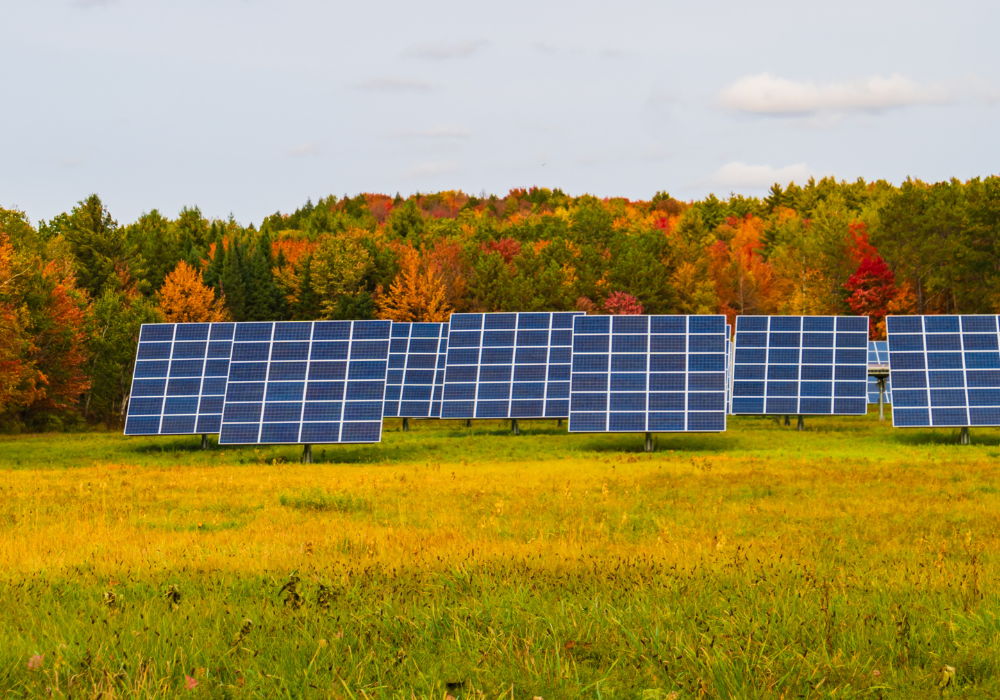
By optimizing the use of existing resources and reducing the need for redundant gas-fired backup plants, such a project could significantly lower electricity rates for millions of Canadians. Analysts suggest that the long-term fuel savings and avoided infrastructure costs from a fully integrated grid would far outweigh the initial capital outlay, providing a hedge against volatile global fossil fuel prices.
The Rise of Community Bonds and Retail Investment
Given that government financing is expected to cover only 20% to 25% of the $1.26 trillion grid investment, the role of private capital is paramount. While pension funds and private utilities will provide the bulk of this, a new model of "democratic finance" is emerging through community bonds.
Community bonds allow everyday Canadians to invest directly in local renewable energy projects. With minimum investments often as low as $1,000, these bonds function as loans to community-owned co-operatives. The capital is used to build projects like solar farms or wind turbines, and the revenue generated from selling power back to the grid is used to pay investors interest.
This model offers several strategic advantages:
- Local Wealth Retention: Unlike projects owned by multinational corporations, the interest paid on community bonds stays within the community.
- Increased Public Support: When residents are financial stakeholders in a project, they are less likely to oppose its construction.
- Diversification: For retail investors, community bonds offer a fixed-income asset that is uncorrelated with the volatility of the stock market.
However, these investments are not without risk. Unlike government-issued bonds, community bonds lack a secondary market, meaning they can be difficult to sell before they reach maturity. Additionally, as with any private loan, there is a risk of default if the project fails to generate expected revenues.
Success Stories: The SolarShare Model
SolarShare, Canada’s largest renewable energy co-operative, serves as a blueprint for this model. Since its inception in 2010, the co-op has grown to more than 2,000 members who have collectively invested $80 million. SolarShare operates 51 projects across Ontario, ranging from rooftop installations in the Greater Toronto Area to the "Sundance" solar farm in Timiskaming.
To date, the co-op has paid out more than $17 million in interest to its members. Brian Chang, General Manager of SolarShare, notes that the co-op’s democratic structure—where every member has one vote regardless of the size of their investment—is a major draw. Furthermore, the co-op de-risks its projects by outsourcing initial construction and only taking ownership once the project is operational and generating revenue. Currently, SolarShare bonds offer returns of approximately 4% over three- to seven-year terms, remaining competitive with Guaranteed Investment Certificates (GICs) while contributing to carbon reduction.
Global Context and Future Outlook
While community energy is growing in Canada, the country still lags behind its European peers. A study from Royal Roads University identifies only 82 active energy co-ops in Canada, managing 214 projects. In contrast, Germany boasts 847 energy co-ops, and the Netherlands has 713. The disparity is largely attributed to more supportive policy environments in Europe, where decentralized energy production is integrated into national planning.
For Canada to reach its 2050 net-zero goals, the energy system must evolve from a centralized "top-down" model to a "hub-and-spoke" system. This involves not only massive interprovincial transmission lines but also thousands of decentralized power-generating nodes and storage solutions located within the communities they serve.
The path forward requires a delicate balance of political will, regulatory reform, and financial innovation. As the Mark Carney government moves to implement its national strategy, the success of the transition may ultimately depend on whether ordinary Canadians see themselves as mere consumers of electricity or as active participants and stakeholders in the new energy economy. If the regulatory hurdles can be cleared, community bonds and co-operative models may provide the necessary "social license" to build the $2 trillion grid of the future.
