


Tech giants Amazon and Microsoft have entered into a landmark partnership to launch a major water replenishment project in Hesse, Germany. This collaborative initiative, situated in the ecologically sensitive Vogelsberg region, aims to restore natural wetland conditions and significantly bolster local groundwater resources. According to project specifications, the endeavor is expected to return more than 750 million liters of water annually to the local groundwater supply, addressing critical environmental needs in one of Germany’s most vital hydrological areas.
The project represents a strategic response to the growing environmental footprint of the global technology sector. As cloud computing and artificial intelligence (AI) continue to expand, the infrastructure supporting these technologies—primarily massive datacenters—requires substantial amounts of water for cooling purposes. By investing in nature-based solutions, Amazon and Microsoft are seeking to mitigate their impact on local ecosystems while advancing their respective corporate sustainability mandates.
Strategic Collaboration for Hydrological Restoration
The project is being implemented in coordination with the German environmental NGO NABU (Naturschutzbund Deutschland), along with various regional partners and public authorities. The primary focus of the intervention is the Vogelsberg region, which serves as a crucial source of drinking water for the city of Frankfurt and the surrounding Rhine-Main metropolitan area.
The technical scope of the project involves the restoration of wetlands across approximately 40 hectares. This will be achieved through a series of nature-based approaches designed to reverse decades of industrial and agricultural modification to the landscape. Key interventions include the removal of artificial drainage systems that previously diverted water away from the soil, the creation of shallow water zones to slow the flow of surface water, and the implementation of extensive grassland management. These measures are intended to increase the rate of water infiltration into the earth, thereby recharging the aquifers that supply the region.
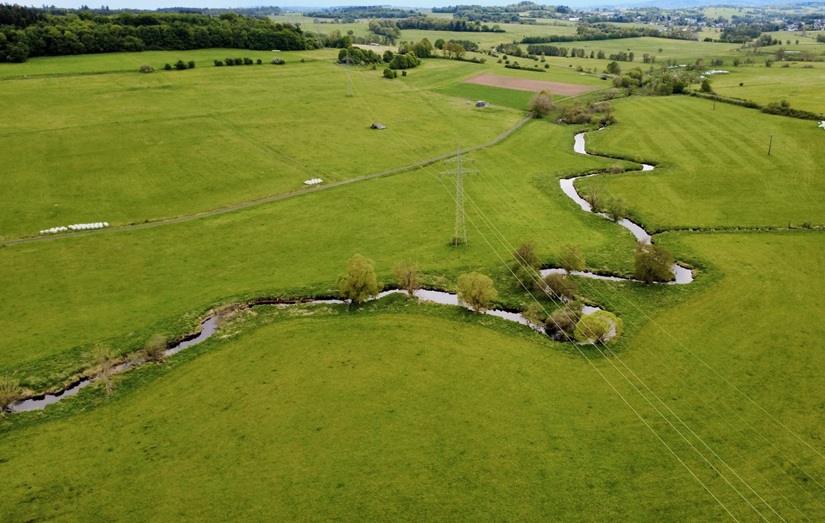
NABU has confirmed that it will collaborate with approximately 10 local landholders to acquire 80 hectares of land across two project sites near Herbstein. Further land acquisitions are planned through 2028, ensuring a long-term commitment to the region’s ecological health. Funding for these acquisitions and the subsequent restoration work is being provided jointly by Amazon and Microsoft, marking a rare instance of direct environmental collaboration between the two competitors.
The Drive Toward Water Positivity
The announcement comes at a time when the technology industry is facing unprecedented scrutiny over its resource consumption. Both Amazon and Microsoft have established ambitious "water positive" goals, pledging to replenish more water than they consume across their global operations by 2030.
Microsoft recently reached a significant milestone in this journey, announcing that it hit its water-positive target for the first time in 2025, five years ahead of its original 2030 deadline. This was achieved through a combination of efficiency gains in datacenter cooling and a diverse portfolio of replenishment projects worldwide. Christian Schätz, COO of Microsoft Germany, emphasized the importance of industry-wide cooperation in achieving these goals. He noted that when major tech players invest together in water stewardship, it sends a powerful signal regarding the sector’s commitment to regional sustainability.
Amazon, through its Amazon Web Services (AWS) division, has also reported substantial progress. The company recently revealed that it has reached 75% of its goal to be water positive by 2030. Furthermore, Amazon has successfully doubled its datacenter water efficiency over the past few years, utilizing advanced cooling technologies that minimize evaporation and maximize the reuse of water within its facilities. Michael Hanisch, Head of Technology at AWS Germany, stated that efficient water use is merely the starting point for the company, and that active contribution to local water systems is essential for the long-term viability of the communities where they operate.
Ecological Impact and Biodiversity Enhancement
Beyond the primary goal of groundwater replenishment, the Vogelsberg project is designed to deliver significant co-benefits for local biodiversity. The restoration of wetland habitats is expected to provide a sanctuary for several bird species that have seen their populations decline sharply in Germany due to habitat loss. Species expected to benefit include the whinchat, snipe, wood sandpiper, and gadwall.

To ensure the project meets its ecological objectives, the companies have committed to a rigorous decade-long monitoring program. Between 2028 and 2038, experts will conduct annual assessments of mammals, birds, insects, amphibians, and reptiles within the project area. This data will be used to measure the success of the restoration efforts and provide a scientific basis for future nature-based solutions in other regions.
The project also addresses the issue of nutrient runoff. By managing grasslands more extensively and restoring natural water cycles, the project will reduce the amount of agricultural nitrates and other pollutants entering local streams. This improvement in water quality is vital not only for the environment but also for the long-term security of the region’s drinking water supply.
The Broader Context: Datacenters and the European Water Crisis
The focus on Hesse is particularly relevant given Frankfurt’s status as one of the world’s leading datacenter hubs. The "FLAP" markets (Frankfurt, London, Amsterdam, Paris) represent the core of Europe’s digital infrastructure. However, this concentration of technology puts immense pressure on local power grids and water utilities.
In recent years, Europe has experienced increasingly frequent and severe periods of drought, linked to climate change. Germany, in particular, has seen fluctuating groundwater levels that have led to conflicts between industrial users, agricultural interests, and municipal water providers. By proactively investing in replenishment, Amazon and Microsoft are attempting to stay ahead of potential regulatory restrictions and public opposition to datacenter expansion.
The European Union’s Corporate Sustainability Reporting Directive (CSRD) and the Nature Restoration Law are also driving companies to take more concrete actions regarding their environmental impact. Under these frameworks, large corporations are required to disclose their water usage and the steps they are taking to protect and restore biodiversity. The Vogelsberg project serves as a high-profile example of how companies can align their corporate social responsibility (CSR) initiatives with emerging regulatory requirements.

Chronology of Corporate Water Stewardship in the Tech Sector
The path to the current partnership in Hesse has been shaped by a series of strategic moves by both companies over the last decade:
- 2020: Microsoft announces its commitment to be "water positive" by 2030, sparking a trend among large tech firms to look beyond carbon neutrality toward broader resource stewardship.
- 2021: Amazon joins the Water Resilience Coalition, a CEO-led initiative to address water stress globally, and begins integrating water-positive targets into its Climate Pledge.
- 2022: AWS announces its global "Water Positive" commitment, specifically targeting a 2030 deadline. The company begins deploying "direct evaporative cooling" and "recycled water" systems across its global datacenter fleet.
- 2024: Both companies ramp up investments in Europe, particularly in Germany, as the demand for sovereign cloud services and AI processing grows.
- 2025: Microsoft achieves its initial water-positive target, demonstrating the feasibility of large-scale replenishment projects.
- 2026 (October): Amazon and Microsoft announce the joint Hesse project, marking a shift toward collaborative environmental infrastructure investment.
Analysis of Implications for the Industry
The decision by Amazon and Microsoft to collaborate rather than compete on this specific environmental project suggests a maturing of the tech sector’s sustainability strategies. Water management is increasingly viewed not just as a corporate branding exercise, but as a critical operational risk. Without stable and sustainable water supplies, the expansion of high-density AI computing remains vulnerable to both environmental and political constraints.
This partnership may serve as a blueprint for future "co-opetition" in the realm of ESG (Environmental, Social, and Governance) goals. As the scale of required environmental restoration grows beyond the capacity of any single corporation, joint ventures between industry leaders may become the standard for large-scale nature-based solutions.
Furthermore, the involvement of a major NGO like NABU provides the project with essential scientific credibility and local expertise. For tech companies, partnering with established environmental organizations helps bridge the gap between global corporate goals and local ecological realities. It also ensures that the projects are managed with a focus on long-term ecological outcomes rather than short-term public relations gains.
As the Vogelsberg project moves into its implementation phase, it will be watched closely by policymakers, environmentalists, and industry peers. If successful, the return of 750 million liters of water annually to the Hesse groundwater supply will not only support the region’s water security but also demonstrate that the digital economy can, with sufficient investment and collaboration, contribute to the restoration of the natural world.
