

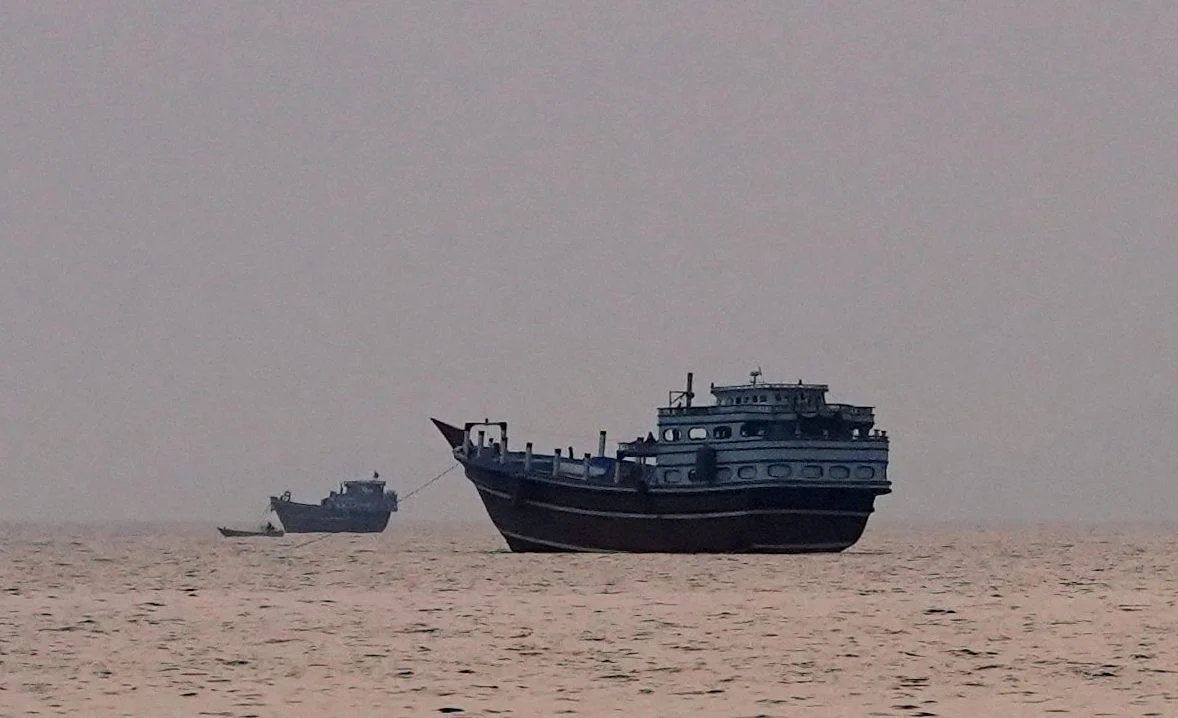
A high-level Omani delegation has arrived in Tehran for critical discussions aimed at de-escalating the perilous military standoff between the United States and Iran, focusing primarily on the management of shipping traffic through the strategically vital Strait of Hormuz. The visit, confirmed by Iran’s state-run IRNA news agency, comes at a time of unprecedented regional tension, marked by fourteen consecutive days of tit-for-tat airstrikes between Washington and Tehran, transforming the narrow maritime choke point into the principal flashpoint of a burgeoning conflict with global implications.
The Nexus of Conflict: The Strait of Hormuz
The Strait of Hormuz is more than just a waterway; it is a geopolitical artery, a narrow channel connecting the Persian Gulf to the Arabian Sea and beyond. Geographically, it is approximately 39 kilometers (21 nautical miles) wide at its narrowest point, with traffic lanes just 3.2 kilometers (2 miles) wide in each direction. Its strategic importance cannot be overstated. Before the current escalation, an estimated 20 percent of the world’s total oil consumption and approximately one-third of the world’s liquefied natural gas (LNG) transited through this strait daily. This represents a staggering volume of energy crucial for global markets, particularly for major economies in Asia and Europe. Disruptions here send immediate shockwaves through international commodity markets, directly impacting energy prices and the stability of the global economy. Indeed, in the immediate aftermath of the initial hostilities and threats of closure, global crude oil prices surged past $100 per barrel, a level not seen since May, underscoring the profound economic vulnerability associated with this waterway.
Historically, the Strait has been a flashpoint for regional and international tensions, witnessing numerous incidents during the Iran-Iraq War (1980-1988), often referred to as the "Tanker War." Both sides targeted each other’s shipping, and international naval forces, including those of the U.S., became involved to protect neutral vessels. This history underscores the inherent fragility of peace and navigation in the Strait, a fragility now being tested by the most intense US-Iran confrontation in decades. Control and unimpeded passage through the Strait have become the central contention point, with Iran asserting its sovereign rights and the international community, led by the U.S., emphasizing the principle of freedom of navigation under international law.
Oman’s Diplomatic Gambit
The Omani delegation arrived in Tehran late on Friday, initiating talks with senior Iranian officials on mechanisms governing navigation through the Strait. This visit is not an isolated event but rather part of ongoing consultations between Muscat and Tehran, reflecting Oman’s long-standing and distinctive foreign policy. Unlike many of its Gulf Cooperation Council (GCC) neighbors, Oman has historically maintained a degree of neutrality and cordial relations with Iran, positioning itself as a crucial back channel for diplomacy between Tehran and Western powers, including the United States. This unique diplomatic posture has allowed Oman to play a mediating role in numerous regional disputes, often facilitating dialogue when direct communication between adversaries is impossible. Notable examples include Oman’s role in the preliminary talks that led to the 2015 Iran nuclear deal (Joint Comprehensive Plan of Action – JCPOA) and various prisoner exchanges between Iran and Western nations.
The Iranian Foreign Ministry confirmed that Foreign Minister Abbas Araghchi held a phone call with his Omani counterpart, Badr Albusaidi, prior to the delegation’s arrival, signaling the high-level nature of these consultations. While specific details regarding the ideas being discussed were not released, Tehran has consistently maintained throughout the ongoing conflict that it is open to managing the critical waterway in coordination with Oman. This proposal, however, has been met with firm rejection from the United States and other Gulf states, who insist on the principle of unimpeded international navigation and view any joint management as an attempt by Iran to assert undue control.
Omani Foreign Minister Badr Albusaidi, articulating his country’s principled stance, posted on X (formerly Twitter) that "Vital waterways, including the Strait of Hormuz, must remain open and accessible for navigation, free from any measures that would impede freedom of navigation and international trade flows." This statement, while emphasizing a universally accepted principle, subtly underscores Oman’s advocacy for a diplomatic resolution that preserves international maritime law while acknowledging regional sensitivities. Oman’s strategic geographical position, bordering the Strait’s southern shore, grants it a unique perspective and leverage in any discussions concerning the waterway’s future.
Escalation on Multiple Fronts: A Chronology of Recent Hostilities
The Omani diplomatic initiative unfolds against a backdrop of rapidly escalating military actions and a prior breakdown in de-escalation efforts.
-
Failed Diplomacy: The Islamabad Memorandum of Understanding (MoU):
The current crisis has only deepened since the collapse of a previously brokered diplomatic arrangement, the "Islamabad Memorandum of Understanding." This MoU, agreed upon just last month, had aimed to achieve a temporary pause in fighting between the US and Iran. However, it swiftly unraveled, largely due to fundamental differences over what was agreed regarding freedom of navigation in the Strait of Hormuz. While the MoU’s specific terms were not fully disclosed, it is understood that Iran sought certain assurances or concessions regarding its perceived sovereignty over the Strait, which were incompatible with the US and its allies’ insistence on unrestricted international passage. This failure highlighted the deep-seated mistrust and conflicting interpretations of international maritime law that plague US-Iran relations, proving that even a temporary ceasefire is elusive without addressing these core disagreements. -
Continuous Air Strikes:
For the fourteenth consecutive day, the United States and Iran have exchanged air strikes, marking an alarming and sustained period of direct military confrontation. Iran’s military has claimed further attacks on US bases across the region, which have been the primary targets for its retaliatory fire during these hostilities. Reports from Iranian state media detailed attacks on American military installations in Kuwait, Bahrain, and Jordan. Furthermore, a drone crash near Iraq’s Erbil International Airport forced the temporary suspension of flights, underscoring the widening geographical scope and disruptive impact of these engagements.In a particularly provocative claim, Iran’s Islamic Revolutionary Guard Corps (IRGC) stated they targeted US tech giant Amazon’s data center in Bahrain. The IRGC justified this attack by alleging that Amazon was "providing intelligence support for the American child-killing army," a highly charged accusation reflecting Iran’s narrative of the conflict. Such claims, even if unverified, illustrate the asymmetric nature of some of Iran’s responses, potentially targeting critical infrastructure with perceived links to US operations.
Conversely, the US Central Command (CENTCOM) announced it had concluded a series of air strikes on Iran. Iranian media subsequently reported significant casualties and damage within Iran, with four people injured in blasts in several cities, including Khorramabad, Jask, Ahvaz, and Bandar Abbas, as well as on Qeshm Island. Iran’s Health Ministry provided a more grim update, stating that at least 55 people have been killed in recent US attacks and nearly 650 injured, painting a stark picture of the human cost of this escalating conflict.
-
New Regional Front: The Houthi Blockade:
Adding another layer of complexity and danger to the regional landscape, Houthi rebels in Yemen, widely believed to be backed by Iran, declared a naval blockade against Saudi Arabia on Monday. This move effectively opened a new front in the conflict, threatening vital shipping lanes beyond the Strait of Hormuz. The Houthis have reportedly continued to target Saudi tankers not only in the Strait of Hormuz but also in the strategic Bab al-Mandeb Strait, located at the southern entrance to the Red Sea. The Bab al-Mandeb, another critical global maritime choke point, sees approximately 12% of the world’s seaborne oil and a significant portion of international trade passing through it annually. However, a Houthi spokesman denied the group had completely shut down the waterway, suggesting their actions might be more targeted or symbolic than an outright closure, yet the threat of disruption remains potent. This Houthi declaration significantly expands the potential area of conflict, raising concerns about the security of shipping across a vast stretch of the Arabian Peninsula’s coastlines and further intertwining the Yemeni civil war with the broader US-Iran confrontation.
Broader Context: US-Iran Relations and Regional Dynamics
The current crisis is not an isolated event but a culmination of decades of animosity and a complex web of regional proxy conflicts. The underlying US-Iran geopolitical rivalry stems from the 1979 Iranian Revolution, the subsequent hostage crisis, and profound ideological differences. More recently, the US withdrawal from the JCPOA in 2018 and the re-imposition of crippling sanctions severely exacerbated tensions, leading to a cycle of escalation that included attacks on shipping in the Gulf, drone incidents, and retaliatory strikes.
The conflict in Yemen, where a Saudi-led coalition is fighting the Houthi rebels, is a significant proxy battleground. Similarly, Iraq, Syria, and Lebanon are arenas where US and Iranian interests frequently clash through allied groups. The current direct military exchanges are a dangerous departure from previous proxy confrontations, signaling a willingness by both sides to engage directly, albeit with calculated limits. The fear is that these calculations could easily go awry, leading to an uncontrolled regional conflagration.
Economic Repercussions and Global Concerns
The economic implications of a sustained or intensified conflict in the Strait of Hormuz are dire. The initial surge in oil prices to over $100 per barrel is just a precursor to what could be a global economic crisis. A prolonged closure or severe disruption of the Strait would not only send oil and gas prices soaring to unprecedented levels, triggering inflation and potentially plunging major economies into recession, but also severely impact global supply chains. Manufacturers reliant on energy inputs, shipping companies facing increased insurance premiums and rerouting costs, and consumers grappling with higher fuel and goods prices would all feel the pinch. The stability of the global financial system itself could be threatened.
International calls for de-escalation have grown increasingly urgent. The United Nations, various European nations, and Asian powers heavily reliant on Gulf energy have all voiced deep concern and urged both Washington and Tehran to exercise restraint and pursue diplomatic solutions. The international community recognizes that the stakes extend far beyond the immediate belligerents, threatening the very fabric of global economic stability and peace.
Analysis: The Path Forward and Obstacles
The Omani diplomatic mission represents a slender thread of hope in an otherwise rapidly unraveling situation. However, the path to de-escalation is fraught with immense challenges. The entrenched positions of the US and Iran, particularly regarding freedom of navigation in the Strait and broader regional security architecture, appear fundamentally incompatible. Iran views its control over the Strait as a matter of national sovereignty and a vital strategic asset, while the US and its allies see unimpeded passage as a cornerstone of international trade and maritime law.
Oman, despite its historical success as a mediator, possesses limited leverage to bridge such a chasm, especially when both sides are engaged in active military exchanges. The intertwining of regional conflicts – the Yemeni civil war, the Iraqi political landscape, and the broader sectarian rivalries – further complicates any potential resolution. Each of these conflicts adds another layer of grievances and objectives that feed into the larger US-Iran confrontation.
A critical risk factor is the potential for miscalculation. In an environment of constant military action, a single error, an unintended strike, or a misinterpretation of intent could quickly spiral into a full-scale regional war. The necessity of maintaining freedom of navigation for global commerce clashes directly with Iran’s perceived national security interests and its desire to project power in the Gulf.
The current diplomatic push by Oman, therefore, is not merely about managing traffic but about preventing a catastrophic regional war. Its success hinges on the willingness of both the US and Iran to step back from the brink, acknowledge the global consequences of their actions, and engage in genuine dialogue, even as their missiles fly. The world watches anxiously, understanding that the outcome of these delicate negotiations in Tehran will profoundly shape the geopolitical and economic landscape for years to come.
