

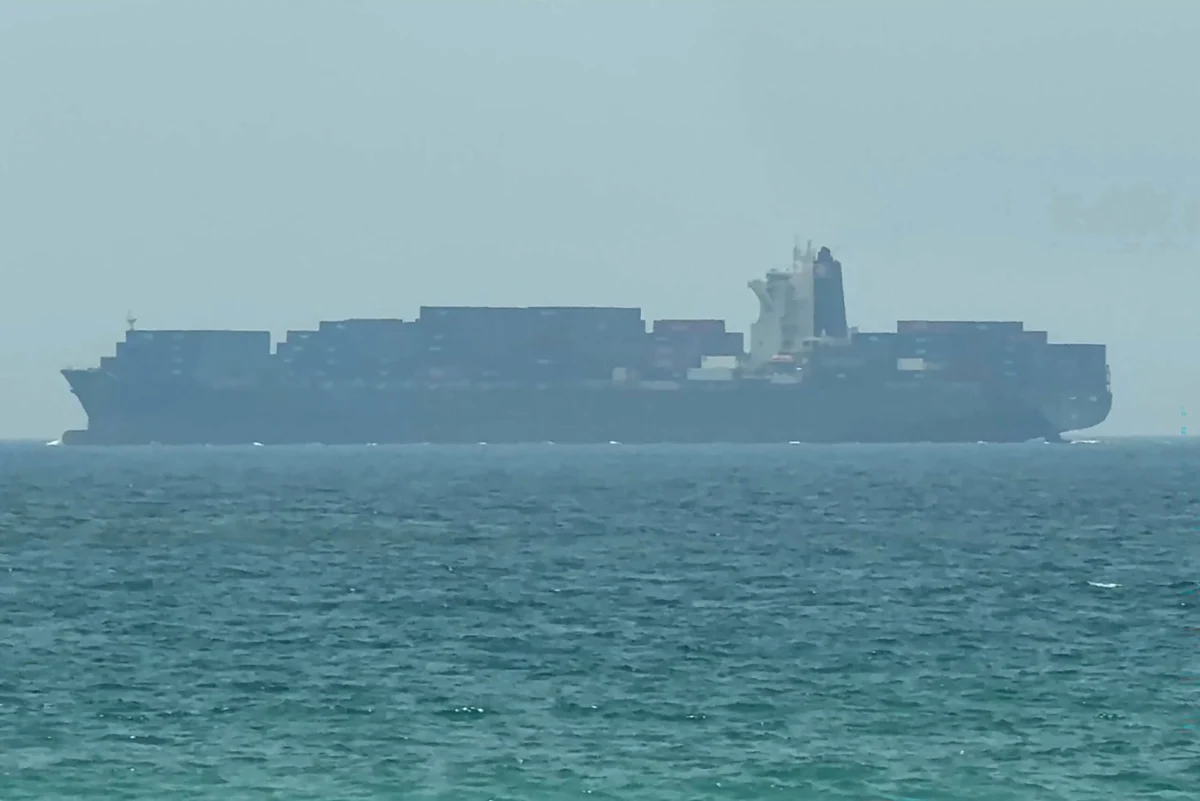
Oil prices have experienced a significant surge following President Donald Trump’s decision to reinstate the blockade on the Strait of Hormuz, a critical global chokepoint for crude transit. This assertive move comes on the heels of intensified military confrontations between Iran and the United States over the past weekend, marking a dangerous escalation in regional hostilities. The resulting heightened market volatility, while indicative of profound instability, is simultaneously forging distinct opportunities for sophisticated participants in the options market.
Escalating Tensions in the Persian Gulf
The recent flare-up in the Strait of Hormuz represents a critical juncture in the long-standing, often fraught, relationship between the United States and Iran. Reports indicate that the weekend saw a series of tit-for-tat strikes, beginning with an alleged Iranian drone attack on a commercial tanker navigating international waters near the Strait. This was reportedly followed by U.S. retaliatory air strikes against Iranian naval assets and Revolutionary Guard Corps (IRGC) installations along the Iranian coastline. Iran, in turn, is understood to have responded by harassing commercial shipping and initiating missile tests in the vicinity, further destabilizing the crucial waterway.
President Trump’s directive to reinstate the blockade on the Strait of Hormuz, effectively restricting the movement of Iranian oil and commercial vessels, is framed by the administration as a necessary measure to curb Iran’s regional aggression and ensure the safety of international maritime traffic. This action harks back to previous periods of heightened tension where similar tactics were employed, albeit with varying degrees of success and international support. The Strait of Hormuz, a narrow passage between the Persian Gulf and the Gulf of Oman, is globally recognized as the most important oil transit chokepoint in the world. Approximately one-fifth of global oil consumption, or about 21 million barrels per day, passes through this strait. Any disruption, perceived or real, sends immediate shockwaves through global energy markets.
Historical Context of US-Iran Dynamics
The current crisis is deeply rooted in decades of animosity and mistrust. Following the 1979 Iranian Revolution, relations between Washington and Tehran deteriorated sharply, marked by events such as the Iran hostage crisis, the Iran-Iraq War, and subsequent nuclear proliferation concerns. Economic sanctions, imposed by various U.S. administrations, have been a consistent feature of this strained relationship, aimed at pressuring Iran’s nuclear program and its support for regional proxy groups. The 2015 Joint Comprehensive Plan of Action (JCPOA), a multilateral agreement designed to curb Iran’s nuclear ambitions in exchange for sanctions relief, briefly offered a reprieve. However, the U.S. withdrawal from the JCPOA in 2018 under the Trump administration reignited tensions, leading to a "maximum pressure" campaign that significantly curtailed Iran’s oil exports and exacerbated economic hardship within the country. This latest blockade represents a significant intensification of that campaign, pushing the two nations closer to a direct military confrontation.
The Options Market: Capitalizing on Volatility
Against this backdrop of geopolitical uncertainty and fluctuating crude prices, the options market is presenting a compelling avenue for traders. The United States Oil Fund (USO), an exchange-traded fund (ETF) designed to track the daily price movements of West Texas Intermediate (WTI) crude oil, offers equity options traders a highly liquid and accessible alternative to the more intricate and capital-intensive futures market. While the immediate volatility stemming from the Gulf crisis suggests potential for sharp price swings, a deeper analysis reveals that longer-term crude oil prices are likely to encounter both structural upside resistance and a robust downside floor. This unique confluence of factors creates an ideal environment for "premium sellers" – traders who profit from the decay of option value over time – looking to exploit elevated implied volatility.
Structural Constraints on Oil Prices
On the downside, a persistent structural floor underpins crude prices. Protracted conflicts and escalating tensions in the Middle East inherently strain global oil supply chains. Beyond the immediate threat to shipping through the Strait of Hormuz, such conflicts can disrupt production facilities, pipelines, and export terminals across the region. This "tight physical reality" is compounded by the status of the U.S. Strategic Petroleum Reserve (SPR).
The SPR, established in the 1970s after the Arab oil embargo, is the world’s largest emergency crude oil supply, designed to protect the U.S. economy from severe supply disruptions. Historically, it has been a tool for national energy security. However, its role has evolved. Ahead of the 2022 midterm elections, the Biden administration undertook massive drawdowns from the SPR to combat soaring domestic gasoline prices, bringing the reserve to its lowest levels in decades. In the wake of the "latest war" with Iran, the Trump administration further depleted the SPR to cushion the impact of Iran’s actions on oil exiting the Persian Gulf. This consecutive depletion has fundamentally altered the SPR’s utility. Rather than serving as a readily available political tool for price suppression, the government now faces a critical imperative to refill the reserve, transforming it into a significant backstop against precipitous declines in crude oil prices. Its depleted state means it can no longer be easily drawn upon, creating a de facto floor beneath the market.

Conversely, the upside potential for oil prices also faces substantial resistance. The United States continues to pump crude oil at record-shattering levels, with domestic production frequently exceeding 13 million barrels per day. This robust American output acts as a massive structural counterweight to efforts by OPEC+ (Organization of the Petroleum Exporting Countries and its allies, including Russia) to manage global supply through production cuts. Furthermore, the tentative, long-term return of Venezuelan supply promises to inject additional barrels into global balances over the coming years, albeit with significant political and infrastructure hurdles. Venezuelan production has been severely hampered by years of underinvestment and U.S. sanctions, but any meaningful increase would add further pressure to the supply side.
On the demand side, persistent economic headwinds cast a shadow over future consumption projections. China, the world’s largest oil importer, has been grappling with a multi-year economic slowdown, exacerbated by property market crises, lingering effects of past pandemic lockdowns, and structural shifts in its growth model. This slowdown invariably dulls long-term demand for commodities. Concurrently, the steady, secular shift toward alternative energy sources globally continues to fundamentally alter consumption patterns. Government policies promoting renewable energy, increasing adoption of electric vehicles (EVs), and advancements in energy efficiency are collectively chipping away at long-term oil demand growth, especially in developed economies. These factors suggest that while short-term volatility will persist, crude oil prices are likely to remain range-bound over a medium-term horizon.
The Strategy: Selling Cash-Secured Puts
This environment of elevated, yet potentially range-bound, oil prices with a strong floor and ceiling, has pushed implied volatility (IV) in oil options well above historical averages. This expansion in option premiums creates an opportune moment for premium sellers. One particularly effective strategy in this scenario is selling a cash-secured put.
A cash-secured put involves selling an out-of-the-money put option and simultaneously setting aside enough capital to purchase the underlying shares if the option is exercised. This strategy allows traders to capitalize on high implied volatility without taking on the unlimited upside risk inherent in buying call options or the potential for catastrophic losses associated with naked call selling. In an environment where structural supply caps make a runaway rally unlikely, selling puts on USO is particularly attractive. By essentially underwriting the downside insurance that the market is currently overpricing, traders extract a premium that accelerates in value via time decay (theta) as the option approaches expiration over the next two months.
Trade Breakdown and Mechanics
For the United States Oil Fund (USO), the execution of this strategy typically targets a roughly 30-delta strike price, positioned approximately 45 to 60 days out from expiration. A 30-delta option implies a roughly 30% probability that the option will expire in-the-money. This strike price is deliberately chosen to be well below the current market price of USO, placing it deep within the safety net provided by the depleted SPR and the geopolitical supply constraints acting as a structural floor.
Let’s consider a hypothetical example based on the original article’s inference: an investor could sell the USO August 28th weekly $100 put for $2.40. This means the investor receives $2.40 per share (or $240 per contract) upfront.
- Maximum Profit: If USO stays range-bound or grinds higher over the next 6-8 weeks, the put option will lose value rapidly due to time decay and decreasing implied volatility. The trader can then buy it back cheaply, or, ideally, let it expire worthless for the maximum profit of the collected premium ($240 per contract). This represents an annualized return potentially exceeding 18% on the collateral tied up.
- Downside Protection: The collected premium of $2.40 lowers the effective break-even point. In this specific case, the break-even price would be $100 (strike price) – $2.40 (premium collected) = $97.60. This means the trader would only start incurring losses if USO falls below $97.60 by expiration.
- Scenario of Assignment: If a macro slowdown or an unforeseen event temporarily pushes oil prices significantly lower, causing USO to fall below the $100 strike price by expiration, the put option may be "assigned." This means the trader is obligated to purchase 100 shares of USO per contract at the strike price of $100. However, even in this scenario, the trader effectively acquires USO shares at a significant discount (the strike price minus the premium collected, i.e., $97.60).
- Managing Assigned Shares: If assigned, the trader can consistently lower their effective cost basis by subsequently selling covered calls against the newly acquired USO shares, particularly as long as implied volatility remains above average. This generates additional income and further mitigates potential losses, transforming an assignment into a strategic entry point for a longer-term position.
This strategy is often described as a "win-win" scenario in popular financial commentary because it profits if the underlying asset (USO) goes up, stays flat, or even falls slightly. It only begins to lose money if the decline in the underlying asset exceeds the collected premium.
Broader Implications and Market Outlook
The current geopolitical climate in the Middle East, coupled with the complex interplay of supply and demand fundamentals, suggests that energy markets will remain a focal point for global economic stability. The reinstatement of the Strait of Hormuz blockade signals a dangerous escalation that could have far-reaching consequences beyond crude oil prices.
- Global Economy: Sustained high oil prices contribute to inflationary pressures, impacting consumer spending, transportation costs, and manufacturing input prices globally. This could hinder the recovery of economies still grappling with post-pandemic challenges and existing supply chain disruptions.
- Geopolitical Stability: The heightened tensions between the U.S. and Iran increase the risk of miscalculation, potentially drawing other regional and international powers into the conflict. This could destabilize the entire Middle East, a region vital for global energy security.
- Energy Security: Nations heavily reliant on oil imports, particularly those in Asia and Europe, will face increased energy security concerns and potentially higher import bills. This may accelerate diversification efforts towards alternative energy sources.
- Future of Strategic Reserves: The depletion of the U.S. SPR underscores the need for a re-evaluation of national strategic reserves and their intended purpose, moving away from short-term political manipulation towards their original mandate of long-term emergency supply.
As the situation unfolds, market participants will closely monitor diplomatic efforts, military movements, and global economic indicators. For options traders, however, the present volatility offers a tactical advantage, enabling them to generate premium from the market’s pricing of uncertainty, particularly through strategies like the cash-secured put, which are designed to thrive in range-bound, high-volatility environments. The interplay of geopolitical risk, robust U.S. production, shifting demand patterns, and a depleted yet crucial Strategic Petroleum Reserve sets the stage for a prolonged period where oil prices, though volatile, may struggle to break decisively out of their established boundaries.
