

Los Angeles, California – July 11, 2026 – The United States housing market experienced a significant jolt this past week as mortgage rates climbed to their highest point since August 2025, prompting a noticeable retreat in homebuyer demand for new loans. This surge in borrowing costs, however, coincided with a surprising increase in applications to refinance existing home loans, according to the latest data from the Mortgage Bankers Association (MBA). The confluence of these trends underscores the complex and often contradictory forces shaping the nation’s real estate landscape in mid-2026.
Total mortgage application volume, a crucial barometer for housing market activity, registered a 2.7% decline last week compared with the preceding period, as measured by the MBA’s seasonally adjusted index. This overall dip was primarily driven by a sharp contraction in purchase loan applications, reflecting the immediate impact of elevated interest rates on prospective homebuyers already navigating a challenging market.
Detailed Breakdown of Rate Movements and Application Trends
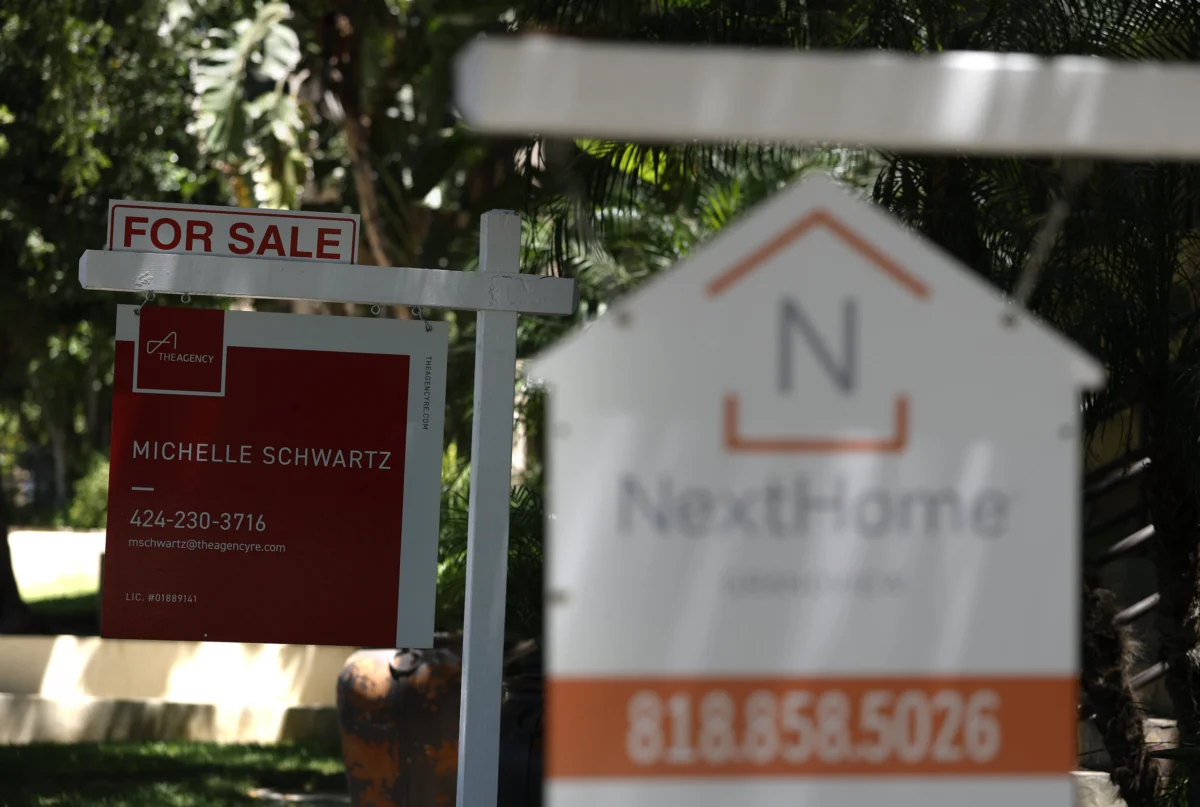
The average contract interest rate for a 30-year fixed-rate mortgage, specifically for conforming loan balances of $832,750 or less, ascended to 6.65%. This marked an increase from the 6.58% recorded the previous week. Accompanying this rise in the headline rate, points – a fee paid to the lender at closing to secure the interest rate – also moved higher, climbing to 0.67 from 0.64, inclusive of the origination fee, for loans based on a 20% down payment. This incremental but persistent upward movement in borrowing costs has substantial implications for affordability, particularly in high-cost regions like Los Angeles, where the visual context of "for sale" signs against the backdrop of condominium developments on July 9, 2026, vividly illustrates the market’s current state.
The most pronounced impact of these rising rates was felt in the purchase segment of the market. Applications for a mortgage to purchase a home plummeted by 7% from the previous week. This decline was not merely a week-over-week fluctuation; purchase applications were also 2% lower than during the same week one year ago, signaling a sustained cooling trend in buyer enthusiasm. The underlying reasons for this reticence are multifaceted, with prospective buyers continuing to grapple with stubbornly high home prices, which have shown remarkable resilience despite rising rates, and a persistently lean supply of affordable homes for sale across much of the country.
Conversely, applications to refinance an existing home loan defied the broader trend, increasing by 4% for the week. This segment also showed a year-over-year gain, standing 7% higher than the same week a year prior. While this increase might appear counterintuitive given the rising rate environment, analysts suggest it reflects a combination of factors. Last year, rates were only 17 basis points higher than the current levels, meaning the incentive for a broad swath of borrowers to refinance into a lower rate is still limited. The percentage gains in refinance activity are therefore likely attributed to a relatively small, niche pool of borrowers. These often include individuals looking to execute cash-out refinances, leveraging the substantial gains in home equity accumulated over recent years, or those whose specific loan types or financial situations make a refinance advantageous even at these higher rates.
Joel Kan, vice president and deputy chief economist at the MBA, highlighted the specifics of this refinancing surge. "Despite higher mortgage rates, refinance applications increased, led by FHA and VA refinance applications rising 9 and 10 percent, respectively," Kan stated in a recent release. This indicates that government-backed loan programs, often favored by first-time homebuyers or veterans, are seeing a distinct uptick in refinancing activity, possibly due to unique program benefits, lower credit requirements, or specific equity-tapping options unavailable to conventional borrowers. The refinance share of total mortgage activity consequently expanded, rising to 43.2% of all applications from 40.6% the previous week, indicating a significant shift in the composition of mortgage demand.
Broader Economic Context and Influencing Factors
The recent ascent in mortgage rates is not an isolated event but rather a symptom of broader macroeconomic forces at play. According to a separate survey from Mortgage News Daily, mortgage rates jumped higher at the very start of the current week, underscoring the volatility in the bond market, which directly influences fixed mortgage rates.
Matthew Graham, chief operating officer at Mortgage News Daily, offered a concise explanation for the recent spike. "The key contributor to the recent spike has been the uptick in fuel prices in July combined with the fact that rates never made it any lower than 6.52% over the past 2 months," Graham wrote. "In other words, we were already in a high range and the uptick in fuel prices simply gave rates a push." This analysis points to the insidious nature of inflation, where even specific commodity price increases, like fuel, can ripple through the economy, impacting inflation expectations and, consequently, long-term interest rates. The bond market, ever sensitive to inflation signals, reacts by demanding higher yields, which in turn translates to higher mortgage rates for consumers.
However, the market’s reaction can be swift and sometimes contradictory. Rates did experience a slight recovery on Tuesday, following a fresh inflation reading that came in much lower than anticipated. This immediate, albeit modest, pullback illustrates the hypersensitivity of financial markets to economic data, particularly concerning inflation. A lower-than-expected inflation figure can temper expectations for aggressive monetary policy tightening by the Federal Reserve, leading to a temporary easing in bond yields and, subsequently, mortgage rates.
A Chronology of Market Shifts and Economic Drivers
The journey to the current rate environment has been dynamic. Following a period of historically low rates during the pandemic-era stimulus, the Federal Reserve embarked on an aggressive campaign of interest rate hikes starting in early 2022 to combat surging inflation. This policy shift sent shockwaves through the housing market, rapidly pushing 30-year fixed mortgage rates from below 3% to over 7% by late 2022. While rates saw some moderation in early 2023, they remained elevated, fluctuating significantly throughout the year as the market digested varying economic data points and Federal Reserve commentary.
By August 2025, rates had settled into a range that was, at the time, considered high but perhaps more stable. The current climb "to the highest level since August 2025" indicates a regression to or beyond those previous peaks, suggesting renewed inflationary pressures or a re-evaluation of the Federal Reserve’s future policy trajectory by bond investors. The "uptick in fuel prices in July [2026]" acted as a fresh catalyst, pushing rates beyond what had been perceived as a recent ceiling of around 6.52%. The subsequent "lower than expected" inflation report on Tuesday, July 9, 2026, provided a momentary reprieve, yet the overall trend remains firmly in the higher range.
This volatility underscores the tightrope walk policymakers face: taming inflation without inadvertently stifling economic growth or triggering a severe housing market correction. The Federal Reserve’s dual mandate of maximum employment and price stability means every economic data release is scrutinized for its potential impact on future monetary policy decisions, which directly ripple into the mortgage market.
Implications for Homebuyers, Sellers, and the Broader Economy
The sustained high interest rates pose significant challenges for prospective homebuyers. Affordability, already a pressing concern due to elevated home prices and stagnant wage growth relative to housing costs, is further eroded. A 30-year fixed-rate mortgage at 6.65% translates to a significantly higher monthly payment compared to even 6.00%, let alone the sub-3% rates seen just a few years prior. For a median-priced home, this difference can amount to hundreds of dollars per month, effectively pricing out a segment of potential buyers and forcing others to scale back their housing aspirations or extend their search. The 7% drop in purchase applications is a direct manifestation of this diminished purchasing power and increased buyer hesitancy.
Sellers are also feeling the pinch. While home prices have remained resilient, the shrinking pool of qualified buyers could eventually lead to longer listing times, fewer bidding wars, and potentially a deceleration in price appreciation, if not outright price corrections in certain overvalued markets. The "lean supply of affordable homes for sale" exacerbates this dynamic, creating a bottleneck where even if buyers are willing, the right inventory at the right price point is scarce. This dynamic is particularly evident in competitive urban centers like Los Angeles, where the average home price often far exceeds the conforming loan limit, pushing buyers into jumbo loan territory with potentially different rate structures.
The surprising increase in refinance demand, particularly cash-out refinances, also carries broader economic implications. While it allows homeowners to tap into their accumulated equity for various purposes—debt consolidation, home improvements, or other investments—it also represents a withdrawal of capital from the housing market. If a significant portion of these cash-outs are used for consumption, it could provide a short-term boost to consumer spending, but also potentially contribute to inflationary pressures. Conversely, if used for home improvements, it could sustain activity in the construction and renovation sectors.
Looking ahead, the trajectory of mortgage rates will largely depend on the ongoing battle against inflation and the Federal Reserve’s response. Should inflation prove more persistent than anticipated, further rate hikes or a prolonged period of elevated rates could be on the horizon. Conversely, clear signs of disinflation could pave the way for future rate cuts, offering some relief to the housing market. However, for the foreseeable future, both homebuyers and existing homeowners will need to navigate an environment characterized by elevated borrowing costs and market volatility. The current landscape, marked by diminishing buyer enthusiasm and a niche but active refinance market, serves as a stark reminder of the profound impact macroeconomic forces have on the personal finance and wealth-building aspirations of millions of Americans.
