

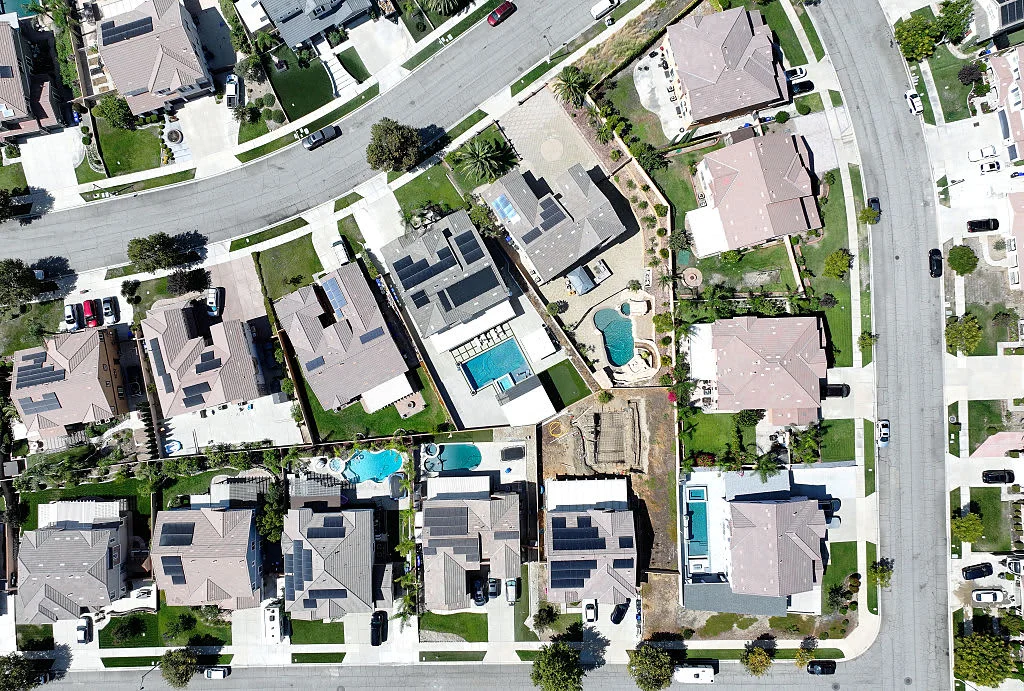
The residential real estate market in the United States experienced a notable deceleration last week as mortgage rates continued their upward trajectory, prompting a significant retreat from both prospective homebuyers and existing homeowners contemplating refinancing. This shift, particularly impactful on first-time buyers, manifested in a 4.4% decline in total mortgage application volume compared to the previous week, according to the Mortgage Bankers Association’s (MBA) seasonally adjusted index. The increase in borrowing costs has injected a fresh wave of uncertainty into a housing sector already grappling with persistent affordability challenges.
The Ascent of Mortgage Rates: A Deeper Dive
Last week, the average contract interest rate for 30-year fixed-rate mortgages with conforming loan balances, capped at $832,750, ascended to 6.45%. This marked an increase from 6.37% in the preceding week. Concurrently, points, which represent an upfront fee paid to the lender in exchange for a lower interest rate, also rose to 0.66 from 0.61, including the origination fee, for loans requiring a 20% down payment. This incremental but steady climb has pushed mortgage rates to their highest level in a month, creating an immediate ripple effect across the housing landscape.
Joel Kan, Vice President and Deputy Chief Economist at the MBA, attributed part of this recent surge to global geopolitical tensions. "The ongoing conflict in the Middle East continues to push rates higher. Mortgage rates last week increased to their highest level in a month," Kan stated in a release. This sentiment underscores the intricate link between international events, financial markets, and domestic borrowing costs. Global instability often drives investors towards the perceived safety of U.S. Treasury bonds, but if such conflicts are seen as inflationary (e.g., through potential energy price shocks), they can also contribute to rising yields, which directly influence mortgage rates.
Economic Undercurrents Fueling Rate Hikes
The recent uptick in mortgage rates is not an isolated event but rather a symptom of broader economic forces at play, predominantly driven by the Federal Reserve’s monetary policy and market expectations regarding future inflation and economic growth. The Federal Reserve, tasked with maintaining maximum employment and price stability, has been on an aggressive campaign of interest rate hikes since early 2022 to combat stubbornly high inflation. While the Fed’s target rate directly influences short-term borrowing costs, it indirectly impacts long-term rates like mortgages through its effect on the bond market, particularly the 10-year Treasury yield, which serves as a benchmark for 30-year fixed mortgage rates.
Market participants closely scrutinize economic indicators such as the Consumer Price Index (CPI), Producer Price Index (PPI), employment reports, and retail sales data. Stronger-than-anticipated economic data often signals to investors that the Federal Reserve may need to maintain higher interest rates for an extended period to fully tame inflation. This "higher for longer" narrative translates into elevated Treasury yields, subsequently pushing mortgage rates upward. For instance, robust job growth or resilient consumer spending can be interpreted as signs of an overheating economy, reinforcing the Fed’s hawland stance and tempering expectations for imminent rate cuts.
Furthermore, the aforementioned geopolitical conflicts contribute to rate volatility through several channels. Beyond the direct impact on inflation expectations via commodity prices, global uncertainty can also influence investor sentiment, leading to shifts in capital flows that affect bond yields. The perception of increased risk can prompt investors to demand a higher premium for holding long-term debt, thereby elevating yields and, consequently, mortgage rates.
A Turbulent Timeline for the Housing Sector
The current housing market trajectory is best understood within the context of recent history. Following the unprecedented lows during the pandemic, mortgage rates began their significant ascent in early 2022, reaching multi-decade highs by late 2022 and again in late 2023. This rapid increase cooled a red-hot housing market, leading to a substantial reduction in transaction volumes and a deceleration in home price appreciation in many regions.
The spring housing market of the current year has been characterized by considerable volatility. It commenced slowly, particularly when rates experienced a sharp increase in March. This period saw many prospective buyers, already stretched by elevated home prices, pulling back from their searches. Subsequently, there was a brief reprieve as rates fell back slightly and a modest increase in housing inventory came onto the market, offering a glimmer of hope for a more active season. However, this nascent recovery appears to have been curtailed by the latest surge in rates, once again challenging buyer affordability and confidence.
A significant indicator of the ongoing affordability struggle is the average loan size on purchase applications, which has now climbed to $467,300. This figure represents the highest in the MBA’s survey history, dating back to 1990. Joel Kan noted that this increase "could indicate that potential first-time buyers, and buyers looking for homes at lower price points, might be the most hesitant to move forward given the economic uncertainty and higher rates." This trend suggests that the limited pool of buyers currently active in the market are those with higher purchasing power, effectively squeezing out a substantial segment of the population, especially those seeking entry-level homes or residing in more expensive coastal markets.
Purchase Market Retreats: First-Time Buyers Hit Hardest
Applications for a mortgage to purchase a home declined by 4% for the week, underscoring the immediate impact of rising rates on buyer enthusiasm. While purchase applications were still 5% higher than the same week one year ago, this annual comparison has shown signs of weakening, indicating a cooling trend in demand. The sustained high interest rates, coupled with persistently elevated home prices, have created an affordability crisis that disproportionately affects first-time homebuyers. These buyers typically lack the accumulated equity of existing homeowners, making them more sensitive to monthly payment fluctuations.
The "lock-in effect" continues to be a dominant factor shaping housing supply. Many existing homeowners are reluctant to sell their properties because doing so would mean relinquishing a much lower mortgage rate secured years ago—often in the 2-4% range—in favor of a new mortgage at 6.45% or higher. This reluctance severely constrains the inventory of homes available for sale, particularly in the mid-to-lower price ranges that first-time buyers typically target. With limited options and higher borrowing costs, the dream of homeownership becomes increasingly distant for many.
Real estate agents across the country report a noticeable shift in buyer behavior. Open house attendance may remain steady, but serious offers are fewer, and contingencies are returning. Buyers are taking longer to make decisions, and many are opting to delay their home search until rates potentially stabilize or decline, or until more favorable market conditions emerge. This cautious approach contributes to the overall slowdown in transaction volume.
Refinance Activity Shrinks: A Fading Opportunity
The segment of the mortgage market that experienced the sharpest decline last week was refinancing, with applications falling 5% for the week. While demand for refinancing was still 29% higher than the same week one year ago, the pace of this annual comparison has been steadily shrinking. This contraction is largely attributable to the fact that the 30-year fixed rate was only 39 basis points higher at this time last year, meaning fewer homeowners today can benefit from refinancing to a lower rate. The vast majority of homeowners who could have significantly reduced their interest rates likely did so during the historically low-rate environment of 2020-2021.
The refinance share of mortgage activity decreased to 42% of total applications, reaching its lowest level since August 2025. This metric highlights the diminishing utility of refinancing for the average homeowner. With rates hovering above 6%, only a select group of borrowers, perhaps those with adjustable-rate mortgages reaching their reset period or those needing to tap into equity for home improvements, find refinancing a viable option. For most, the current rates offer no financial advantage over their existing mortgages.
Broader Implications for the Housing Ecosystem
The sustained high mortgage rate environment carries significant implications for the broader housing ecosystem and the national economy. A continued slowdown in purchase activity inevitably translates into reduced home sales volume, impacting real estate agents, mortgage lenders, title companies, and all associated industries. While home prices have shown remarkable resilience in many markets, the current trajectory of rates could lead to a deceleration in appreciation or, in some overvalued areas, even modest price corrections.
The challenges extend to new construction as well. Higher borrowing costs for developers and builders, coupled with reduced buyer demand, can lead to a slowdown in housing starts. This exacerbates the existing housing supply shortage in the long term, creating a cycle where limited inventory continues to put upward pressure on prices, even as buyer affordability is strained. The ripple effect extends to consumer spending, as a less active housing market means less spending on home furnishings, renovations, and related services.
Expert Perspectives and Market Sentiment
Beyond Joel Kan’s insights, other market analysts echo concerns about the enduring impact of elevated rates. Many economists suggest that while the Federal Reserve may be nearing the end of its rate-hiking cycle, the expectation of "higher for longer" rates is likely to persist well into the coming year. This sentiment is fueled by the robust performance of the U.S. labor market and sticky inflation components.
Real estate professionals frequently report a shift in buyer expectations, with fewer bidding wars and a greater willingness among sellers to negotiate. However, the fundamental imbalance between supply and demand, particularly for affordable housing, means that significant price drops are unlikely to be widespread unless a more severe economic downturn materializes. The market is currently characterized by a delicate balance between constrained demand and limited supply.
The Road Ahead: Economic Reports and Future Rate Trajectories
The immediate future of mortgage rates remains highly sensitive to incoming economic data. According to a separate survey from Mortgage News Daily, mortgage rates moved even higher to start the current week, indicating that the upward pressure is continuing. The next significant market mover is widely anticipated to be the government’s monthly employment report, scheduled for release on Friday. A stronger-than-expected jobs report could reinforce the narrative of a resilient economy, potentially leading to further increases in Treasury yields and, consequently, mortgage rates, as it would likely reduce the urgency for the Federal Reserve to consider rate cuts. Conversely, a weaker report might offer some reprieve, signaling a cooling economy and potentially easing inflationary pressures.
Looking further ahead, the trajectory of mortgage rates will hinge on the Federal Reserve’s policy decisions, which are directly informed by inflation data, labor market conditions, and global economic developments. While the consensus suggests the Fed may be at or near its peak policy rate, the timing and pace of any future rate cuts remain highly uncertain. This uncertainty will continue to foster volatility in the bond market and, by extension, in mortgage rates. The long-term outlook for housing affordability will depend not only on interest rates but also on sustained efforts to increase housing supply and address the structural imbalances in the market.
Conclusion: Navigating a Challenging Landscape
The latest increase in mortgage rates represents a significant hurdle for the U.S. housing market, pushing affordability further out of reach for many and dampening overall market activity. With purchase and refinance applications declining, and key indicators like average loan size reaching historic highs, the market is signaling a period of cautious adjustment. As economic data continues to unfold and geopolitical events evolve, stakeholders across the housing ecosystem will remain vigilant, adapting strategies to navigate what promises to be a challenging and dynamic environment for the foreseeable future.
