

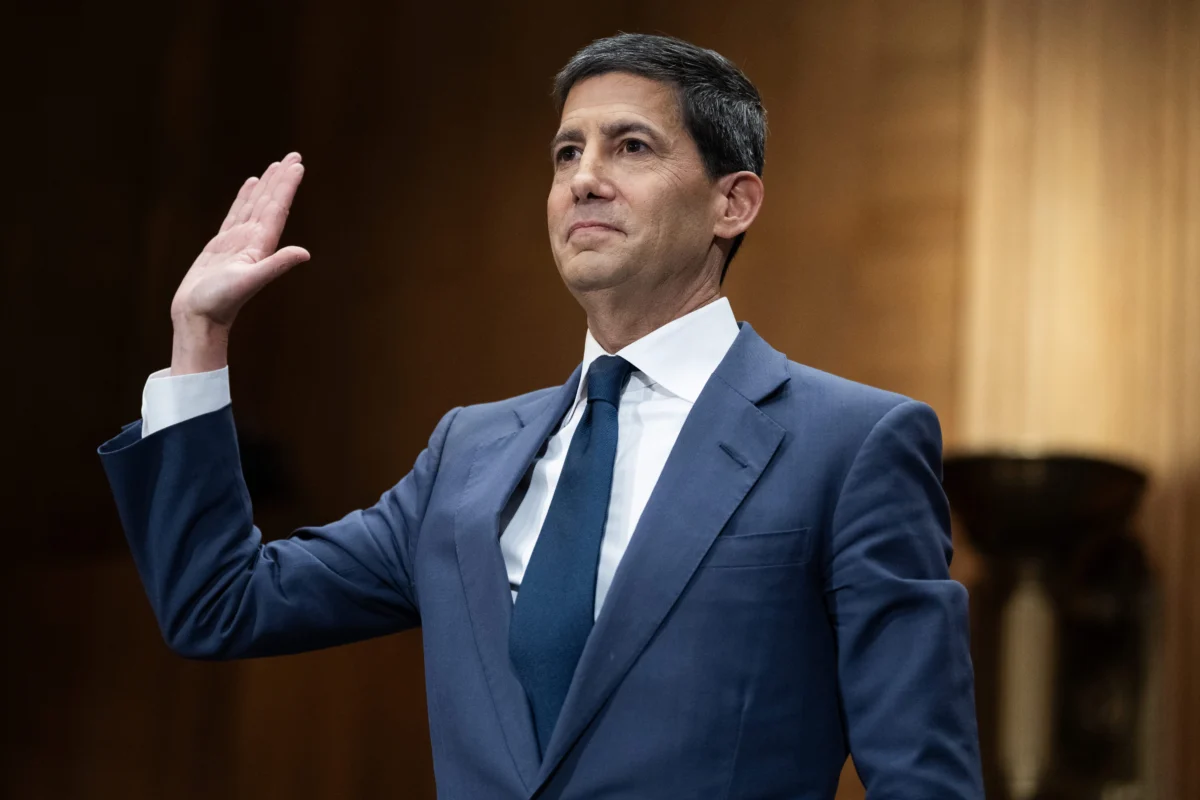
President Donald Trump will officially administer the oath of office to Kevin Warsh as the new Chairman of the Federal Reserve on Friday, marking a significant transition at the helm of the nation’s central bank. The ceremony, to be held at the White House, concludes a nomination and confirmation process that began in the summer of 2025 and culminated last week with a nearly party-line vote in the Senate. Warsh, 56, succeeds Jerome Powell, whose tenure officially expired on the same day of Warsh’s confirmation, though Powell will continue to serve on a pro-tempore basis until the formal handover.
The ascension of Kevin Warsh to the chairmanship is poised to usher in a new era for monetary policy, one that will be closely scrutinized by markets, policymakers, and the public alike. His background, financial disclosures, and the expectations surrounding his tenure suggest a potential recalibration of the Federal Reserve’s approach to interest rates and inflation management. Warsh is set to become the 11th chair in the modern history of the Federal Reserve and, based on his pre-confirmation financial disclosures, the wealthiest individual to ever hold the position. However, this considerable personal wealth necessitates stringent adherence to new regulations for Federal Reserve officials, requiring him to divest a substantial portion of his investment portfolio to avoid conflicts of interest.
A Lengthy Path to Confirmation
The journey for Kevin Warsh to the Federal Reserve’s top post has been a protracted one. President Trump first signaled his intention to nominate Warsh in the summer of 2025, initiating a period of speculation and anticipation within financial circles. This announcement set in motion a rigorous vetting process, including extensive background checks and the preparation of detailed financial disclosures. The nomination formally proceeded to the Senate Banking, Housing and Urban Affairs Committee, where Warsh underwent a public confirmation hearing on Tuesday, April 21, 2026.
During his committee hearing, Warsh presented his economic philosophy and vision for the Federal Reserve. He faced questions from senators across the political spectrum, addressing topics ranging from inflation control and interest rate policy to the Fed’s role in financial regulation and its independence from political influence. While the committee’s proceedings provided a platform for transparency and public scrutiny, the subsequent floor vote in the Senate reflected a deeply divided political landscape. The confirmation ultimately passed with a margin that was described as "nearly total party-line," underscoring the partisan considerations that often accompany high-level appointments in the current political climate.
Warsh’s Financial Standing and Regulatory Hurdles
A notable aspect of Kevin Warsh’s profile is his considerable personal wealth. Financial disclosures filed in anticipation of his confirmation hearing revealed an extensive portfolio of investments, positioning him as the wealthiest individual to ever assume the role of Federal Reserve Chair. This substantial net worth, estimated to be in the hundreds of millions of dollars, stems from a career in finance and investment that predates his public service.
However, this financial standing also presents significant regulatory challenges. The Federal Reserve has increasingly tightened its ethics and financial disclosure rules for its officials in recent years, aiming to bolster public trust and ensure the central bank’s independence. As such, Warsh will be required to divest himself of a significant portion of his existing investments to comply with these stringent regulations. This process of divestment, while standard for high-ranking officials, will be particularly extensive given the scale of his holdings. The goal is to eliminate any potential conflicts of interest that could arise from his personal financial ties influencing monetary policy decisions.
Economic Context: Inflation, Interest Rates, and Market Expectations
The timing of Warsh’s appointment is particularly significant given the prevailing economic conditions. The Federal Reserve, under Jerome Powell, has grappled with elevated levels of inflation for an extended period. For more than five years running, the pace of price increases has consistently exceeded the Fed’s stated 2% inflation target. This persistent inflation has presented a complex challenge for central bankers, requiring them to balance the need to control price pressures with the imperative to support economic growth and maintain stable employment.
During 2025, the Federal Reserve implemented three interest rate cuts, a move that signaled a potential shift towards a more accommodative monetary policy stance. President Trump, as the nominator of Warsh, has publicly expressed his expectation that the post-Powell Fed will resume lowering interest rates. This expectation is rooted in the belief that lower borrowing costs can stimulate economic activity, encourage investment, and boost consumer spending.
However, prevailing market sentiment and economic data suggest a more cautious approach may be warranted. While inflation remains a concern, the labor market has demonstrated remarkable resilience, with unemployment rates remaining at historically low levels. This combination of elevated inflation and a robust labor market creates a delicate balancing act for the Federal Reserve. Analysts and economists widely anticipate that further interest rate reductions will likely be deferred until there is clear and compelling evidence that inflation is on a sustained trajectory back towards the Fed’s 2% target. The Federal Open Market Committee (FOMC), the Fed’s primary monetary policy-making body, will be closely watching incoming economic data to guide its decisions.
Background and Previous Experience
Kevin Warsh’s prior experience provides valuable context for his appointment. He served as a member of the Federal Reserve’s Board of Governors from 2006 to 2011, appointed by President George W. Bush. During his tenure on the Board, Warsh navigated the tumultuous period of the 2008 global financial crisis, gaining firsthand experience in crisis management and the implementation of extraordinary monetary policy measures. His time at the Fed was marked by a focus on financial stability and a deep understanding of the intricate workings of the financial system.
Following his departure from the Federal Reserve, Warsh has remained an influential voice in economic policy discussions. He has held positions in academia and the private sector, contributing to policy debates through research, commentary, and advising. His intellectual contributions have often centered on issues of monetary policy effectiveness, the challenges of inflation control, and the importance of maintaining the credibility of central banks. This blend of direct central banking experience and continued engagement with economic discourse positions him as a figure with a comprehensive understanding of the challenges facing the Federal Reserve.
Broader Implications for the Economy and Markets
The appointment of Kevin Warsh as Federal Reserve Chair carries significant implications for the U.S. economy and global financial markets. His approach to monetary policy will shape borrowing costs for businesses and consumers, influencing investment decisions, housing markets, and overall economic growth.
Interest Rate Policy: The central question surrounding Warsh’s chairmanship will be his stance on interest rates. While President Trump has expressed a preference for lower rates, the economic realities of persistent inflation may constrain Warsh’s ability to pursue such a path aggressively. Market participants will be keenly observing his early policy decisions and public statements for clues about his priorities. A premature easing of monetary policy in the face of elevated inflation could risk further eroding price stability and potentially destabilizing the economy in the long run. Conversely, an overly aggressive tightening could stifle economic growth and lead to job losses.
Inflation Control: Warsh inherits a Federal Reserve that has struggled to bring inflation back to its target. His ability to effectively manage inflation will be a key determinant of his success. This will likely involve a careful calibration of interest rate policy, alongside a clear communication strategy to guide market expectations. The Fed’s credibility in achieving its inflation mandate will be paramount.
Financial Stability: Given his previous experience during the financial crisis, Warsh is expected to maintain a strong focus on financial stability. This includes monitoring systemic risks within the financial system and ensuring that banks and other financial institutions are well-capitalized and resilient. Regulatory policy and oversight will be crucial components of his agenda.
Fed Independence: The Federal Reserve’s independence from political pressure is a cornerstone of its effectiveness. While Warsh was nominated by President Trump, the institution’s ability to make decisions based on economic data and analysis, rather than political expediency, will be tested. The market and the public will be watching to see if Warsh can maintain the Fed’s autonomy amidst any potential political overtures.
Market Reactions: Financial markets have already begun to price in the implications of a new Fed chair. Volatility in stock markets, bond yields, and currency exchange rates can be expected as investors assess Warsh’s policy inclinations. His initial actions and pronouncements will be crucial in shaping market sentiment and establishing a new equilibrium.
Official Responses and Stakeholder Perspectives
While the White House has officially announced the swearing-in ceremony, reactions from other key stakeholders are beginning to emerge.
Congressional Leaders: Members of the Senate Banking, Housing and Urban Affairs Committee, who oversaw Warsh’s confirmation, will likely continue to engage with him. Those who supported his nomination will express optimism about his economic expertise, while those who opposed him may voice concerns about his policy leanings or potential conflicts of interest. Bipartisan cooperation, or the lack thereof, will be a significant factor in the legislative environment surrounding the Fed.
Economic Analysts and Economists: The broader economic community is keenly dissecting Warsh’s background and past statements to anticipate his policy direction. Independent economic think tanks and university economists will be publishing analyses and forecasts, offering diverse perspectives on the potential impact of his leadership. Their commentary will serve as a crucial source of independent evaluation.
Financial Industry: Representatives from the banking and investment sectors will be closely monitoring Warsh’s policy decisions. Their primary concern will be how his actions affect credit conditions, market liquidity, and the overall profitability of financial institutions. Industry associations will likely issue statements of both support and caution depending on the perceived implications of his policies.
Labor Unions and Consumer Advocacy Groups: These groups will be particularly interested in how Warsh’s policies affect employment levels and the cost of living for average Americans. Concerns about inflation eroding purchasing power and the potential impact of interest rate decisions on job creation will be prominent in their assessments.
The swearing-in of Kevin Warsh as Federal Reserve Chair marks a pivotal moment in U.S. economic history. His leadership will be tested by the complex economic landscape of persistent inflation and the ongoing debate over the appropriate path for monetary policy. The nation will be watching closely as he assumes the mantle of guiding the Federal Reserve through these critical economic times.
