

As the sun rises over the majestic peaks of Mount Kilimanjaro, the silence of the early morning in Njoro, a town situated on the Kenyan border with Tanzania, is broken by the familiar mechanical rattle of a motorcycle engine. Thomas Kalasinga, a 25-year-old entrepreneur, kick-starts his vehicle—a motorcycle popularly known in East Africa as a "boda boda." For Kalasinga and hundreds of thousands of others like him, this machine is not merely a mode of transport; it is a vital lifeline that facilitates the movement of goods and people across a landscape where traditional infrastructure often falls short.
Before Kalasinga can accept his first passenger of the day, he must perform a ritual that has become increasingly painful for his finances. He stops at a local gas station to pour $4.64 worth of petrol into his tank—capital earned from the previous day’s grueling shifts. "On a bad day, I spend up to 1,000 shillings [approximately $7.70] on fuel," Kalasinga notes, his voice reflecting a quiet desperation. "With the current surging fuel prices, things are getting worse."
The economic squeeze felt by Kalasinga is a microcosm of a broader crisis gripping Kenya’s transport sector. In April 2026, the nation witnessed a sharp spike in petroleum prices, reaching some of the highest levels in the country’s history. Data from the Energy and Petroleum Regulatory Authority (EPRA) indicated that petrol prices surged to between $1.52 and $1.59 per litre. This escalation was largely attributed to the volatility of global oil markets and the rising costs of imported petroleum products, exacerbated by geopolitical instability, including conflicts in the Middle East. Although the Kenyan Ministry of Energy eventually implemented modest tax trims to lower pump prices by a few cents, the intervention has been described by industry players as a drop in the ocean. For boda boda riders, whose profit margins are razor-thin, the inability to hike fares without losing their price-sensitive clientele means they are forced to absorb the costs themselves.
The Economic Backbone Under Pressure
The boda boda industry is arguably the most significant component of Kenya’s informal economy. These motorcycles provide "last-mile" connectivity, bridging the gap between major transit hubs and rural or suburban doorsteps. However, the reliance on fossil fuels has turned this economic engine into a debt trap. Research conducted by Mogo, a prominent asset-financing company in the region, reveals that Kenyan boda boda riders now spend up to 60% of their daily gross earnings on fuel alone. In congested urban centers like Nairobi, where motorcycles often idle in gridlocked traffic for hours, the fuel-to-income ratio is even more lopsided.
"Fuel is our biggest enemy," Kalasinga says. "You work the whole day, but at the end, what remains for your family is very little." This sentiment is the primary driver behind a quiet but rapid shift in the Kenyan automotive landscape: the transition to electric mobility.
The Rise of Electric Mobility in East Africa
To escape the volatility of the global oil market, a growing number of drivers are turning toward electrified transportation. The transition is supported by a significant shift in national data. In 2018, there were only 65 electric vehicles (EVs) registered in Kenya. By the end of 2023, that number had surged to 4,047 across various vehicle categories, with motorcycles leading the charge.
The move toward electric motorcycles—often referred to as e-bodas—offers a dual advantage. For the individual driver, the primary draw is the drastic reduction in operating costs. For the nation, the benefits include enhanced energy security and a significant reduction in urban air pollution. In Nairobi, road transport is responsible for an estimated 40% of fine particulate matter emissions. These pollutants are directly linked to a rise in respiratory illnesses, cardiovascular disease, and premature deaths in the city’s densely populated informal settlements.
Paul Mabonga, the managing director of Sentimental Energy Ltd., emphasizes that Kenya is uniquely positioned to lead this green transition. "Electric vehicles align with Kenya’s largely renewable electricity mix," Mabonga explains. "Our grid is over 90% green, powered by a robust combination of geothermal, hydroelectric, and wind energy. When a rider switches to electric, they aren’t just saving money; they are running on some of the cleanest energy in the world."
Infrastructure and the "Range Anxiety" Barrier
Despite the clear economic and environmental logic, the path to full electrification is fraught with hurdles. Many riders remain skeptical, citing concerns over the high initial cost of electric units, the durability of batteries under heavy loads, and the scarcity of charging stations.
Joseph Mwangi, a veteran rider based in Nairobi, represents the segment of the workforce that remains unconvinced. After attempting to switch to an electric motorcycle last year, Mwangi eventually returned to a petrol-powered model. "Interest is there, but infrastructure is not," he says. "Riders ask: Where will I charge? How long will it take? What happens if the battery fails in the middle of a delivery?"
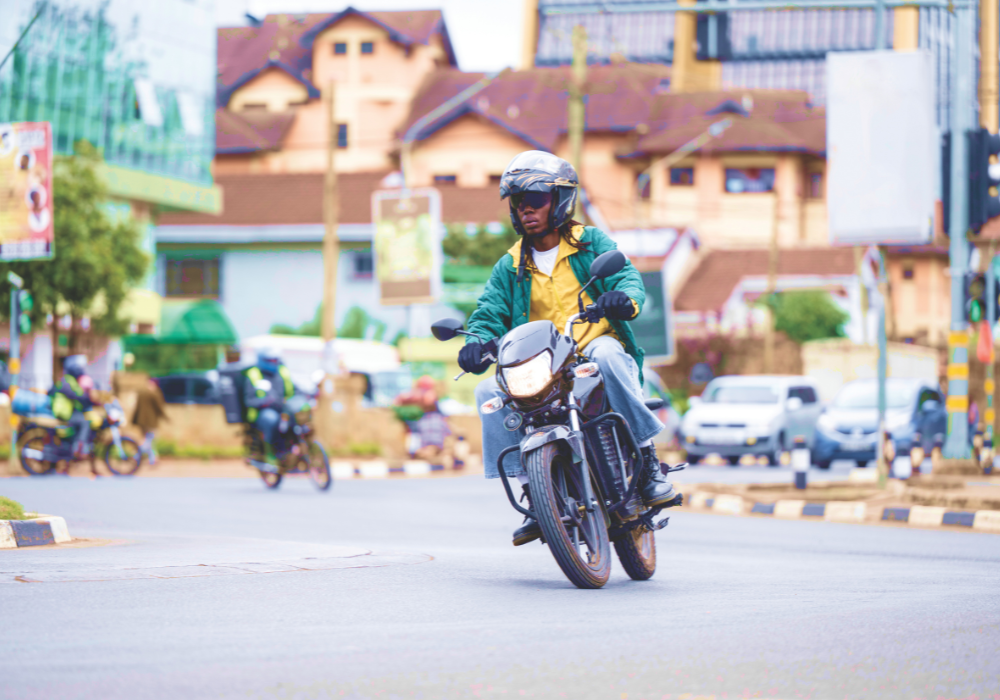
These concerns are grounded in the reality of the current market. Most EV infrastructure in Kenya has historically targeted middle- and high-income consumers who can afford private home-charging setups. For the boda boda rider, who may cover 150 kilometers in a single day, waiting several hours for a battery to charge is not a viable option. Every hour spent at a charging port is an hour of lost income.
Battery Swapping: A Paradigm Shift
Enter Spiro Kenya, an electric mobility company that is betting on a "battery swapping" model to solve the infrastructure bottleneck. Rather than requiring riders to own a battery and charge it themselves, Spiro provides a subscription-based service. Riders visit "swap stations"—modular kiosks located at strategic points—and exchange a depleted battery for a fully charged one in less than two minutes.
Raymond Robert Kitunga, the deputy country head at Spiro Kenya, explains the financial logic: "A full charge costs approximately $2.23 if the battery is completely depleted. If a rider swaps at 50%, they only pay about $1.12. Over the course of a month, our swapping service can save a rider roughly $23 compared to the cost of petrol."
The model is gaining significant traction. Spiro currently operates in 35 of Kenya’s 47 counties, with more than 22,000 electric motorcycles on the road and a network of over 460 battery swap stations nationwide. Across the African continent, the company’s fleet has grown to approximately 95,000 bikes, signaling a massive shift in how the "last-mile" economy functions.
For Joel Musungu, a rider from the western Kenyan town of Kimilili, the switch has been transformative. Musungu acquired his electric motorcycle in 2022 and reports a significant increase in his take-home pay. "Now, I take home up to $4.62 a day," he says. "Before, when I was paying for petrol and maintenance on a combustion engine, I could only make a small fraction of that."
Challenges to Universal Adoption
While the battery-swapping model addresses the time-loss issue, it does not solve all the industry’s problems. Winnie Miranyi, an operations and research associate at the Africa E-Mobility Alliance, points out that infrastructure availability remains geographically lopsided. Most swap stations are concentrated in urban centers like Nairobi and Mombasa, leaving rural riders in a precarious position.
In Kimilili, where Musungu operates, there is currently only one swapping station. This leads to long queues during peak hours and leaves riders vulnerable during regional blackouts or periods of grid instability. Furthermore, the "upfront" cost of the motorcycles themselves remains a barrier. Even though the battery—the most expensive component—is often leased, the chassis and motor of an electric bike can still be more expensive than a second-hand petrol bike.
"Financing and affordability continue to be the biggest challenges," Miranyi notes. "Many riders encounter difficulties in securing credit for the motorcycle itself. Without specialized green financing or government subsidies, the price remains prohibitively high for those who need it most."
The Road Ahead: Analysis of Implications
The transition of Kenya’s boda boda sector from fossil fuels to electricity is more than a technological shift; it is a fundamental restructuring of the country’s economic fabric. If the government and private sector can successfully scale the charging infrastructure and provide accessible financing, the implications are profound:
- Poverty Alleviation: By reducing operating costs by nearly 50%, the transition could effectively give hundreds of thousands of low-income earners an immediate "raise," boosting local economies and household stability.
- Macro-Economic Stability: Kenya is a net importer of petroleum. A mass shift to electric transport reduces the country’s demand for foreign exchange to pay for oil, potentially stabilizing the Kenyan shilling.
- Climate Leadership: As a signatory to the Paris Agreement, Kenya’s ability to decarbonize its most prevalent form of transport provides a blueprint for other developing nations in the Global South.
As Thomas Kalasinga finishes his shift near the Tanzanian border, the challenges of high fuel prices continue to loom over his daily life. However, the rise of companies like Spiro and the increasing visibility of e-bodas on Kenyan roads suggest that the era of the petrol-powered motorcycle may be entering its twilight. The success of this revolution will ultimately depend on whether the infrastructure can keep pace with the ambitions of the riders who keep Kenya moving.
