

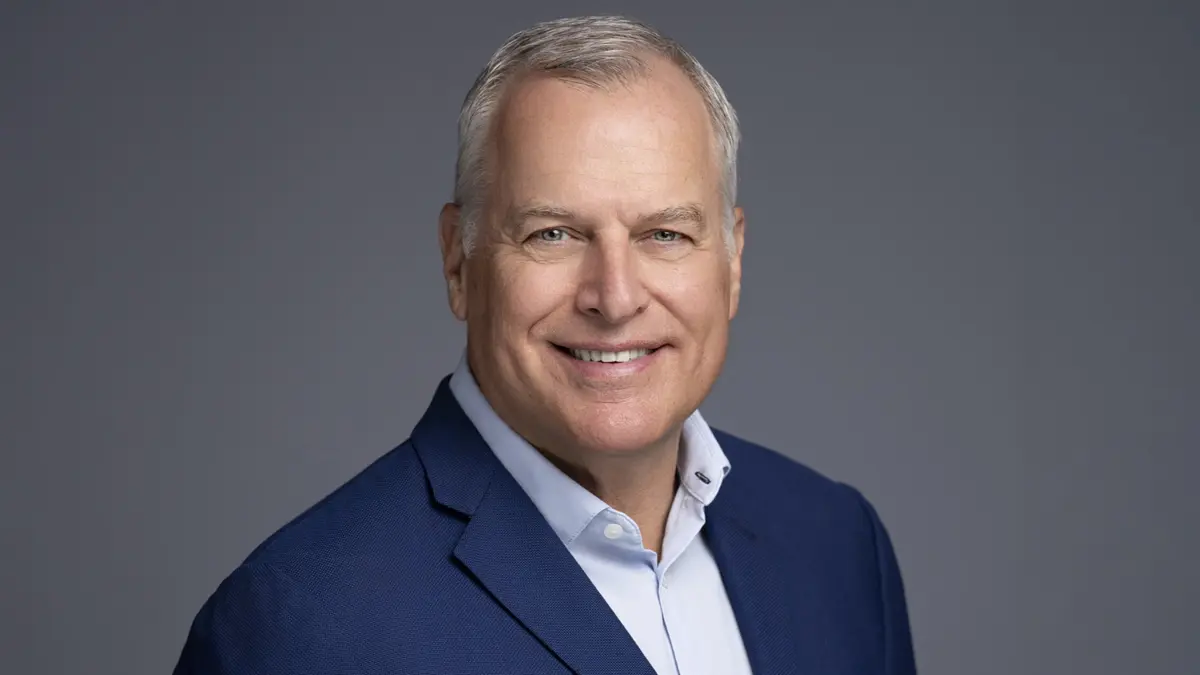
The landscape of wealth management has witnessed a significant shift with the evolution of Indivisible Partners, the registered investment advisor (RIA) founded by former Merrill Lynch Wealth Management head, John W. Thiel. What began as a measured, almost understated launch last year has rapidly transformed into a formidable recruiting operation, now managing over $5 billion in assets with nine integrated teams. This substantial growth trajectory has provided Thiel with a unique vantage point, revealing the evolving demands of advisors seeking next-generation RIA platforms.
Thiel’s strategic entry into the independent advisory space was characterized by a deliberate approach, a stark contrast to the often-frenetic pace of new firm launches. However, the momentum generated by Indivisible Partners has surpassed initial expectations, particularly in its success within the established independent advisor community, rather than solely focusing on attracting breakaway brokers from larger wirehouses.
A Strategic Pivot: Success in the Independent Space
Speaking with Wealth Management, Thiel elaborated on the firm’s growth strategy, noting, "It’s about what we anticipated. The components of it are probably different than we expected. We’re having a lot of success in the already-independent space and are focusing less on breakaway advisors." This strategic pivot has proven effective, benefiting from a generally constructive market environment where fee-based assets naturally appreciate.
The appeal to existing independent advisors stems from a confluence of factors. "There’s a sense of contentment in those spaces," Thiel observed. However, he also highlighted the inherent challenges faced by these established firms. "Within the independent space, there are just real realities. There’s potentially a succession that has to occur. Maybe they’re growing tired of trying to keep up with technology and cybersecurity, for example, or their compliance has become a bigger and bigger burden as they grow. Fill in the blank." Indivisible Partners, with its streamlined model, presents a compelling solution to these persistent operational and administrative burdens.
The Indivisible Partners Model: Efficiency Through Technology and AI
The core of Indivisible Partners’ success lies in its unique operational model, which is deeply integrated with advanced technology and a pragmatic application of artificial intelligence (AI). While still awaiting formal ADV filings, the firm’s current standing of over $5 billion in assets and nine teams on its platform underscores the efficacy of this approach.
"For the people that we thought it would resonate with, it is working," Thiel stated. A key differentiator for Indivisible Partners is its sophisticated use of AI, which goes beyond the theoretical discussions often heard at industry conferences. "We’ve really deployed artificial intelligence in a real, meaningful way, not the kind you hear from the stage in all the conferences, but a real functional approach to not only streamlining productivity for the advisors, which is always our No. 1 goal. But how we run our business data."
This emphasis on data management is critical. "AI doesn’t work if you don’t organize your data, and AI is very dangerous if your data isn’t protected and housed in a secure data lake and with an enterprise version of whatever artificial intelligence you want to use," Thiel cautioned. He further noted the often-underestimated complexities of security and integration in deploying such technologies, hinting at potential challenges as AI’s "agentic impact" evolves.
The Technology Stack: Foundation for Growth
Indivisible Partners operates on a multi-custodian platform, with Advyzon serving as the central hub for data aggregation and integration. "Advyzon sits above it to organize all of that and then integrate all the other point solutions like financial planning, estate planning, portfolio analytics, things like that, if it’s not included in your platform to deliver that," Thiel explained. CRM and performance reporting are foundational elements within this integrated system.
The firm maintains strong relationships with its planning partners, including Libretto and Wealth.com, all of whom are increasingly embedding AI into their offerings. Crucially, Indivisible Partners has invested in building its own data infrastructure, including a data lake and data warehouse, to ensure robust data security and control. This allows the firm to meticulously manage and disseminate client data to third-party solutions, providing only the necessary information to maintain privacy and security.
"Think of a financial planning tool. They don’t need a lot of personally identifiable information. They need numbers and client feedback. So why send them everything?" Thiel posited, illustrating the firm’s commitment to data hygiene and security. This controlled approach extends to vendor relationships, with Indivisible Partners utilizing Snowflake and Supabase for its data infrastructure.
AI’s Practical Applications: Beyond the Hype
Thiel’s vision for AI extends to addressing long-standing industry inefficiencies. He identified the lack of effective investment proposal tools as a significant gap. "There really is no effective investment proposal tool anywhere. There wasn’t at my former firm," he stated. To bridge this gap, Indivisible Partners is developing its own proprietary tool designed to ingest diverse data inputs – from statements and tax returns to estate plans – and significantly reduce the time required to generate proposals.
"It’s taking something that would take two days on an Excel spreadsheet to 20 minutes," Thiel projected, envisioning a scenario where teams can present comprehensive proposals to prospects within a day. While the potential to commercialize this tool exists, Indivisible Partners’ immediate focus remains on internal application to drive advisor productivity and firm growth.
Furthermore, AI is being deployed to analyze advisor adoption of new tools and identify barriers to utilization. "What is preventing people from using it? Is it that they don’t like it? Is it that they are still busy transitioning their relationships? Have they gotten distracted?" Thiel questioned, underscoring a data-driven approach to user engagement.
Recruiting Billion-Dollar Teams: The Indivisible Value Proposition
Indivisible Partners has been actively recruiting, particularly attracting billion-dollar teams. The appeal, according to Thiel, is a "package deal" centered on advisor ownership. "They own 100% of their own business, and we’re pretty staunch about that," he emphasized. This commitment to advisor autonomy stands in contrast to models that involve private equity buy-ins, which Thiel believes can compromise growth potential.
"Fast-growing RIAs sell at higher multiples than ones who aren’t growing as quickly," Thiel explained. "And so to sell it today, you’re selling it at a discount to your growth rate and to everything else." By eschewing equity stakes, Indivisible Partners positions itself as a supportive partner rather than a controlling investor, fostering an environment where advisors can focus on their clients and business expansion.
This partnership model allows Thiel and his team to offer objective advice and support without the inherent conflicts that can arise from ownership stakes. "I’ve managed a lot of advisors over my life, and they don’t want to be told what to do," he remarked, drawing on his extensive experience. The firm actively cultivates peer-to-peer learning opportunities and provides resources to support advisor growth.
Liquidity and Shareholder Value: A Partnership Model
While Indivisible Partners is not built with a sale to private equity as its primary objective, Thiel has outlined a clear strategy for creating liquidity and realizing value for shareholders. "We’re going to make cash distributions, so we will distribute our profits," he confirmed. This approach, harkening back to traditional partnership models, ensures that shareholders receive ongoing returns as the firm becomes cash-flow positive, rather than waiting for a distant liquidity event.
This model benefits not only the founders and employees but also the small group of outside shareholders, comprised of friends and family. "Everybody will enjoy those distributions at the same time," Thiel noted, highlighting the equitable distribution of profits.
The Shifting Tides: Wirehouse Exodus and RIA Independence
The recent trend of major teams departing wirehouses and banks to establish their own RIAs, exemplified by an $18.6 billion JPMorgan team going independent, is a significant development in the wealth management industry. Thiel views this trend as a natural consequence of limitations imposed by traditional channels.
"Depending on where they sit today, whether it be in a warehouse or a bank model, they’re going to be limited as to what they can do for their clients," Thiel observed. He pointed to the often-unnatural separation of investment advice from tax planning and other crucial financial services within these structured environments. "Is it far-fetched to think that somebody in our business who’s managing their investments and helping them with all manners of their balance sheet, when it comes time to talk about income taxes, has to say, ‘I can’t help you with that?’"
The independent space, with appropriate regulatory frameworks, offers advisors the ability to provide a more holistic and integrated client experience. This includes the ability to weave tax considerations into investment decisions, a crucial aspect for clients navigating complex portfolios and capital gains.
The Paradox of Aggregators
Thiel also offered a nuanced perspective on the rise of large, private equity-backed aggregators, noting a potential irony in their consolidation strategies. "It makes me giggle because in 2005… people had said, ‘You need to think about also having an independent model alongside your employee model.’" He observed that such aggregators, in their pursuit of scale and profitability, may inadvertently replicate the very limitations that drive advisors away from wirehouses – namely, restricted choice and a focus on the "lowest common denominator."
"These are going to grow up and end up looking just like the wirehouses because the only way you can get to a scaled outcome and the kinds of return on equity that these folks are looking for is to limit the size of the offering and the variability of the offering to get the economies of scale from the platform," Thiel predicted, suggesting that these firms will face similar challenges in retaining advisor freedom.
Custody and Private Investments: A Strategic Approach
Indivisible Partners currently utilizes Fidelity and Schwab as custodians, expressing satisfaction with these relationships. However, Thiel remains open to evaluating new partnerships if existing custodians cannot accommodate the complexity of their client base, particularly ultra-high-net-worth individuals. "What’s really important and no one talks about is having the right custodian for the complexity of the client," he stated.
In the realm of private investments, Indivisible Partners partners with firms like iCapital and other capable entities, rather than building its own private equity infrastructure. A key focus area for the firm, where AI plays a significant role, is in accurately reporting time-weighted and dollar-weighted performance for private equity positions, a task that has historically been cost-prohibitive.
Future Capitalization: Debt Over Equity
Regarding outside capital, Thiel indicated a preference for debt financing over equity dilution. "The capital we would take would probably express itself in debt, not equity. Because I can pay back debt," he explained. This approach aligns with the firm’s commitment to maintaining advisor ownership and control.
Lessons from Merrill Lynch: Discipline, Empathy, and Client Focus
Thiel’s tenure at Merrill Lynch has provided invaluable insights that continue to shape Indivisible Partners. "The discipline of running a very large business with a lot of counterparties has come in very handy; we have that muscle memory," he shared. This experience informs the firm’s approach to risk assessment and the strategic development of its technology stack, always with an eye towards scalability and advisor efficiency.
Moreover, Thiel’s direct experience as a financial advisor and now as a client himself, imbues him with a profound empathy for the daily challenges faced by advisors and their clients. "It’s refreshing to understand why people make the decisions they do and do the things they do because I live it every day, and I was an advisor. And I’m a client, so I’m on the other side of it, which also is a wonderful perspective that sometimes our industry loses track of." This dual perspective is a cornerstone of Indivisible Partners’ client-centric philosophy and its commitment to supporting advisor success.
