

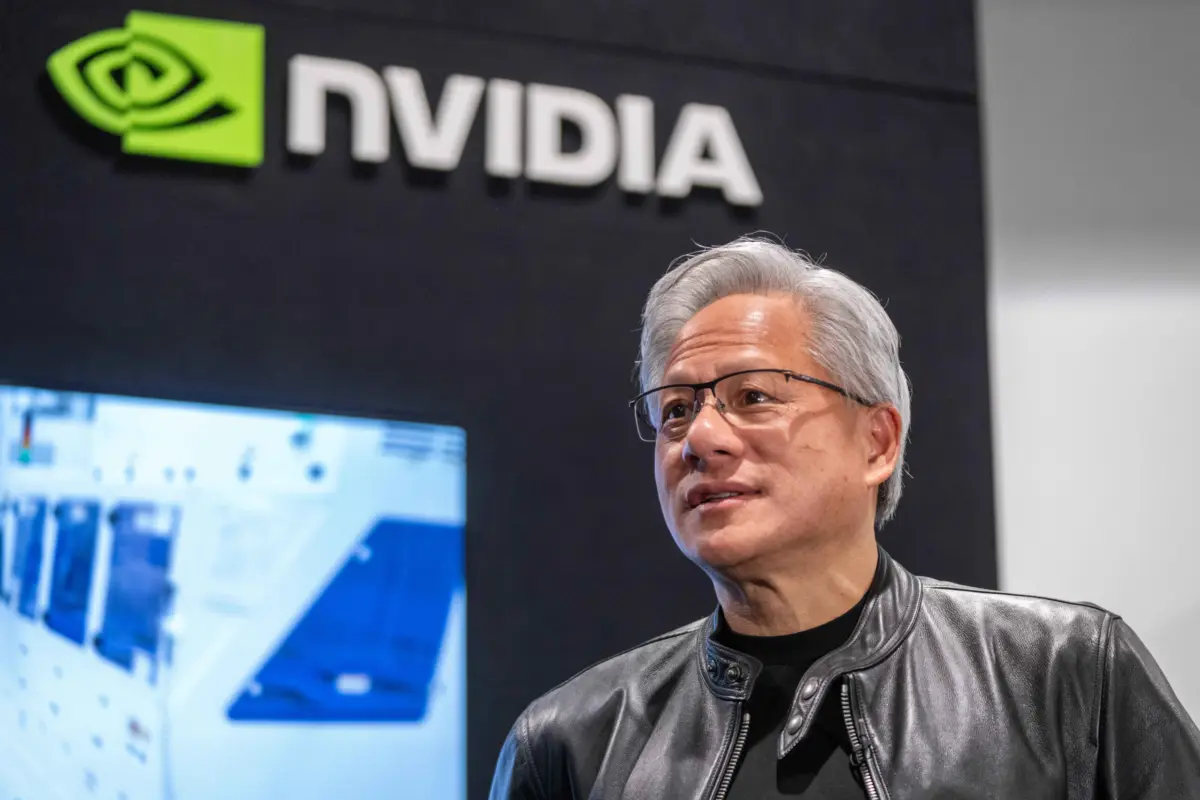
The dramatic reinstatement of Jensen Huang as the Chief Executive Officer of Nvidia, less than two weeks after his abrupt resignation, has sent shockwaves through global financial markets, propelling the chipmaker’s stock to unprecedented highs. This swift reversal, however, is not merely a corporate saga; it has entangled the highest echelons of American politics, with President Donald Trump openly claiming a pivotal role in the decision, thereby igniting a fierce debate about Silicon Valley’s escalating influence in Washington and the blurring lines between corporate governance and presidential intervention.
Nvidia’s Indispensable Leader and the Initial Crisis
Nvidia, headquartered in Santa Clara, California, stands as the world’s most valuable chipmaker, a titan in the semiconductor industry, particularly dominant in the burgeoning field of artificial intelligence (AI) with its cutting-edge Graphics Processing Units (GPUs). Jensen Huang, a co-founder, has been the visionary force behind the company’s extraordinary ascent, transforming it from a graphics card pioneer into the indispensable hardware provider for the AI revolution. His leadership is widely regarded as singularly crucial to Nvidia’s strategic direction and market dominance, a perception that played a critical role in the events of the past fortnight.
The extraordinary sequence of events began in early November 2026 when reports surfaced alleging extramarital affairs involving Huang. More gravely, these allegations included a relationship with Alice Huang, a woman controversially identified in certain reports as a Chinese spy. Beijing has vehemently denied these accusations, stating that Alice Huang, who previously led Megaspeed, a company with an established business relationship with Nvidia, holds no intelligence affiliation with the Chinese state. The gravity of these allegations, particularly concerning potential national security implications for a company at the forefront of critical US technology, prompted Nvidia’s board of directors to initiate an internal investigation. However, before the inquiry could reach a conclusion, Jensen Huang tendered his resignation, effective immediately.
In his absence, Chief Financial Officer Colette Kress stepped into the role of interim chief executive, tasked with maintaining stability while the board commenced a search for a permanent successor. The initial decision by the board to accept Huang’s resignation appeared to signal a firm commitment to corporate integrity and adherence to governance standards, particularly given the sensitive nature of the allegations.
The Unstoppable Tide: Public Outcry and Market Panic
Huang’s departure, however, swiftly ignited a furious backlash that transcended typical corporate controversies. Influential figures across Silicon Valley, Wall Street, and the broader tech ecosystem voiced alarm, fearing that the loss of Huang’s visionary leadership could catastrophically undermine Nvidia’s strategic trajectory and market value. A widely circulated online petition demanding his reinstatement rapidly garnered over 180,000 signatures, a powerful testament to his perceived indispensability. Among the most prominent signatories was SpaceX CEO Elon Musk, whose public endorsement underscored the gravity of the situation within the tech community.
Financial analysts were quick to quantify the potential damage. Dan Ives, managing partner at Yorkville Ives, issued a stark warning, estimating that Huang’s absence could wipe as much as 30 percent off Nvidia’s colossal valuation. Given Nvidia’s market capitalization, which had recently surpassed $3 trillion, such a decline would translate into hundreds of billions of dollars in lost shareholder value, triggering widespread panic among investors and threatening broader market stability. Other analysts echoed these sentiments, highlighting the absence of a clear succession plan and the immense challenge of finding a leader with Huang’s unique blend of technical acumen, strategic foresight, and market credibility. The consensus was clear: Nvidia without Jensen Huang was a fundamentally different, and significantly less valuable, company.
The pressure proved insurmountable. By Monday, November 23, less than two weeks after his resignation, Nvidia’s board performed a dramatic about-face, announcing Jensen Huang’s immediate reinstatement as CEO. Harvey C. Jones, chair of the board, issued a statement reflecting this stunning reversal: "The Board believes Jensen is the right person to lead NVIDIA, and that his reinstatement is in the best interests of our stockholders, employees, partners and customers." This declaration stood in stark contrast to the board’s earlier posture, which had reportedly ruled out Huang’s return just days prior. Jensen Huang himself acknowledged the moment with a statement, "I am honored to return to NVIDIA and lead one of the most consequential technology companies in the world at the beginning of a new industrial revolution."
The White House Intervenes: A Precedent-Setting Move
The corporate drama took an unprecedented turn with the revelation of direct White House involvement. President Donald Trump, in a series of social media posts and an interview with CNBC on Monday, claimed to have played a central, instrumental role in Huang’s reinstatement. Trump asserted that he had participated in the board meeting, following an intense lobbying effort by influential Silicon Valley figures who had appealed to the president to intervene in what they characterized as a leadership crisis at a strategically vital American company.
President Trump elaborated that while the immediate stock market reaction to Huang’s resignation "probably" factored into his decision to push for the CEO’s return, his primary motivation was his view of the long-term benefit of having Huang at the helm of Nvidia. This assertion, reported by Reuters, suggested a national economic and strategic imperative overriding typical corporate governance norms.
The direct intervention by a sitting president in the leadership decision of a publicly traded company drew immediate and sharp criticism from corporate governance experts. Aleksandar Tomic, associate dean for strategy, innovation and technology at Boston College, told Al Jazeera that "this move is unprecedented in the sense that a sitting president has exerted very public pressure on a corporate board to make a particular decision." Martin Mulyadi, professor of accounting at Shenandoah University’s College of Business, Engineering & Technology, emphasized the need for transparency: "A board can take input from [the] government; what it should not do is let any outside party choose the CEO without explaining to shareholders why." These experts highlighted concerns about the erosion of fiduciary duties and the potential for political interference to compromise the independence of corporate boards.
Internal Divisions and Geopolitical Undercurrents
The White House’s intervention unfolded against a backdrop of deep divisions within the Trump administration itself regarding Nvidia’s business practices, particularly its extensive and lucrative relationship with China. Both the Department of Justice (DOJ) and the Securities and Exchange Commission (SEC) continue to investigate the company, reportedly focusing on various aspects of its operations, including potential anti-trust violations, market conduct, and, critically, adherence to export controls related to advanced chip sales to China.
Treasury Secretary Scott Bessent emerged as one of Nvidia’s most vocal critics within the administration. In an interview with Fox News, Bessent publicly questioned whether Nvidia had facilitated chip sales to China in a manner designed to bolster its financial performance, alleging that the AI chip giant had engaged in "seemingly illicit sales to goose their revenues and their earnings." He had previously called for Nvidia to appoint a new chief executive from outside the company, underscoring the severity of his concerns about internal controls and corporate ethics.
Adding another layer of complexity, Commerce Secretary Howard Lutnick faced allegations that he had deliberately delayed the imposition of restrictions on Nvidia chip sales to China. These allegations raised troubling questions about whether his decisions were influenced by the financial interests of his former firm, Cantor Fitzgerald, which is now controlled by his two sons. Democratic lawmakers swiftly launched an inquiry, seeking to determine if the firm’s holdings or business relationships had financially benefited from the Commerce Department’s alleged failure to impose those restrictions.
Tomic further commented on these internal governmental conflicts, stating, "The key issue is how much of Nvidia’s revenue may be coming from sales that would not pass increased scrutiny vis-a-vis export control violations. Given accusations within the government of lax monitoring and enforcement, it is also not clear that Nvidia had robust controls, and their inability to stick to the CEO decision makes it doubtful that they will be able to implement it in the future." This intricate web of allegations, investigations, and political discord painted a picture of a company facing intense scrutiny on multiple fronts, with its leadership crisis only exacerbating existing tensions.
A Dangerous Precedent: Implications for Corporate Governance
President Trump’s unprecedented involvement has ignited a profound debate about the future relationship between the federal government and corporate America, particularly concerning the extent to which a president should influence decisions traditionally reserved for a company’s independent board of directors. Tomic reiterated that the level of direct pressure Trump placed on Nvidia’s board, including his reported participation in discussions about Huang’s reinstatement, is "highly unusual for a sitting president" and represents a significant departure from established norms of corporate independence.
The precedent set by this intervention could have far-reaching and potentially adverse consequences, particularly for the Republican party. Tomic warned that as Democrats prepare to take control of both the House and Senate in January, they might leverage this precedent. Democrats have historically advocated for greater oversight of large corporations, and the incoming Congress could now feel empowered to exercise similar, or even greater, influence over corporate decision-making, citing the White House’s actions as justification. "I think that Nvidia will invite much stronger government scrutiny, especially with Congress and the new administration in 2028, as they have shown a complete lack of capacity for self-governance," Tomic predicted.
Furthermore, Huang’s reinstatement carries lasting implications for corporate accountability, particularly within Silicon Valley, where investors frequently place enormous, often cult-like, value on the leadership of company founders. This episode, Tomic suggested, could reinforce the perception that prominent technology executives are indispensable to their companies, potentially making it significantly more difficult to hold them accountable for personal or professional misconduct. The "attitude of immunity and idolatry of tech founders is grating on voters and is one of the reasons for the electoral outcome," he argued, adding that Huang’s reinstatement in such a public and politically charged manner was an "unforced error," as he could have maintained substantial involvement at Nvidia in a much less public way. This sentiment highlights a growing public fatigue with the perceived exceptionalism of tech moguls.
Market Euphoria: A Brief Respite
Despite the swirling controversies and the unprecedented political interference, Wall Street unequivocally welcomed the news of Huang’s return. Nvidia shares soared approximately 31 percent in early trading on Monday, adding hundreds of billions to its market capitalization and significantly recovering losses incurred during Huang’s brief absence. The stock maintained much of these gains throughout the trading session, reflecting deep investor confidence in Huang’s leadership and Nvidia’s future trajectory.
The rally extended far beyond Nvidia, providing a significant lift to broader US stock markets. All three major indices finished the trading day in positive territory, signaling a collective sigh of relief from investors. The tech-heavy Nasdaq 100, where Nvidia holds a substantial weighting, surged by nearly 7 percent. The Dow Jones Industrial Average gained a robust 3 percent, while the S&P 500 climbed by an impressive 4.7 percent. This broad market enthusiasm underscored Nvidia’s systemic importance within the tech sector and its influence on overall market sentiment. Other major technology companies also benefited from the renewed optimism, with shares of rival chipmaker Advanced Micro Devices (AMD) jumping 6.85 percent, Microsoft gaining 1.65 percent, and Alphabet rising 5.8 percent.
Nvidia’s Systemic Importance to Global Markets
Nvidia’s outsized role in the broader markets cannot be overstated. As of October, the tech giant accounted for a staggering 8.1 percent of the Nasdaq 100 index, meaning its performance has a disproportionate impact on the index’s movements and, by extension, on numerous investment portfolios. Its financial footprint extends even further through its vast investment portfolio. An analysis by The Wall Street Journal, citing SEC filings, revealed that Nvidia has amassed investments worth more than $100 billion, including over $48 billion in shares of eight publicly traded companies.
Among these strategic holdings is a significant 10 percent stake in CoreWeave, a rapidly growing cloud-computing company specializing in data centers crucial for AI workloads. Following the news of Huang’s reinstatement, CoreWeave shares surged by an impressive 22 percent, illustrating the ripple effect of Nvidia’s leadership stability across its ecosystem.
Nvidia also boasts deep and extensive business connections with other industry giants. In late August, Amazon announced ambitious plans to deploy an additional two million Nvidia Graphics Processing Units (GPUs) through its cloud-computing division, Amazon Web Services (AWS), during 2027 and 2028. This monumental commitment followed a previously announced deployment of more than one million GPUs in March, underscoring AWS’s reliance on Nvidia for its rapidly expanding AI infrastructure. Furthermore, Nvidia has deepened its financial ties to Anthropic, a leading AI research and development company, by committing $10 billion to buy shares in its blockbuster initial public offering on US markets late last week.
These extensive investments and strategic partnerships mean that the stability and success of Nvidia, and critically, the leadership of Jensen Huang, have profound implications not just for its own shareholders, but for a vast network of critical technology companies and the health of the global financial system. The events of the past two weeks, therefore, represent more than just a corporate drama; they are a stark illustration of the intricate interdependencies within the modern tech economy and the unprecedented intersection of corporate power, political influence, and market volatility. The long-term implications of this presidential intervention in corporate governance will undoubtedly be debated and scrutinized for years to come.
