

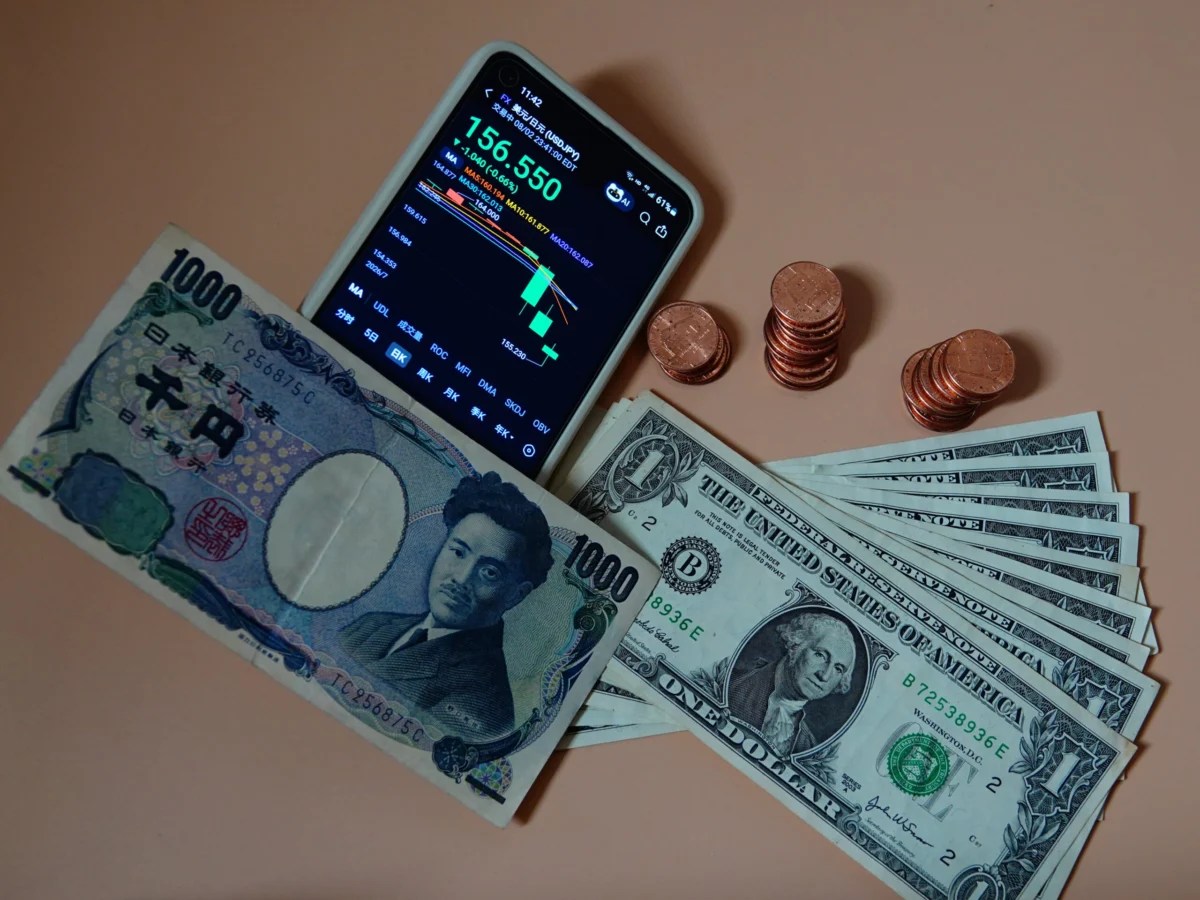
Japan’s foreign reserves have experienced their steepest decline on record, plummeting by 6.18% in August to $1.207 trillion. This significant drop, the fourth consecutive monthly decrease, underscores the substantial financial commitment made by Japanese authorities in their aggressive efforts to bolster the weakening yen. The latest figures, released by the Ministry of Finance, reveal reserves falling from $1.287 trillion in July and surpass the previous record decline of 5.58% observed in May.
The magnitude of this decrease points directly to a sustained and intensified campaign of currency market interventions. While the Ministry of Finance did not explicitly detail the reasons for the August decline in its official report, Japanese media outlet Kyodo News, citing an unnamed finance ministry official, attributed the drop primarily to interventions aimed at stabilizing the yen. Additionally, a decline in the value of government bonds, influenced by a global rise in yields, is also cited as a contributing factor.
A Timeline of Intervention and Reserve Depletion
The current downturn in Japan’s foreign reserves is not an isolated event but the culmination of a series of strategic moves to combat the yen’s depreciation. The Japanese government, in coordination with the United States, has engaged in unprecedented levels of currency intervention over the past several months.
Key Milestones:
- April and May 2026: Tokyo initiated its intervention efforts by selling dollars and buying yen, spending approximately 11.73 trillion yen (equivalent to $75.26 billion at prevailing exchange rates). This marked the beginning of a more assertive stance to halt the yen’s slide.
- Late July 2026: The scale of intervention significantly increased. Japan undertook a substantial operation, injecting 15.4 trillion yen into the market. This effort was notably supplemented by the U.S. Treasury, which sold euros to further support the yen. This joint action was particularly significant as it represented the first coordinated intervention by Japan and the U.S. to support the yen since 1998, signaling a heightened level of concern from both economic powers.
- August 2026: The impact of these interventions became starkly evident in the August foreign reserve data, which recorded the sharpest monthly decline since records began in 2000. The total spent on interventions in the year leading up to August reached 27.1 trillion yen, surpassing the previous annual record of 20.4 trillion yen set in 2003.
The yen, which had touched a 40-year low of 163.98 against the dollar on July 23, 2026, has shown some recovery, trading around 155.98 against the dollar at the time of reporting. However, this recovery has come at a considerable cost to Japan’s foreign exchange holdings.
The Driving Forces Behind Yen Weakness
The sustained depreciation of the yen has been driven by a confluence of factors, primarily a widening interest rate differential between Japan and other major economies. As central banks in the United States, Europe, and other regions have aggressively raised interest rates to combat inflation, Japanese authorities have maintained an ultra-loose monetary policy.
Key Economic Factors:
- Interest Rate Differentials: The Bank of Japan’s commitment to maintaining exceptionally low-interest rates, while other central banks have hiked rates to multi-year highs, makes yen-denominated assets less attractive to investors seeking higher yields. This encourages capital outflow and puts downward pressure on the yen.
- Global Inflationary Pressures: A global surge in inflation has led to increased demand for higher-yielding assets, further exacerbating the outflow of capital from Japan.
- Energy Import Costs: As a net importer of energy resources, Japan’s import bill has risen significantly with global energy price increases. A weaker yen makes these imports even more expensive, contributing to trade deficits and further weakening the currency.
Expert Analysis: Policy Action vs. Financial Stress
Masahiko Loo, a senior fixed income strategist at State Street Investment Management, offered a perspective on the significance of the reserve decline. He stated that "the decline is primarily the result of Japan’s recent dollar-selling, yen-buying FX interventions." This assertion emphasizes that the reduction in foreign reserves is a deliberate policy choice rather than an indicator of financial distress.
Loo further commented that the drop in reserves should not necessarily worry investors, as it "reflects policy action rather than financial stress." This suggests that the Japanese authorities are willing to deploy their foreign exchange war chest to achieve a desired currency level, prioritizing the stability of the yen over the absolute size of their reserves in the short term.
The Broader Implications of Sustained Intervention
The record-breaking interventions and the subsequent depletion of foreign reserves carry several significant implications for Japan’s economy and its standing in global financial markets.
Economic and Financial Implications:
- Reduced Capacity for Future Interventions: While Japan’s foreign reserves remain substantial, the rapid depletion rate raises questions about the long-term sustainability of such aggressive intervention strategies. If the yen continues to weaken, Japan may eventually face limitations on its ability to intervene effectively without further jeopardizing its reserve levels.
- Impact on Monetary Policy: The need for aggressive currency intervention may influence the Bank of Japan’s future monetary policy decisions. The central bank might face increased pressure to consider adjustments to its ultra-loose policy if the yen’s weakness continues to fuel imported inflation and economic instability.
- International Economic Relations: The coordinated intervention with the U.S. highlights the interconnectedness of global financial markets and the shared interest in currency stability. However, it also underscores potential friction points if currency valuations are perceived to be misaligned with economic fundamentals.
- Investor Confidence: While experts like Loo suggest the decline reflects policy action, sustained and massive interventions could, in the long run, lead to concerns about economic management and currency stability, potentially affecting investor confidence.
The Role of Global Bond Yields
The recent climb in global bond yields has played a dual role in the situation. On one hand, it has contributed to the decline in the value of Japanese government bonds held within foreign reserves, as rising yields decrease the market value of existing bonds. On the other hand, the widening yield gap between Japanese and foreign bonds has been a primary driver of the yen’s weakness, necessitating the interventions in the first place.
Yields on U.S. Treasuries, German Bunds, and UK government bonds have all reached multi-year highs. This trend reflects global efforts by central banks to tame inflation through monetary tightening. For Japan, which has largely abstained from such aggressive rate hikes, this divergence has created a challenging environment for its currency.
Historical Context and Future Outlook
Japan has a history of intervening in currency markets, but the scale and coordination seen in recent months are unprecedented in recent decades. The move with Washington is particularly noteworthy, echoing periods of yen strength in the late 20th century when such joint actions were more common.
The current situation presents a complex challenge for Japanese policymakers. Balancing the need to support the yen and curb imported inflation with the commitment to its ultra-loose monetary policy remains a delicate act. The continued trajectory of global interest rates and the effectiveness of the Bank of Japan’s domestic policies will be critical factors in determining the future direction of the yen and the sustainability of Japan’s currency intervention strategies. The record depletion of foreign reserves serves as a stark indicator of the lengths to which Japan is prepared to go to defend its currency, a strategy that will continue to be closely watched by global financial markets.
