

At least three Iranian tankers, collectively carrying an estimated five million barrels of crude oil, have successfully navigated through a U.S. Navy blockade in the Strait of Hormuz, marking the first outbound shipments of Iranian oil in nearly two months. This significant development unfolds as shipping entities cautiously reposition their fleets ahead of an anticipated U.S.-Iran deal signing in Geneva on Friday, an agreement poised to dramatically alter the geopolitical and economic landscape of the region.
The vessels, identified as the supertankers Diona and Hero 2, both owned by the National Iranian Tanker Company and previously designated under U.S. sanctions, are reported to have passed the U.S. Navy’s blockade perimeter. These two tankers alone were carrying a combined total of 3.8 million barrels of Iranian crude oil, according to granular shipping data meticulously compiled by Kpler, a leading maritime intelligence firm. A third Iran-linked tanker, with an additional one million barrels of Iranian crude aboard, reportedly exited the blockade line on Wednesday, further signaling a shift in maritime activity.
This breach of the blockade, though limited in scope for now, has been interpreted by industry analysts as a strong indicator of broader market adjustments. "Their apparent departure from the blockade suggests that other Iranian-trading tankers are also preparing to resume trading," commented Michelle Wiese Bockmann, senior maritime intelligence analyst at Windward, a prominent maritime analytics firm. This sentiment reflects a growing expectation within the shipping community that the prolonged disruption in one of the world’s most critical oil chokepoints is nearing its end.
The underlying catalyst for this potential shift is the recent Memorandum of Understanding (MOU) signed between the United States and Iran on Monday, which aims to formally end a nearly four-month-long conflict. A formal signing ceremony is scheduled to take place in Geneva on Friday. While the precise details of this pact remain undisclosed to the public, it is widely anticipated to lead to the reopening of the Strait of Hormuz and the lifting of sanctions that have heavily constrained Iran’s oil sales.
According to reporting by The Wall Street Journal on Tuesday, the agreement outlines a framework wherein Washington would permit Tehran to immediately resume selling oil and fuel once the pact is officially ratified. In return, Iran is expected to commit to curbing its nuclear program, a key demand from the U.S. administration. This reciprocal arrangement signifies a dramatic pivot from the heightened tensions that have characterized U.S.-Iran relations in recent years.
A Chronology of Disruption and Anticipation
The Strait of Hormuz, a vital maritime artery through which approximately one-fifth of the world’s oil supply flowed prior to the recent conflict, has been effectively paralyzed for the duration of the hostilities. The U.S. Navy implemented a stringent blockade of Iranian ports, a measure designed to impede Tehran’s oil exports and exert economic pressure. In response, Iran targeted vessels associated with nations deemed adversaries, a tactic that resulted in the stranding of hundreds of ships and a significant disruption to global energy flows.
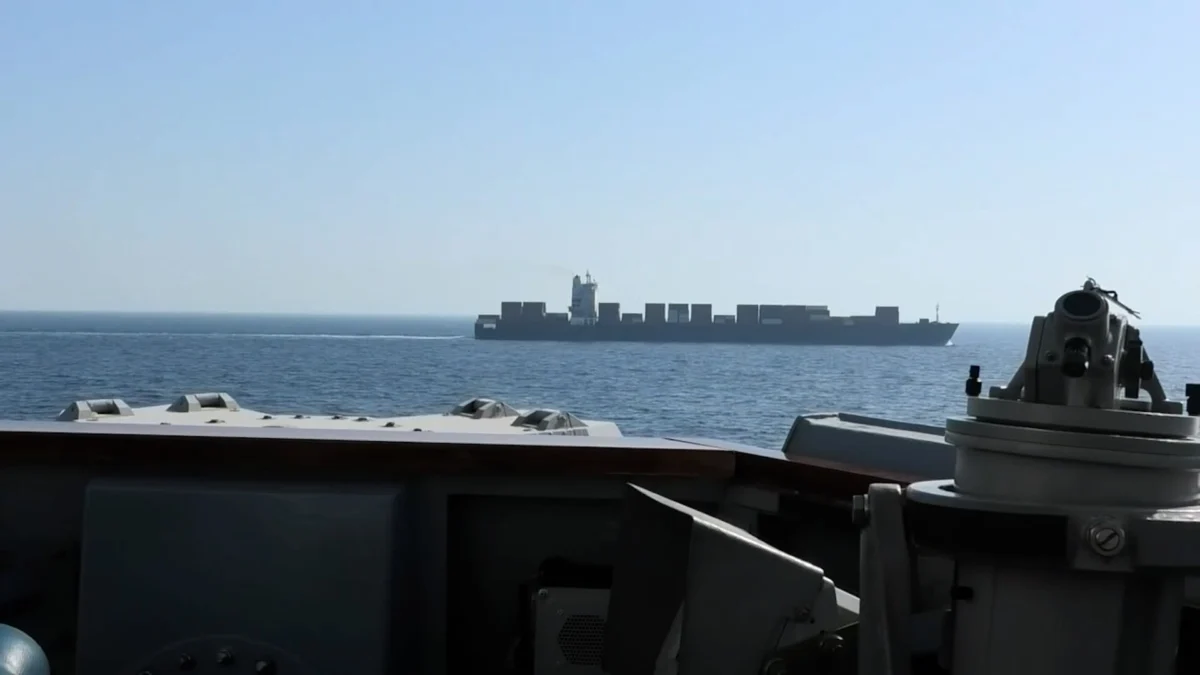
The initial screen grab from a video released by U.S. Central Command on April 19, 2026, depicted U.S. forces enforcing naval blockade measures against an Iranian-flagged cargo vessel attempting to sail toward an Iranian port. This image served as a stark visual representation of the ongoing standoff and the U.S. commitment to enforcing its maritime interdiction policies. The presence of U.S. naval assets in the Arabian Sea underscores the strategic importance of this waterway and the U.S. role in maintaining freedom of navigation, albeit within the context of escalating regional tensions.
The period leading up to the current developments was marked by intense uncertainty. Shipowners, already grappling with soaring freight costs and escalating war-risk insurance premiums, faced unprecedented challenges. The ongoing conflict had effectively frozen a significant portion of maritime trade in the region, leaving numerous vessels idled and cargo movements severely restricted. The potential for a resolution, however tentative, has spurred a wave of strategic repositioning, even as a sense of caution prevails.
Market Reactions: Wary Disbelief and Strategic Maneuvers

The prospect of the Strait of Hormuz reopening has elicited a complex range of reactions within the maritime sector. While some shipowners, particularly those operating very large crude carriers (VLCCs), are reportedly looking to gain a "first-mover advantage" by positioning their vessels toward the Middle East Gulf, a more prevalent sentiment is one of "wary disbelief rather than celebration," according to analysis from Lloyd’s List Intelligence. This cautious optimism stems from the historical volatility of regional politics and the ingrained uncertainty surrounding the full implementation and longevity of any agreement.
Insurers, a critical component of maritime trade, are maintaining their stance on elevated war-risk premiums. They are reportedly demanding "solid evidence" that the waterway will indeed remain safe and secure for transit before considering any significant adjustments. Lloyd’s List Intelligence analysts noted in a client advisory on Tuesday that "while a pause in hostilities will free stranded mariners and boost tanker and bulk markets, the sector sees this as a fragile reprieve rather than a return to normality." This perspective highlights the deep-seated concerns about the potential for renewed hostilities or unforeseen complications that could quickly reverse any positive momentum.
Despite this overarching caution, a discernible movement of vessels has begun. Dozens of VLCCs are reported to be en route from the South China Sea and across the Indian Ocean toward ports in the United Arab Emirates. Maritime intelligence firm Windward reported on Wednesday that at least 30 ships were already at anchor in these UAE ports, indicating a preparatory phase for anticipated increased activity.
Navigating the Styx: Continued Blockade and Anticipated Surge
For the immediate present, maritime traffic through the Strait of Hormuz is expected to remain minimal. Both the U.S. naval blockade and associated operational measures are understood to remain in effect until the U.S.-Iran agreement is formally signed on Friday. Tim Wilkins, managing director of Intertanko, an association representing independent tanker owners, emphasized the ongoing operational realities. He stated that the U.S. Navy has reiterated to the industry that "nothing has changed and will not until the agreement is signed." This message underscores the importance of adhering to official directives and the need for patience as the diplomatic process reaches its formal conclusion.
The scale of the backlog of vessels and potential cargo awaiting transit is significant. Kpler estimates that as many as 118 laden tankers could exit the region within a fortnight following the deal’s signing. However, analysts caution that this surge in departing ships is likely to be a singular event, a release of pent-up demand and stranded capacity, rather than an immediate and sustained recovery of traffic levels to pre-war norms. This distinction is crucial for understanding the medium-term outlook for shipping in the region.
"Most shipowners appear to be cautiously awaiting more details before planning new transits of the Strait of Hormuz," observed Niels Rasmussen, chief shipping analyst at BIMCO, a global organization representing shipowners. He further elaborated on the mindset of market participants: "They will seek reassurance that transits are not only permitted but also safe before sending their ships through the strait." This statement encapsulates the prevailing sentiment of prudence and the imperative for clear, verifiable assurances regarding the safety and legality of maritime operations in the Strait of Hormuz.
Broader Implications: Geopolitical Realignment and Economic Resurgence
The potential reopening of the Strait of Hormuz and the lifting of sanctions on Iran’s oil exports carry profound geopolitical and economic implications. For the global energy market, it promises a significant influx of crude oil, potentially easing supply concerns and contributing to price stabilization. Iran, a nation with substantial oil reserves, has been largely excluded from the international market for years, and its re-entry could reshape global oil supply dynamics.
From a geopolitical standpoint, the U.S.-Iran deal, if successfully implemented, would represent a major diplomatic achievement for both nations and a significant de-escalation of regional tensions. It could pave the way for broader dialogue and cooperation on other critical issues, potentially altering the strategic calculus in the Middle East. The commitment to curbing Iran’s nuclear program, a long-standing concern for the international community, would be a particularly significant outcome.
The economic impact on Iran itself could be transformative. The lifting of sanctions would unlock vital revenue streams, enabling the government to invest in its economy and address domestic challenges. For the international shipping industry, it signals a return to normalcy for a crucial trade route, alleviating the financial pressures of extended blockades and high insurance costs. However, the long-term sustainability of this newfound stability will depend on the consistent adherence to the terms of the agreement by all parties involved and the continued commitment to de-escalation and peaceful resolution of regional disputes. The cautious optimism within the maritime sector is a testament to the fact that while the immediate signs are positive, the path forward remains one that requires careful navigation and sustained diplomatic engagement.
