

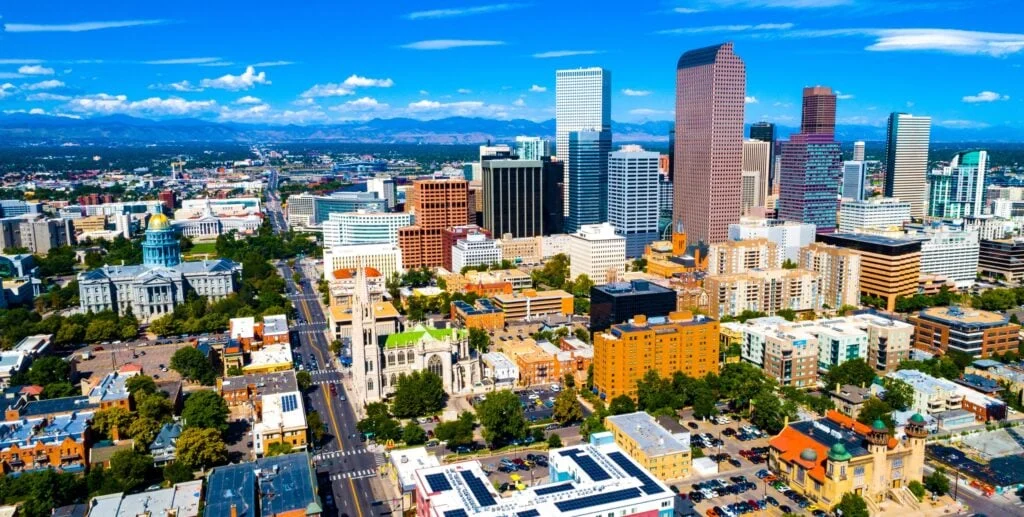
The American real estate landscape, already navigating the complexities of elevated interest rates and historically high property valuations, is currently facing a secondary, more insidious threat to profitability: the rapid escalation of homeowner’s insurance premiums. This "insurance shock" is fundamentally altering the financial viability of real estate investments, particularly in markets previously considered stable. While the trend is national, the state of Colorado has emerged as the primary flashpoint for this crisis, experiencing premium hikes that far outpace the national average and signal a potential shift in the broader domestic housing economy.
According to data from LendingTree and reports from Homes.com, Colorado’s homeowner’s insurance premiums rose by 18.32% in 2025 alone. This figure is more than triple the national average increase of 6% for the same period. However, the immediate year-over-year jump represents only a fraction of the long-term trend. Since 2020, insurance coverage costs in the Centennial State have surged by approximately 100.8%. This doubling of costs within a five-year window has transformed insurance from a predictable operating expense into a primary driver of negative cash flow for investors and a catalyst for foreclosure for homeowners.
The Chronology of a Crisis: 2020 to 2026
The current insurance crisis did not emerge in a vacuum but is the result of a compounding series of economic and environmental events. In 2020, as the global pandemic reshaped housing demand, insurance rates remained relatively stable compared to the volatility seen today. However, the subsequent years introduced a "perfect storm" of inflationary pressures.
By 2022 and 2023, the rising costs of construction materials—driven by supply chain disruptions—and a shortage of skilled labor significantly increased the "replacement cost" of homes. Because insurance policies are tied to the cost of rebuilding rather than the market value of the property, premiums began to climb to keep pace with these valuation shifts.
By 2024, the impact of climate-related claims began to weigh heavily on carrier balance sheets. States like Colorado, Iowa, and Minnesota saw a dramatic uptick in claims related to severe weather events, including hail and wildfires. This led to a massive recalibration of risk by major insurers in 2025, culminating in the current state of the market where 71% of homeowners nationally report significant increases in their insurance costs. As of early 2026, the cumulative effect has resulted in U.S. foreclosure filings reaching nearly 119,000 properties in the first quarter, a 26% increase from the previous year.
Regional Data and the "Dual-Catastrophe" Designation
While Colorado leads the nation in premium growth, it is not an isolated case. Data indicates a broader regional struggle across the American Midwest and West. Iowa has seen insurance costs rise by 96% since 2020, while Minnesota has experienced an 88.2% increase. In contrast, the rest of the nation saw an average increase of 46.8% over the same period.
The primary driver behind Colorado’s disproportionate increase is its status as a "dual-catastrophe" state. Carole Walker, Executive Director of the Rocky Mountain Insurance Association, notes that the state faces a unique combination of high hail risk and increasing wildfire risk. This dual threat makes the state a high-risk target for insurance carriers who have historically found the region unprofitable.
The 2025 Insurance Research Council’s Affordability Index ranks Colorado as the 11th least affordable state for home insurance, with premiums now consuming 2.43% of the average household income. This lack of affordability is compounded by the fact that insurance carriers are no longer willing to allow more profitable states to subsidize high-risk regions. John Klaassen, President of Lightship Insurance, emphasizes that carriers now expect every state to be independently profitable, leading to aggressive pricing in markets with high claim frequencies.
Economic Implications for Real Estate Investors
For real estate investors, the rapid escalation of insurance costs acts as a "machete" to cash flow. Most investment models, particularly those developed between 2015 and 2020, accounted for insurance as a minor, slow-growing expense. The reality of 100% increases in five years has invalidated many of these initial pro-formas.
The "layering effect" is a term used by economists to describe the cumulative burden of rising taxes, high interest rates, and soaring insurance. Marina Walsh, an economist at the Mortgage Bankers Association, suggests that for homeowners and investors who purchased property recently at high valuations, this layering effect creates a state of "payment shock" that leads directly to financial distress.
In many cases, investors find themselves unable to pass these costs on to tenants. Single-family rent growth has steadied or even softened in certain markets, while operating expenses continue to climb. This squeeze on Net Operating Income (NOI) is particularly acute in the "Sun Belt" and "Mountain West" regions, where the gap between rising expenses and stagnant rents is widening.
The Impact on Tenants and the Rental Market
The insurance crisis is not limited to property owners; it has profound implications for the national rental market. According to Harvard University’s Joint Center for Housing Studies, 12.1 million renters—approximately 26% of the renter population—are "severely burdened," meaning they spend more than half of their income on rent and utilities.
When landlords face insurance hikes, their natural inclination is to raise rents to maintain margins. However, with renter incomes rising by only 9% in real terms since 2001 while rents have risen by 30%, the capacity for tenants to absorb further increases is nearly exhausted. This creates a volatile environment where even a modest rent hike to cover insurance costs can lead to increased delinquency and turnover, further damaging the landlord’s bottom line.
State and Local Policy Responses
Recognizing the threat that insurance costs pose to housing stability, several states have begun implementing policy solutions. In Colorado, lawmakers have moved beyond simple regulation to proactive mitigation. The state has created grant programs designed to help homeowners fund the installation of hail-resistant roofs and has established a statewide wildfire resiliency code. These measures aim to reduce the frequency and severity of future claims, thereby making the state more attractive to private insurers.
In California, where the private insurance market has contracted significantly, the state-backed "FAIR Plan"—the insurer of last resort—is undergoing its own price corrections. Starting in late 2026, rates for the FAIR Plan are expected to rise by 29.1% for some homeowners. This highlights the difficulty of providing affordable coverage even through government-mandated programs when the underlying environmental risks are high.
On the East Coast, New York City has acknowledged the role of insurance in the affordable housing crisis. Mayor Zohran Mamdani recently introduced initiatives aimed at providing cheaper property and liability insurance to owners of rent-stabilized and affordable housing units. The goal is to preserve the viability of these buildings by preventing insurance costs from forcing owners into foreclosure or abandonment.
Analytical Perspective: The Necessity of Risk Management
The current market environment dictates a fundamental shift in how real estate assets are managed and insured. The reliance on standard homeowner policies is increasingly viewed as insufficient by industry experts. One critical area of focus is the "umbrella policy," which provides liability coverage beyond the limits of standard policies.
Despite the pressure to cut costs, experts argue that maintaining an umbrella policy is essential. In a litigious environment, the $200 annual cost for $1 million in coverage is considered a necessary safeguard against the inherent risks of landlording. The volatility of the human element—tenants, legal disputes, and third-party liabilities—often presents a greater risk to an investor’s portfolio than the physical structure itself.
Conclusion and Future Outlook
The "insurance shock" currently rippling through the U.S. housing market serves as a stark reminder that real estate investing is subject to more than just interest rate cycles. The intersection of climate change, inflationary pressure on construction, and a shifting legal landscape has made insurance a primary variable in property valuation.
For the market in Colorado, the 51% year-over-year spike in foreclosure calls is a sobering indicator of what happens when housing costs outpace income growth. As insurance carriers continue to recalibrate their risk models for a "dual-catastrophe" world, investors and homeowners alike must prepare for a future where insurance premiums are a volatile and significant portion of the monthly mortgage payment. The lesson for the broader national market is clear: if the insurance math does not work, the investment does not work. Prospectively, thorough due diligence must now include a deep analysis of regional climate risks and a conservative projection of insurance escalations to ensure long-term solvency in an increasingly unpredictable environment.
