

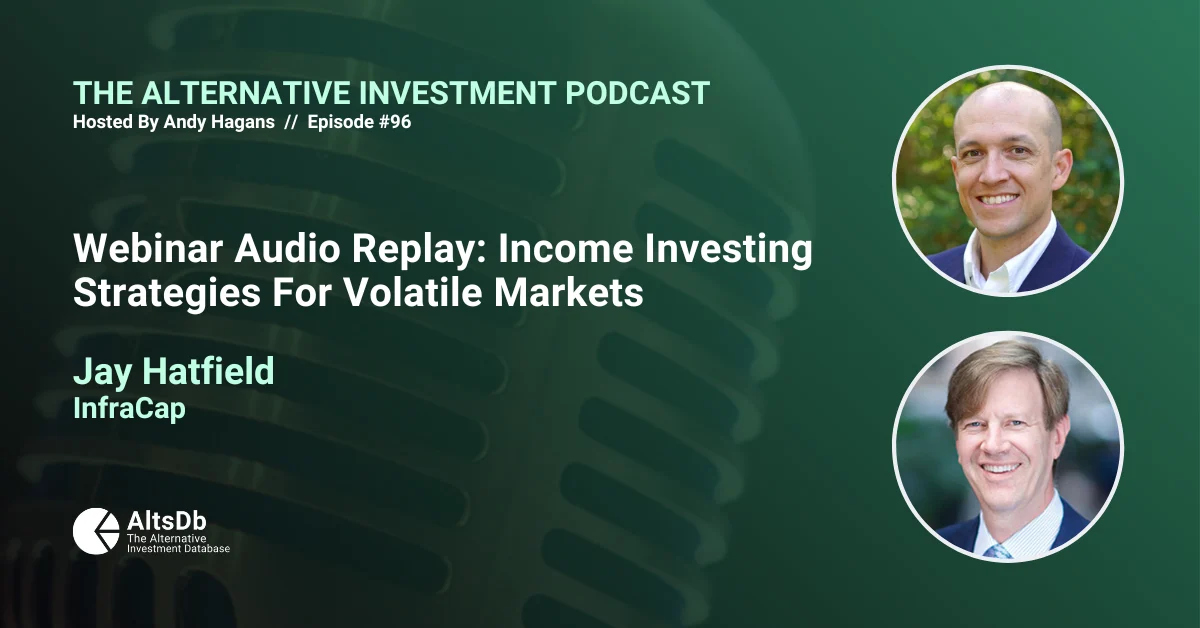
On February 8th, financial advisors convened for a comprehensive one-hour webinar, expertly guided by Jimmy Atkinson, co-founder of AltsDb, and featuring Jay Hatfield, founder and CEO of InfraCap. The session was meticulously designed to dissect and illuminate income investing strategies tailored for the complex and often volatile macroeconomic landscape of the current era. This educational initiative has been formally recognized by the CFP Board, awarding participants one hour of Continuing Education (CE) credit, underscoring its value and relevance for financial professionals.
The webinar, accessible in its entirety via a recorded YouTube stream, delved into critical aspects of navigating financial markets with an income-generating focus. The core objective was to equip financial advisors with actionable insights and robust strategies that can be applied to client portfolios, particularly in an environment characterized by shifting interest rates, inflationary pressures, and geopolitical uncertainties.
Context of the Webinar and Presenters
The timing of this webinar was particularly pertinent. In early 2023, the financial world was grappling with the aftermath of a period of unprecedented monetary stimulus, the resurgence of inflation, and a series of aggressive interest rate hikes by central banks globally. This confluence of factors created a challenging environment for traditional fixed-income investments, prompting a renewed focus on alternative income strategies. Financial advisors were seeking guidance on how to protect client capital while still generating reliable income streams, a perennial goal for many investors, especially those in or nearing retirement.
Jay Hatfield, as the founder and CEO of InfraCap, brought a wealth of experience and specialized knowledge to the discussion. InfraCap is a firm known for its focus on alternative investments, often including strategies designed to generate income through various sophisticated financial instruments. Hatfield’s leadership at the firm suggests a deep understanding of market dynamics and the nuances of income-focused portfolio construction. Jimmy Atkinson, co-founder of AltsDb, a platform dedicated to providing insights and research on alternative investments, served as an ideal moderator, ensuring the discussion remained focused, informative, and relevant to the target audience of financial advisors. AltsDb’s mission to educate and inform the alternative investment community aligns perfectly with the webinar’s objectives.
Key Topics Explored in the Webinar

While the specific bullet points of the topics covered were not provided in the original text, the overarching theme of "income investing strategies for today’s macroeconomic environment" suggests a deep dive into several critical areas. Based on industry trends and the stated purpose of the webinar, it is highly probable that the following subjects were addressed:
- The Current Macroeconomic Landscape: A thorough examination of prevailing economic conditions, including inflation rates, central bank policies (interest rate outlook, quantitative easing/tightening), employment data, and global economic growth forecasts. Understanding these macro factors is fundamental to any effective investment strategy.
- Challenges and Opportunities in Fixed Income: The webinar likely discussed the impact of rising interest rates on bond valuations, the potential for yield enhancement through various fixed-income sectors, and strategies to manage interest rate risk. This could have included discussions on corporate bonds, municipal bonds, and emerging market debt.
- Alternative Income Strategies: This would be a core focus, given the AltsDb platform and InfraCap’s expertise. Potential topics include:
- Real Estate Investment Trusts (REITs): Examining different types of REITs and their income-generating potential across various property sectors.
- Business Development Companies (BDCs): Exploring how BDCs provide debt financing to middle-market companies and their dividend-paying characteristics.
- Preferred Stocks: Analyzing the hybrid nature of preferred stocks, offering fixed dividends with equity-like features.
- Infrastructure Funds: Discussing investments in essential infrastructure assets that often provide stable, long-term cash flows.
- Private Credit: Delving into the opportunities and risks associated with lending to private companies, a sector that has seen significant growth.
- Master Limited Partnerships (MLPs): Considering energy infrastructure assets and their pass-through income potential.
- Portfolio Construction and Diversification: Guidance on how to integrate various income-generating assets into a diversified portfolio to manage risk and optimize returns. This would likely involve asset allocation models and risk management techniques.
- Risk Management in Income Investing: Strategies for mitigating risks such as interest rate risk, credit risk, inflation risk, and liquidity risk within an income-focused portfolio.
- Regulatory and Tax Considerations: Discussing any relevant regulatory changes or tax implications associated with different income-generating investments, particularly for financial advisors and their clients.
- Identifying Sustainable Income Streams: A focus on distinguishing between short-term yield opportunities and those that offer sustainable, long-term income generation.
Supporting Data and Analysis
To provide a more comprehensive understanding of the webinar’s content, let’s consider some supporting data and analytical points that would likely have been presented or are relevant to the discussed topics:
- Inflation Trends: As of early 2023, inflation remained a significant concern. For instance, the US Consumer Price Index (CPI) had seen considerable increases throughout 2022. A webinar focused on income investing would need to address how inflation erodes the purchasing power of fixed income and how certain assets can offer inflation protection or outpace inflation. Data on historical inflation rates and their impact on different asset classes would be crucial.
- Interest Rate Hikes: The Federal Reserve and other central banks implemented aggressive rate hikes in 2022 and into 2023. For example, the Federal Funds Rate saw multiple increases, moving from near zero to several percentage points within a short period. This action directly impacts bond yields and the cost of capital. Data illustrating the correlation between rising rates and bond price declines, as well as the increase in yields, would have been valuable.
- Yield Curves: The shape of the yield curve (the difference in yields between short-term and long-term bonds) provides insights into market expectations for future interest rates and economic growth. An inverted yield curve, which was observed in various markets, often signals a potential recession. Analyzing yield curve data would inform strategies for duration management and yield enhancement.
- Performance of Alternative Income Investments: Data on the historical performance of asset classes like REITs, BDCs, and private credit would be essential to support the strategies discussed. For example, comparing the total returns and income distributions of these asset classes against traditional bonds during periods of market stress would demonstrate their potential diversification benefits. For instance, many REIT sectors, particularly those with essential services like healthcare or data centers, may have shown resilience or even growth during turbulent periods, offering attractive dividend yields.
- Credit Spreads: The difference in yield between corporate bonds and government bonds of similar maturity (credit spreads) reflects the perceived risk of corporate defaults. Widening credit spreads can indicate increased economic uncertainty, while narrowing spreads suggest improving credit conditions. Data on credit spreads across different rating categories would inform the selection of credit-sensitive income investments.
Broader Impact and Implications
The insights shared in this webinar have significant implications for financial advisors and their clients:
- Enhanced Client Portfolio Resilience: By equipping advisors with strategies to navigate a challenging macroeconomic environment, the webinar helps them build more resilient portfolios for their clients. This is particularly important for clients who rely on investment income for their living expenses.
- Diversification Beyond Traditional Assets: The emphasis on alternative income strategies underscores the importance of diversification beyond the traditional stock and bond markets. This can lead to reduced portfolio volatility and potentially higher risk-adjusted returns.
- Meeting Evolving Investor Needs: As interest rate environments change and inflation persists, investor expectations for income generation evolve. Advisors who are well-versed in a broader range of income-generating strategies are better positioned to meet these evolving needs.
- Professional Development for Advisors: The CE credit offered by the CFP Board highlights the commitment to ongoing professional development within the financial advisory community. Staying current with macroeconomic trends and investment strategies is crucial for maintaining professional credentials and providing optimal client service.
The availability of the webinar recording and the presentation deck for download further extends the reach and impact of this educational initiative. Financial advisors who may not have been able to attend the live session can still access the valuable information presented, allowing them to deepen their understanding of income investing in today’s complex markets.
In conclusion, the webinar hosted by AltsDb and featuring Jay Hatfield of InfraCap provided a timely and essential educational resource for financial advisors. By focusing on income investing strategies within the current macroeconomic context, the session aimed to empower professionals with the knowledge and tools necessary to effectively manage client portfolios and generate sustainable income streams amidst market uncertainty. The recognition by the CFP Board underscores the practical and professional value of this endeavor.
