

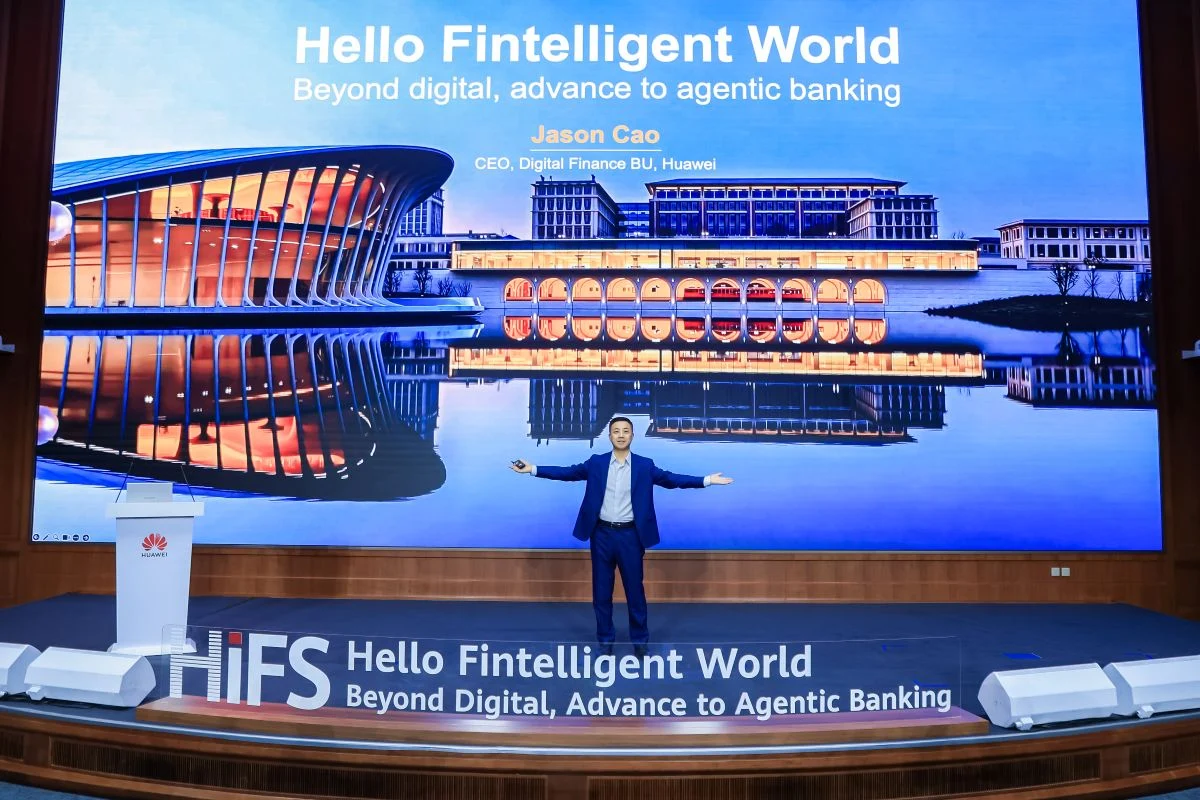
Shanghai, China – The future of global finance was the focal point at the recent Huawei Intelligent Finance Summit (HiFS), held at the picturesque Lianqiu Lake Campus in Shanghai. The event convened over 800 distinguished representatives from leading financial institutions worldwide, converging to explore the transformative power of large-scale Artificial Intelligence (AI), data intelligence, and resilient infrastructure in reshaping the financial landscape. The summit served as a crucial platform for dialogue and discovery, highlighting the industry’s pivot towards an era of "agentic banking" and AI-native operations.
The Dawn of Agentic Banking: A Paradigm Shift
Jason Cao, CEO of Huawei Digital Finance Business Unit (BU), set the stage with a compelling keynote address that underscored Huawei’s sixteen-year journey of continuous innovation. This sustained effort, spanning core technologies, engineering prowess, ecosystem development, and localized services, has propelled Huawei’s financial strategy from a foundation of basic hardware and software to a comprehensive industry solutions flywheel. This evolution is now powering its ambitious move into agentic banking, a concept poised to redefine customer engagement and operational efficiency.
Cao articulated Huawei’s customer-centric philosophy, emphasizing how the company synergizes AI computing power, advanced data platforms, and industry-specific engineering expertise to empower banks and insurers. This integrated approach is designed to address the complex challenges and seize the immense opportunities presented by the digital transformation of the financial sector.
During a pivotal global session titled "Hello Fintelligent World: Beyond Digital, Advance to Agentic Banking," several overarching themes emerged with striking clarity. A significant trend identified was the adoption of hybrid AI architectures, a strategic blend of public cloud scalability and the security and control offered by on-premise solutions. Complementing this is the imperative for meticulously governed, all-domain data, essential for enabling intelligent decision-making. The rise of "digital employees" and AI agents integrated into daily workflows promises to augment human capabilities, while a growing emphasis on openness in models, ecosystems, and infrastructure fosters greater collaboration and innovation.
Collectively, these developments signal a profound industry-wide shift towards "thinking banks" and AI-native insurers. These entities are envisioned to operate with enhanced security, greater resilience, and a more personalized approach to customer service, all while maintaining rigorous control over long-term costs and operational complexity. "We believe every user will have a ‘super steward’ to help manage their life and services, and every employee in your organization will have a ‘super avatar’ to help them get their job done," Cao stated, painting a vivid picture of a future where AI agents act as indispensable assistants.
Defining Agentic Banking: Beyond Automation to Autonomy
Agentic banking represents the next frontier in financial services, characterized by AI-native operations where autonomous agents manage end-to-end services. This paradigm shift moves away from rigid product stacks towards flexible architectures capable of delivering VIP-level personalization, unparalleled efficiency, and accelerated innovation.
The core components of agentic banking, as elucidated at the summit, include:
- Hyper-personalization: AI agents continuously analyze customer behavior and context to dynamically design and adapt services tailored to individual needs. This deep understanding enables financial institutions to configure bespoke products and facilitate natural, conversational interactions, fostering stronger customer relationships.
- AI-Driven Decision Making: The transition from static analytics to dynamic, intelligent decision-making is powered by the embedding of domain-specific models and knowledge graphs. As Jason Cao explained, "The mode of making decisions is moving from data plus rules to ontology plus knowledge." This approach allows for more nuanced, context-aware, and accurate decision-making processes.
- Multi-Agent Collaboration: Agentic banking fosters a collaborative environment where human judgment is augmented by AI colleagues. These AI agents are designed to plan and execute tasks alongside human staff, optimizing workflows and enhancing overall productivity.
Navigating the Challenges and Seizing the Opportunities
Traditional financial institutions are confronting a multifaceted set of challenges as they navigate this transformative journey. The persistent issue of legacy core systems and fragmented data across numerous applications creates significant hurdles for granting agents real-time, end-to-end visibility over customers and processes. Furthermore, the regulatory landscape is still evolving, necessitating a co-design approach to AI policies and architectures with regulatory bodies, while diligently addressing market-specific concerns such as data residency and sovereignty.
Beyond technological and regulatory hurdles, substantial talent and organizational challenges lie ahead. The transition from isolated AI proof-of-concept projects to scaled, production-grade agent systems demands the development of new AI engineering disciplines, a fundamental redesign of existing processes, and the implementation of robust guardrails to mitigate risks such as AI hallucinations and unsafe behaviors. This is not merely about deploying new tools but about fundamentally reimagining operational architectures.
Despite these challenges, the opportunities for growth and efficiency are immense. The summit showcased compelling examples of how AI-assisted coding and digital employees are already dramatically reducing development cycles and enabling banks to achieve significant operating cost savings. Document review capacity, for instance, can be amplified fivefold on the same hardware, with accuracy rates soaring from approximately 85% to an impressive 97%. The impact on fraud case handling is equally transformative, with AI agents efficiently processing volumes of cases in minutes that would typically overwhelm human teams.
At the business level, agentic banking unlocks the potential for hyper-personalized, intent-driven services. As Jason Cao aptly put it, "everyone will be a VIP," fostering deeper customer engagement and enabling more precise cross-selling and upselling opportunities. By building domain-tuned models on proprietary data and expertise, and deploying them on hybrid AI infrastructure utilizing cost-effective open-source models, banks can forge a durable competitive advantage and accelerate their innovation pipelines.
Huawei’s Strategic Role in the Agentic Banking Ecosystem
The Huawei Intelligent Finance Summit served as a testament to the accelerating pace at which global financial institutions are moving beyond experimental digital initiatives to establish truly AI-native operating models. Supported by the expertise of over 70 industry partners, Huawei, alongside leading banks and insurers from China, Asia, and Africa, demonstrated the large-scale application of agentic AI, open-source models, and real-time data platforms. These applications span critical areas such as credit decisioning, fraud detection, customer engagement, call center operations, and core banking modernization.
In a significant move to support this transformation, Huawei announced six key initiatives focusing on scenarios, architecture, engineering, data, AI infrastructure, and talent. The company also launched its Financial Data Intelligence Solution 6.0 and Digital CORE Solution 6.0, alongside a new resilient infrastructure designed for both general-purpose and AI computing. These offerings are aimed at empowering financial institutions to scale their AI capabilities and expedite their digital and intelligent transformation journeys.
On the AI infrastructure front, Huawei provides high-performance solutions such as Atlas SuperPOD clusters, enabling hybrid AI architectures that seamlessly integrate on-premise and cloud deployments. Its ecosystem is built around open-source models and specialized, domain-tuned financial models, fostering an environment of collaboration and innovation.
In the realm of data, Huawei’s FinData Intelligence Solution 6.0, guided by the RACE strategy (Real-time, All-domain, Converged, and Experience-centric data), delivers the real-time, governed data foundation essential for agentic banking. This is often achieved through strategic partnerships with specialists like TrustDecision for fraud detection and Sensors Data for hyper-personalized marketing initiatives.
At the application and core system layer, Huawei’s 4M Digital CORE solution, coupled with AI coding tools for COBOL-to-Java migration and cell-based cloud-native architectures, facilitates the modernization of legacy core systems into AI-ready platforms. This strategic overhaul is crucial for enabling the agility and intelligence required by modern financial services.
Finally, ensuring resilience and operational continuity in an agentic world, Huawei offers RAAS-based resilient infrastructure, DR RAAS 2.0, and agentic AIOps appliances developed with partners like Netis. Integrated inference solutions are also available, making the deployment of AI data centers practical within existing facilities, thereby enhancing operational robustness and efficiency.
Collectively, these comprehensive contributions solidify Huawei’s position as a full-stack partner for financial institutions embarking on the transition towards AI-native, agentic architectures, paving the way for a more intelligent, personalized, and resilient future for global finance.
