

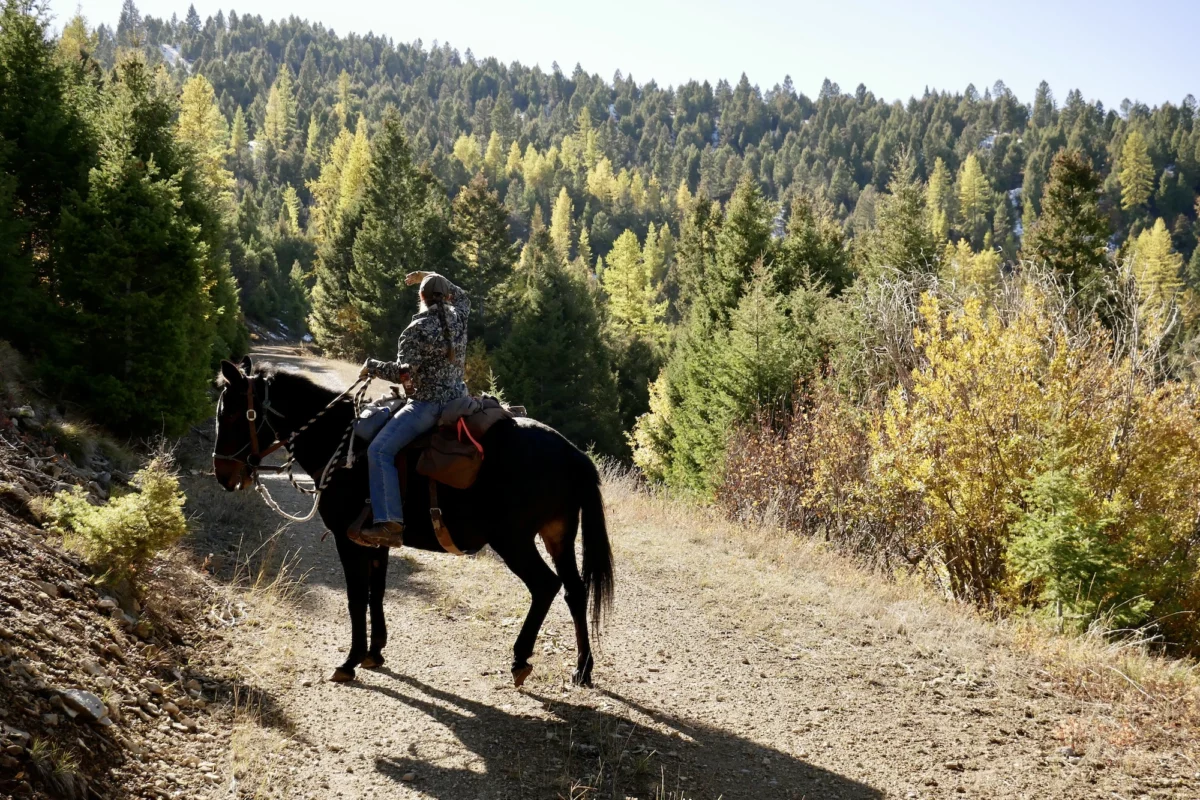
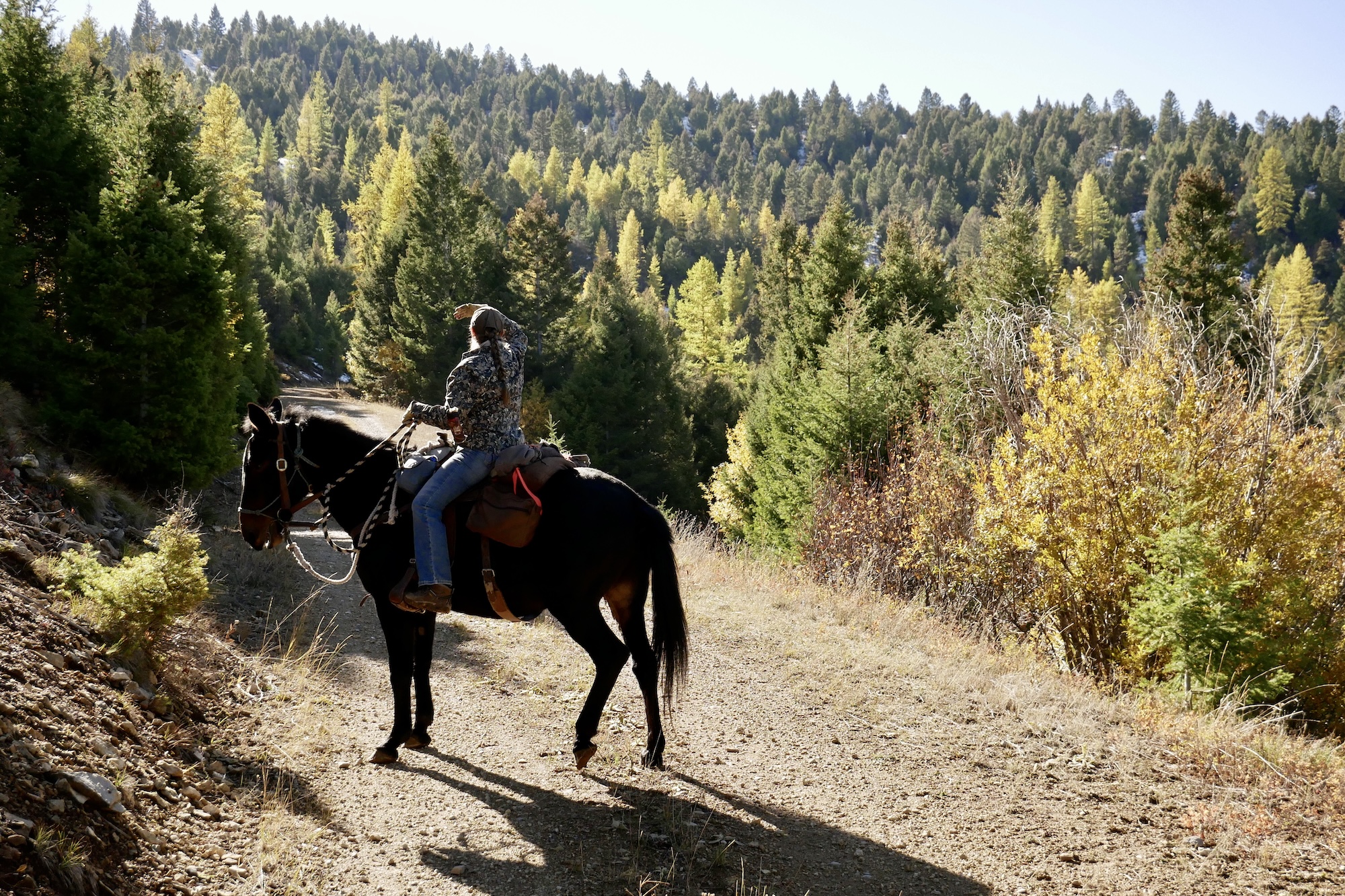
As the first light of dawn breaks over the rugged ridges of Montana’s Blackfoot Valley, Sigrid Olson and her horse, Jake, begin their daily patrol. They move along a Forest Service road that skirts the boundary between wilderness and working ranchland, eyes scanning the muddy earth for the distinctive prints of grizzly bears or wolves. This is not a scene from a historical reenactment; it is a vital component of 21st-century wildlife management. Olson is a range rider, a role that was once considered a relic of the 19th-century American West but has been revived as a critical tool for mitigating human-wildlife conflict in an era of rapid environmental change.
The Blackfoot Valley, a picturesque expanse of timber and grassland flanking the Northern Continental Divide, has become a global testbed for coexistence. As populations of apex predators—specifically grizzly bears and gray wolves—recover and expand into their former territories, they increasingly encounter the livestock and human settlements that now occupy those landscapes. The challenge facing the valley is one shared by rural communities worldwide: how to preserve iconic biodiversity while safeguarding the livelihoods and safety of the people who live alongside it.
The Historical Trajectory of Predator Management in the American West
To understand the current tension in the Blackfoot Valley, one must look back at the radical shifts in land management that occurred over the last two centuries. During the era of Westward Expansion in the 1800s, range riders were the primary guardians of cattle herds on the open range. However, as the frontier was settled and sequestered into fenced parcels, the philosophy of the West shifted toward the total eradication of any species perceived as a threat to agriculture.
By the early 20th century, state-sponsored bounty systems, poisoning campaigns, and intensive trapping had pushed gray wolves and grizzly bears to the brink of extinction in the lower 48 states. Gray wolves lost approximately 95 percent of their historic range, while grizzly populations were decimated. By the 1970s, the Greater Yellowstone Ecosystem was one of the last strongholds for grizzlies, with as few as 30 breeding females remaining.
The tide began to turn with the passage of the Endangered Species Act (ESA) in 1973. This landmark legislation mandated that federal and state governments take active measures to prevent extinction and promote the recovery of threatened species. In 1974 and 1975, respectively, gray wolves and grizzly bears were listed under the ESA. Decades of protection, combined with the 1995 reintroduction of wolves into Yellowstone National Park, have led to a significant population rebound. Today, the Northern Continental Divide Ecosystem, which includes the Blackfoot Valley, is home to more than 1,100 grizzly bears—the largest population in the lower 48 states. Similarly, gray wolf populations across the United States have surpassed 10,000.
The Global Context of Human-Wildlife Conflict
The success of conservation efforts has brought a new set of challenges. As predators reclaim their ancestral ranges, they find those spaces significantly altered by human development. This phenomenon is not unique to Montana; it is a global crisis. A 2023 World Bank report revealed that more than 70 percent of countries surveyed have seen a rise in human-wildlife conflict incidents. These escalations are primarily driven by habitat loss, land-use changes, and resource competition exacerbated by climate change.
In Japan, the contraction of rural populations and the abandonment of farmland have led to an uptick in bear-human encounters, with a record 238 attacks reported in 2023 alone. In Africa and Asia, the expansion of agricultural development into elephant corridors has led to devastating conflicts; in Asia, interactions with wild elephants result in approximately 700 human deaths annually. These statistics underscore the reality that the preservation of biodiversity often comes at a high cost to local communities, involving loss of income, property damage, and, in tragic cases, loss of life.

The Blackfoot Challenge: A Model for Community-Led Conservation
In Montana, the response to these pressures has been led by the Blackfoot Challenge, a landowner-based nonprofit organization established in 1993. The organization operates on the principle that the people best suited to solve local problems are those who live on the land. Rather than relying solely on top-down government mandates, the Blackfoot Challenge fosters a collaborative environment where ranchers, biologists, and conservationists work together.
The range rider program is a cornerstone of this collaborative model. Range riders like Sigrid Olson serve as a "human presence" on the landscape, which is believed to be one of the most effective non-lethal deterrents for predators. While scientific data on the efficacy of range riders is still being gathered, anecdotal evidence from ranchers suggests that the presence of a skilled equestrian who can monitor cattle health and track predator movement significantly reduces the likelihood of "depredation"—the killing of livestock by wild animals.
Seth Wilson, a wildlife biologist and the executive director of the Blackfoot Challenge, emphasizes that the program’s success relies on the sharing of information. When Olson finds a carcass or spots a wolf pack near a grazing herd, she immediately notifies the rancher and the Blackfoot Challenge. This allows the rancher to move cattle to safer ground and alerts wildlife services to investigate the cause of death.
Economic Impacts and the Role of Compensation
The financial stakes of ranching in predator country are high. A single grizzly bear or a wolf pack can cause thousands of dollars in damage in a single night. Beyond the direct loss of an animal, the stress of predator presence can lead to lower weight gain in cattle and reduced conception rates, further impacting a rancher’s bottom line.

To address these losses, the Montana Livestock Loss Board, a division of the Montana Department of Livestock, provides compensation to ranchers for animals confirmed to have been killed by predators. This system is essential for maintaining the economic viability of ranching in the valley. However, ranchers like Denny Iverson argue that compensation is only part of the solution. For Iverson, the goal is to prevent the conflict from occurring in the first place.
"To live with these predators, you have to understand them," Iverson says. He notes that modern ranching requires a departure from the methods used by previous generations. The integration of traditional stockmanship with modern technology is now a requirement for survival.
Technology and Innovation in the Field
While the range rider represents an "analog" solution, the Blackfoot Challenge also employs cutting-edge technology. GPS collars on cattle allow ranchers to track strays that might be vulnerable to attack. In areas where grizzly bears are known to frequent, electrified "bear mats" are placed around grain sheds and calving pens. These mats deliver a non-lethal shock that discourages bears from entering human-occupied spaces.
This hybrid approach has drawn international attention. In 2023, a Japanese television crew visited the Blackfoot Valley to document these prevention methods for a documentary on brown bear conflict. Following the broadcast, Japanese authorities began experimenting with drones equipped with bear spray to deter problem animals in rural villages. Similarly, the state of Colorado consulted with the Blackfoot Challenge during its recent efforts to reintroduce gray wolves, seeking to replicate the community-led mediation model that has proven successful in Montana.

Navigating Tragedy: The Ovando Incident
The resilience of the Blackfoot model was tested in 2021 when a bicyclist was killed by a grizzly bear near the town of Ovando. Such incidents often lead to calls for the mass removal of predators, but the Blackfoot community chose a different path. Rather than villainizing the species, they focused on practical safety measures.
The community worked together to install an electric fence around the Ovando Park camping area, providing a secure space for cyclists and visitors. This response reflects the "interests versus positions" philosophy advocated by Seth Wilson. By focusing on the shared interest of safety and livelihood rather than entrenched political positions on predator rights, the community was able to implement a solution that protects both humans and bears.
The Future of the Frontier: Stewardship and Open Space
The work of range riders and the Blackfoot Challenge extends beyond predator management; it is a fight to keep the landscape open. As development pressures mount across the American West, many ranches are being sold and subdivided into smaller residential parcels. This fragmentation of the land destroys wildlife corridors and erodes the cultural fabric of rural communities.
Conservationists argue that keeping large-scale ranches in operation is the most effective way to preserve the vast, connected habitats that apex predators require. Range riders play a vital role in this by making it feasible for ranchers to stay on the land despite the challenges of living with carnivores.

The 2026 range rider season in the Blackfoot Valley will see three riders patrolling the fringes of the mountains from May to October—the period when livestock are most at risk. Their presence is a testament to a changing culture in the West, one where the goal is no longer the conquest of nature, but a hard-earned, daily negotiation with it.
As Julie Young, a professor of ecology at Utah State University, observes, the most effective tools for conservation are often the oldest: "livestock guardian dogs and people." In the Blackfoot Valley, the return of the range rider suggests that the future of wildlife conservation may depend on a return to the attentive, hands-on stewardship of the past, updated for the complexities of a crowded and changing world. Through collaboration, technology, and an unwavering commitment to the land, the people of the Blackfoot Valley are proving that while coexistence is difficult, it is the only sustainable path forward for the American West.
