

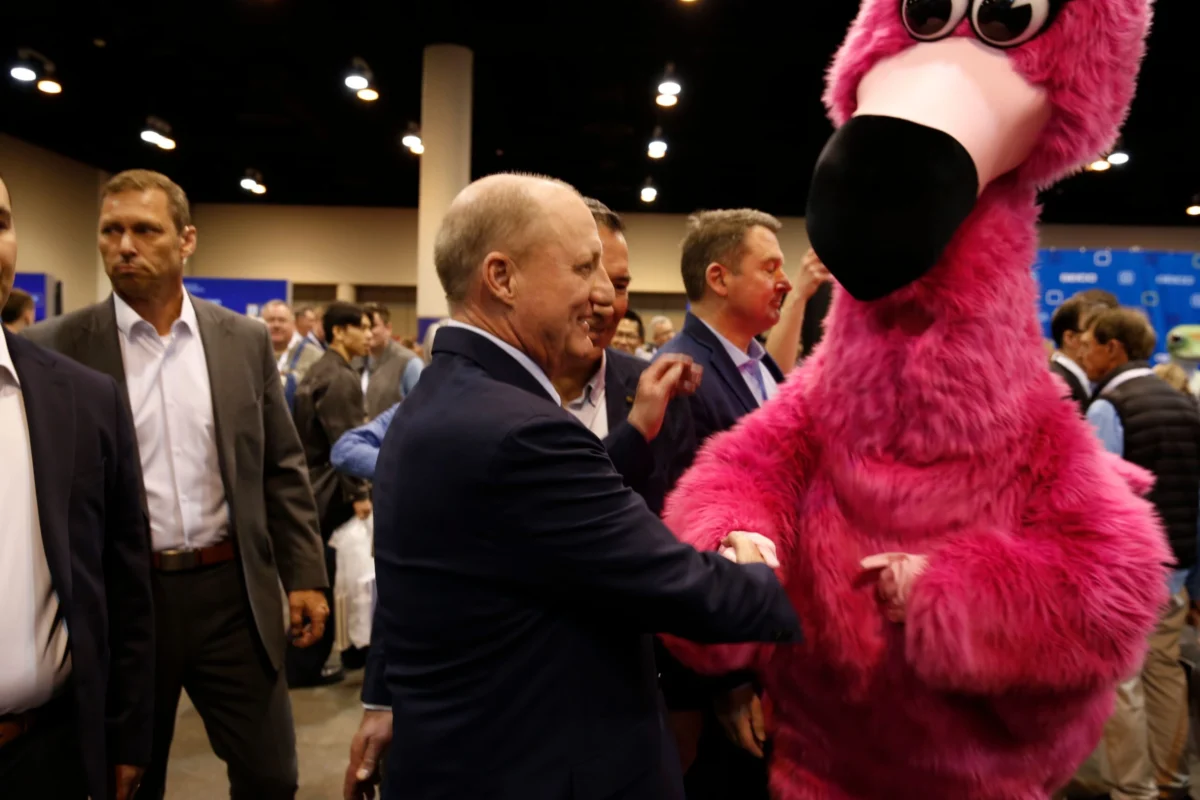
In a definitive move signaling a new era of leadership, Greg Abel, CEO of Berkshire Hathaway, has executed his first major acquisition, guiding the conglomerate to a $6.8 billion cash purchase of Taylor Morrison Home Corporation. The transaction, announced on June 1, 2026, sees Berkshire Hathaway significantly expand its already substantial presence in the residential construction sector, adding one of the nation’s largest homebuilders to its diverse portfolio. This strategic maneuver, executed with remarkable speed and independence from legendary investor Warren Buffett, has been widely lauded by analysts as a classic Berkshire-style deal, characterized by a seemingly bargain valuation and a strong strategic fit within the company’s existing ecosystem.
The acquisition comes at a pivotal time for Berkshire Hathaway, as the investment community closely monitors the strategic direction under Abel’s stewardship. Warren Buffett, the revered Chairman of Berkshire Hathaway, publicly endorsed Abel’s handling of the deal, remarking, "Greg did that faster than I could have done it, smoother than I could have done it, and I never talked to the CEO. He has launched." This statement, made during the Berkshire Hathaway Annual Shareholders Meeting in Omaha, Nebraska, on May 1, 2026, just weeks prior to the announcement, underscores the smooth transition of operational leadership and Abel’s demonstrated capability to identify and close significant transactions autonomously.
Chronology of a Strategic Shift
The journey towards this landmark acquisition can be traced through several key events, both within Berkshire Hathaway and the broader economic landscape. Greg Abel’s trajectory as the designated successor to Warren Buffett became increasingly clear following his appointment as Vice Chairman, Non-Insurance Operations, in May 2021. This role effectively positioned him as the operational head of Berkshire’s vast non-insurance businesses, a proving ground for the strategic oversight required of a CEO. By 2026, as confirmed by the context of this acquisition, Abel had fully assumed the mantle of CEO, with Buffett retaining the role of Chairman.
The housing market, a sector where Berkshire Hathaway has long held significant interests, experienced considerable volatility in the years leading up to 2026. Following a period of unprecedented demand fueled by low interest rates during the early 2020s, the market contended with rising inflation, subsequent interest rate hikes by the Federal Reserve, and persistent supply chain challenges. These factors led to fluctuating consumer confidence and, at times, a slowdown in new home sales, creating opportunities for well-capitalized entities like Berkshire to acquire strong, established players at potentially attractive valuations.
Taylor Morrison Home Corporation, a prominent player in the U.S. homebuilding industry with operations across numerous states, found itself navigating this complex environment. While remaining a robust company, the broader industry trends and the ongoing consolidation within the sector likely made an acquisition by a stable, long-term-oriented conglomerate like Berkshire Hathaway an appealing prospect. The negotiations, as hinted by Buffett’s comments, were evidently swift and decisive, culminating in the June 1, 2026, announcement of the $72.50 per share cash offer. This timeline highlights Abel’s efficiency and ability to capitalize on market conditions.
A Deep Dive into the Financials and Valuation
Berkshire Hathaway’s agreement to pay $72.50 per share for Taylor Morrison translates to an equity value of approximately $6.8 billion. Including Taylor Morrison’s outstanding debt, the total enterprise value of the transaction stands at roughly $8.5 billion. This valuation immediately drew attention from financial analysts, many of whom quickly pointed out the seemingly modest price paid by Berkshire Hathaway relative to recent comparable transactions in the homebuilding sector.
Analysts at Citizens, a financial services firm closely tracking the industry, noted, "Based on recent completed transaction multiples, the 0.9x price-to-tangible book value multiple we estimate Berkshire is paying appears low relative to recent public builder transactions." To illustrate this point, they cited two recent, significant acquisitions: the purchase of Tri Pointe Homes earlier in the year, which implied a multiple of approximately 1.2 times forward tangible book value, and the acquisition of MDC Holdings in the previous year, which was valued at about 1.3 times tangible book value. The stark contrast suggests that Berkshire Hathaway, under Abel’s direction, managed to secure Taylor Morrison at a considerable discount, aligning perfectly with Warren Buffett’s enduring philosophy of buying excellent businesses at fair, or even attractive, prices.
The capacity for such a substantial cash acquisition underscores Berkshire Hathaway’s unparalleled financial strength. The conglomerate ended the first quarter of 2026 with a staggering $397.4 billion in cash and cash equivalents. This colossal cash pile, often referred to as "dry powder," has been a consistent feature of Berkshire’s balance sheet, providing immense flexibility for opportunistic acquisitions. The Taylor Morrison deal, despite its size, consumes less than 2% of this available liquidity, leaving Berkshire Hathaway ample reserves for future investments, share repurchases, or other strategic deployments.
While significant, the Taylor Morrison acquisition is not the largest in Berkshire’s history, but it ranks among the more substantial ones in recent years. For context, Berkshire Hathaway’s last major acquisition was the $9.7 billion purchase of OxyChem, Occidental Petroleum’s chemical business, which was completed in January 2025. This historical perspective reinforces the idea that Berkshire, while patient, is willing and able to deploy considerable capital when the right opportunity arises, and Abel is demonstrating the same discipline and readiness.
Strategic Integration into the Berkshire Ecosystem
The acquisition of Taylor Morrison is more than just a financial transaction; it represents a deeply strategic move designed to enhance Berkshire Hathaway’s already formidable presence across the entire housing value chain. This aspect perfectly embodies another hallmark of Berkshire’s acquisition strategy: integrating businesses that become more valuable within the conglomerate’s ecosystem than they would be operating independently.
Housing has long been a core pillar of Berkshire Hathaway’s diversified empire. The conglomerate owns Clayton Homes, which stands as the nation’s largest producer of manufactured and modular housing. Beyond direct home construction, Berkshire also controls an extensive array of businesses integral to residential construction and homeownership. This includes major players in building materials such as Shaw Industries (flooring), Johns Manville (insulation), Acme Brick (brick manufacturing), Benjamin Moore (paints), and various components under the MiTek and Marmon Group umbrellas. Furthermore, Berkshire Hathaway operates one of the largest real estate brokerage networks globally through Berkshire Hathaway HomeServices.
The addition of Taylor Morrison, a prominent builder of traditional, site-built homes, creates immediate and profound synergies. Greg Abel himself acknowledged this strategic vision, stating that he expects to unify Berkshire’s site-built homebuilding operations into a combined platform over time. This unification would likely see Taylor Morrison’s operations integrated with Clayton Homes’ existing site-built division, creating a much larger, more efficient, and vertically integrated homebuilding entity.
Analysts at UBS highlighted the transformative potential of this integration, suggesting that combining Taylor Morrison’s nearly 13,000 home deliveries in 2024 with Clayton’s more than 10,000 site-built homes from the same year could elevate the combined entity into one of the top five largest homebuilders in the U.S. by volume. This scale would confer significant advantages, including enhanced purchasing power for materials, optimized logistics, and a broader geographic footprint.
Moreover, UBS noted the potential for Berkshire to leverage Clayton Homes’ extensive expertise in manufactured and modular housing. "Given Clayton Homes is already the largest producer of manufactured & modular housing in the US, we believe Berkshire could leverage this transaction to infuse additional off-site construction methods at TMHC," UBS commented in their analysis. This cross-pollination of construction techniques could lead to efficiency gains, reduced build times, and potentially lower costs for Taylor Morrison, thereby enhancing profitability and market competitiveness. The broader implication, as UBS concluded, is that "continued consolidation of the US homebuilders, which could provide a meaningful catalyst for industry improvement, efficiency gains and stock price appreciation," a trend in which Berkshire is now a leading participant.
Reactions and Broader Implications
The acquisition has been met with generally positive reactions from market observers, underscoring its strategic soundness and financial prudence. Warren Buffett’s enthusiastic endorsement of Abel’s execution served as a powerful signal to investors that the succession plan is robust and that Abel possesses the acumen to lead Berkshire Hathaway into its next chapter. This vote of confidence from the Oracle of Omaha is invaluable and helps to quell any lingering concerns about the post-Buffett era.
Greg Abel’s official statement, while concise, emphasized the long-term vision: "Taylor Morrison is an excellent company with a strong track record and a deep commitment to quality and customer satisfaction. This acquisition allows us to further strengthen our position in the vital U.S. housing market and leverage synergies across our existing housing-related businesses. We look forward to welcoming Taylor Morrison into the Berkshire Hathaway family and working with their talented team to build an even stronger future."
While Taylor Morrison’s leadership has yet to issue a detailed public statement beyond the formal acquisition announcement, it is anticipated that their executives would express enthusiasm for joining a stable, well-capitalized entity like Berkshire Hathaway. Such an alignment typically offers enhanced access to capital, long-term strategic stability free from quarterly market pressures, and the opportunity to scale operations within a supportive corporate structure. Shareholders of Taylor Morrison, meanwhile, are set to benefit from a definitive cash payout, providing certainty in an often-cyclical industry.
The broader implications of this acquisition are multi-faceted. For Berkshire Hathaway, it cements Greg Abel’s reputation as a decisive and strategically astute leader capable of executing large-scale transactions that align with the conglomerate’s established principles. This deal validates Buffett’s faith in his successor and provides a clear indicator of Abel’s preferred investment methodology – focusing on foundational, tangible assets that offer clear synergies and long-term value. It also signals a continued appetite for deploying Berkshire’s immense cash reserves into high-quality, durable businesses, particularly within sectors where the company already possesses deep expertise.
For the U.S. housing market, the consolidation trend is likely to continue, driven by the advantages of scale and efficiency. The emergence of a potentially top-five homebuilder under the Berkshire umbrella could exert influence on industry standards, supply chain management, and even the adoption of innovative construction methods, such as off-site fabrication. Consumers might ultimately benefit from more efficient construction processes, although the immediate impact on housing affordability remains to be seen within the complex interplay of supply, demand, and economic conditions.
In conclusion, Greg Abel’s successful acquisition of Taylor Morrison Home Corporation marks a significant milestone for Berkshire Hathaway. It is a strategic, financially sound, and well-integrated deal that not only expands the conglomerate’s footprint in a crucial sector but also emphatically underscores the capable leadership of its new CEO. This transaction serves as a powerful testament that while the steward may have changed, the core tenets of value investing, strategic growth, and long-term vision continue to define the enduring legacy and future trajectory of Berkshire Hathaway.
