

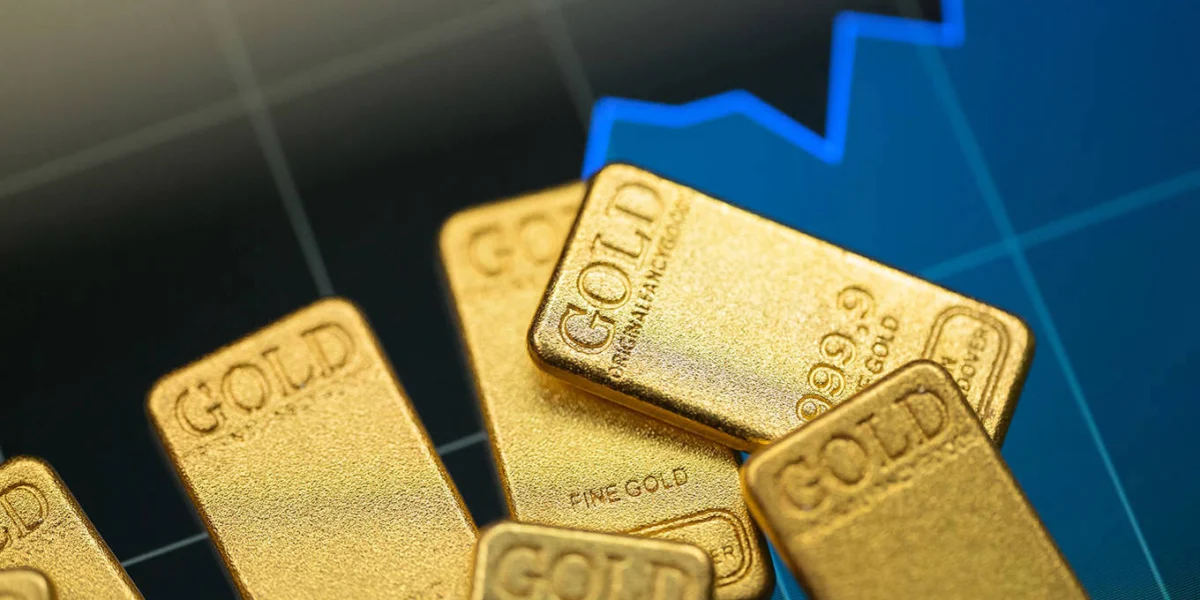
The recent ascent of gold to become the world’s preeminent reserve asset, surpassing US Treasuries, signifies a profound recalibration of the global financial architecture. This shift is not merely a consequence of the inherent qualities of gold as a store of value but is also a direct response to the evolving geopolitical landscape and the increasing diffusion of economic power, which collectively foster a more diversified international monetary system. The trend is underscored by record central bank purchases of gold, strategic relocations of reserves, and a growing investor perception of gold as a crucial hedge against escalating financial and geopolitical uncertainties.
The Resurgence of Gold: A Strategic Imperative
Gold’s renewed prominence on the global financial stage is a clear indicator of the ongoing de-dollarization trend and the emergence of a multipolar monetary order. Investors and central banks alike are increasingly recognizing gold not just as a commodity but as a strategic asset offering a crucial hedge against the volatility inherent in a rapidly changing world. Last year witnessed the fourth-largest expansion of gold reserves on record, a testament to the growing appetite for this traditional safe-haven asset. This surge in demand is driven by a complex interplay of factors, including concerns over the fiscal health of major economies, the weaponization of financial tools in international relations, and the inherent instability associated with a single dominant reserve currency.
The Dutch central bank’s decision to move a significant portion of its gold reserves out of the United States, citing "geopolitical unrest," serves as a stark and recent illustration of this broader trend. This action, while specific to the Netherlands, resonates with a growing sentiment among nations seeking to diversify their holdings and mitigate exposure to potential risks emanating from a single, powerful nation. The implications of such a move extend beyond mere asset diversification; they signal a recalibration of trust and a desire for greater financial autonomy in an increasingly unpredictable global environment.
Historical Context: The Dollar’s Reign and the Seeds of Change
For decades, the US dollar has occupied an unparalleled position as the world’s primary reserve asset, a status cemented by the Bretton Woods Agreement in 1944. This agreement established a system where the dollar was convertible to gold at a fixed rate, effectively making it the bedrock of international trade and finance. However, the dismantling of the Bretton Woods system in the early 1970s, when the US unilaterally suspended the dollar’s convertibility to gold, marked a pivotal moment. While the dollar remained dominant, this event sowed the seeds of doubt and paved the way for a gradual re-evaluation of its perpetual supremacy.
Since then, various economic and geopolitical events have intermittently challenged the dollar’s hegemony. The Asian Financial Crisis of the late 1990s, the Global Financial Crisis of 2008, and more recently, the increasing use of sanctions and financial restrictions by the United States have all contributed to a growing awareness among nations of the risks associated with over-reliance on a single currency. These events have spurred a quiet but persistent quest for alternative stores of value and reserve assets that offer greater stability and neutrality.
The Drivers of Gold’s Ascendancy
Several key factors are propelling gold’s renewed relevance and its overtaking of US Treasuries as the world’s leading reserve asset:
-
The "Rogue America" Factor and Geopolitical Uncertainty: The perception of the United States as a potentially "rogue" actor in international affairs, particularly in its use of financial sanctions and its unilateral policy decisions, has fueled a desire for assets that are not subject to the political whims of any single nation. Gold, being a physical commodity with intrinsic value and no issuer risk, offers a compelling alternative. The Dutch central bank’s explicit mention of "geopolitical unrest" highlights this concern, suggesting that nations are increasingly viewing reserve asset management through a geopolitical lens. The ongoing conflicts and shifting alliances globally further amplify the need for safe havens.
-
Rapid Technological Diffusion and Economic Power Dispersion: The rapid diffusion of technology across the globe has led to a more even distribution of economic power. Emerging economies are no longer solely reliant on established powers for growth and development. This economic decentralization naturally leads to a demand for a more diversified international monetary system, one that is not dominated by a single currency or a single set of financial instruments. As more nations gain economic clout, they seek reserve assets that reflect this multipolar reality.
-
Central Bank Diversification Strategies: Central banks are actively diversifying their reserves beyond traditional US dollar holdings. The World Gold Council has consistently reported robust central bank gold purchases in recent years. In 2023, for instance, central bank net purchases of gold reached 1,037 tonnes, marking the second-highest annual total on record, following the record set in 2022. This sustained buying activity demonstrates a strategic intent to reduce reliance on a single currency and to build resilience against potential shocks. These institutions are not driven by speculative fervor but by long-term strategic planning to safeguard their economies.
-
Inflationary Pressures and Currency Devaluation: In an era of significant government spending and quantitative easing, concerns about inflation and currency devaluation are on the rise. Gold has historically been viewed as a hedge against inflation, as its supply is finite and its value is not eroded by monetary policy decisions in the same way as fiat currencies. As central banks globally grapple with managing inflation, the appeal of gold as an inflation-resistant asset grows.
-
The Appeal of US Treasuries Diminishes: While US Treasuries have long been considered the benchmark for safety and liquidity, recent trends have introduced new considerations. The growing US national debt, coupled with increased political polarization and the potential for fiscal instability, has led some investors to reassess the long-term security of these assets. Furthermore, the increasing use of US Treasuries as a tool for geopolitical leverage has also prompted some nations to seek alternatives.
A Timeline of Shifting Reserves
The transition of gold’s status has not been an overnight phenomenon but rather a gradual evolution punctuated by significant events:
-
Post-Bretton Woods Era (1971 onwards): Following the suspension of dollar convertibility to gold, the US dollar solidified its role as the dominant fiat reserve currency. However, this period also saw increased interest in gold as an alternative store of value, particularly during times of economic uncertainty.
-
Early 2000s: A period of significant dollar depreciation and rising commodity prices saw a renewed interest in gold. Central banks began to re-evaluate their holdings, and some began to modestly increase their gold reserves.
-
Global Financial Crisis (2008): The crisis exposed vulnerabilities in the global financial system and led to a surge in gold prices as investors sought safe havens. This event further solidified gold’s reputation as a crisis-resilient asset.
-
Post-2010s: The increasing use of financial sanctions by the US and concerns about the sustainability of US fiscal policy began to influence reserve management strategies. Central banks, particularly in emerging markets, started to more actively diversify their holdings, with a notable increase in gold purchases.
-
2020s: The COVID-19 pandemic and subsequent economic stimulus measures, coupled with escalating geopolitical tensions, have accelerated the trend. Central bank gold buying has reached historic levels, and the narrative of de-dollarization has gained significant traction. The Dutch central bank’s recent action is a prominent example of this ongoing shift.
Supporting Data and Economic Indicators
The shift in reserve asset dominance can be quantified through various economic indicators:
-
Central Bank Gold Holdings: According to the World Gold Council, total official sector gold holdings stood at approximately 36,000 tonnes by mid-2024. While the exact proportion held by central banks is constantly fluctuating, the consistent upward trend in their purchases is undeniable. In contrast, while US Treasuries remain a massive market, their role as the primary reserve asset is being challenged by the growing diversification into gold. The total value of global gold reserves held by central banks is estimated to be in the trillions of dollars, rivaling and in some analyses, exceeding the value of traditional reserve currency holdings for certain countries.
-
Dollar’s Share in Global Reserves: While the US dollar still constitutes the largest share of global foreign exchange reserves, its dominance has been gradually eroding. Data from the International Monetary Fund (IMF) indicates a steady decline in the dollar’s share over the past two decades, from over 70% to closer to 58-60% in recent years. This decline, though seemingly modest, represents trillions of dollars being reallocated into other currencies and assets, including gold.
-
Gold Price Performance: Gold’s price has demonstrated significant resilience and upward momentum over the past two decades, particularly during periods of heightened geopolitical and economic uncertainty. Its ability to hold or increase its value when other assets falter underscores its appeal as a reserve asset. For instance, the price of gold has seen substantial gains since the early 2000s, significantly outperforming many traditional financial assets during certain periods.
Official Responses and Market Reactions
Reactions from various stakeholders to this evolving landscape are varied:
-
Central Banks: While most central banks do not publicly articulate specific de-dollarization strategies, their actions speak volumes. The consistent purchases of gold, as reported by the World Gold Council, indicate a deliberate effort to diversify reserves and enhance financial stability. Some central banks have also begun to explore alternative payment systems and to increase the use of their own currencies in bilateral trade.
-
International Financial Institutions: Institutions like the IMF monitor these trends and often provide analyses of global reserve asset composition. While they typically advocate for stability and diversification, they also acknowledge the evolving nature of the international monetary system. Their reports often highlight the increasing role of gold in central bank reserves.
-
Financial Analysts and Economists: The consensus among many financial analysts is that the shift towards a multipolar monetary system is a long-term trend. They point to the increasing interconnectedness of the global economy, the rise of new economic powers, and the growing assertiveness of various nations on the geopolitical stage as key drivers. The role of gold as a neutral, universally accepted store of value is seen as integral to this transition.
-
US Treasury Department: While the US Treasury has not made any official statements directly acknowledging gold’s surpassing of US Treasuries as the top reserve asset, the underlying dynamics are undoubtedly being monitored. The continued demand for US Treasuries, driven by their liquidity and perceived safety by many global investors, remains significant. However, the trend of diversification suggests a potential recalibration of US Treasury’s role in the long term.
Broader Impact and Implications
The ascendancy of gold as the world’s top reserve asset carries significant implications for the global economy and international relations:
-
Enhanced Financial Stability: A more diversified reserve system, with gold playing a prominent role, can contribute to greater global financial stability. It reduces the systemic risk associated with over-reliance on a single currency and mitigates the potential for contagion from economic or political crises in one dominant nation.
-
Shift in Global Power Dynamics: The diminishing dominance of the US dollar as the sole reserve currency could lead to a recalibration of global economic and political power. It may empower emerging economies and reduce the leverage that the United States currently wields through its currency’s central role.
-
Volatilities in Currency Markets: As nations diversify their reserves, there could be increased volatility in currency markets. The demand for alternative currencies and assets may rise, leading to fluctuations in exchange rates.
-
The Future of International Trade and Finance: The long-term implications for international trade and finance are profound. A multipolar monetary system might necessitate new frameworks for international payments, reserve management, and global economic governance. The role of digital currencies, both sovereign and private, may also evolve in this new paradigm.
-
Gold’s Enduring Appeal: Gold’s intrinsic value, its historical role as a store of wealth, and its immunity to inflation and political manipulation have cemented its position as a crucial asset in the global financial system. Its recent elevation to the top reserve asset underscores its timeless appeal in an era defined by uncertainty and the pursuit of financial resilience. The narrative of gold as a "rogue America" solution is perhaps an oversimplification, but it powerfully encapsulates the sentiment driving its renewed relevance in a world grappling with the complexities of a rapidly shifting global order. The future of the international monetary system is likely to be characterized by greater diversity, with gold playing a pivotal and enduring role.
