

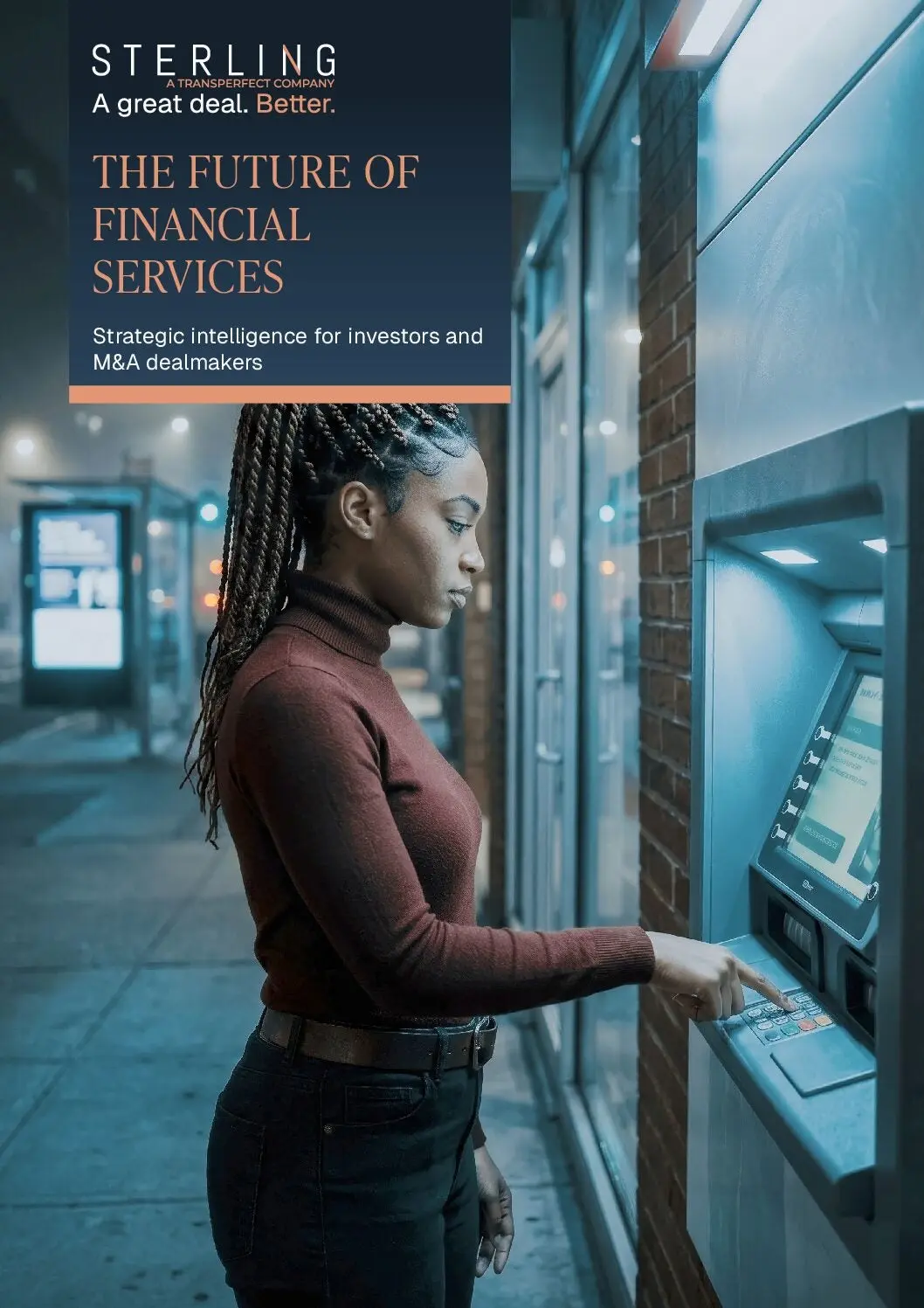
The global financial services industry is currently navigating a period of unprecedented transformation, characterized by rapid technological advancements that are fundamentally reshaping how value is created, capital is allocated, and deals are struck. While artificial intelligence (AI) is a prominent driver, the sector’s evolution extends far beyond this single technology, encompassing a broader suite of innovations and strategic realignments. This profound shift is set to redefine the landscape of banking and insurance for the next decade, from 2025 to 2035, presenting both significant challenges and lucrative opportunities for investors, M&A dealmakers, and corporate strategists.
The Sterling Financial Services Podcast: Decoding the Future of Banking and Insurance
To delve into these critical developments, a new podcast episode, produced in association with Sterling Technology, offers a comprehensive exploration of the forces reshaping the financial services sector. The podcast is specifically designed to equip its target audience—investors, M&A dealmakers, and corporate strategists—with the insights necessary to understand and capitalize on the evolving market.
The episode promises to dissect the intricate shifts occurring within banking and insurance, pinpointing the key themes that are driving these changes and illuminating the emerging opportunities. A particular focus will be placed on providing a SWOT (Strengths, Weaknesses, Opportunities, Threats) analysis for the year 2027, offering a forward-looking perspective on the industry’s trajectory.
The distinguished guest featured in this pivotal episode is Douglas Blakey, the esteemed editor of GlobalData’s banking and payments titles. Blakey’s expertise is expected to provide a nuanced and data-driven perspective on the complex dynamics at play within the financial services ecosystem.
A Decade of Disruption: 2025-2035
The period between 2025 and 2035 is anticipated to be a watershed moment for the financial services industry. This decade will be marked by several overarching trends that are already beginning to manifest:
1. Digitalization and Automation: The relentless march of digital transformation, accelerated by the pandemic, continues to redefine customer expectations and operational efficiencies. Banks and insurers are investing heavily in digital platforms, mobile banking, cloud computing, and robotic process automation (RPA) to streamline operations, reduce costs, and enhance customer experience. This trend is not limited to front-end interfaces; it extends to back-office processes, risk management, and compliance.
- Supporting Data: A recent report by Statista indicated that the global digital banking market size was valued at over $20 trillion in 2023 and is projected to grow at a compound annual growth rate (CAGR) of over 10% in the coming years. Similarly, the InsurTech market, which leverages technology to innovate insurance products and services, is experiencing exponential growth, with global premiums projected to reach hundreds of billions of dollars by the end of the decade.
2. The Rise of FinTech and Neobanks: Financial technology (FinTech) companies have disrupted traditional banking models by offering innovative, customer-centric solutions. Neobanks, digital-only banks, have gained significant traction by providing seamless user experiences, lower fees, and specialized services. This has forced incumbent institutions to either collaborate with FinTechs, acquire them, or develop their own digital capabilities to remain competitive.
- Background Context: The emergence of FinTech is not a new phenomenon, but its maturity and integration into mainstream financial services have accelerated. Early FinTech players focused on niche areas like payments and lending, but now they are expanding into wealth management, investment, and even core banking functions. This competitive pressure has spurred traditional banks to re-evaluate their business models and invest in technology and innovation.
3. Artificial Intelligence and Machine Learning: AI and ML are no longer buzzwords but integral components of the financial services strategy. They are being deployed across various functions, including fraud detection, credit scoring, personalized customer service, algorithmic trading, and risk assessment. AI-powered chatbots and virtual assistants are enhancing customer engagement, while advanced analytics are providing deeper insights into customer behavior and market trends.
- Fact-Based Analysis of Implications: The widespread adoption of AI promises significant improvements in operational efficiency and decision-making. However, it also raises concerns around data privacy, algorithmic bias, and the need for robust ethical frameworks. Financial institutions must invest in data governance, cybersecurity, and talent development to harness the full potential of AI responsibly.
4. Shifting Capital Allocation and Investment Strategies: The economic landscape is characterized by fluctuating interest rates, geopolitical uncertainties, and evolving investor preferences. Financial institutions are adapting their capital allocation strategies to navigate these complexities, focusing on areas with higher growth potential and greater resilience. This includes increased investment in sustainable finance, private markets, and alternative assets.
- Broader Impact and Implications: A focus on sustainable finance, for instance, is driven by growing investor demand for Environmental, Social, and Governance (ESG) compliant investments. This trend is not only influencing investment decisions but also prompting companies to adopt more sustainable business practices, creating a virtuous cycle.
5. Evolving M&A Landscape: The transformative pressures on the industry are fueling a dynamic M&A environment. Consolidation is expected as larger institutions acquire smaller players to gain market share, access new technologies, or expand their geographic reach. Strategic partnerships and joint ventures are also becoming more prevalent as companies seek to share risks and leverage complementary capabilities.
- Timeline/Chronology: We can anticipate a surge in FinTech acquisitions by traditional banks and insurers in the immediate future (2025-2027) as they seek to quickly integrate innovative technologies. Later in the decade (2028-2032), we might see cross-border consolidation and mergers driven by the need for scale to compete globally. By 2035, the industry might be characterized by a more consolidated landscape with fewer, but larger, integrated financial services providers.
6. Regulatory Adaptation: Regulators worldwide are grappling with the rapid pace of technological change and its implications for financial stability, consumer protection, and market integrity. New regulations are emerging to address issues like data privacy, cybersecurity, and the responsible use of AI. Financial institutions must remain agile and proactive in adapting to these evolving regulatory frameworks.
- Statements or Reactions (Inferred): While specific official statements are not available for this general trend, it’s logical to infer that financial industry bodies and individual firms are actively engaging with regulators, providing feedback on proposed regulations, and investing in compliance infrastructure to meet new requirements. The Bank for International Settlements (BIS) and various national central banks are consistently publishing reports and consultations on these evolving regulatory challenges.
The Podcast’s Value Proposition: A SWOT Analysis for 2027
The inclusion of a SWOT analysis for 2027 within the podcast episode is particularly noteworthy. This forward-looking assessment will provide listeners with a tangible framework to understand the current standing and future potential of the financial services sector.
- Strengths: These might include the industry’s inherent resilience, its deep understanding of risk management, and its established customer bases. The ongoing digital transformation efforts are also a growing strength, enhancing efficiency and customer reach.
- Weaknesses: Potential weaknesses could encompass legacy IT systems that hinder rapid innovation, the challenge of attracting and retaining top tech talent, and the ongoing pressure on traditional revenue streams due to increased competition.
- Opportunities: The podcast will likely highlight opportunities in areas such as personalized financial advice powered by AI, embedded finance solutions, the growing demand for sustainable investments, and the expansion into emerging markets. The potential for new business models built around data analytics and blockchain technology will also be explored.
- Threats: Key threats will undoubtedly include escalating cybersecurity risks, the potential for disruptive innovation from agile new entrants, evolving regulatory landscapes that could impose significant compliance burdens, and macroeconomic volatility that impacts investment and lending activities.
Douglas Blakey: An Expert Perspective
Douglas Blakey’s role as editor of GlobalData’s banking and payments titles positions him as an ideal authority to guide this discussion. His extensive experience in analyzing industry trends, market dynamics, and the financial performance of leading institutions provides a credible and insightful perspective. GlobalData is a leading provider of data and analytics to the financial services industry, suggesting that Blakey’s commentary will be grounded in robust data and in-depth research.
Conclusion: Navigating the Future
The financial services industry is at a critical juncture. The confluence of technological innovation, evolving customer expectations, and a dynamic economic environment demands strategic foresight and adaptability. This podcast, by focusing on the key shifts in banking and insurance from 2025 to 2035 and providing a specific outlook for 2027, offers an invaluable resource for those seeking to understand and navigate this complex and exciting future. The insights provided by Sterling Technology and Douglas Blakey are poised to equip investors, dealmakers, and strategists with the knowledge to identify opportunities, mitigate risks, and thrive in the evolving global financial landscape. The ongoing transformation is not merely about adopting new technologies; it is about fundamentally rethinking how financial services are delivered, how value is generated, and how the industry contributes to broader economic growth and stability.
