

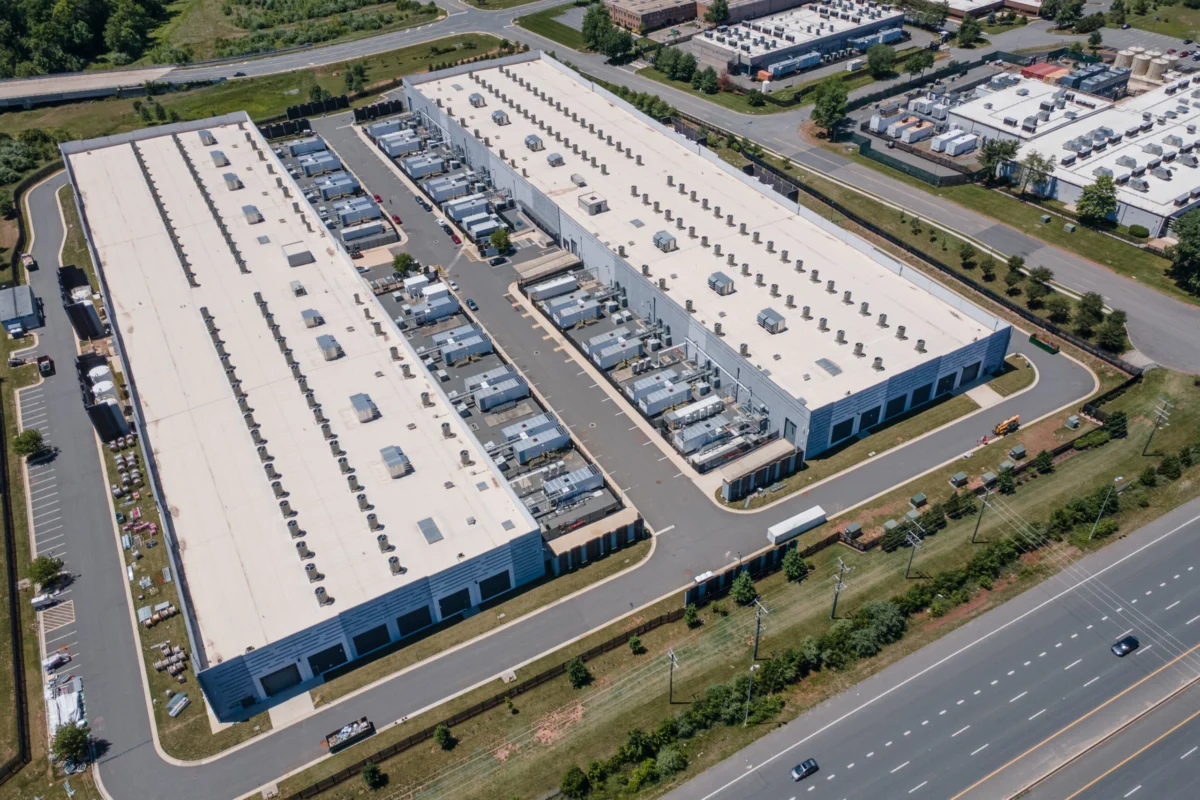
A groundbreaking study released by First Street, a leading climate risk analytics firm, has unveiled a stark reality: a vast majority of the world’s data center capacity is exposed to significant threats from both acute and chronic climate hazards. The findings, which analyzed 97 global data center markets, indicate that 79% of this critical infrastructure faces elevated risk from severe, climate-induced events such as flooding, extreme winds, and wildfires. These acute hazards not only disrupt operations and increase downtime but also drive up insurance premiums and repair costs, posing a profound challenge to the digital backbone of the global economy.
The study further highlighted that over half of all global data centers are situated in markets contending with chronic climate stress. These persistent conditions, including extreme heat and prolonged drought, directly impact energy efficiency, escalate operational expenditures, and degrade equipment over time. While singular catastrophic events often grab headlines, First Street’s research emphasizes that the cumulative, long-term effects of chronic climate change are capable of inflicting the most extensive physical and financial damage.
The Unseen Threat: Acute vs. Chronic Hazards
Data centers are the unseen engines of the modern world, housing the servers, networking equipment, and storage that power everything from cloud computing and artificial intelligence to financial transactions, healthcare systems, and everyday internet use. Their uninterrupted operation is paramount for global commerce and communication. The identified climate risks represent a systemic vulnerability that, if unaddressed, could have cascading consequences.
Acute hazards, characterized by sudden and intense environmental events, present immediate threats. For instance, extreme winds, often associated with hurricanes or tornadoes, can cause structural damage to facilities, disrupt power lines, and sever critical fiber optic connections. Flooding, whether from torrential rainfall, storm surges, or overflowing rivers, can inundate equipment, lead to electrical failures, and render facilities inoperable for extended periods. Wildfires, increasingly prevalent in many regions, not only pose direct threats to physical structures but also cause air quality issues that can impact sensitive electronics and lead to power grid instability. The study underscores that nearly four-fifths of the world’s data capacity is in the crosshairs of these immediate, high-impact events.
In parallel, chronic climate stressors insidious threats that gradually erode operational stability and profitability. Extreme heat necessitates greater cooling efforts, significantly increasing energy consumption and, consequently, operational costs. Data centers are massive energy consumers, and rising ambient temperatures force cooling systems to work harder, reducing their efficiency and increasing their carbon footprint. Drought conditions, often accompanying extreme heat, exacerbate this problem by limiting the availability of water, which many cooling systems rely upon. These chronic stresses also contribute to premature equipment degradation, shortening the lifespan of expensive infrastructure and increasing the frequency of maintenance and replacement. The long-term nature of data center investments, typically spanning 20 to 30 years, makes these chronic risks particularly concerning for stakeholders.
Flawed Foundations: The Problem with Traditional Risk Models
A critical finding of the First Street study is the inadequacy of current risk assessment methodologies. Matthew Eby, CEO of First Street, articulated this deficiency, stating, "Most underwriting for real assets still uses historical data, but the climate is no longer behaving the way the historical record would predict." He elaborated that as phenomena like heatwaves, droughts, and water stress intensify, outdated models simply fail to provide a complete and accurate view of the evolving risk landscape.
Jeremy Porter, First Street’s chief economist, echoed this sentiment, pointing out that backward-looking models neglect to incorporate the accelerating pace of climate change and the multifaceted sources of associated risks. "Ultimately, it’s just something that we’re underestimating," Porter remarked. He specifically cited government models that rely on past precipitation levels, which are no longer reliable indicators given that a warming Earth causes clouds to hold more moisture, leading to heavier and more intense rainfall events. This oversight in modeling means that many investors and developers are making long-term capital allocation decisions based on incomplete or even misleading data.
The danger, as highlighted by the study, is that investors continue to rely on traditional metrics when planning and developing data centers, often overlooking the profound impact climate change will have on long-term operating conditions. Given the multi-decade operational lifespan expected of these facilities, failing to account for future climate scenarios represents a significant mispricing of risk. Eby emphasized, "Investors who incorporate these factors into underwriting and capital allocation decisions will be better positioned to identify resilient markets and avoid mispriced risk."
Geographic Vulnerabilities: A Global Snapshot
The First Street report meticulously mapped climate risk across different geographic regions, revealing a highly uneven distribution of vulnerability. The Asia-Pacific (APAC) region emerged as the most exposed, with a staggering 89% of its data center capacity facing climate risk. This high percentage is particularly concerning given the rapid digital transformation and exponential growth of data center infrastructure across many APAC nations, including India, China, and Southeast Asian economies. The region is frequently impacted by typhoons, monsoons, and extreme heatwaves, making its digital backbone exceptionally susceptible.
In contrast, the Americas face exposure for 50% of their data center capacity, while Europe, the Middle East, and Africa (EMEA) collectively see 46% exposure. While these figures are lower than APAC, they still represent substantial portions of critical infrastructure at risk. The study specifically identified some of the industry’s fastest-growing markets as among the most exposed. In the U.S., Northern Virginia, a global hub for data centers, particularly for cloud providers like Amazon Web Services (AWS), shows significant vulnerability. Globally, Johor in Malaysia and Marseille in France were also highlighted as high-risk, rapidly expanding markets.
Porter noted that "The top 10 markets with acute climate risk across the globe, most of them are in the U.S. Most of them have wind and flood risk." He added that while the U.S. experiences considerable acute climate risk, it generally faces less chronic climate stress compared to other parts of the world. Conversely, Nordic markets, known for their cooler climates and abundant renewable energy sources, registered the lowest climate risk, positioning them as potentially more resilient locations for future data center development.

Economic Repercussions: Costs and Investment Risks
The economic implications of these climate risks are multifaceted and substantial. Increased downtime, whether from acute events or chronic stress, translates directly into lost revenue for data center operators and their clients. Businesses reliant on cloud services can face disruptions to their operations, financial transactions, and customer services, leading to broader economic ripple effects. The cost of repairs following severe weather events can be astronomical, encompassing structural damage, equipment replacement, and extensive restoration efforts.
Insurance costs are also on an upward trajectory. As the frequency and intensity of climate events increase, insurers are re-evaluating their risk models and adjusting premiums accordingly. Data centers, with their high-value equipment and critical role, represent significant liabilities, and rising insurance expenses will inevitably impact their operational budgets. The study’s emphasis on "mispriced risk" suggests that current investment valuations may not fully account for these escalating costs, potentially leading to overvalued assets in vulnerable locations.
For investors, the findings present both challenges and opportunities. Those who fail to integrate robust climate risk assessments into their due diligence processes risk substantial financial losses over the long term. Conversely, investors who proactively identify and invest in resilient markets and facilities that incorporate advanced mitigation strategies stand to gain a competitive advantage. The long-term viability of a data center investment is increasingly intertwined with its climate resilience, making environmental factors as crucial as traditional financial metrics.
Industry Responses and Mitigation Strategies
Despite the sobering findings, the data center industry is not entirely passive. Some developers and operators are beginning to integrate climate considerations into their design and operational strategies. Digital Realty, a prominent global data center provider, exemplifies this proactive approach. Andrew Power, CEO of Digital Realty, highlighted their efforts on the Property Play podcast, stating, "Almost all of our data centers today, 300 around the world, the global portfolio, are either a waterless system or closed loop water." He explained that these investments eliminate evaporation, significantly reducing water consumption and mitigating risks associated with drought and water scarcity.
While developers can implement resilient measures for building envelopes – the physical barriers between a building’s interior and the outside – to protect structures from severe weather, Porter emphasizes that true resilience extends beyond the immediate structure. He argues that understanding the actual systems that connect to the data centers, and their internal and external vulnerabilities to climate risk, is paramount. This necessitates a "systems-level thinking" that looks beyond mere building and parcel-specific risk.
Porter advocates for a holistic approach that considers broader infrastructure and community demographics. "Acute climate risk can be mitigated with building adaptation, so that, that’s not a huge issue. Then you start to think about the system, though, you start to think about the infrastructure, the egress, the access to the site, power access. There is a building mitigation process, but then there’s a community mitigation process," he elaborated. This means assessing the resilience of local power grids, transportation networks, and emergency services, as these external factors can profoundly impact a data center’s ability to operate during and after a climate event. A robust community infrastructure provides the necessary support systems for a data center to maintain functionality and recover quickly.
The Broader Context: Why Data Centers Matter
The criticality of data centers cannot be overstated. They are the bedrock of the digital economy, enabling everything from streaming services and online retail to complex scientific research and global communication. The exponential growth in data generation, driven by artificial intelligence, the Internet of Things (IoT), and expanding digital populations, ensures that the demand for data center capacity will continue to surge. This makes the vulnerability highlighted by the First Street study a matter of global economic and societal stability.
Historically, climate-related disruptions have already offered glimpses into the fragility of digital infrastructure. Hurricane Sandy in 2012, for instance, caused widespread power outages in New York City, impacting numerous data centers and leading to significant service disruptions for businesses and individuals. More recently, wildfires in California have periodically threatened power grids, forcing pre-emptive shutdowns and raising concerns about the resilience of local data center clusters. These events underscore the urgent need for comprehensive risk assessment and mitigation.
The Path Forward: Policy, Innovation, and Collaboration
The findings from First Street necessitate a multi-pronged approach involving policymakers, industry leaders, investors, and climate scientists. On the policy front, there is a clear need for governments to update building codes, infrastructure planning guidelines, and land-use regulations to incorporate forward-looking climate projections. This includes investing in resilient power grids, improving flood defenses, and developing early warning systems for extreme weather events.
For the data center industry, innovation in design and technology will be key. This includes developing more energy-efficient cooling systems that require less water, exploring renewable energy sources to power facilities, and implementing advanced physical protections against hazards like extreme winds and seismic activity. The shift towards modular data centers and edge computing could also offer greater resilience by distributing capacity and reducing the reliance on single, large vulnerable facilities.
Collaboration between climate risk analytics firms like First Street, insurers, and the financial sector is crucial to developing more accurate and dynamic risk models. These models must move beyond historical data and integrate sophisticated climate projections to provide a realistic view of future liabilities and opportunities. Ultimately, addressing the climate vulnerability of data centers requires a collective commitment to integrate climate resilience as a core principle in every stage of planning, investment, development, and operation. Failure to do so risks not only substantial financial losses but also widespread disruption to the digital infrastructure that underpins modern life.
