

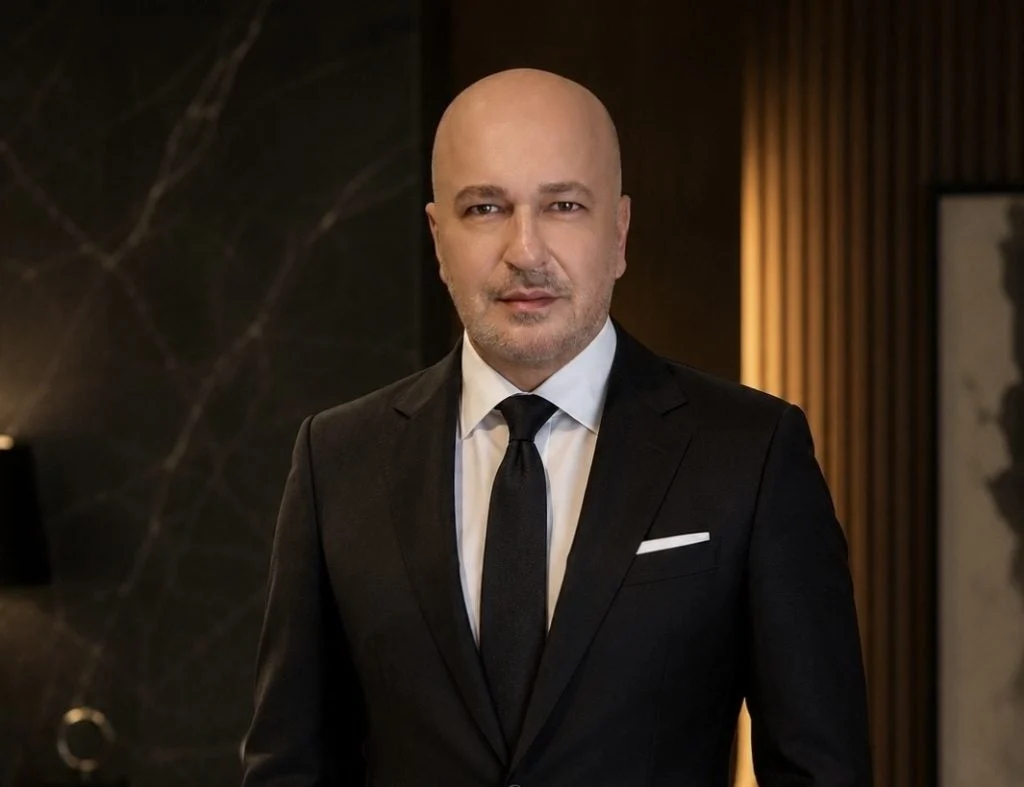
In an era marked by rapid technological advancement and shifting global dynamics, the landscape of investment is undergoing a profound transformation. The traditional metrics of financial return are increasingly being augmented by considerations of strategic capability, geopolitical resilience, and long-term value creation. Sertan Ayçiçek, a seasoned executive with over 25 years of international business leadership experience across business, diplomacy, international institutions, academia, and strategic investment, offers a compelling perspective on these evolving paradigms. As Chairman of the Board of Royal Funds, CEO of IKAR Holdings, and Vice President of the Swiss Academy, Ayçiçek’s insights sit at the critical intersection of private capital, geopolitics, and the pursuit of enduring economic value.
Ayçiçek’s career trajectory, spanning diverse and influential spheres, imbues his analysis with a unique depth. His background in diplomacy and international institutions, in particular, has provided him with a granular understanding of how political decisions translate into tangible economic realities. "My experience in diplomacy and international institutions taught me that political decisions often become economic realities before they appear in financial statements," Ayçiçek explains. "A regulatory decision can redirect capital, an export restriction can alter a company’s competitive position, and energy policy can reshape an entire sector." This foundational understanding underscores his assertion that for modern investors, the question extends far beyond immediate financial attractiveness. Instead, the focus must shift to identifying the complex web of forces—financial, technological, regulatory, geopolitical, and strategic—that will shape an asset’s value over the next decade and beyond.
The Evolving Role of Private Bankers in a Complex World
The implications of this geopolitical shift are particularly significant for private bankers advising High Net Worth (HNW) and Ultra High Net Worth (UHNW) clients. While core financial analysis—cash flows, balance sheets, valuations, and management quality—remains paramount, it must now be integrated into a broader contextual framework. Ayçiçek elaborates on this, stating, "Financial analysis remains fundamental… But these factors increasingly need to be considered within a wider context."
Consider, for instance, an investment in the burgeoning field of artificial intelligence. This is no longer a purely technological consideration. It necessitates an understanding of the intricate global supply chains for semiconductors, the vast energy requirements of AI infrastructure, evolving data privacy regulations across jurisdictions, and the availability of specialized talent. Similarly, investments in the energy sector are profoundly influenced by considerations of energy security, the development of new infrastructure (such as renewable energy grids or advanced nuclear facilities), and the evolving national policies designed to achieve energy independence and climate goals. These factors can materially alter the long-term economic viability of energy-related assets, far beyond traditional financial projections.
The role of the financial advisor, therefore, is not merely to predict the next geopolitical flashpoint, but to equip clients with the foresight to understand how overarching structural developments could impact their existing portfolios and future investment opportunities. This involves a more holistic approach to due diligence, incorporating risk assessments that account for potential regulatory shifts, trade disputes, or international alliances that could reshape entire industries.
Family Offices: Navigating Private Markets with Long-Term Vision
Family offices, with their inherent ability to adopt a genuinely long-term investment horizon, are uniquely positioned to capitalize on these evolving trends. Unlike traditional funds that may face pressure from shorter investment cycles, family offices can afford to look beyond the immediate fluctuations of the market and concentrate on identifying and benefiting from fundamental structural changes. "Many family offices have the ability to take a genuinely long-term view and are not necessarily constrained by the same time horizon as a traditional fund," Ayçiçek notes.
However, this capacity for patience must be complemented by rigorous investment discipline. Ayçiçek emphasizes that "patient capital still requires discipline." Family offices must meticulously assess critical factors such as management quality, robust governance structures, the intricacies of capital structures, liquidity considerations, technological dependencies, and crucially, geopolitical exposure. The distinction, he clarifies, lies between possessing patient capital and adhering to a patient investment process. These are not interchangeable; a long-term perspective must be embedded within a disciplined and thorough evaluation framework.

The Rise of "Strategic Capital"
Ayçiçek introduces the concept of "strategic capital," a term that signifies a significant shift in how investment opportunities are evaluated. Traditionally, capital has been primarily assessed by its capacity to generate financial returns. While this remains a foundational requirement, investors are increasingly posing an additional, crucial question: "What strategic capability can this capital create?"
This evolving perspective is driving heightened attention towards sectors and technologies that are vital for national and global resilience. These include artificial intelligence, advanced energy infrastructure, semiconductor manufacturing, critical minerals extraction and processing, robust cybersecurity solutions, and advanced manufacturing capabilities. Ayçiçek posits that these are not merely investment themes, but rather "components of broader economic and strategic systems." They have the potential to significantly influence economic resilience and enhance strategic capabilities on a national and international level.
For private capital, this translates into a more expansive framework for opportunity assessment. It moves beyond evaluating an asset’s current worth to understanding the long-term value that ownership or investment can foster. This strategic lens is particularly relevant in private markets, which often offer direct access to companies undergoing profound structural transformations that may not yet be reflected in public market valuations.
Evaluating Private Markets Through a Strategic Lens
The emergence of strategic capital necessitates a re-evaluation of how private markets are assessed. While private markets offer unparalleled access to businesses and sectors undergoing significant structural evolution, identifying an attractive company is merely the initial step. Investors must delve deeper, scrutinizing management expertise, corporate governance, capital structure dynamics, competitive advantages, liquidity profiles, and the broader operational environment.
For family offices, this means framing investment decisions not just with the question, "Is this a good investment?" but also, "Does this investment align with our long-term objectives, our established risk framework, and our desired strategic capabilities?" This integrated approach ensures that capital deployment serves a dual purpose: generating financial returns while simultaneously contributing to the achievement of broader strategic goals.
Artificial Intelligence: Reshaping Investment Decision-Making
Artificial intelligence (AI) is a pivotal force reshaping both the investment landscape and the very process of investment decision-making. At the corporate level, AI is revolutionizing productivity, enhancing data analysis capabilities, transforming customer interactions, and optimizing operational models. From an investment perspective, AI offers the potential to significantly improve the ability to process vast quantities of information, identify subtle patterns, and conduct more sophisticated risk assessments.
However, Ayçiçek cautions against the notion that AI will entirely supplant human judgment. On the contrary, he suggests that the opposite may be true. As the volume of available data escalates, the capacity to discern what information is truly relevant and impactful becomes increasingly valuable. "Investment decisions still require judgement, context, and an understanding of people," he asserts, underscoring the enduring importance of human insight, intuition, and contextual understanding in navigating the complexities of financial markets.
Emerging Strategic Investment Considerations
Ayçiçek identifies several key areas where the most significant strategic investment considerations are emerging:

- Supply Chain Redesign and Infrastructure: As global supply chains are reconfigured for greater resilience and efficiency, substantial new infrastructure investments are required, ranging from advanced logistics hubs to localized manufacturing facilities.
- Energy System Transformation: The global shift towards sustainable and secure energy sources necessitates significant capital allocation towards renewable energy generation, energy storage solutions, grid modernization, and potentially next-generation nuclear power.
- Technological Sovereignty: Governments worldwide are increasingly prioritizing technological independence and self-sufficiency, leading to capital flows directed towards domestic innovation, advanced manufacturing, and the development of critical technologies.
These interconnected trends highlight why sectors like energy, semiconductors, data infrastructure, and advanced manufacturing are no longer viewed in isolation but as integral components of broader economic and strategic systems. The most compelling opportunities often lie at the confluence of these disciplines, requiring a multidisciplinary approach to investment.
The Crucial Role of Governance
The significance of governance cannot be overstated when private capital enters a business. Ayçiçek states unequivocally, "Capital without governance can create acceleration without direction." When capital is deployed, the objective should extend beyond mere expansion; it should be geared towards building a stronger, more resilient organization. This necessitates well-defined decision-making structures, clear lines of accountability, unwavering transparency, and a coherent long-term strategy. For private investors, governance is evolving from a mere compliance issue into an intrinsic element of the investment thesis itself, fundamentally influencing the potential for sustainable value creation.
Evaluating Companies and Management Teams
When assessing a company or its management team, Ayçiçek prioritizes several key qualities. Foremost among these is "intellectual honesty," meaning management must possess a clear-eyed understanding of both the opportunities and the inherent risks. While ambition is crucial, it must be tempered with discipline. Furthermore, Ayçiçek places significant emphasis on governance. A company might possess groundbreaking technology or operate in a highly attractive market, yet still present substantial investment risk if its governance structures are weak. Ultimately, the goal is to ascertain whether management, capital, strategy, and governance can mutually reinforce one another, creating a virtuous cycle of growth and value creation.
Switzerland’s Role in International Capital
Switzerland’s unique position as a global hub for finance, international institutions, diplomacy, and cross-border business makes it a compelling environment for an investment platform with an international outlook. Ayçiçek notes that this "ecosystem is valuable" for such an enterprise. However, the firm’s strategic approach is not confined by national borders. The focus remains on identifying where capital, technology, strategic capability, and long-term economic opportunity converge globally.
The Global Strategic Capital Council
To foster dialogue and collaboration in this increasingly interconnected world, Ayçiçek has established the Global Strategic Capital Council. This initiative aims to create a platform for discussion around cross-border investment, strategic capital, and international economic transformation. "The global investment environment has become too interconnected for capital to be considered in isolation," Ayçiçek observes. He stresses that investors, businesses, institutions, and strategic partners must develop a deeper mutual understanding. In this evolving landscape, "relationship infrastructure is becoming almost as important as the financial infrastructure itself."
Entrepreneurs and Capital: A Strategic Partnership
For entrepreneurs, understanding the nuances of institutional and private capital is paramount. Ayçiçek advises them to look beyond mere fundraising. The critical question is not simply, "Who will invest in my company?" but rather, "What type of capital does my company need at this particular stage of its development?" A company’s capital requirements will evolve, potentially necessitating venture capital in its early stages, followed by growth capital, strategic corporate investment, and eventually, institutional or infrastructure capital as it matures. The right capital partner can offer far more than financial resources; they can provide invaluable expertise, extensive networks, robust governance frameworks, access to new markets, and crucial strategic capabilities.
The Next Decade of Private Capital and Wealth Management
Looking ahead, Ayçiçek anticipates that the lines between finance and strategy will continue to blur. Investors and their advisors will need to cultivate a deep understanding of technology, geopolitics, regulatory landscapes, and human behavior, akin to their mastery of financial markets. AI is poised to revolutionize industries, energy will assume an increasingly strategic role, data infrastructure will become critical national infrastructure, robotics will impact productivity, and supply chains will be fundamentally re-architected around resilience. "You cannot understand the future economy by looking only at today’s financial statements," Ayçiçek concludes. "You need to understand the forces behind those numbers."
The Philosophy of Royal Funds
The guiding philosophy behind Royal Funds, as articulated by Ayçiçek, is that "capital should not simply follow the future. It should help build it." The firm’s objective is to identify transformative structural changes, comprehend the underlying forces driving them, and strategically connect the appropriate capital, companies, and strategic partners to foster enduring long-term value. The next generation of investment will be defined not merely by the availability of capital, but by the effectiveness with which investors can discern where capital can generate significant, sustainable strategic value. This forward-thinking approach positions Royal Funds at the vanguard of a new era in investment, one where strategic foresight and robust governance are as critical as financial acumen.
