

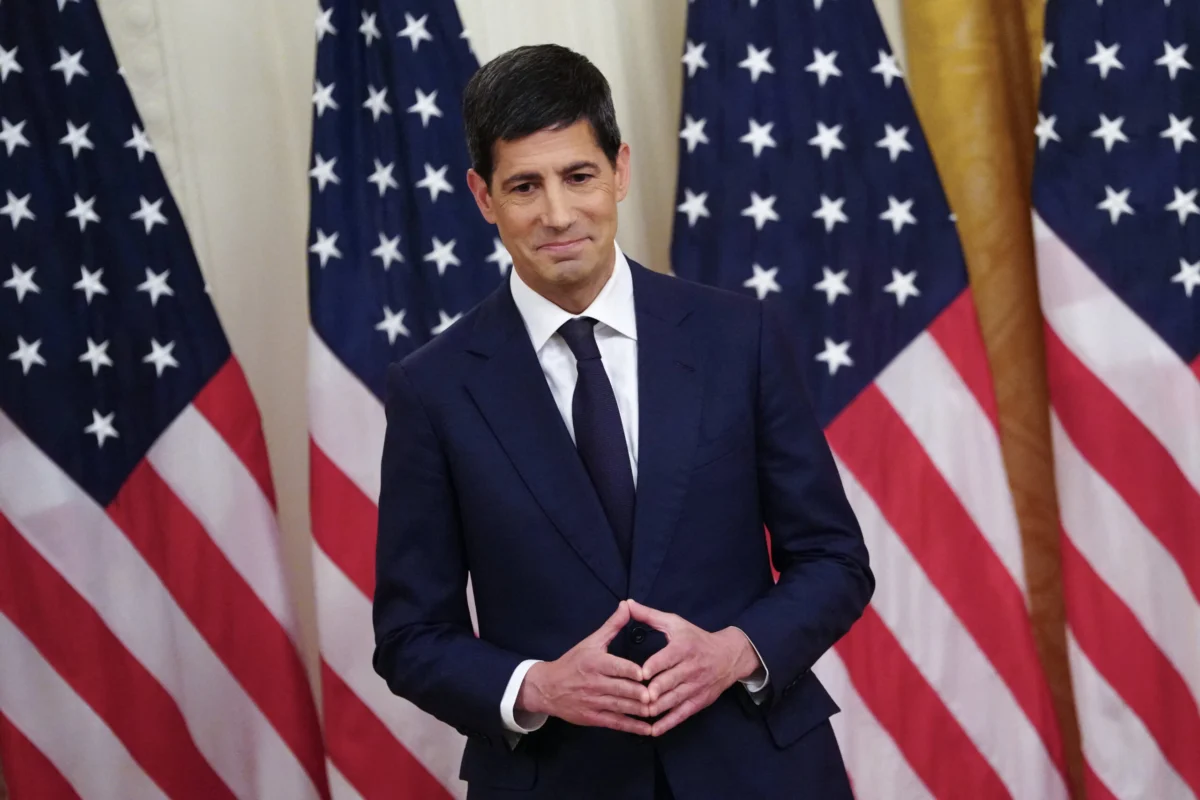
New Federal Reserve Chair Kevin Warsh has barely settled into his East Room office, following a May 22, 2026, swearing-in ceremony at the White House, before confronting a complex economic landscape that immediately challenges his policy vision. A robust May jobs report, far exceeding expectations, has effectively extinguished any lingering hopes for imminent interest rate cuts, simultaneously illuminating a treacherous path for the central bank under its new leadership. The unexpected strength of the labor market, coupled with stubbornly high inflation and geopolitical uncertainty, sets the stage for a critical early test of Warsh’s ability to navigate internal dissent and shape a cohesive monetary policy.
The possibility of rate reductions, which had been a subject of cautious optimism in some circles, was already on tenuous ground heading into Friday’s release of the nonfarm payrolls report. However, the unexpectedly strong gain of 172,000 jobs in May, compounded by significant upward revisions for prior months, delivered a decisive blow to the case for policy easing. This surge in employment, coming at a time of elevated inflation and amidst the backdrop of the ongoing Iran war’s impact on global energy markets, presents a formidable challenge to the Federal Reserve’s dual mandate of achieving maximum employment and price stability.
"If I’m sitting at the Federal Reserve, my assessment would be clear: job growth is robust, indicating no immediate need for monetary policy to support the labor market. Concurrently, inflation remains elevated," stated Gus Faucher, chief economist at PNC. "Therefore, the prudent course of action is to maintain the fed funds rate at its current level until we gain a clearer and more consistent picture of disinflationary trends." This sentiment reflects a growing consensus among economists that the current economic data strongly argues against any dovish pivot in the near term.
Indeed, market expectations rapidly adjusted in the aftermath of the nonfarm payrolls report. Traders, utilizing the CME Group’s FedWatch tool, priced in an even lower probability of a rate cut at the upcoming June 16-17 Federal Open Market Committee (FOMC) meeting. More significantly, the odds of an interest rate hike by the end of 2026 surged to approximately 70% by midday Friday, signaling a dramatic shift in investor sentiment and a recognition of the increasing likelihood of further monetary tightening. This abrupt recalibration underscores the market’s responsiveness to data that defies the narrative of an economy cooling sufficiently to warrant rate cuts.
The New Chair’s Mandate and Economic Backdrop
Kevin Warsh, a former Federal Reserve Governor from 2006 to 2011, brings a distinguished background to the chairmanship. Known for his intellectual rigor and often perceived as a more hawkish voice within monetary policy circles, his appointment was seen by some as a potential pivot towards a more disciplined approach to inflation. His tenure as Governor coincided with the 2008 financial crisis, giving him firsthand experience in navigating economic turmoil. His nomination and subsequent swearing-in marked a new chapter for the central bank, following a period characterized by aggressive monetary stimulus to combat persistent inflationary pressures that emerged in the post-pandemic recovery.
The economic landscape Warsh inherits is complex. For over two years, the Fed has grappled with inflation that has consistently run above its symmetrical 2% target, driven by a combination of supply chain disruptions, robust consumer demand, and more recently, geopolitical events. Prior to the May jobs report, the Fed had engaged in a series of aggressive rate hikes, bringing the federal funds rate to a range that many considered restrictive. However, the economy’s resilience, particularly in the labor market, has repeatedly defied predictions of a slowdown, complicating the central bank’s efforts to bring inflation sustainably back to target without triggering a recession.
The "Iran war" reference in the initial assessment is not merely a passing comment; it represents a critical geopolitical variable directly impacting the Fed’s inflation outlook. Escalating tensions in the Middle East, particularly involving the Strait of Hormuz, a vital chokepoint for global oil shipments, have driven energy prices higher. With crude oil consistently trading above $90 a barrel, these geopolitical risks translate directly into higher headline inflation figures, impacting everything from transportation costs to manufacturing inputs. This external shock adds another layer of complexity to the Fed’s challenge, as it grapples with inflationary pressures that are partly beyond the scope of domestic monetary policy.
A Chorus of Dissent: Challenges from Fed Peers
Warsh’s dilemma, however, transcends the simple calculus of where interest rates are headed. A significant and immediate challenge comes from within the Federal Reserve itself, where a number of his colleagues have begun to openly question not only the chair’s implied policy positions but also the fundamental framework and interpretative filters through which policymakers assess inflation, economic growth, and the appropriate stance of monetary policy. This internal dialogue, while often collegial, signals a spirited debate that Warsh must navigate to build consensus.
In recent days, several influential central bank officials have used public forums to articulate positions that subtly, yet pointedly, challenge core policy assumptions Warsh has reportedly held since his emergence as a leading candidate for the chair’s seat.
Governor Christopher Waller, a prominent voice on the FOMC, expressed significant worry that consumer and market psychology was in danger of shifting their inflation expectations higher. Waller, in a speech, underscored the critical importance of anchored inflation expectations, noting that if the public begins to anticipate higher prices as a norm, it can become a self-fulfilling prophecy, making the Fed’s job of restoring price stability considerably harder. This directly challenges any inclination to view current inflation as purely transitory or easily manageable.
St. Louis Fed President Alberto Musalem directly took on Warsh’s stated belief that the advent of artificial intelligence (AI) and its anticipated productivity gains would serve as a powerful disinflationary force on the economy. While some economists indeed point to AI’s potential to boost efficiency and lower costs, Musalem contended in a recent address, "it would be remarkably risky to rely on the prospect of higher productivity growth in the future to solve our inflation problem today." His argument emphasizes the immediacy of the inflation challenge and the speculative nature of future productivity gains, urging the Fed not to delay necessary tightening based on unproven long-term trends.
Meanwhile, Dallas Fed President Lorie Logan countered Warsh’s reliance on "trimmed mean" measures for inflation. These statistical gauges, designed to strip out extreme price movements by discarding the highest and lowest inputs to inflation calculations, often present a picture of inflation closer to the Fed’s 2% target than broader headline data. Warsh has reportedly favored these measures, arguing they better reflect underlying inflationary trends, especially when surging energy prices might skew headline figures. However, Logan, whose own Dallas Fed produces one of the most widely followed trimmed mean measures, cautioned against placing too much weight on them. She articulated that "a change in the mix of price increases and decreases is causing the trimmed mean to drop too many price increases. That can pull the trimmed mean below the underlying trend in inflation." For April, the Dallas Fed’s trimmed mean PCE reading stood at 2.3%, significantly below the 3.8% headline PCE and the 3.3% core PCE (excluding food and energy), illustrating the potential for divergence. Logan’s warning, coming from the source of the data itself, was particularly potent, suggesting a need for a more comprehensive view. She concluded with a stark warning: "I am increasingly concerned that higher interest rates could be necessary later this year to fully restore price stability and appropriately balance both sides of the Fed’s dual mandate."
Governor Michelle Bowman weighed in, advocating that the Fed should not "overreact" to what could be a temporary price spike resulting from an energy supply shock, aligning partly with a desire to avoid unnecessary tightening. Bowman also stated her comfort with the Fed continuing to use "forward guidance" language in its post-meeting statements – language that markets have often interpreted as signaling that the next rate move could be a cut. This stance presents a nuanced challenge to Warsh, who is known to favor lower rates but has also expressed skepticism about the reliability and efficacy of forward guidance as a tool for future policy communication. However, Bowman, too, added a critical note of caution regarding the ongoing geopolitical conflict: "the longer the conflict persists, the more we should consider the effects on inflation in our outlook," implicitly acknowledging the potential for sustained inflationary pressures.
Finally, Governor Michael Barr recently delivered a pointed critique of Warsh’s advocacy for a smaller Fed balance sheet, insisting that such a narrow focus could cause more harm than good. A smaller balance sheet, achieved through quantitative tightening (QT), is intended to withdraw liquidity from the financial system, but Barr highlighted concerns about potential disruptions to market functioning and financial stability if unwound too aggressively or without proper consideration of its broader impact on the plumbing of Wall Street.
The Greenspan Parallel and Wall Street’s Skepticism
Beyond the internal debates, Warsh is also facing critical scrutiny from influential voices on Wall Street. The new chair, along with multiple White House officials, has often referenced the mid-1990s Federal Reserve under then-Chair Alan Greenspan as a template for navigating a similar economic environment. During that period, the Fed successfully managed a hot economy by allowing a productivity boom to act as a disinflationary force, effectively countering inflationary pressures without excessive tightening.
However, Jason Thomas, the influential head of global research and strategy at the Carlyle Group, argued in a recent client note that there are critical differences between the mid-1990s and today. Thomas contended that real interest rates—the difference between nominal interest rates and inflation—were significantly higher under Greenspan, making monetary policy far more restrictive then than it is today. This higher restrictiveness provided the Greenspan Fed with greater leeway to accommodate growth without fueling inflation. "The argument essentially is that Fed policy was tighter in that era than today," Thomas wrote, implying that the current Fed lacks the same inherent disinflationary buffer.
Thomas dramatically framed the current situation by quoting Vito Corleone from "The Godfather," asking, "’How did things ever get so far?’ This is the question Kevin Warsh should pose to colleagues when he chairs his first Federal Open Market Committee meeting later this month." He concluded his analysis with a stark warning: "Don’t expect any movement this meeting or next; the option value of waiting is too high given the scale of uncertainty introduced by the Strait of Hormuz closure. But it’s long past time to abandon the endemic easing bias that’s characterized policy for the past two years." This assessment suggests that the market believes the Fed has been too slow to acknowledge and respond to persistent inflation, a legacy Warsh must now address.
Navigating the Path Ahead: Implications for Warsh’s Leadership
Given the robust May jobs report, the persistent inflationary pressures, and the chorus of nuanced, yet pointed, challenges from within and outside the Fed, Warsh can anticipate stiff challenges as he prepares to chair his first FOMC meeting. The Federal Reserve, despite its internal disagreements, is traditionally known for its collegiality, but the breadth and depth of the current policy debate suggest that forging a consensus will require skillful leadership.
Cleveland Fed President Beth Hammack, a policymaker known for her concerns about inflation and who notably voted against the April statement due to its forward guidance language, echoed the skepticism regarding the sole reliance on trimmed mean and core inflation measures, especially with oil prices remaining above $90 a barrel. In a candid analogy during a recent public appearance, Hammack quipped, "What if I told you that my weight is amazing, I’m looking really great right now. My diet is perfect, except for the donuts I had for breakfast, the fried chicken I’m going to have for dinner, and the ice cream I’ll have after that, but other than that, I am totally on track?" Her point was clear: ignoring significant components of inflation, particularly energy, provides an incomplete and potentially misleading picture of underlying price stability.
Despite these intellectual skirmishes, Hammack expressed confidence in Warsh’s approach. She spoke of having "a conversation" with the new chair "a few weeks ago" and noted that "he is approaching the job with a real open mind." She added, "I think that he’s coming in asking some of those big-picture questions. What’s working well? Where can we do better? How do we help support our goals of maximum employment, price stability, and how do we really do that to serve the public? I think he is a public servant who will come in with an open mind and try to do his best."
This assessment, while positive about Warsh’s temperament, underscores the magnitude of the questions he faces. The initial days of his chairmanship are proving to be a baptism by fire, forcing him to immediately confront deep-seated disagreements over the interpretation of economic data, the appropriate theoretical frameworks, and the practical implementation of monetary policy. The strong jobs report has shifted the immediate focus from easing to potentially tightening, placing the burden on Warsh to articulate a clear strategy that can unite the FOMC and credibly guide the economy towards sustainable price stability without jeopardizing employment gains. The stakes are exceptionally high, not only for Warsh’s legacy but for the economic stability of the nation.
