

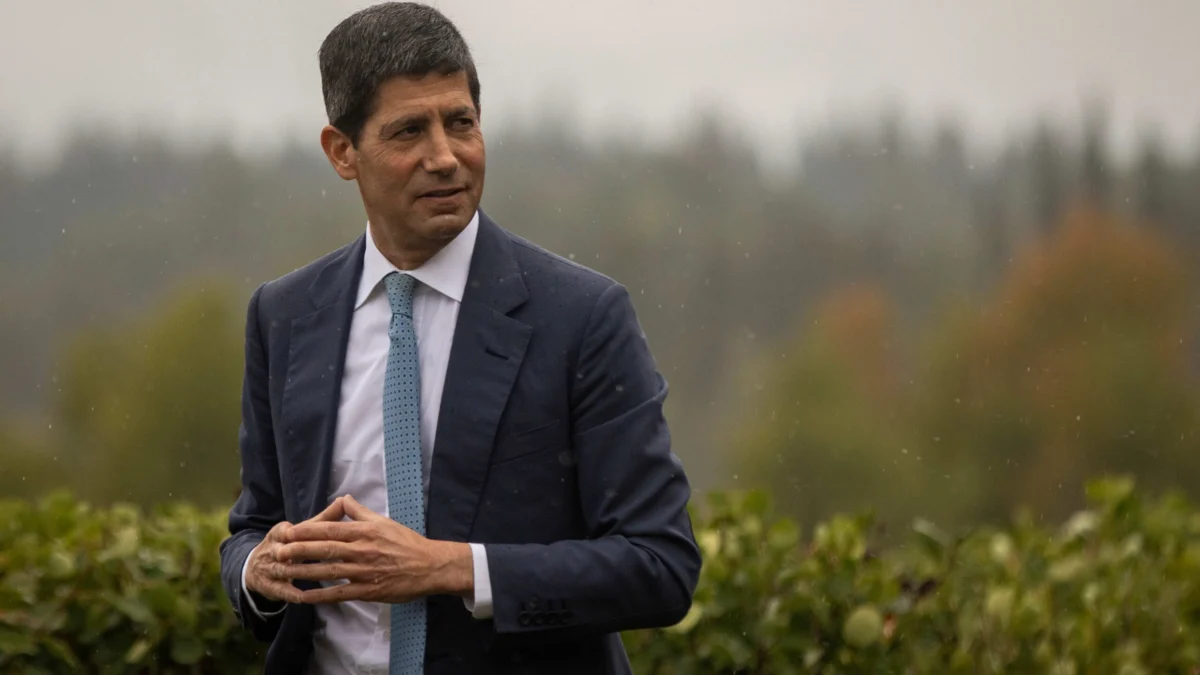
SAN FRANCISCO, Calif. – Federal Reserve Chairman Kevin Warsh’s deliberate shift towards a more secretive and less communicative approach to monetary policy guidance is drawing sharp criticism from leading economists and generating significant unease across financial markets. This departure from the transparency cultivated by his recent predecessors risks fostering "unproductive volatility" and undermining the effectiveness of monetary policy, according to Goldman Sachs chief economist Jan Hatzius.
Speaking at the firm’s prestigious Communacopia & Tech conference, Hatzius articulated a nuanced but firm critique of the new Chairman’s methodology. While acknowledging that explicit forward guidance on the exact path of the federal funds rate might not be essential in the current economic climate – suggesting it should be reserved primarily for crisis situations where interest rates are at or near the zero lower bound – Hatzius strongly emphasized the critical importance of transparency regarding the Fed’s "thought process."
"Transparency about the thought process, I do think, is important," Hatzius stated. "If investors understand how the Fed is going to react to new information, then they can anticipate those reactions that accelerate the transmission of monetary policy and that ultimately reduces the lags of monetary policy." He warned that without this foundational understanding, markets would be forced to operate with less information, leading to a higher degree of uncertainty and potentially destabilizing fluctuations. "I think markets are still going to try to figure out what the Fed is thinking, but they’ll have less information, less of a basis on which to do that. And that’s going to mean more volatility," Hatzius added. He drew a crucial distinction, noting that while volatility stemming from new economic information is natural and necessary for rate expectations to adjust, volatility born from a lack of central bank clarity is "unproductive."
Warsh’s Rocky Debut: The Jackson Hole Address
The concerns voiced by Hatzius come just weeks after Chairman Warsh’s debut keynote address at the highly influential Jackson Hole Economic Policy Symposium on August 28, 2026. This annual gathering of central bankers, finance ministers, academics, and financial market participants from around the world is traditionally a platform for significant policy insights and forward-looking statements. Expectations were high for Warsh’s first major public pronouncement as the head of the world’s most powerful central bank, particularly concerning the trajectory of interest rates amid persistent inflationary pressures.
However, Warsh’s address proved to be a stark declaration of a hawkish stance on interest rate policy, largely disappointing investors who had hoped for hints of an upcoming rate cut or a softening of the Fed’s inflation fight. Instead, the Chairman unequivocally warned that the central bank’s battle against inflation was "far from over." He asserted that with inflation "running above our 2% target… the Fed’s predominant focus right now should be on prices."
Warsh characterized recent inflation numbers as "concerning," signaling a resolute commitment to price stability. He underscored this commitment by stating, "we must be confident that underlying inflation is moving to our objective, clearly and at sufficient speed… otherwise, we have work to do." This firm stance, coupled with remarks implying that current financial conditions might not yet be restrictive enough to fully tame inflation, sent a clear message to markets: the Fed remains vigilant and prepared to act decisively.
The Philosophy of Forward Guidance: From Crisis Tool to Market Stabilizer
Chairman Warsh’s communication style represents a significant pivot from the practices institutionalized by his immediate predecessors: Jerome Powell, Janet Yellen, and Ben Bernanke. The concept of "forward guidance" gained prominence during the global financial crisis of 2008 and its aftermath, primarily under then-Chairman Ben Bernanke. Facing the zero lower bound for interest rates, the Fed needed alternative tools to influence market expectations and provide additional monetary accommodation. Forward guidance, in this context, involved explicit communication about the likely future path of the federal funds rate, often tied to specific economic thresholds (e.g., unemployment rates or inflation targets).
The rationale behind this approach was multifaceted:
- Anchoring Expectations: By providing clarity on future policy, the Fed aimed to anchor long-term interest rates and inflation expectations, thereby enhancing the effectiveness of its monetary policy, especially when conventional tools were constrained.
- Reducing Uncertainty: Clear communication helps financial markets and businesses anticipate future policy moves, allowing them to make more informed decisions about investment, hiring, and consumption. This reduces policy uncertainty, which can otherwise act as a drag on economic activity.
- Accelerating Transmission: As Hatzius highlighted, when markets understand the Fed’s reaction function, they can anticipate policy shifts, leading to quicker adjustments in financial conditions (e.g., bond yields, exchange rates, equity prices). This accelerates the "transmission mechanism" of monetary policy, meaning the central bank’s actions translate more rapidly into real economic effects.
Bernanke, Yellen, and Powell largely embraced and refined this philosophy, utilizing press conferences, detailed minutes, and regular speeches to communicate the Fed’s thinking and policy outlook. This era marked a conscious move away from the perceived ambiguity of the Alan Greenspan era, where the Fed often preferred to keep markets guessing to maximize its flexibility. Warsh’s current approach, favoring less explicit direction, echoes some aspects of that earlier, more enigmatic style, but in a markedly different economic environment where inflation is a primary concern rather than deflationary pressures.
Transparency vs. Ambiguity: The Economic Debate
The debate between transparency and ambiguity in central bank communication is long-standing. Proponents of transparency argue that it reduces information asymmetry, makes policy more predictable, and ultimately enhances the central bank’s credibility and effectiveness. By clearly articulating its goals, strategies, and reaction functions, the Fed can better steer market expectations and guide economic behavior towards desired outcomes.
Conversely, some argue that excessive transparency can limit the central bank’s flexibility, making it harder to react to unforeseen economic shifts without appearing to contradict previous statements. A degree of ambiguity, they contend, can allow the Fed greater room to maneuver and adapt to evolving circumstances. However, the risk, as Hatzius points out, is "unproductive volatility" – market swings not driven by fundamental economic news but by confusion over the central bank’s intentions. This kind of volatility can increase risk premiums, raise borrowing costs, and deter investment, ultimately counteracting the Fed’s policy objectives.
For instance, if market participants are unsure how the Fed will interpret incoming inflation data or employment figures, they might overreact to small fluctuations, leading to exaggerated movements in asset prices. This creates a less stable financial environment, potentially hindering the efficient allocation of capital and increasing the cost of doing business. Hatzius’s emphasis on the "thought process" is crucial here; even if the Fed isn’t pre-committing to specific rate paths, understanding how it processes information and what principles guide its decisions allows markets to form reasonable expectations.

Market’s Uneasy Reaction: Pricing in Uncertainty
The immediate aftermath of Warsh’s Jackson Hole speech vividly illustrated the market’s discomfort with his less-is-more communication strategy. Investors, who had positioned themselves for a potential dovish pivot or at least a softer tone, were caught off guard. Treasury yields, particularly for shorter-dated maturities sensitive to Fed policy, rose sharply as traders adjusted their expectations. Higher Treasury yields translate to higher borrowing costs across the economy, impacting everything from mortgages and corporate bonds to consumer loans.
More tellingly, market participants swiftly moved to price in a significantly higher probability of an interest rate hike at the upcoming mid-September Federal Open Market Committee (FOMC) meeting. Before Warsh’s speech, the likelihood of a hike was considerably lower, with many anticipating a pause or even a cut later in the year. Following his address, however, traders assigned a nearly 61% probability to an interest rate increase, reflecting a dramatic recalibration of expectations. This shift underscores how sensitive markets are to perceived signals from the Fed, even when those signals are conveyed through the absence of explicit guidance.
The ripple effects extended beyond the bond market. Equity markets reacted with caution, as higher interest rates typically imply tighter financial conditions and can dampen corporate earnings growth. Sectors sensitive to interest rates, such as technology and real estate, often experience heightened volatility in such environments. The US dollar also saw strengthening, as the prospect of higher rates makes dollar-denominated assets more attractive to international investors.
The Broader Economic Landscape in 2026
The backdrop to Chairman Warsh’s policy stance is a complex economic environment in 2026. While the global economy has largely recovered from recent shocks, persistent inflationary pressures remain a dominant concern for central banks worldwide. Factors contributing to this sustained inflation could include:
- Supply Chain Disruptions: Lingering effects from geopolitical tensions or localized disruptions continue to impact global supply chains, pushing up costs for raw materials and finished goods.
- Robust Demand: Strong labor markets and accumulated savings in some economies could be fueling robust consumer demand, putting upward pressure on prices.
- Energy and Commodity Prices: Volatility in global energy markets and other key commodities can transmit quickly through the economy, affecting a wide range of goods and services.
- Wage-Price Spiral Concerns: While not explicitly mentioned, persistent inflation raises concerns among policymakers about the potential for a wage-price spiral, where rising wages chase rising prices, embedding inflation more deeply into the economy.
The Federal Reserve operates under a dual mandate from Congress: to achieve maximum employment and price stability. With the labor market generally strong (implied by the Fed’s focus shifting away from employment concerns), the emphasis has squarely fallen on the price stability component. Warsh’s hawkish tone at Jackson Hole reaffirmed this prioritization, indicating that the Fed is prepared to endure potential short-term economic headwinds to bring inflation back to its long-term 2% target.
Implications for Monetary Policy and Fed Credibility
The current approach by Chairman Warsh carries significant implications for the future of monetary policy and the Federal Reserve’s institutional credibility. If the lack of clear guidance indeed leads to prolonged "unproductive volatility," it could undermine the very transmission mechanism the Fed relies upon to implement its policies. Markets thrive on predictability and clarity, and a sustained period of confusion could lead to:
- Increased Risk Premiums: Investors might demand higher returns to compensate for increased uncertainty, raising the cost of capital for businesses and governments.
- Delayed Investment Decisions: Businesses might postpone investment and expansion plans if they lack a clear understanding of the future interest rate environment, potentially slowing economic growth.
- Erosion of Trust: A central bank that is perceived as opaque or inconsistent in its communication risks losing the trust of the public and financial markets. This trust is crucial for the effectiveness of its policies, as expectations play a vital role in shaping economic outcomes.
- Policy Missteps: Without clear market feedback channels, the Fed itself might find it harder to gauge the impact of its policies, increasing the risk of over-tightening or under-tightening, leading to either a recession or persistent inflation.
The challenge for Chairman Warsh will be to find a balance between maintaining flexibility and providing enough clarity to prevent market dysfunction. While he may genuinely believe that less explicit guidance allows for greater maneuverability, the market’s initial reaction suggests a strong preference for the more transparent era established by his predecessors.
Looking Ahead: The September FOMC Meeting
All eyes are now firmly fixed on the upcoming mid-September FOMC meeting. The market’s pricing of a 61% probability of a rate hike indicates a strong expectation for further tightening. The decisions made at this meeting, and critically, the accompanying statements and Chairman Warsh’s subsequent press conference, will be pivotal.
Analysts will be scrutinizing every word for any hint of a shift in communication strategy. Will Warsh maintain his opaque approach, or will market pressure and the concerns voiced by economists like Hatzius prompt him to offer more insight into the Fed’s "thought process"? The economic data released between now and the FOMC meeting, particularly inflation figures and labor market reports, will heavily influence the committee’s decision. However, how that decision is communicated will be just as important for shaping market expectations and fostering stability.
Conclusion: Navigating the New Normal
Chairman Kevin Warsh has ushered in a new era of Federal Reserve communication, one characterized by a deliberate move away from the explicit forward guidance that defined the past decade. While his commitment to fighting inflation is clear, the method of conveying that commitment is stirring considerable debate and market anxiety. As Goldman Sachs’ Jan Hatzius aptly summarized, while a precise rate path may not always be necessary, transparency regarding the Fed’s underlying rationale is paramount for effective monetary policy transmission and the prevention of "unproductive volatility."
The coming months will be a crucial test for Chairman Warsh. His ability to manage inflation while also managing market expectations through effective communication will determine not only the immediate trajectory of the US economy but also the long-term credibility and operational framework of the Federal Reserve itself. The financial world watches intently, seeking clarity in a landscape increasingly defined by calculated ambiguity.
