

The escalating trade disputes initiated by United States President Donald Trump, ostensibly targeting Canada, represent a stark warning to European leaders, who must recognize their own vulnerability. The European Union, much like Canada, occupies the position of a middle power, a status that necessitates a robust strategy of solidarity with economic and political peers to safeguard its future prosperity and security. This imperative has been underscored by recent geopolitical maneuvers and pronouncements that signal a potential shift in the global order, where established norms of international cooperation are being challenged.
The ongoing trade tensions, characterized by the imposition of tariffs and retaliatory measures, have disrupted established supply chains and created an atmosphere of uncertainty for businesses and consumers alike. While the immediate focus has been on North America, the underlying principles of power projection and economic leverage employed by the United States have broader implications for other global actors. The assertion of national interests through aggressive economic policies, a hallmark of the current US administration, raises concerns about the future of multilateral trade agreements and the stability of the international economic system.
The Carney Doctrine: A Call for Collective Action
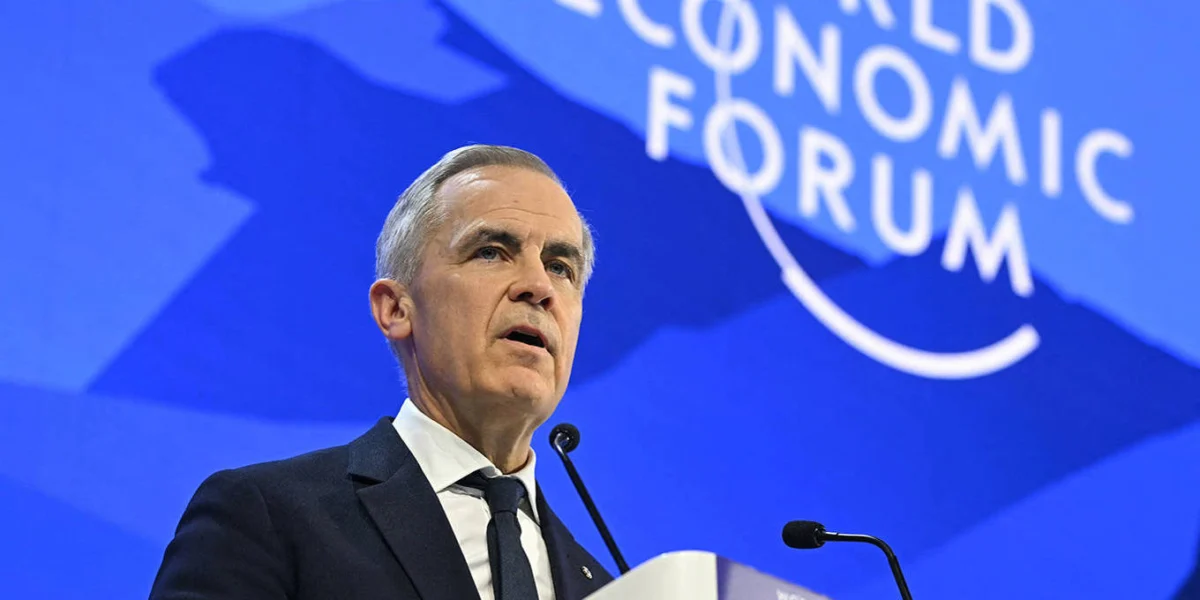
The diplomatic circles worldwide continue to dissect Canadian Prime Minister Mark Carney’s influential address at the World Economic Forum in Davos earlier this year. Carney articulated a compelling argument for middle powers to coalesce, thereby preventing themselves from becoming casualties of the actions of more dominant global players. His subsequent actions have mirrored his rhetoric, most notably in his firm stance alongside European allies when United States President Donald Trump made an unexpected assertion of interest in Greenland, a territory belonging to Denmark. This act, perceived by many as an overreach and a disregard for established sovereignty, served as a potent illustration of Carney’s thesis.
Carney’s speech, delivered amidst a backdrop of increasing protectionism and a questioning of long-standing international alliances, resonated deeply with leaders from nations that often find themselves navigating the complex interplay between major global powers. His message was not one of appeasement, but rather a pragmatic call for strategic alignment and mutual support. The "Carney Doctrine," as some have begun to refer to it, emphasizes that in an era of unilateralism, collective strength is not merely an option but a necessity for survival and continued influence.
The context of Carney’s address is crucial. The global economic landscape has been marked by a slowdown in growth, rising inflation in several key economies, and persistent geopolitical instability. Against this backdrop, the imposition of trade barriers and the threat of economic coercion by a major power like the United States can have cascading effects, destabilizing markets and exacerbating existing vulnerabilities. Canada, with its open economy heavily reliant on international trade, is particularly sensitive to such disruptions. Similarly, the European Union, a vast economic bloc with intricate trade relationships with nations across the globe, faces significant risks from a fracturing of the global trading system.
Geopolitical Flashpoints and Economic Vulnerabilities
The Greenland incident, while seemingly a localized dispute, served as a powerful metaphor for the broader challenges confronting middle powers. The United States’ apparent interest in acquiring or exerting influence over the strategically located Arctic territory, a move that bypassed established diplomatic channels and disregarded Danish sovereignty, signaled a willingness to pursue national interests through unconventional and potentially destabilizing means. Prime Minister Carney’s public support for Denmark and the broader European position on this matter demonstrated a commitment to upholding international norms and principles, even when faced with pressure from a larger economic and military power.
This episode highlighted several critical vulnerabilities inherent in the position of middle powers:
- Economic Interdependence: Nations like Canada and EU member states are deeply integrated into global supply chains. Disruptions, whether through trade wars or other geopolitical interventions, can have immediate and significant economic consequences. For instance, the imposition of tariffs on specific goods can lead to increased production costs, reduced competitiveness, and job losses.
- Limited Leverage: Individually, middle powers often lack the economic or military might to unilaterally counter the actions of superpowers. This asymmetry in power necessitates collective bargaining and coordinated responses to exert meaningful influence.
- Sovereignty and Territorial Integrity: The Greenland episode underscored the fragility of national sovereignty in the face of assertive geopolitical ambitions. The defense of territorial integrity and the respect for international law are paramount for the stability of all nations, especially those that are not dominant global players.
- Security Implications: Economic instability and geopolitical uncertainty can have direct implications for national security. Trade wars can spill over into broader security concerns, as nations reassess their alliances and defense strategies in light of shifting global dynamics.
Supporting Data and Historical Precedents
Historical precedents offer valuable insights into the dynamics of power and the importance of alliances for middle powers. The post-World War II era saw the rise of multilateral institutions like the United Nations and the World Trade Organization (WTO), largely driven by a desire to prevent the recurrence of global conflicts and to foster economic cooperation. These institutions, while not without their flaws, provided a framework for international dialogue, dispute resolution, and the promotion of shared norms.
However, the current geopolitical climate suggests a potential erosion of these multilateral structures. The rise of nationalism, the questioning of global governance, and the increasing assertiveness of certain major powers have created a more fragmented and unpredictable international environment. This is not entirely unprecedented. The interwar period, for example, was characterized by the rise of protectionism and a breakdown of international cooperation, which contributed significantly to the outbreak of World War II.
Looking at economic data, the impact of trade disputes can be substantial. For instance, a hypothetical tariff of 10% imposed on a significant portion of bilateral trade between two major economies could lead to billions of dollars in lost trade volume and reduced GDP growth for both. The International Monetary Fund (IMF) and the World Bank have consistently warned about the negative consequences of protectionist policies on global economic growth and stability. In 2023, the IMF estimated that a significant escalation of trade tensions could reduce global GDP by several percentage points, with disproportionate impacts on export-oriented economies.
The European Union’s economy, with its significant reliance on intra-EU trade and exports to global markets, is particularly susceptible to disruptions. Germany, for example, as the EU’s largest economy, has a substantial export sector, and any significant downturn in global demand or imposition of trade barriers could have a profound impact. Similarly, Canada’s economy is heavily reliant on its trade relationship with the United States, with approximately 75% of Canadian exports going to its southern neighbor. Disruptions to this trade flow would inevitably lead to economic contraction and job losses.
Official Responses and Diplomatic Maneuvers
The reactions to President Trump’s trade policies and assertive geopolitical stances have been varied but have increasingly pointed towards a recognition of shared vulnerability. While individual nations have sometimes adopted defensive postures, there is a growing understanding that a coordinated approach is more effective.
Within the European Union, there have been calls for greater strategic autonomy and a more unified foreign policy. European leaders have reiterated their commitment to the multilateral trading system and have sought to de-escalate trade disputes through diplomatic channels. The EU has also been actively engaged in strengthening its own internal economic resilience and exploring new trade partnerships to diversify its economic relationships. The establishment of initiatives aimed at bolstering European industrial capacity and reducing reliance on external suppliers for critical goods is a testament to this evolving strategy.
Canada, under Prime Minister Carney’s leadership, has been a vocal advocate for multilateralism and has actively sought to strengthen its ties with other middle powers. This includes engaging in diplomatic dialogues with countries in Asia, Latin America, and Africa to build broader coalitions for trade and security. The emphasis is on creating a network of like-minded nations that can collectively advocate for a rules-based international order.
Reactions from other related parties have included statements from international organizations, business leaders, and academics. Many have echoed the concerns raised by Carney and have emphasized the need for de-escalation, dialogue, and a renewed commitment to international cooperation. Business groups have often expressed concern about the uncertainty created by trade wars, as it hampers investment decisions and disrupts long-term planning. Academics specializing in international relations and economics have frequently analyzed the shifting power dynamics and the implications for global governance.
Broader Impact and Implications: The Imperative of Solidarity
The current geopolitical and economic landscape presents a critical juncture for middle powers. The challenges posed by assertive superpowers and the erosion of multilateral norms are not abstract concerns; they have tangible implications for economic stability, national security, and the very fabric of international relations.
The core implication of the current situation is the amplified need for solidarity. For middle powers, this solidarity can manifest in several ways:
- Coordinated Trade Policies: Instead of individual nations facing trade threats in isolation, middle powers can align their trade policies, presenting a united front in negotiations and disputes. This could involve forming trade blocs or coordinating responses to protectionist measures.
- Strengthened Multilateral Institutions: Middle powers have a vested interest in a strong and effective multilateral system. They can work together to reform and strengthen institutions like the WTO, ensuring they remain relevant and capable of addressing contemporary challenges.
- Joint Investment in Security and Resilience: Collective investment in defense capabilities and economic resilience can provide a greater deterrent and buffer against external pressures. This could include joint research and development in critical technologies or coordinated efforts to secure supply chains.
- Unified Diplomatic Voice: Presenting a unified diplomatic voice on global issues can amplify the influence of middle powers and ensure their perspectives are heard and considered in international forums.
The strategic choices made by middle powers in the coming years will have a profound impact on the future global order. The path of isolationism and unilateral action, often favored by dominant powers, risks leading to increased instability and conflict. Conversely, a commitment to solidarity, cooperation, and the upholding of international norms offers a more promising route towards a stable and prosperous future for all nations, regardless of their size or power. The lessons from historical periods of rising protectionism and the pragmatic calls for collective action by leaders like Mark Carney serve as a potent reminder that in an increasingly uncertain world, unity is not just a virtue, but a strategic imperative. The ability of middle powers to effectively coordinate their efforts will be a defining factor in shaping the geopolitical and economic landscape of the 21st century.
