


The global transition toward a low-carbon economy requires more than just high-level policy shifts and multinational corporate investments; it necessitates a fundamental reimagining of how energy projects are funded, owned, and managed at the local level. Across Canada, a growing movement of cooperatives and community-led initiatives is demonstrating that the financial capital required for the green transition may be closer to home than previously thought. By leveraging community bonds and cooperative ownership models, residents from British Columbia to the Maritimes are bypassing traditional institutional financing to build solar arrays, wind turbines, and net-zero housing. This decentralized approach not only accelerates the deployment of renewable energy but also ensures that the economic benefits of the energy transition remain within the communities they serve.
The Rise of Community-Led Energy Financing
For decades, the development of large-scale power infrastructure was the exclusive domain of provincial utilities and private energy conglomerates. However, the emergence of the "community bond" has democratized access to energy investment. Unlike traditional stocks, community bonds are social finance tools that allow non-profit organizations and cooperatives to raise capital directly from their members. These bonds typically offer a fixed rate of return while allowing local citizens to see their investments manifest as tangible infrastructure in their own backyards.
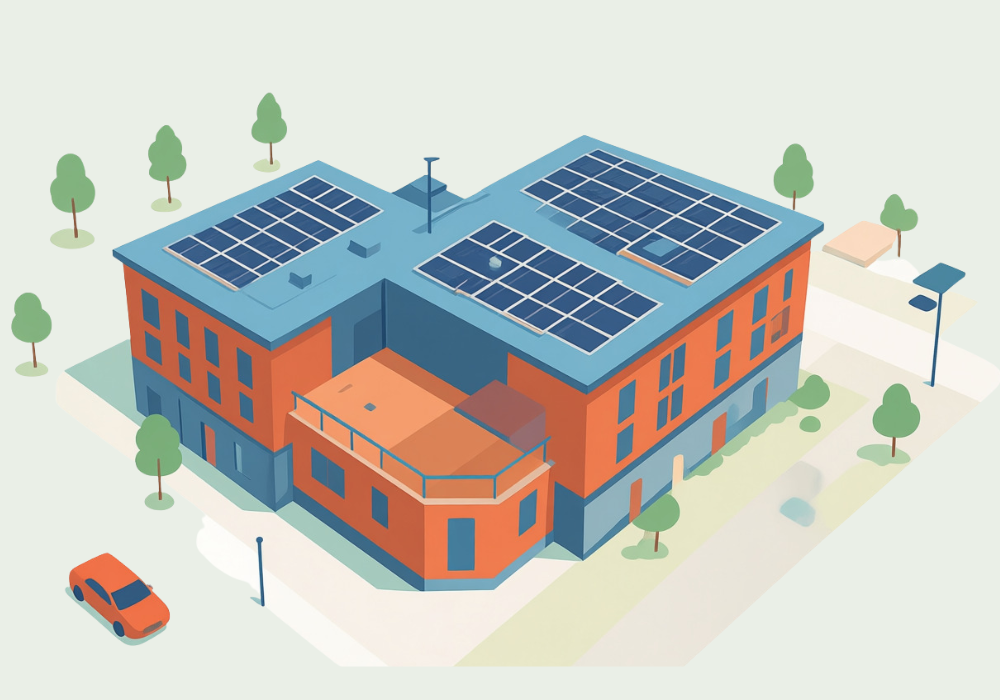
This shift comes at a critical juncture for Canada. With the federal government aiming for a net-zero electricity grid by 2035, the scale of required infrastructure is immense. Industry analysts suggest that community-led projects play a vital role in reducing "NIMBYism" (Not In My Backyard) by transforming local residents from passive observers into active stakeholders and owners.
1. SolarShare and the Wintergreen Project: Scaling Solar in Ontario
SolarShare, Canada’s largest renewable energy cooperative, has become a blueprint for community-led solar development. One of its standout projects is the Wintergreen solar array, located just outside Kingston, Ontario. This project represents a significant milestone in the cooperative’s portfolio, which now includes over 50 solar installations across the province.
The Wintergreen array is designed to generate enough clean electricity to power approximately 100 homes. The project was made possible through the collective investment of SolarShare’s 2,000-plus members, who have cumulatively invested more than $70 million in community bonds. This model provides a stable, long-term return for investors—typically ranging from 4% to 6%—while contributing to the provincial grid’s decarbonization.
The success of SolarShare is rooted in the legacy of Ontario’s Green Energy Act of 2009, which initially provided the regulatory framework for small-scale producers to sell power back to the grid at guaranteed rates. While the policy landscape has shifted, the cooperative has maintained its momentum by focusing on commercial-scale rooftop and ground-mounted systems that offer localized energy resilience.
2. ZooShare: The Circular Economy in Action
In Toronto, a unique partnership between the Toronto Zoo, the City of Toronto, and Oshawa-based Walker Industries led to the creation of ZooShare, North America’s first zoo-based biogas plant. This facility exemplifies the circular economy by converting organic waste—specifically animal manure from the zoo and food waste from local grocery stores—into renewable electricity.
The project was funded by 800 cooperative members who purchased community bonds, raising several million dollars to bring the facility online. Once fully operational, the plant was designed to divert 15,000 tonnes of waste from landfills annually, reducing greenhouse gas emissions by the equivalent of removing 2,100 cars from the road.

However, ZooShare also serves as a case study in the financial complexities of green startups. In 2023, following a member vote, the cooperative announced it would temporarily stop interest payments on its bonds. The decision was made to stabilize the organization’s balance sheet, with a commitment to repay bondholders as cash flow permits. This development highlights the inherent risks in pioneering energy technology and the importance of transparent communication between cooperatives and their community investors.
3. EcoCharge: Electrifying the Eastern Corridor
As electric vehicle (EV) adoption accelerates, the need for robust charging infrastructure has moved to the forefront of the climate conversation. EcoCharge, a project spearheaded by Earth Day Canada, represents the first EV-charging community bond campaign of its kind in the country.
Through this initiative, community members own approximately 100 charging stations distributed across Quebec and New Brunswick. By utilizing community bonds, EcoCharge has tapped into a pool of investors who are directly impacted by the lack of charging infrastructure in their regions. This model addresses "range anxiety" while providing a financial vehicle for residents to profit from the growing demand for EV services. The project demonstrates how community financing can be applied beyond power generation to include the essential services required for a low-carbon transport sector.

4. Propolis: Net-Zero Affordable Housing in Kamloops
The intersection of the housing crisis and the climate crisis has led to innovative solutions in British Columbia. In Kamloops, a cooperative known as Propolis successfully raised $1 million in community bonds from approximately 100 local investors. The funds are earmarked for the construction of a 53-unit apartment building designed to be both affordable and net-zero.
Propolis’s approach is significant because it challenges the notion that sustainable building practices are prohibitively expensive. By cutting out traditional high-interest construction lenders and replacing them with community-sourced capital, the cooperative can keep rents below market rates while implementing advanced energy-saving technologies. This project serves as a pilot for how mid-sized Canadian cities can achieve densification and decarbonization simultaneously.
5. Faithfully Green: Greening Sacred Spaces
Religious institutions often possess significant real estate but lack the capital for expensive energy retrofits. The Faithfully Green Fund, an initiative of Faith Common Good, addresses this gap by selling community bonds to fund green upgrades for temples, churches, and mosques.

The fund operates on a revolving basis: money raised from bond sales is loaned to faith communities for projects such as heat pump installations, solar panels, and high-efficiency insulation. As the institutions save money on their utility bills, they repay the loans, allowing the capital to be redeployed to other congregations. This model not only reduces the carbon footprint of historic buildings but also strengthens the financial sustainability of community hubs.
6. Wascana Solar Co-op: Solar for the Urban Resident
In Regina, Saskatchewan, the Wascana Solar Co-op has found a way to bring renewable energy to those who are traditionally excluded from the market: apartment dwellers and renters. The cooperative is responsible for the installation of 400 solar panels within the city, which are collectively owned by roughly 100 members.
Saskatchewan has some of the highest solar potential in Canada, yet the provincial grid remains heavily dependent on fossil fuels. Wascana’s model allows individuals who cannot install panels on their own roofs to own a portion of a larger array. This "virtual" ownership model democratizes the sun, allowing a broader demographic to participate in and benefit from the energy transition.

7. WindShare: The Urban Pioneer
No discussion of Canadian community energy is complete without WindShare. Launched in 2002 at Toronto’s Exhibition Place, the WindShare turbine was the first Canadian example of local residents co-owning a major clean energy project. A joint venture between the WindShare cooperative and Toronto Hydro, the project proved that wind power could be successfully integrated into a dense urban environment.
With 825 members, WindShare paved the way for the legislative changes that would later support the growth of other cooperatives like SolarShare. Although the turbine was eventually decommissioned after two decades of service, its legacy remains as the catalyst for the community power movement in Canada.
8. OREC: Harvesting the Wind of Lake Huron
The Ottawa Renewable Energy Co-operative (OREC), founded in 2010, has expanded its reach far beyond the capital. One of its most significant assets is its partial ownership of two large wind turbines on the shores of Lake Huron. These turbines generate approximately 3.3 million kWh annually—enough to power more than 400 homes.

OREC’s growth reflects a broader trend of cooperative consolidation and professionalization. By diversifying its portfolio to include both wind and solar, OREC has managed millions of dollars in assets, providing a stable platform for Eastern Ontario residents to invest in the province’s energy future.
Broader Impact and Economic Implications
The rise of community-led green projects suggests a shift in the Canadian economic landscape. According to financial analysts, community bonds represent a "sticky" form of capital—money that stays within the local economy rather than flowing to international equity markets. This creates a multiplier effect: local investors receive interest, local contractors are hired for installation, and the community gains a sense of agency over its environmental future.
However, challenges remain. Regulatory hurdles, such as varying provincial securities laws and complex grid-connection processes, can slow the pace of development. Furthermore, as seen in the case of ZooShare, these projects are not immune to the volatility of the energy market or technical operational hurdles.

Despite these challenges, the trajectory is clear. As the cost of renewable technology continues to fall and the social demand for climate action rises, community-led projects are moving from the periphery to the center of the energy conversation. They offer a tangible, democratic path forward, proving that the solution to the climate crisis is not just about changing how we produce power, but about changing who owns it.
The success of these eight initiatives—from the solar fields of Kingston to the EV stations of New Brunswick—highlights a resilient and growing ecosystem of social finance in Canada. By empowering citizens to become energy producers, Canada is not only cleaning its grid but also fostering a more inclusive and robust domestic economy.
