


The transition toward a low-carbon economy is often framed as a challenge of massive capital expenditures and multinational industrial shifts, yet a growing movement across Canada suggests that the solution to funding the green transition may be rooted in local communities. As the federal government aims for a net-zero electricity grid by 2035, the emergence of renewable energy cooperatives (RECs) and community bond initiatives has provided a blueprint for how individual citizens can bypass traditional financial institutions to directly fund, own, and benefit from clean energy infrastructure. This decentralized approach not only democratizes energy production but also ensures that the economic returns of the energy transition remain within the regions where the projects are located.
The Evolution of Community-Owned Energy in Canada
The concept of community-owned energy is not new, but its application has matured significantly over the last two decades. In the early 2000s, the primary hurdle for renewable projects was the high cost of technology and a lack of regulatory frameworks to integrate small-scale producers into the provincial grids. The introduction of Feed-in Tariff (FIT) programs, particularly in Ontario under the Green Energy Act of 2009, served as a catalyst. These programs offered guaranteed long-term contracts for renewable energy producers, making it feasible for cooperatives to seek investment from their members.
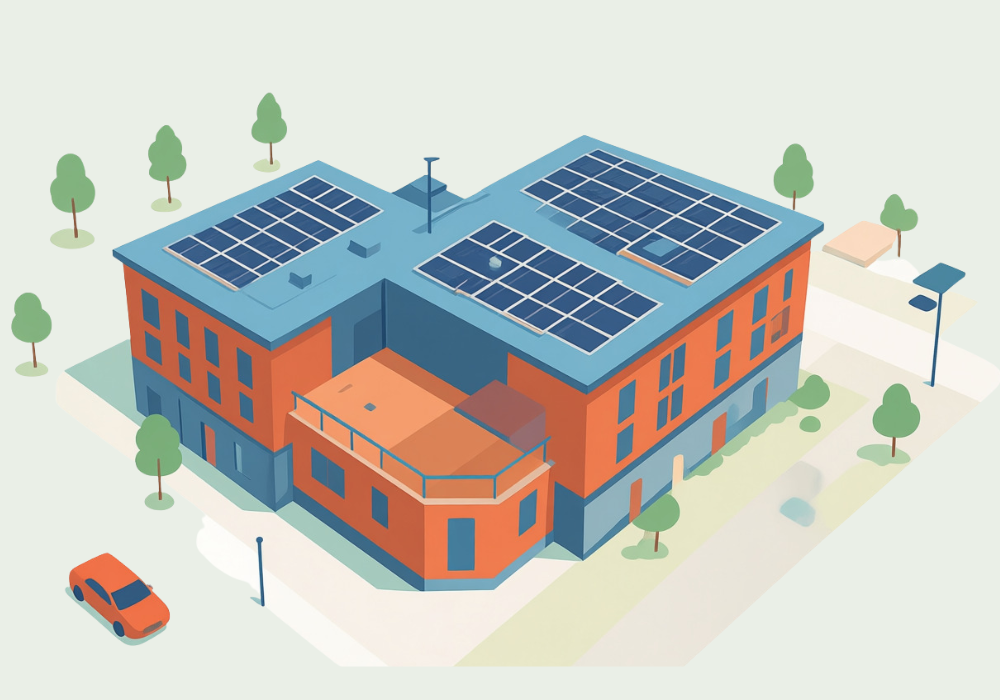
Today, even as some of those early incentive programs have expired or evolved, the infrastructure of community investment remains. Organizations are utilizing "community bonds"—an interest-bearing investment tool that allows non-accredited investors to put their money into local projects—to bridge the funding gap. Unlike traditional stocks or mutual funds, community bonds allow residents to see the tangible impact of their capital, whether it is a wind turbine on the horizon or a solar array on a local community center.
Pioneering Wind and Solar Initiatives
The history of community energy in Canada is perhaps best exemplified by WindShare. Established in Toronto, WindShare was a trailblazer as the first Canadian example of local residents co-owning a utility-scale wind project. In partnership with Toronto Hydro, the cooperative commissioned the ExPlace wind turbine, which has become a landmark on the city’s waterfront. By allowing 825 Toronto residents to become partial owners, WindShare proved that urban populations could actively participate in the generation of clean power, rather than remaining passive consumers.
Building on the foundation laid by wind energy, solar power has become the most accessible entry point for many cooperatives. SolarShare, Canada’s leading renewable-energy cooperative, has scaled this model across Ontario. One of its flagship projects, Wintergreen, located outside Kingston, illustrates the scalability of this model. The Wintergreen solar array produces enough electricity to power approximately 100 homes. By pooling the capital of thousands of members, SolarShare has successfully developed over 50 solar projects, effectively de-risking the investment for individual participants.

In Western Canada, the Wascana Solar Co-operative in Regina, Saskatchewan, has addressed a specific barrier to renewable adoption: the "renter’s dilemma." Because apartment dwellers and renters cannot install solar panels on roofs they do not own, the Wascana model allows for collective ownership. Approximately 100 members own a portion of a 400-panel installation, allowing them to participate in the green economy and receive returns on their investment despite not having a traditional "sunny roof" of their own.
Diversifying the Green Portfolio: Biogas and EV Infrastructure
As the sector matures, community-led projects are moving beyond traditional wind and solar. ZooShare represents one of the most innovative applications of the circular economy in the country. Located at the Toronto Zoo, this project utilizes an anaerobic digester to turn organic animal waste and food waste from local grocery stores into high-quality fertilizer and renewable electricity. The project was made possible through $7 million in community bonds purchased by 800 members.

However, ZooShare also serves as a case study in the financial complexities of community energy. In 2023, following a member vote, the cooperative announced it would stop interest payments and move toward a model of repaying bonds only when cash flow permits. This highlight’s the inherent risks of small-scale energy production, where operational costs and regulatory shifts can impact the financial timelines originally promised to investors.
In the realm of transportation, the EcoCharge project has introduced the first EV-charging community bond campaign in Canada. Operating across Quebec and New Brunswick, EcoCharge allows members to own a network of roughly 100 charging stations. This initiative addresses the "chicken and egg" problem of electric vehicle adoption—where consumers are hesitant to buy EVs without charging infrastructure, and private companies are hesitant to build infrastructure without high demand. By utilizing community bonds, EcoCharge empowers local residents to build the infrastructure they wish to see in their own neighborhoods.

Decarbonizing the Built Environment and Sacred Spaces
The mission of community energy is increasingly intersecting with social equity and the preservation of community institutions. Propolis, a cooperative based in Kamloops, British Columbia, recently raised $1 million through community bonds from approximately 100 investors. This capital is earmarked for a 53-unit affordable housing project designed to be net-zero. By combining the need for affordable housing with high-performance green building standards, Propolis demonstrates that sustainability and social justice can be funded through the same financial mechanisms.
Similarly, the Faithfully Green Fund has identified a unique niche: the retrofitting of religious buildings. Places of worship often occupy large, aging structures that are expensive to heat and maintain. Faithfully Green sells community bonds and uses the proceeds to provide low-interest loans to temples, churches, and mosques for energy-efficient retrofits. As these institutions save money on utility bills, they repay the loans into a revolving fund, which is then used to finance the next project. This model creates a self-sustaining ecosystem of green upgrades within the faith community.

Regional Expansion and Capacity Building: The Case of OREC
The Ottawa Renewable Energy Co-operative (OREC) has become a major player in the regional energy landscape of Eastern Ontario. Founded in 2010, OREC has expanded its portfolio to include a diverse range of assets, including two wind turbines on the shores of Lake Huron. These turbines generate approximately 3.3 million kWh annually, providing enough clean electricity to power more than 400 homes. OREC’s success is largely attributed to its professionalized management structure and its ability to partner with municipalities and school boards, providing a template for how cooperatives can move from "niche" projects to significant regional energy contributors.
Data and Economic Implications of Community Energy
The growth of these eight projects occurs against a backdrop of significant shifts in the Canadian energy sector. According to data from Natural Resources Canada, renewable energy currently accounts for approximately 17% of Canada’s total primary energy supply. However, to meet 2050 net-zero targets, the capacity of the grid will need to double or even triple.

Economically, community-led projects offer a higher "local multiplier effect" than large-scale utility projects owned by foreign equity firms. When a community bond pays out a 4% or 5% return, that interest remains in the local economy, often being spent at local businesses. Furthermore, these projects create "green-collar" jobs in installation, maintenance, and management within the community.
From a policy perspective, the federal government’s Clean Electricity Investment Tax Credit (ITC) is expected to provide further tailwinds for these initiatives. By offering a 15% refundable tax credit for eligible investments in non-emitting electricity generation, the government is lowering the barrier for cooperatives to launch new projects.

Challenges and the Path Forward
Despite the successes, the community energy sector faces ongoing challenges. Regulatory hurdles vary significantly by province; while Ontario and Nova Scotia have historically been leaders in cooperative legislation, other provinces lack the "virtual net metering" laws that allow residents to easily credit energy produced off-site against their own utility bills. Additionally, as seen with ZooShare, the management of community-funded projects requires high levels of transparency and financial literacy to maintain member trust when projects face operational headwinds.
The future of the Canadian grid will likely be a hybrid of massive provincial projects and a decentralized network of community-owned assets. The eight projects highlighted—from the wind turbines of Toronto to the net-zero apartments of Kamloops—prove that when citizens are given the financial tools to participate, they are willing to take the lead in building a sustainable future. By turning energy consumers into energy owners, Canada is not just greening its grid; it is strengthening the social and economic fabric of its communities.
