

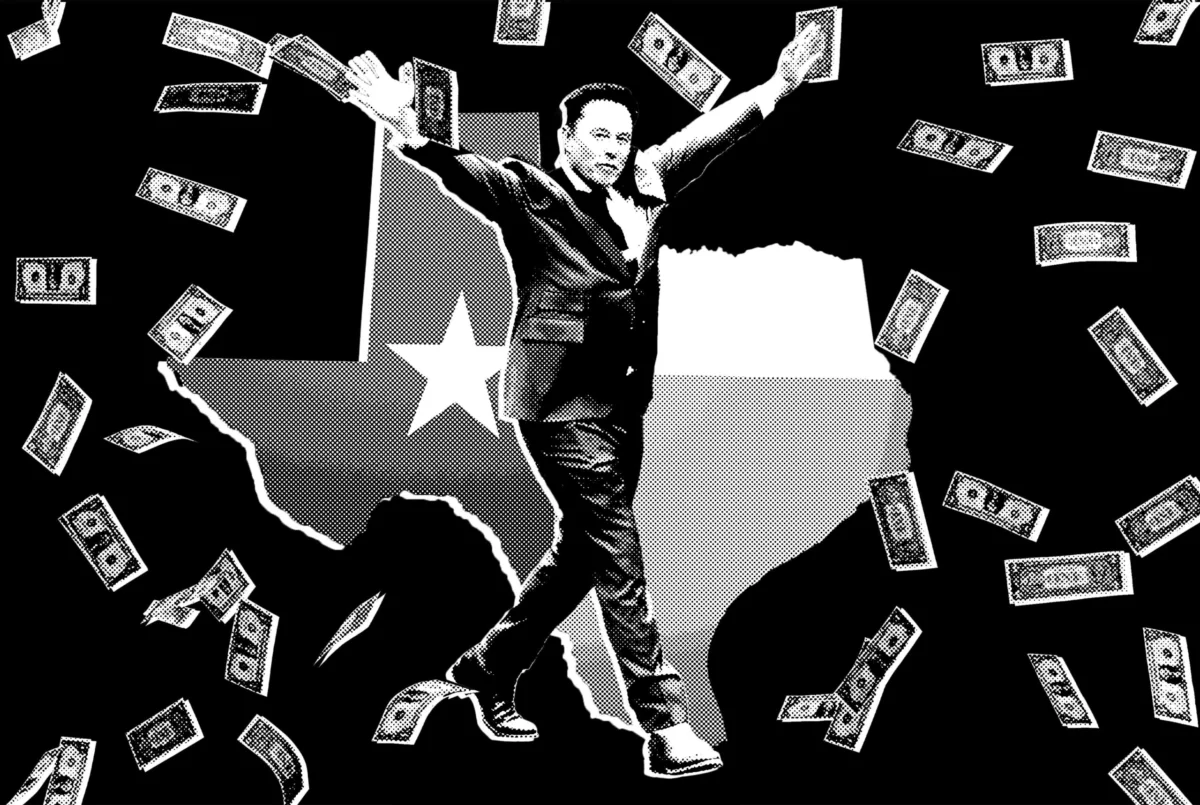
Elon Musk is expected to deploy a massive capital injection of between $100 million and $200 million to bolster Republican efforts in the upcoming November midterm elections. According to Trump administration officials briefed on the matter, the expenditure will primarily focus on sophisticated voter turnout operations in high-stakes races across the United States. A central priority of this financial strategy is the state of Texas, where the political future of Republican nominee Ken Paxton is viewed as a critical factor in determining which party will ultimately control the United States Senate.
This planned infusion of cash, which could take the form of direct spending through Musk’s America PAC or in-kind contributions related to ground-game logistics, represents a significant lifeline for Paxton. The Republican nominee has struggled to keep pace with the fundraising prowess of his Democratic opponent, James Talarico. Recent Federal Election Commission (FEC) filings highlight a stark disparity: Talarico has reported raising approximately $69 million, while Paxton’s campaign has generated a comparatively modest $9 million.
The High Stakes of the Texas Senate Race
The focus on Texas underscores the state’s transition from a reliable Republican stronghold to a competitive battleground for Senate control. Ken Paxton’s path to the nomination was fraught with internal party friction. While he secured a victory in a bruising primary against veteran Senator John Cornyn—aided in large part by an endorsement from former President Donald Trump—the contest left him financially depleted and politically bruised. The primary campaign frequently revisited past scandals and legal challenges associated with Paxton, providing ammunition for his opponents and creating a sense of hesitation among traditional Republican donors.
Since securing the nomination, Paxton’s fundraising has failed to gain the momentum typically seen in top-tier Senate races. This lag is partly attributed to a lack of commitment from the two primary national Republican entities. The Senate Leadership Fund, which is closely aligned with Senate Majority Leader John Thune, has yet to pledge significant resources to Paxton’s defense. Thune’s long-standing alliance with John Cornyn, whom Paxton defeated, is widely seen as a contributing factor to this hesitation. Similarly, the Trump-aligned Super PAC, MAGA Inc., has not yet clarified its specific spending allocations for the Texas race, leaving a vacuum that Musk’s America PAC appears ready to fill.
A Comparative Analysis of National Fundraising
The financial landscape of the 2026 midterms reveals a broader trend of Democratic candidates outraising their Republican counterparts in individual races. This phenomenon has forced the Republican Party to rely heavily on centralized committees and outside spending groups to bridge the gap.
As of the latest reporting period, the Republican National Committee (RNC) boasts a $128 million war chest, a significant advantage over the Democratic National Committee (DNC), which currently reports approximately $2 million in debt. However, the disparity shifts when examining the resources available to Super PACs. The two primary Republican Super PACs dedicated to House and Senate races hold a combined $380 million, while their Democratic equivalents have reported roughly $116 million.
The most formidable financial entity in the Republican orbit is MAGA Inc., which currently holds approximately $400 million on hand. There is currently no single Democratic equivalent that matches the scale and liquidity of MAGA Inc. Musk’s projected $100 million to $200 million spend would further tilt the balance of outside spending in favor of the GOP, particularly in the realm of field operations and "get out the vote" (GOTV) initiatives.
The Role of America PAC and the Strategy of Voter Turnout
America PAC, the primary vehicle for Musk’s political expenditures, has become a central pillar of the Republican ground game. In the 2024 election cycle, the Trump campaign effectively outsourced much of its field operations to the group. America PAC spent more than $46 million on third-party canvassing firms across several pivotal battleground states.
The strategy behind this spending was specifically tailored to "low propensity" voters—individuals who express support for Republican policies or Donald Trump personally but have a historical record of inconsistent turnout. By focusing on this demographic, Musk and his advisors believe they can expand the electorate and secure victories in states where the margin of error is razor-thin.
However, the efficacy of this outsourced model has been a subject of intense debate within the Republican establishment. While Donald Trump achieved a clean sweep of the six primary battleground states in 2024, many campaign officials remain skeptical that America PAC’s paid canvassers were the driving force behind that success. Internal critiques suggest that paid, third-party workers often lack the ideological fervor of in-house volunteers. Reports have surfaced of canvassers "ghosting"—the practice of claiming to have visited homes and engaged voters while actually remaining stationary—in order to meet strict performance quotas and secure paychecks.
Controversies and Operational Challenges
The 2024 operation was also marred by allegations regarding the treatment of field staff. Several workers involved in America PAC-funded canvassing efforts in Michigan claimed they were misled about the nature of their employment. Some reported being transported in U-Haul vans without proper seating and alleged they were threatened with the loss of hotel accommodations if they failed to meet aggressive voter contact targets.
These operational hurdles highlight the risks associated with scaling a massive political ground game in a short period. Despite these past issues, Musk’s decision to double down on America PAC for the 2026 midterms suggests a belief that the model can be refined and optimized. The New York Times previously reported that Musk authorized a minimum of $100 million for the 2026 cycle, though the current estimates from Trump officials suggest the final figure could be twice that amount.
Chronology of Musk’s Increasing Political Influence
The evolution of Elon Musk from a politically unaligned tech entrepreneur to a major Republican donor has been rapid:
- Pre-2022: Musk maintains a largely bipartisan or centrist public profile, focusing on Tesla and SpaceX.
- May 2022: Musk publicly announces a shift in his political allegiance, stating he can no longer support the Democratic Party and will vote Republican.
- Late 2022: Following his acquisition of X (formerly Twitter), Musk begins more frequent engagement with conservative political figures and issues.
- 2024 Election Cycle: Musk forms America PAC and commits tens of millions of dollars to support Donald Trump’s reelection, specifically targeting battleground state turnout.
- Post-2024: Musk is increasingly viewed as a "shadow" architect of GOP field strategy, with officials now expecting a record-breaking spend for the 2026 midterms.
Broader Implications for the 2026 Midterms
The entry of a single donor with the capacity to spend $200 million on voter turnout has profound implications for the 2026 political map. For the GOP, Musk’s funding provides a safeguard against the fundraising advantages often held by Democratic incumbents and well-funded challengers like Talarico. It allows the party to maintain a physical presence in expensive markets like Texas while diverting RNC and Senate Leadership Fund money to other competitive states such as Pennsylvania, Georgia, or Arizona.
For the Democratic Party, the challenge lies in countering a ground game that is essentially subsidized by one of the world’s wealthiest individuals. While Democrats have historically excelled at grassroots organizing and maintaining a robust internal "ground game," the sheer scale of Musk’s financial commitment threatens to overwhelm local efforts through sheer volume.
Furthermore, the focus on Ken Paxton in Texas suggests that the GOP views the state as the "Alamo" of the 2026 cycle. If Paxton were to lose a Senate seat in Texas, it would likely signal a catastrophic night for Republicans nationwide. Conversely, if Musk’s intervention secures a Paxton victory despite a massive fundraising gap, it will validate the Super PAC-led, outsourced canvassing model as the future of Republican campaigning.
Conclusion and Future Outlook
As the November midterms approach, the political world will be watching to see if Musk’s America PAC has learned from the logistical failures of 2024. The transition from digital influence to physical voter mobilization is a complex undertaking, and the stakes in Texas could not be higher.
A spokesperson for America PAC has declined to comment on the specifics of the spending plans, and Musk himself has not provided a detailed breakdown of his 2026 strategy. However, the consensus among Trump officials is clear: Musk is prepared to be the primary financier of the Republican attempt to seize the Senate. Whether $200 million can overcome a $60 million fundraising deficit in a single race remains one of the most critical questions of the current election cycle.
