

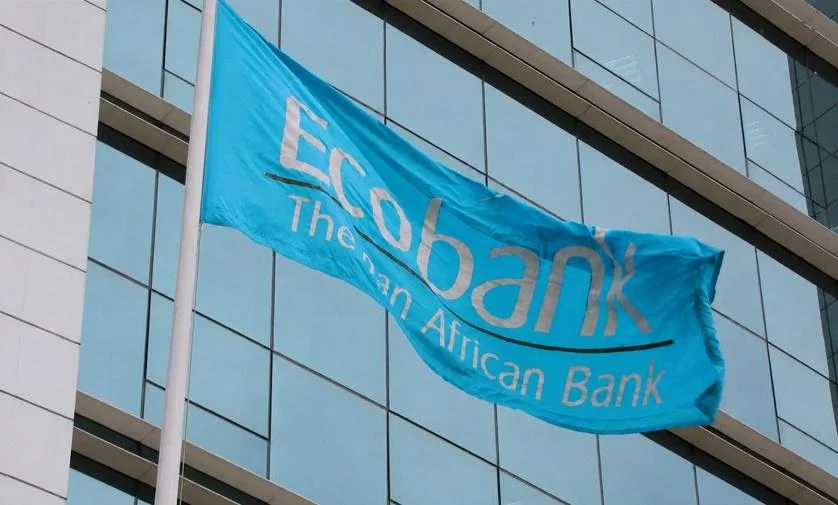
The pan-African banking conglomerate Ecobank Transnational Incorporated (ETI) has successfully priced and issued a landmark $450 million Nature Bond, marking a significant evolution in the landscape of sustainable finance for the African continent. This issuance represents the world’s first Nature Bond aligned with the International Capital Market Association (ICMA) standards to be launched by a commercial banking institution. The proceeds from this capital raise are strategically earmarked to fortify biodiversity conservation, enhance sustainable agricultural practices, and modernize water management systems across more than two dozen African markets. By linking international capital markets directly to the preservation of Africa’s natural capital, Ecobank aims to address a critical funding disparity that has historically left the continent’s environmental assets undervalued and under-financed.
A Milestone in Global Sustainable Finance
The issuance of the $450 million Nature Bond is not merely a financial transaction but a proof of concept for a new asset class within the broader Environmental, Social, and Governance (ESG) debt market. While green bonds have become a staple of sustainable finance, often focusing on renewable energy and carbon emission reductions, Nature Bonds are more specialized. They prioritize outcomes related to biodiversity, land use, and the protection of vital ecosystems. By adhering to ICMA’s rigorous guidelines, Ecobank has provided a transparent framework that ensures the proceeds are utilized for projects with verifiable environmental benefits, thereby mitigating concerns regarding "greenwashing" and setting a benchmark for other financial institutions in emerging markets.
The bond was listed on the London Stock Exchange (LSE), a move that underscores the global appetite for high-impact environmental investments in Africa. The successful listing in London allows Ecobank to tap into a diverse pool of institutional investors, ranging from dedicated ESG funds to traditional pension funds seeking long-term value tied to sustainable development. The structure of the bond is designed to reach the "real economy," moving beyond high-level policy to provide liquidity to the actors on the ground who are most essential to ecological preservation.
Bridging the African Nature Finance Gap
Africa possesses some of the most significant natural capital on the planet. The continent is home to 25% of global biodiversity, including the world’s second-largest tropical rainforest in the Congo Basin, vast freshwater systems like the Nile and Niger rivers, and hundreds of millions of hectares of arable land. However, a stark disconnect exists between this wealth of natural resources and the financial flows dedicated to their protection. Current data indicates that Africa receives less than 3% of global nature-related finance.
Ecobank’s Nature Bond is a direct response to this imbalance. The bank noted that private capital has not flowed to the continent at a scale commensurate with its ecological importance. Traditional conservation financing has often relied on grants or public sector funding, which, while valuable, are frequently insufficient to meet the multi-billion-dollar requirements for landscape-scale restoration and sustainable industrial transition. By utilizing a commercial bond structure, Ecobank is demonstrating that biodiversity can be a bankable sector, attracting private sector discipline and capital to environmental stewardship.
Strategic Allocation and Geographic Focus
The deployment of the $450 million will be extensive, covering 24 markets where Ecobank maintains a significant presence. A primary focus of the fund allocation is directed toward countries where biodiversity is under the most immediate threat from human activity and climate change. Specifically, Côte d’Ivoire, Burkina Faso, and Ghana have been identified as high-priority regions.
In these West African nations, agricultural land-use change—often involving the conversion of forests into cocoa, rubber, or palm plantations—is the leading driver of biodiversity loss. Ecobank revealed that approximately 81% of the eligible lending pool is allocated to countries where this specific driver is most prevalent. By directing capital toward sustainable agricultural practices in these areas, the bond seeks to decouple economic growth from environmental degradation. The goal is to incentivize "nature-positive" outcomes, where the expansion of the agricultural sector does not come at the cost of the continent’s remaining primary forests or wildlife corridors.
Targeting the Underserved: Smallholders and Water Systems
A unique feature of this Nature Bond is its focus on sectors that are traditionally underserved by the global financial system. Large-scale renewable energy projects often find it easier to secure green financing than small-scale farmers or local water operators. Ecobank’s framework specifically targets:
- Smallholder Farmers: These individuals form the backbone of the African economy but often lack the capital to transition to regenerative farming techniques. The bond will provide credit lines for seeds, organic fertilizers, and equipment that support soil health and reduce chemical runoff.
- Agri-processors: By financing processors with verified deforestation-free supply chains, Ecobank is encouraging the development of value-added industries that respect ecological boundaries. This ensures that the entire value chain, from farm to market, adheres to sustainability standards.
- Water Infrastructure: The bond will support projects aimed at protecting freshwater ecosystems and improving water efficiency. This is particularly crucial in the Sahel and other arid regions where water security is intrinsically linked to both social stability and environmental health.
Market Reception and Financial Performance
The financial markets responded to the offering with overwhelming enthusiasm, signaling a robust demand for African ESG-linked debt. The orderbook for the Nature Bond exceeded $1.36 billion, representing an oversubscription rate of approximately 3.9 times the original target size. This high level of interest allowed Ecobank to increase the transaction size by $100 million from its initial projections and to tighten the pricing by 50 basis points.

The strong demand came from a mix of international investors in Europe and the United States, as well as significant participation from African institutional investors. This dual interest highlights a growing consensus that environmental risks are material financial risks, and conversely, that environmental restoration offers a pathway to sustainable, long-term returns. The pricing of the bond reflects the market’s confidence in Ecobank’s ability to manage the complex reporting and monitoring requirements associated with nature-based lending.
Chronology of the Issuance
The path to this $450 million issuance was paved by years of institutional preparation within Ecobank. The bank has been progressively integrating Environmental and Social Risk Management (ESRM) protocols into its core lending operations.
- Initial Framework Development: Over the past 24 months, Ecobank worked with international sustainability consultants to develop a Nature Bond Framework that met ICMA standards.
- Pipeline Identification: The bank conducted an extensive audit of its existing and prospective loan portfolios across 24 countries to identify projects that met the strict "nature-positive" criteria.
- Investor Roadshow: In the months leading up to June 2026, Ecobank executives engaged in a series of global roadshows to educate investors on the specificities of Nature Bonds versus traditional Green Bonds.
- Issuance and Listing: On June 5, 2026, coinciding with global environmental awareness initiatives, the bond was officially priced and listed on the London Stock Exchange.
Official Responses and Strategic Vision
Rachael Antwi, the Group Head of Sustainability and ESRM at Ecobank Transnational Incorporated, emphasized that the bond’s success is rooted in its practicality. In a statement following the issuance, she noted that nature finance can only achieve scale in Africa if it is "connected to the real economy." Antwi highlighted that the bond is not a philanthropic exercise but a strategic financial tool designed to link international capital to measurable lending for sustainable agriculture and water infrastructure.
"This bond reflects the systems and standards Ecobank has built to ensure nature finance supports both environmental resilience and the communities whose livelihoods depend on healthy ecosystems," Antwi said. Her comments underscore a broader shift in the banking sector, where sustainability is no longer a peripheral corporate social responsibility (CSR) activity but a central pillar of risk management and business growth.
Industry analysts have noted that Ecobank’s move could trigger a wave of similar issuances across the continent. By providing a blueprint for ICMA alignment, Ecobank has lowered the barrier to entry for other regional banks to tap into the "blue" and "green" economies.
Broader Implications and Future Outlook
The success of Ecobank’s Nature Bond has profound implications for the future of conservation in Africa. First, it demonstrates that there is a viable commercial pathway for protecting biodiversity. When biodiversity loss is framed as a risk to agricultural productivity and water security, it becomes a matter of national and economic importance.
Second, the bond sets a high bar for impact reporting. To maintain its ICMA alignment, Ecobank will be required to provide regular, transparent updates on the environmental outcomes of the funded projects. This focus on data-driven results is expected to improve the overall quality of environmental monitoring across the 24 participating countries.
As the global community moves toward the targets set by the Kunming-Montreal Global Biodiversity Framework, which aims to protect 30% of the planet’s land and seas by 2030, instruments like Ecobank’s Nature Bond will be essential. They provide the necessary bridge between high-level international agreements and the localized, ground-level financial support required to make those goals a reality. For Africa, this issuance represents a vital step toward a future where its vast natural heritage is not just preserved for the sake of the environment, but is recognized as the bedrock of its economic prosperity.
