

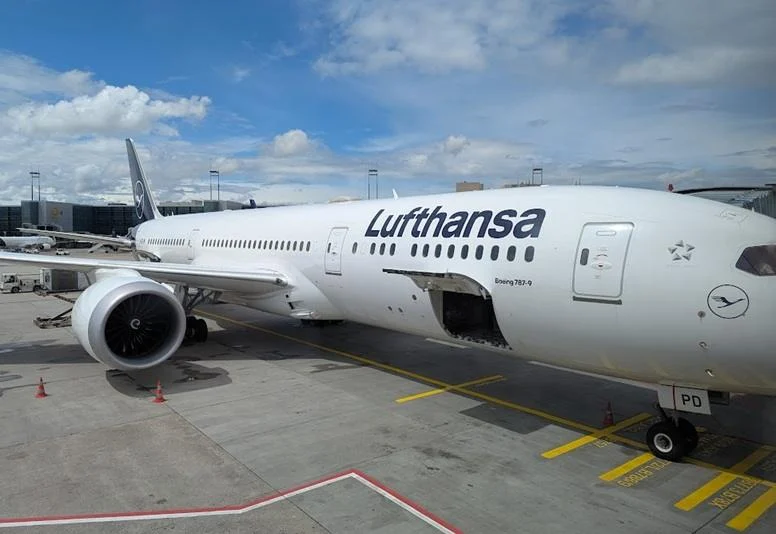
Deutsche Bank has entered into a significant partnership with the Lufthansa Group to invest in the deployment of Sustainable Aviation Fuel (SAF), marking a major milestone in the financial institution’s strategy to mitigate the environmental impact of its corporate operations. Under the terms of the agreement, Deutsche Bank will fund the procurement of approximately 1,600 metric tonnes, or 2 million liters, of SAF. This volume of alternative fuel is projected to reduce lifecycle carbon emissions by roughly 5,500 metric tons compared to the use of conventional fossil-based jet fuel. To put this reduction into a tangible perspective, the savings are equivalent to the total carbon dioxide emissions generated by approximately 520 flights between Frankfurt and London.
The move represents a strategic alignment between two of Germany’s largest corporate entities, focusing on the "hard-to-abate" aviation sector. For Deutsche Bank, the investment is a direct response to the challenge of managing Scope 3 emissions—specifically those arising from business travel. For the Lufthansa Group, the deal reinforces its position as a leader in the transition toward more sustainable flight operations and demonstrates a growing corporate appetite for high-quality carbon reduction solutions.
The Technical Foundations of Sustainable Aviation Fuel
Sustainable Aviation Fuel is widely regarded by climate scientists and industry experts as the most viable medium-term solution for decarbonizing the airline industry. Unlike electric or hydrogen-powered flight, which require entirely new aircraft designs and infrastructure that are likely decades away from commercial scaling, SAF is a "drop-in" fuel. This means it can be blended with traditional kerosene and used in existing aircraft engines and airport refueling systems without modification.
SAF is typically produced from a variety of sustainable feedstocks, including used cooking oils, agricultural residues, and municipal solid waste. More advanced versions, known as "e-fuels" or Power-to-Liquid (PtL) fuels, are created using captured carbon dioxide and green hydrogen produced via renewable electricity. The primary environmental benefit of SAF lies in its lifecycle. While burning SAF still releases carbon dioxide at the tailpipe, the carbon was previously absorbed from the atmosphere by the organic matter used to create the fuel, resulting in a circular carbon loop.
Producers and environmental agencies estimate that high-quality SAF can reduce lifecycle greenhouse gas (GHG) emissions by as much as 80% compared to conventional petroleum-based jet fuel. However, the industry currently faces a "chicken-and-egg" dilemma: supply remains less than 1% of global jet fuel demand, and prices remain significantly higher—often two to five times the cost of traditional kerosene. Partnerships like the one between Deutsche Bank and Lufthansa are designed to bridge this gap by providing the guaranteed demand necessary for producers to scale up operations.
Deutsche Bank’s Strategic Climate Objectives
The investment in SAF is a core component of Deutsche Bank’s broader sustainability roadmap. The bank has set an ambitious target to nearly halve its carbon dioxide emissions across its entire supply chain by 2030, using 2019 as the baseline year. Jörg Eigendorf, Chief Sustainability Officer of Deutsche Bank, emphasized that the move is both a practical tool for emission reduction and a symbolic gesture to the energy market.
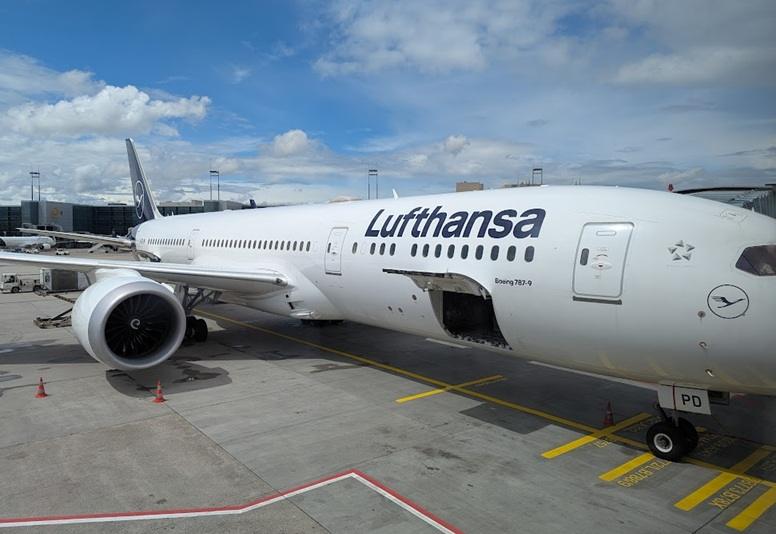
"Sustainable Aviation Fuel is an important instrument for Deutsche Bank in our efforts to nearly halve our CO₂ emissions along our supply chain by 2030 compared with 2019," Eigendorf stated. He further noted that the bank intends to send a clear market signal to energy providers. By committing to large-scale SAF purchases, the bank aims to demonstrate that there is a reliable and growing demand for alternative fuels, which in turn encourages producers to invest in new refineries and technological innovation.
This commitment aligns with Deutsche Bank’s participation in global climate initiatives, such as the Net-Zero Banking Alliance (NZBA). As financial institutions face increasing pressure from regulators, shareholders, and clients to align their balance sheets and operations with the Paris Agreement, addressing the carbon footprint of corporate travel has become a priority. Business travel often constitutes a significant portion of a global bank’s operational emissions, and reducing these through SAF investment is seen as a more robust strategy than relying solely on traditional carbon offsets.
Lufthansa’s Role in Transitioning the Aviation Sector
For the Lufthansa Group, this agreement is part of a multi-faceted approach to achieving net-zero carbon emissions by 2050, with an interim goal of halving net CO₂ emissions by 2030 compared to 2019 levels. The airline group has been aggressive in developing products that allow both individual travelers and corporate clients to contribute to fuel decarbonization.
Lufthansa’s "Green Fares" initiative, launched in 2023, has seen a steady rise in adoption. In 2025, the company reported that more than 5% of its passengers opted for more sustainable travel options, which include a combination of SAF credits and contributions to high-quality climate protection projects. The growth in the corporate sector has been even more pronounced; Lufthansa noted that SAF sales more than doubled year-over-year across its entire product portfolio.
Frank Naeve, Senior Vice President of Global Sales and Distribution for the Lufthansa Group, highlighted the significance of the Deutsche Bank deal as a bellwether for the industry. "Deutsche Bank’s decision to support the deployment of SAF with Lufthansa Group at this scale is a compelling demonstration that more sustainable flying is becoming increasingly important in the business travel sector," Naeve said. He suggested that such large-scale corporate commitments are essential for making SAF a standard component of global aviation.
Chronology of the SAF Market and Regulatory Landscape
The partnership between Deutsche Bank and Lufthansa does not exist in a vacuum; it is part of a rapidly accelerating global trend influenced by shifting regulations, particularly in Europe.
- 2021-2022: The European Union introduces the "Fit for 55" package, which includes the ReFuelEU Aviation initiative. This regulation mandates that fuel suppliers ensure that a growing percentage of the fuel available at EU airports is SAF, starting at 2% in 2025 and rising to 70% by 2050.
- 2023: Major airlines begin forming "SAF coalitions" with corporate partners. Corporations like Microsoft, Google, and DHL announce large-scale SAF purchase agreements to address their Scope 3 travel emissions.
- 2024: Lufthansa expands its "Green Fares" globally across its network, including subsidiaries like Swiss International Air Lines, Austrian Airlines, and Brussels Airlines.
- 2025: Lufthansa reports a doubling of SAF sales, indicating that corporate sustainability departments are shifting budgets away from traditional carbon credits toward "insetting" via SAF.
- 2026 (July): Deutsche Bank and Lufthansa announce their 2-million-liter agreement, setting a new benchmark for financial sector involvement in aviation decarbonization.
Economic and Operational Implications
The investment by Deutsche Bank highlights a shift in how corporations view the cost of doing business. By paying the "green premium"—the price difference between SAF and conventional fuel—Deutsche Bank is effectively internalizing the cost of carbon. This move is expected to influence other major financial institutions to follow suit, potentially creating a specialized market for SAF credits within the corporate travel sector.

From an operational standpoint, the 1,600 metric tonnes of SAF will be fed into Lufthansa’s fueling system at major hubs like Frankfurt (FRA) and Munich (MUC). Because SAF is blended, it does not mean that specific Deutsche Bank employees will be flying on 100% sustainable fuel. Instead, the bank is funding the injection of that volume into the overall fuel mix, thereby reducing the total carbon intensity of the airline’s operations. This "book and claim" model is essential for the logistical feasibility of SAF, as it allows companies to claim the environmental benefits of the fuel even if it is physically consumed by a different aircraft in the carrier’s fleet.
Broader Impact on the Global Aviation Industry
The aviation industry is responsible for approximately 2.5% to 3% of global CO₂ emissions, but its impact is magnified because these emissions are released at high altitudes. As other sectors like road transport and energy production undergo rapid electrification, aviation’s share of global emissions is projected to grow unless radical changes are made.
The collaboration between Deutsche Bank and Lufthansa underscores several key trends:
- Shift from Offsets to Insets: Companies are moving away from external offsets (like planting trees) toward "insetting," which involves reducing emissions directly within their own value chain (like using cleaner fuel for the planes they fly in).
- Corporate Responsibility as a Market Driver: In the absence of a global carbon tax, voluntary corporate investments are currently the primary driver for SAF market growth.
- Financial Sector Influence: As banks become major purchasers of SAF, they gain better insight into the risks and opportunities of the energy transition, which informs their lending and investment strategies for the broader energy sector.
Looking ahead, the success of such partnerships will depend on the continued scaling of production technology. While waste-based SAF is a strong start, the industry will eventually need to transition to synthetic e-fuels to meet the massive demand of global aviation without competing with food supplies or land use. The capital provided by firms like Deutsche Bank serves as the "early-stage" funding necessary to bring these next-generation technologies to maturity.
As the 2030 deadline for climate targets approaches, the aviation and financial sectors will likely see an increase in these types of collaborative agreements. For now, the Deutsche Bank-Lufthansa partnership serves as a blueprint for how cross-industry cooperation can tackle one of the most difficult challenges in the global race to net zero.
