

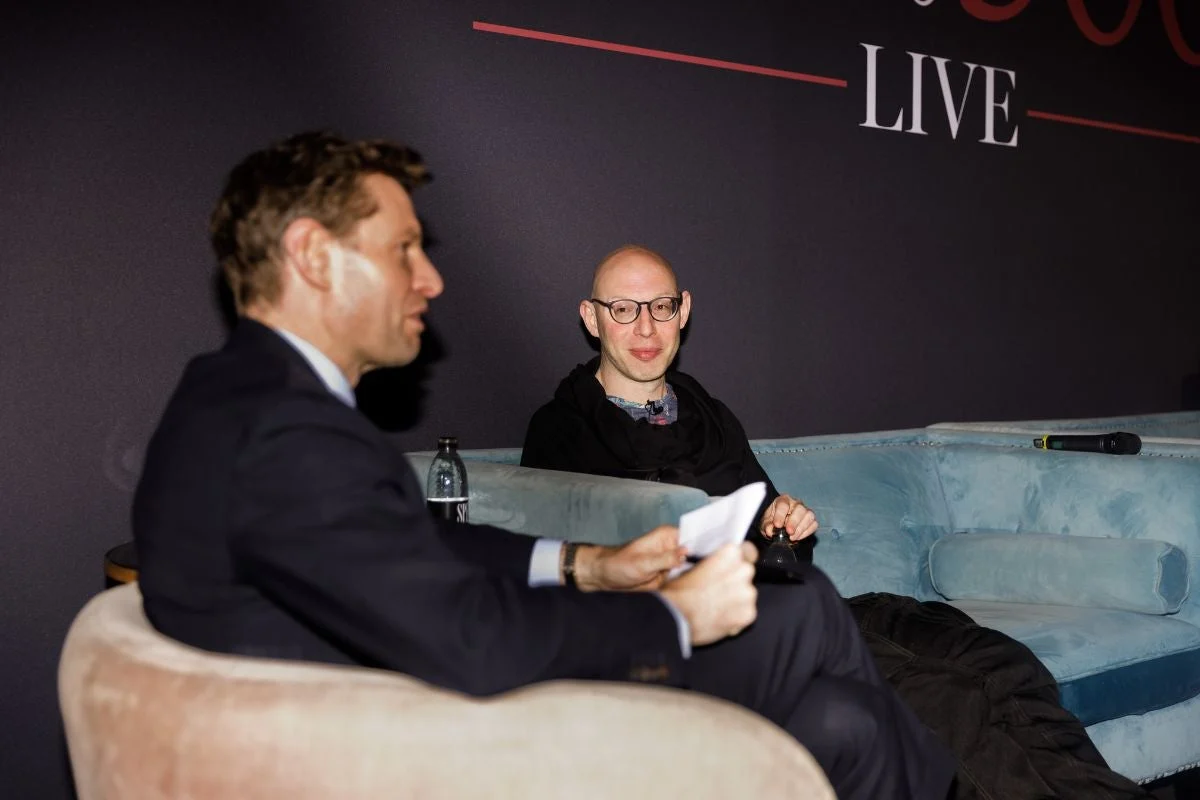
Tax lawyer Dan Neidle, known for his tenacious investigations into the financial affairs of prominent figures, has become a pivotal voice in the ongoing debate surrounding Strategic Litigation Against Public Participation (SLAPPs) in the United Kingdom. In a recent address at Spear’s 500 Live 2026, Neidle detailed his landmark victory against an £8 million libel claim, the first to be officially designated as a SLAPP, and articulated his conviction that current UK legal frameworks remain insufficient to curb the misuse of legal processes by the wealthy and powerful to silence legitimate criticism.
"Time after time, oligarchs, criminals, rapists send libel threats under the cover of letters from lawyers containing statements that are false," Neidle stated, underscoring the perceived impunity enjoyed by those who wield legal threats as a weapon. He emphasized that this tactic disproportionately affects individuals and organisations lacking substantial financial resources, often forcing them to abandon their causes due to the prohibitive costs and emotional toll of legal battles.
The case that brought Neidle’s concerns to the forefront involved an £8 million libel claim initiated by tax barrister Setu Kamal. The lawsuit stemmed from Neidle’s critical analysis of tax schemes associated with Kamal. In a significant ruling, the High Court officially designated the claim as a SLAPP, a legal classification introduced by the Economic Crime & Corporate Transparency Act 2023, which came into effect in June of the previous year. This designation marked a watershed moment, signalling a judicial acknowledgment of the manipulative nature of such litigation.
However, Neidle’s victory, while historic, came at a considerable cost. He revealed that to achieve the dismissal of the claim, he personally incurred £150,000 in legal fees, which were subsequently reimbursed. The protracted legal battle spanned six months, highlighting the arduous and expensive process of defending against such actions, even when ultimately successful. Furthermore, the current SLAPP designation is narrowly applied, primarily to cases involving financial crime, leaving a significant gap in protection for victims of other forms of alleged wrongdoing.
"There’s an awful lot of intimidation of whistleblowers, of victims of sexual assault, of other appalling conduct which has nothing to do with financial crime," Neidle observed, arguing for a broader application of anti-SLAPP measures. He advocated for the extension of these protections to encompass all defamation claims, urging for greater accountability for lawyers and claimants who employ deceptive tactics, including the dissemination of false statements through legal correspondence.
Neidle’s critique extended to the Solicitors Regulation Authority (SRA), which he suggested has been unable to effectively police such behaviour. He expressed skepticism regarding the likelihood of new anti-SLAPP legislation being introduced in the upcoming King’s Speech, indicating a perceived lack of urgency from the government to address the issue comprehensively.
The Legal Landscape of SLAPPs
Strategic Litigation Against Public Participation, commonly known as SLAPPs, refers to lawsuits filed to intimidate and silence critics by burdening them with the cost and stress of a legal defence. These lawsuits often target individuals, journalists, activists, or organisations who are speaking out on matters of public interest. While the UK has historically grappled with the misuse of legal channels for silencing dissent, the formal introduction of the SLAPP definition into law through the Economic Crime & Corporate Transparency Act 2023 represents a significant legislative development.

The Act, which received Royal Assent on 20 September 2023, aims to combat economic crime and enhance corporate transparency. Within this broader legislative package, the provisions concerning SLAPPs reflect a growing international concern about the erosion of free speech and public participation due to vexatious legal actions. However, as Neidle points out, the current scope of these provisions is a point of contention.
Neidle’s High-Profile Investigations and the Legal System
Dan Neidle’s prominence in the public sphere grew significantly following his investigation into the tax affairs of Nadim Zahawi, then Chancellor of the Exchequer. This investigation ultimately led to Zahawi’s dismissal from his government position by Prime Minister Rishi Sunak. Neidle’s subsequent scrutiny has extended to various other high-profile individuals and their business dealings, including those of Michelle Mone and Douglas Barrowman concerning their COVID-era business interests, and investigations into Peter Mandelson’s alleged Epstein-related leaks.
These high-profile investigations, while often bringing crucial issues to light, have not been without their legal challenges and setbacks for Neidle and the SRA. In one notable instance, Neidle forwarded an email from Ashley Hurst, a solicitor at Osborne Clarke representing Nadim Zahawi, which urged Neidle to retract his allegations. The email was marked "Confidential & Without Prejudice." Neidle and the SRA contended that the restrictive labelling was inappropriate as the conditions for its use were not met, thus suggesting the email bore the hallmarks of a SLAPP.
The SRA subsequently initiated proceedings before the Solicitors Disciplinary Tribunal (SDT). In May 2024, the tribunal found that there was no proper basis for the email’s confidential status and deemed the alleged misconduct "very serious." Hurst was fined £50,000 and ordered to pay £260,000 in costs to the SRA. However, Hurst appealed this decision to the High Court. In a significant reversal, the High Court overturned the SDT’s ruling, ordering the SRA to cover Mr. Hurst’s legal costs. Ashley Hurst subsequently declared his exoneration on LinkedIn, stating, "It’s been a long and stressful road but I’m pleased to say that I won the appeal and have been exonerated."

Neidle’s reaction to this High Court decision was one of concern for freedom of speech. He stated, "The idea that someone can make a meritless threat of defamation proceedings and you are then never able to talk about it is inimical to freedom of speech and public policy, and it shouldn’t be permitted."
Another case that saw Neidle and the SRA initially aligned, but ultimately unsuccessful, involved a letter sent in 2017 by Claire Gill, a partner at Carter-Ruck. The letter threatened defamation proceedings against an investor who had publicly spoken out about the cryptocurrency OneCoin, a venture later exposed as a significant scam with its founder, Dr. Ruja Ignatova, placed on the FBI’s most-wanted list.
In partnership with the Bureau of Investigative Journalism, Neidle filed a detailed complaint against Carter-Ruck’s conduct with the SRA. The SRA announced its intention to prosecute Gill in August 2025. Prior to the main SDT hearing, Carter-Ruck sought an anonymity order and reporting restrictions, which were refused. The tribunal indicated that the Carter-Ruck retainer was likely engaged in furtherance of fraud by OneCoin and Dr. Ruja Ignatova. However, in December 2025, the SDT dismissed the case against Gill before a substantive hearing, concluding that the prosecution was based on "hindsight not evidence of professional misconduct." The tribunal also commended Gill’s professionalism. Carter-Ruck has since indicated its intention to seek approximately £1 million in costs from the SRA.
Reflecting on this outcome, Neidle reiterated past remarks, noting, "When I said I’d say this, Carter-Ruck vaguely threatened libel action against me. When I then said it: nothing. And that’s because it’s true. So why the SDT found what it did, I don’t know."

Addressing Accusations of Political Bias
Neidle, a member of the Labour Party, has faced accusations of political motivation behind his investigations. He firmly rejected these claims at the Spear’s conference, asserting, "[J]ust because you have a particular political view doesn’t mean you lose your powers of rationality." He highlighted his past criticisms of the current government’s tax policies and his accusations against Labour politicians for tax non-compliance as evidence of his non-partisan approach. "Anyone who thinks of some kind of partisan hack is, well, I think they’ve got an agenda," he stated.
Proposals for Tax System Reform
Beyond his advocacy against SLAPPs, Neidle shared his perspectives on reforming the UK tax system. He argued that simplification of tax laws, without significant cost implications, is achievable. He specifically pointed to corporation tax as being "way too complex" and identified "irrational kinks" in the system, such as the anomaly where individuals earning £100,000 can face a higher marginal tax rate than those earning £150,000.
Neidle suggested that the focus should shift from retaining billionaires to preventing the emigration of skilled professionals. "Worry less about billionaires leaving the UK," he advised. "Worry more about junior doctors, accountants, coders leaving the UK, because they’re at that point [of earning around £100,000] where the tax rules really bite and look deeply irrational." He also proposed the abolition of stamp duty, council tax, and business rates, advocating for their replacement with a land value tax.
While Neidle has previously expressed reservations about a wealth tax, he believes it is now "too late" to entice Ultra-High-Net-Worth individuals (UHNWIs) back to the UK following recent tax changes. He cited the abrupt introduction of inheritance tax on the worldwide assets of former non-domiciled individuals as a critical misstep. He suggested a more gradual implementation, likening it to "boil the frog," would have been more effective in retaining wealth and preventing capital flight.

The Role of Advisers in Tax Compliance
Addressing an audience comprising advisers to UHNWIs and family offices, Neidle clarified his professional evolution, dismissing the notion that he had transitioned from a "poacher turned gamekeeper." He asserted that the primary role of most advisers is to ensure their clients adhere to legal and ethical standards. "Our clients are complicated people… with many competing interests. Very often [they] will want to do a thing that we think is on the wrong side of the line, or too close to the line," he explained. He stressed the crucial role of these advisers in guiding clients towards ethical conduct and maintaining tax compliance, suggesting that it is largely their efforts, rather than those of HMRC alone, that ensure the correct tax is paid by the wealthy and multinational corporations.
The comprehensive discussion at Spear’s 500 Live 2026 underscored Dan Neidle’s multifaceted engagement with issues of legal accountability, corporate transparency, and the complexities of the UK tax system. His advocacy for robust anti-SLAPP legislation and his insights into tax reform continue to resonate within financial and legal circles, highlighting the ongoing need for vigilance and reform in these critical areas.
