

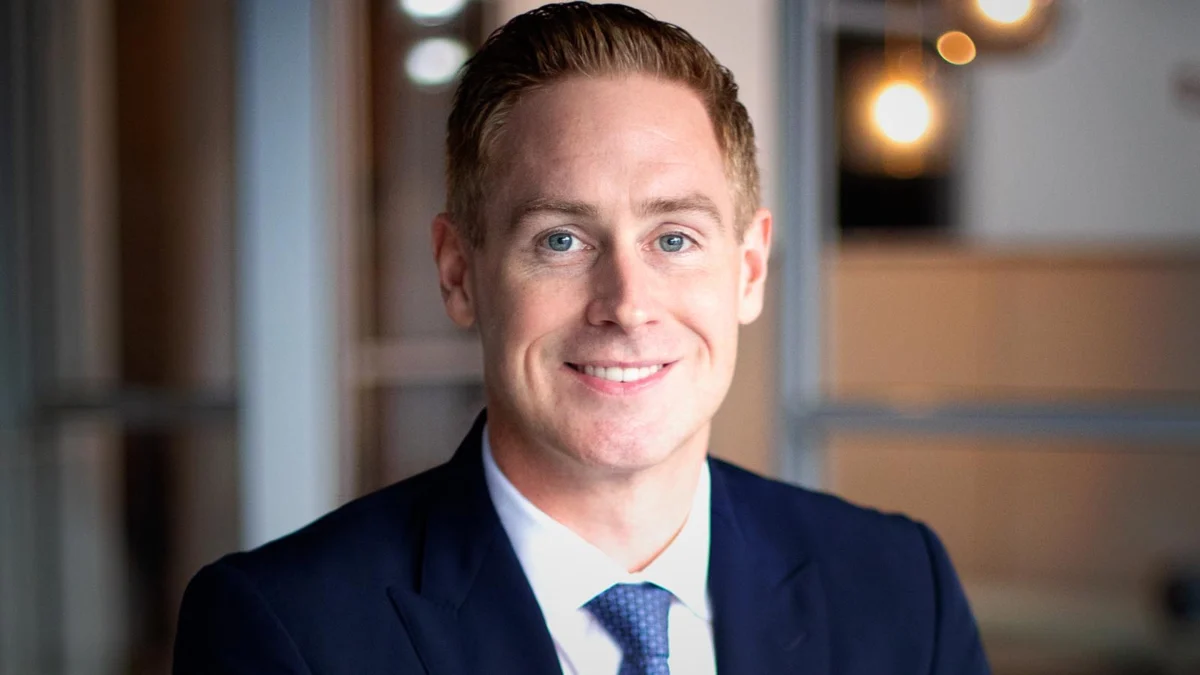
Miami-based wealth management firm Corient has witnessed a remarkable surge in its clients’ assets, more than doubling since the beginning of the year. At the helm of this impressive expansion is CEO Kurt MacAlpine, who attributes the firm’s success to a foundational principle established at Corient’s inception in 2020: running a Registered Investment Advisor (RIA) firm akin to other leading professional services organizations, such as law or accounting practices, by embracing a robust partnership model. This strategic approach, MacAlpine contends, fundamentally reshapes the dynamics of wealth management, fostering unparalleled client-centricity and internal collaboration.
"Our model eliminates the inherent competition that can arise among advisors within a traditional RIA structure," MacAlpine explained in a recent interview with Wealth Management. "Instead, it cultivates a culture where the client’s needs are paramount, and the entire organization is mobilized to meet them, regardless of which specific team or individual possesses the requisite expertise."
This philosophy is not merely theoretical; it is deeply embedded in Corient’s operational framework. MacAlpine has implemented a singular profit-and-loss (P&L) statement that encompasses the entire organization, deliberately eschewing "chargebacks" to individual teams. This unified financial structure now oversees an RIA dedicated to serving ultra-high-net-worth (UHNW) clients across the United States, Canada, and Europe. The firm boasts a network of over 300 partners, approximately 3,000 employees, and manages an astounding $556 billion in client assets. This scale positions Corient as a significant player in the global wealth management landscape.
A Strategic Acquisition Fuels Momentum
Corient’s recent expansion has been further bolstered by the announcement of its agreement to acquire Summit Trail Advisors, a firm managing $21 billion in assets. This strategic move underscores Corient’s aggressive growth trajectory and its commitment to integrating high-caliber organizations that align with its unique operational ethos. The acquisition, finalized on Wednesday, is a testament to Corient’s ability to identify and integrate firms that resonate with its client-first, collaborative partnership model.
"Summit Trail Advisors represents an exceptional business," MacAlpine stated, highlighting the firm’s significant scale within the wealth management sector, its esteemed client base, and, crucially, its talented professionals who have consistently delivered outstanding client outcomes over an extended period.
The attraction for Summit Trail, MacAlpine elaborated, was Corient’s distinct operational structure. "The entire industry is largely oriented towards individual advisors or small teams operating in silos, with their economics directly tied to the clients they onboard," he observed. "At Corient, clients are clients of the firm. We foster collaboration across the entire organization to serve them collectively. This ensures clients are not confined to the expertise of one or two advisors; they gain access to the collective capabilities of our 3,000 global employees."
MacAlpine drew parallels to established professional services firms, stating, "Think of it as a professional services partnership – like a law firm or an accounting firm. My background is in management consulting, which is fundamentally different from the independent contractor, sole practitioner model prevalent in wealth management. I attribute much of our success to this structure, as it has filled a significant void in the marketplace."
A Differentiated Service Offering for UHNW Clients
Beyond its structural innovation, Corient’s comprehensive suite of services for UHNW clients is another key differentiator. While Summit Trail already offered a broad range of services to affluent clients, Corient’s capabilities extend significantly further. This includes traditional wealth advisory, both traditional and alternative investment management, global financial planning, global wealth transfer, global tax advisory, global trust services, and a global family office equipped with outsourced CFO services, customized reporting, concierge lending, management of complex residential real estate projects, an aviation business managing aircraft on behalf of clients worldwide, and art management services. This expansive and integrated offering is particularly appealing to UHNW families with complex global financial needs.
The firm’s global footprint is also a significant draw. Corient positions itself as the only truly global independent wealth manager. Its "global" nature is defined not just by its presence in multiple jurisdictions but by its unified partnership, a singular global compensation model, and a consolidated global P&L. This structure enables Corient to serve global families in a manner that traditional banks, despite their multi-jurisdictional presence, often struggle to replicate due to their siloed local operations and P&Ls.
Challenging the Status Quo: A Paradigm Shift in Wealth Management
MacAlpine’s critique of the traditional RIA model is sharp and forms the bedrock of Corient’s strategy. He argues that the prevailing industry structure, characterized by independent contractors operating under shared brands and technologies, breeds internal competition. "Advisors can compete with one another for new clients, even within the same firm," he stated. "This creates significant isolation rather than collaboration."
Furthermore, he points out that ancillary services, such as family office offerings, are often treated as cost centers by advisors, creating friction and discouraging client adoption. The traditional advisor compensation model, heavily reliant on individual revenue generation and commissions, incentivizes hoarding rather than sharing resources. "If you generate a lot of revenue and commissions and share it with 70 people, or five people, you make a lot less than if you keep it for yourself," MacAlpine observed.
This siloed and competitive structure, he believes, ultimately disadvantages the client. "When your advisors have tension with one another, or tension with the front office or middle and back office because people are paid on different metrics, the clients are the big loser," MacAlpine asserted. "The client’s experience becomes marginalized down to the individual who initially onboarded them, failing to provide access to the full breadth of the organization’s capabilities." He also identified employees as significant losers, often working as "independents on a platform" rather than within a cohesive company culture with aligned financial interests and clear career development paths.
Addressing Concerns: No Return to Wirehouse Days
When questioned about potential advisor concerns regarding a return to the centralized structures of traditional wirehouses, MacAlpine was unequivocal. "We’re nothing like a wirehouse on any dimension," he emphasized. "Our entire focus is on being the best in the world at serving ultra-high-net-worth clients. We believe we can achieve this by leveraging the collective expertise of our 3,000 people to serve these clients directly and indirectly."
Corient’s commitment to a unified structure is further evidenced by its single global compensation plan, with zero exceptions. The firm’s single P&L and the deliberate absence of chargebacks are designed to ensure that all resources and expertise flow seamlessly to clients without friction.
The firm’s rapid growth is a testament to its model’s appeal. Launched in April 2020 with $50 billion in assets, Corient has since grown to $550 billion, a more than tenfold increase in a relatively short period. MacAlpine attributes this success to Corient being the "first choice" for those who believe in collaborative client service, contrasting it with firms solely focused on commission grids, which is "just not our model."
The Global Imperative: A Growing Need for International Wealth Management
The timing of Corient’s aggressive global expansion is strategically significant. MacAlpine identifies several converging trends that underscore the demand for a truly global independent wealth management firm. "More wealth is being created today than ever before," he noted. "It’s being created faster, it’s more concentrated, it’s changing hands more rapidly, and it’s globalizing at an unprecedented pace. This global nature of wealth inherently creates complexity, magnifying the need for sophisticated financial advice."
He maintains that outside of Corient, no other truly global wealth managers exist. While banks may operate across multiple jurisdictions, MacAlpine distinguishes between being "multi-jurisdictional" and "global." He explains that multi-jurisdictional operations often involve local silos, P&Ls, and compensation plans. In a typical banking scenario, a UHNW client consolidating assets across four countries might see three regional P&Ls become irrelevant, with advisors in those regions losing their income streams. Meanwhile, a single advisor in the U.S. might see their managed assets quadruple, creating a zero-sum dynamic that discourages true collaboration.
Corient’s model, in contrast, ensures that when a client consolidates assets across multiple jurisdictions, every partner in the firm remains equally invested. "It doesn’t matter if a client decides to consolidate all their assets in Florida or New York," MacAlpine stated. "Every single person who was part of the team before remains equally relevant. There’s no incremental compensation for the person where the assets are domiciled, and no negative consequences for those who were previously serving the family. It’s effectively business as usual for everyone involved."
Strategic Global Acquisitions: Building Scale and Capability
Corient’s approach to global expansion has been deliberate and impactful. The simultaneous acquisition of two major UK-based UHNW wealth managers, Stonehage Fleming and Stanhope Capital Group, was a strategic decision to establish immediate scale. "When we went global, we acquired the largest and second-largest independent ultra-high-net-worth wealth managers on the same day," MacAlpine revealed. "This was important because when you’re going global, many make the mistake of establishing a presence in multiple jurisdictions without building relevant scale. In our industry, all scale comes locally."
This strategy has enabled Corient to "overwhelm the complexity" and deliver exceptional client outcomes. Following these initial UK acquisitions, Corient has continued its expansion in Europe with the announcement of two more acquisitions: an $11 billion business in Geneva and a $5 billion business in Paris. This methodical, yet ambitious, expansion strategy allows Corient to build local scale and multi-jurisdictional capabilities before expanding market by market, a more challenging endeavor internationally compared to the U.S. market’s relative uniformity.
Distinguishing Corient from CI Financial
Clarifying the relationship with CI Financial, MacAlpine highlighted that they are distinct entities serving different market segments. CI Financial, a Canadian entity, primarily focuses on the mass affluent and broader client base with a different structure and value proposition. Corient, on the other hand, is a global UHNW-focused wealth manager with a presence in Canada serving ultra-high-net-worth families. "They serve different segments," MacAlpine explained, "and are not really competitors but rather operate in very distinct market segments."
Strategic Partnership with Mubadala Capital
Corient’s ambitious growth and acquisition strategy has been significantly supported by its partnership with Mubadala Capital. "They’ve been amazing," MacAlpine expressed. "We’ve more than doubled the size of the firm since January, and they’ve been incredible partners on this journey." Mubadala Capital’s belief in Corient’s potential and their partnership in taking the company private has provided the firm with robust capitalization.
A key advantage of this partnership is the provision of "permanent strategic capital," a stark contrast to the temporary capital typically associated with private equity firms. "If you’re taking a forever time horizon to build a business, it’s very different than a two-to-four-year time horizon," MacAlpine stated. He views this permanent strategic capital as the ideal partner, ensuring complete alignment on building the business for the long term. Corient operates as a freestanding private partnership owned and operated by its partners, with Mubadala Capital serving as a significant institutional partner and shareholder, offering a stable and aligned foundation for sustained growth and client service excellence.
