

May 25, 2026
Jayati Ghosh
China’s political and intellectual elites increasingly perceive the nation’s profound economic transformation as compelling evidence of the success of state-led development, a narrative that posits its superiority over the perceived failures of liberal capitalism. However, a closer examination reveals persistent structural challenges, including pervasive overcapacity and entrenched inequality, which suggest that any sense of triumphalism may be premature. This analysis delves into the complexities of China’s economic trajectory, examining the underpinnings of its recent achievements while critically assessing the underlying vulnerabilities that could temper its future prospects.
The Allure of State-Led Development: A Narrative of Success
The prevailing narrative within China’s corridors of power and intellectual circles is that the country’s remarkable economic ascent, characterized by decades of high growth and poverty reduction, stands as a testament to the efficacy of its unique development model. This model, deeply rooted in state intervention, strategic planning, and a gradual, controlled opening to the global economy, is presented as a stark contrast to the often volatile and unequal outcomes attributed to unfettered liberal capitalism. Proponents of this view point to China’s ability to mobilize vast resources, direct investment into strategic sectors, and achieve rapid industrialization and technological advancement as clear indicators of state-led development’s inherent strengths.
This perspective gained significant traction following the global financial crisis of 2008, which exposed vulnerabilities within Western capitalist economies. While many developed nations grappled with recession, China, with its robust state control over its financial system and its capacity for large-scale stimulus, continued its growth trajectory. This divergence in performance further solidified the belief among Chinese policymakers and thinkers that their model offered a more stable and effective path to prosperity. The narrative is further bolstered by the dramatic reduction in extreme poverty, lifting hundreds of millions out of destitution – an achievement often cited as unparalleled in human history.
The Trump Visit: A Symbol of Shifting Global Dynamics
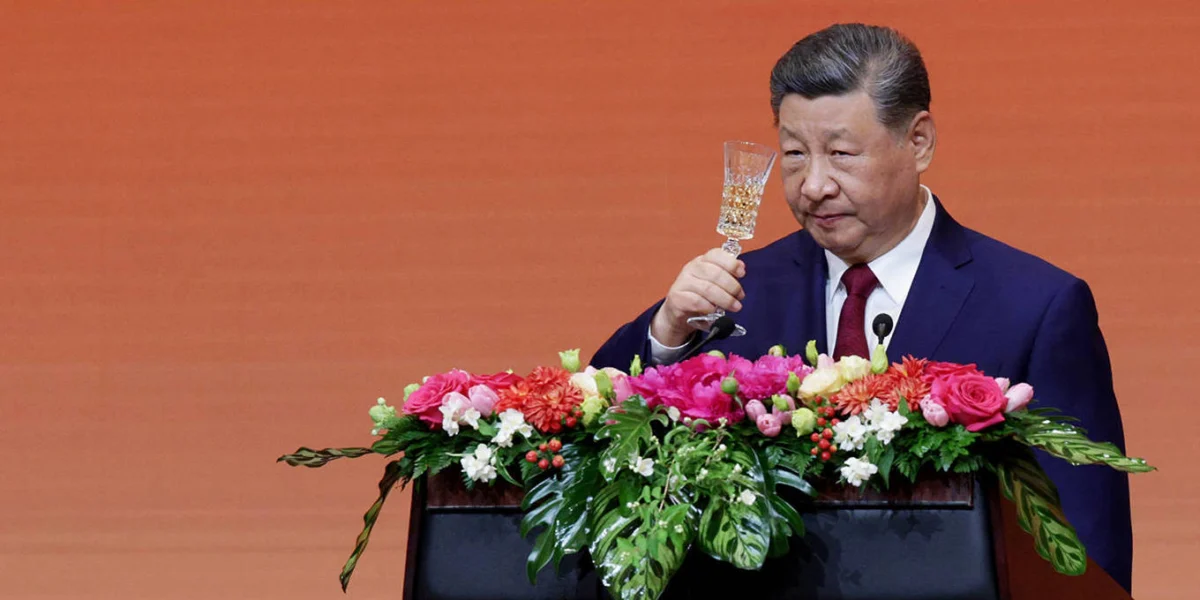
The period surrounding US President Donald Trump’s visit to China in May 2026 served as a vivid illustration of these evolving global dynamics and the differing perceptions of economic models. The stark contrast between the official accounts of President Trump’s meetings with Chinese President Xi Jinping was immediately apparent. While official Chinese readouts emphasized areas of agreement and mutual understanding, highlighting President Xi’s leadership and China’s growing influence, American interpretations often focused on unresolved trade disputes and the perceived recalcitrance of Chinese negotiators.
This divergence in perception is not merely a matter of diplomatic nuance; it reflects deeper ideological differences and competing visions for the global economic order. For China, the Trump visit, despite its inherent tensions, was an opportunity to project an image of strength and stability, reinforcing the narrative of a nation on an inexorable rise, a counterpoint to what they view as the disruptive and protectionist tendencies of the current US administration. The very fact that a US president was engaging in high-stakes negotiations with President Xi, rather than dictating terms, was interpreted by many in China as a sign of their nation’s enhanced global standing.
Underlying Structural Challenges: Overcapacity and Inequality
Despite the compelling narrative of success and the outward signs of economic prowess, China’s economic landscape is not without its significant structural challenges. Two of the most prominent and persistent issues are overcapacity and persistent inequality.
Overcapacity: This phenomenon, where the production capacity for certain goods and services significantly exceeds demand, has become a chronic problem in many of China’s key industrial sectors. Fueled by massive state-backed investment, often driven by regional growth targets and a desire to create jobs, industries such as steel, cement, solar panels, and automobiles have seen their production capabilities expand at an astonishing rate. While this has contributed to China’s dominance in global manufacturing and kept prices low for consumers worldwide, it has also led to significant inefficiencies, environmental degradation, and financial strain on state-owned enterprises.
The consequences of overcapacity are far-reaching. It can depress prices, leading to lower profit margins for businesses and potentially triggering bankruptcies. It also contributes to a misallocation of resources, as capital is tied up in underutilized factories rather than being channeled into more innovative or productive sectors. Furthermore, the accumulation of excess inventory can stifle new investment and innovation. The Chinese government has acknowledged this problem and has implemented various measures to address it, including shutting down inefficient plants, encouraging mergers and acquisitions, and shifting investment towards higher-value industries. However, the sheer scale of the problem makes it an ongoing challenge. Data from the National Bureau of Statistics of China consistently shows capacity utilization rates below optimal levels in key heavy industries, a trend that has persisted for years. For instance, in 2025, the average capacity utilization rate for the steel industry hovered around 70%, significantly below the internationally recognized healthy range of 80-85%.
Persistent Inequality: While China has achieved remarkable poverty reduction, the fruits of its economic growth have not been distributed evenly. A significant and widening gap exists between the wealthy elite and the vast majority of the population, as well as between urban and rural areas, and between the more developed coastal regions and the less developed interior. This inequality manifests in various forms, including disparities in income, wealth, access to quality education and healthcare, and social mobility.
The hukou (household registration) system, which ties individuals to their place of birth, continues to create barriers for rural migrants seeking opportunities in urban centers, often relegating them to precarious employment and limited access to social services. The rapid accumulation of wealth by a select few, often linked to real estate and financial markets, has exacerbated this divide. Addressing this persistent inequality is not only a matter of social justice but also crucial for sustaining long-term domestic demand and social stability. The Gini coefficient, a measure of income inequality, while subject to varying methodologies and reporting, has shown a tendency to remain at levels indicative of significant disparities, even as the overall economy has grown. Official figures, though often debated, suggest that the top 10% of earners continue to capture a disproportionately large share of national income.
A Timeline of China’s Economic Evolution: From Reform to Triumphalism
Understanding China’s current economic juncture requires a brief historical perspective.
- 1978: Deng Xiaoping initiates the "Reform and Opening Up" policy, marking a fundamental shift from a centrally planned economy towards a more market-oriented system, albeit with strong state guidance. Special Economic Zones are established, attracting foreign investment and technology.
- 1990s – 2000s: China experiences explosive economic growth, becoming the "world’s factory." Its accession to the World Trade Organization (WTO) in 2001 further integrates it into the global economy. This period sees significant poverty reduction and rapid urbanization.
- 2008: The global financial crisis highlights the resilience of China’s state-controlled economic model compared to the struggles of Western economies. This strengthens the belief in the superiority of state-led development.
- 2010s: China begins to grapple with the downsides of its rapid growth, including environmental degradation, rising inequality, and structural issues like overcapacity. The government initiates a "rebalancing" of the economy, aiming to shift from export-led growth to domestic consumption and from heavy industry to services and innovation.
- Early 2020s: The COVID-19 pandemic further underscores China’s ability to implement stringent control measures, but also reveals vulnerabilities in global supply chains and the potential impact of geopolitical tensions.
- Mid-2020s (leading up to May 2026): Tensions with the United States and other Western nations intensify, focusing on trade imbalances, intellectual property rights, and technological competition. China’s narrative of state-led success gains further prominence as it navigates these challenges, positioning itself as a stable alternative to perceived Western economic volatility. President Trump’s visit in May 2026 occurs against this backdrop, serving as a focal point for the contrasting economic ideologies.
Broader Impact and Implications: A Global Economic Reordering
The narrative of China’s state-led economic success has profound implications not only for China itself but for the global economic order.
A Challenge to Liberal Capitalism: China’s model presents a direct challenge to the long-held dominance of liberal capitalist principles as the universal path to development. Many developing nations, seeking rapid growth and poverty reduction, are increasingly looking to China’s example, potentially leading to a diversification of global economic governance.
Geopolitical Shifts: As China’s economic power grows, so does its geopolitical influence. The narrative of success emboldens China to assert its interests more forcefully on the international stage, leading to shifts in global power dynamics and potential friction with established powers.
The Future of Global Trade and Investment: China’s approach to trade, characterized by strategic state intervention and a focus on domestic champions, may lead to a reshaping of global trade rules and investment flows. Concerns about fair competition and market access are likely to persist.
The Domestic Imperative: For China, the long-term sustainability of its economic model hinges on its ability to effectively address its structural challenges. Failure to manage overcapacity and reduce inequality could lead to social unrest, economic stagnation, and a tarnishing of the very narrative of success that its elites so ardently promote. The government’s commitment to "common prosperity" and its ongoing efforts to deleverage the economy and curb speculative asset bubbles will be critical indicators of its capacity to adapt and evolve.
In conclusion, while China’s economic transformation has been a remarkable achievement, characterized by unprecedented growth and poverty reduction, the narrative of triumphalism is tempered by persistent structural challenges. Overcapacity and deep-seated inequality represent significant vulnerabilities that require sustained and effective policy responses. The ongoing debate and contrasting perceptions surrounding China’s economic model, vividly illustrated by events like President Trump’s visit, underscore the complex and evolving nature of the global economic landscape, where the efficacy of different development pathways is constantly being tested and re-evaluated. The coming years will be crucial in determining whether China can successfully navigate these challenges and solidify its position as a stable and equitable global economic power, or if its current trajectory will be hampered by the very structural issues that its success has helped to expose.
