

China’s economic landscape in June presented a complex picture, with consumer price inflation growing at a slower-than-anticipated pace while wholesale inflation accelerated, underscoring the persistent drag of elevated energy costs on domestic demand. The National Bureau of Statistics reported that consumer prices rose by a modest 1% year-on-year in June, falling short of economists’ consensus estimate of 1.1% and marking a deceleration from the 1.2% increase recorded in May. This trend suggests that inflationary pressures, while present, are not translating into robust consumer spending.
The core Consumer Price Index (CPI), which excludes volatile food and energy prices, mirrored the broader trend, also registering a 1% increase year-on-year in June. This figure edged down from the 1.1% rise seen in May, indicating a lack of broad-based inflationary momentum in the economy. Within the consumer basket, food prices continued their downward trajectory, declining by 1.6% compared to the previous year. This decline, while still significant, represented a slight easing from the 1.7% fall observed in May, suggesting that the downward pressure on food prices might be moderating.
In stark contrast to the subdued consumer price growth, producer prices painted a different story. The Producer Price Index (PPI), a key indicator of industrial inflation, surged by 4.1% year-on-year in June. This figure was in line with economists’ forecasts and represented an acceleration from the 3.9% increase recorded in May. This marks the strongest year-on-year PPI growth since July 2022, according to data from LSEG. The robust performance of the PPI suggests that manufacturers are facing rising input costs, a trend that has been building momentum in recent months.
However, the picture for producer prices was not entirely uniform. On a month-on-month basis, the PPI actually declined by 0.3% in June, according to official data. This divergence between year-on-year and month-on-month trends can often be attributed to base effects and the impact of commodity price fluctuations.
Economic Underpinnings: Energy Costs and Demand Dynamics
Economists attribute the recent surge in producer prices primarily to the lingering impact of higher energy costs and a favorable base effect from the previous year. Tianchen Xu, senior economist at the Economist Intelligence Unit, commented that while oil prices are generally on a "easing course," this has helped prevent PPI from climbing even higher. The year-on-year strength, Xu explained, is significantly influenced by a low-base effect, as producer prices experienced a sharp decline in June of the previous year.
Indeed, June 2025 marked one of the worst months for Chinese producer prices in nearly two years, with a year-on-year fall of 3.6%. This significant contraction was largely driven by an intensifying price war that rippled through the economy, reflecting a period of intense competition and subdued demand.
The return of producer prices to growth in March of this year was partly fueled by rising input costs, exacerbated by geopolitical tensions, particularly the conflict in the Middle East. These supply disruptions contributed to higher commodity prices, a key component of industrial production. This period marked the end of one of China’s longest deflationary streaks in decades, a significant shift in the economic environment. Beyond commodity costs, wholesale prices have also been buoyed by a growing demand for artificial intelligence (AI) computing power. This surge in demand for AI infrastructure has consequently pushed up prices for tech equipment and semiconductors, contributing to the broader inflationary trend at the wholesale level.
Manufacturing Momentum and Export-Led Growth
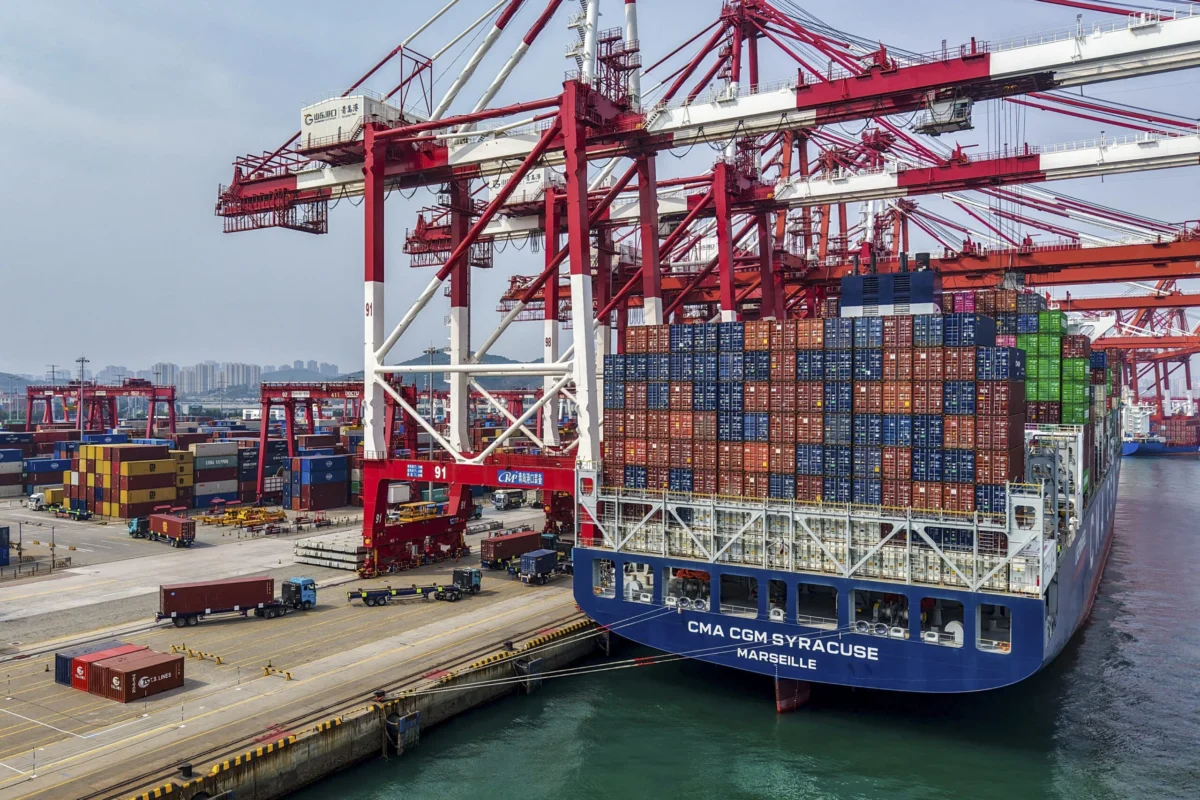
The resilience observed in manufacturing activity further supports the narrative of an export-driven economic recovery. China’s manufacturing sector expanded at a faster-than-expected pace in June, with experts citing robust external demand, particularly for AI-related technologies, as a primary driver of this momentum. This indicates that Chinese factories are benefiting from global demand for their products, even as domestic consumption remains sluggish.

This "two-speed growth" phenomenon, characterized by strong exports and manufacturing on one hand, and weak consumption and a struggling housing market on the other, is increasingly being viewed by investors as a defining long-term feature of the Chinese economy. Neo Wang, China strategist at Evercore ISI, noted that consumer sentiment remains subdued. Households are reportedly grappling with the negative wealth effect stemming from the prolonged downturn in the housing market, a significant component of household wealth in China.
Policy Implications and Future Outlook
The persistent weakness in domestic consumption and the strong performance of exports are likely to influence Beijing’s policy decisions. It is anticipated that the government will be reluctant to roll out broad stimulus measures aimed at reviving tepid consumer demand, preferring to let export-led growth continue to underpin the economy. "Policymakers are likely to refrain from major new stimulus unless the slowdown persists beyond the conflict," suggested Gabriel Wildau, managing director at Teneo.
The upcoming top policy meeting by the 24-member Politburo of the Communist Party, scheduled for late July, is seen as a crucial juncture. This meeting is considered "the next opportunity to escalate policy stimulus," according to Wildau, suggesting that any significant policy shifts or interventions would likely be announced following this high-level deliberation.
The International Monetary Fund (IMF) has recently updated its outlook for China, forecasting that the country’s economy will outperform global growth this year. The IMF raised its growth forecast for China to 4.6%, an upward revision from its previous projection of 4.4%. This optimistic view was attributed to China’s robust high-tech manufacturing and export performance, as well as significant frontloaded public infrastructure investments. This revised forecast contrasts with a trimming of the global economic expansion forecast to a sluggish 3%. China has set a modest economic growth target of 4.5% to 5% for the current year, and the IMF’s upward revision suggests the country is on track to meet or even exceed this target, largely driven by external demand and industrial output.
Chronology of Key Economic Indicators:
- June 2025: Producer Price Index (PPI) falls 3.6% year-on-year, marking a significant deflationary period for Chinese manufacturers.
- March 2026: Producer prices return to growth, influenced by rising input costs due to Middle East conflict and supply disruptions.
- May 2026: Consumer Price Index (CPI) grows 1.2% year-on-year. Producer Price Index (PPI) grows 3.9% year-on-year.
- June 2026 (Early): China’s manufacturing activity expands faster than expected, driven by external demand.
- June 10, 2026: Reports indicate elevated energy costs are beginning to impact domestic demand, with potential implications for inflation.
- June 30, 2026: Official data confirms faster-than-expected expansion in China’s manufacturing activity for June.
- July 9, 2026: National Bureau of Statistics releases June inflation data: CPI at 1% year-on-year, PPI at 4.1% year-on-year. Core CPI at 1% year-on-year. Food prices decline 1.6% year-on-year.
- July 9, 2026 (International): The International Monetary Fund raises its forecast for China’s economic growth to 4.6% for the year.
- Late July 2026: The Politburo of the Communist Party is scheduled to hold a key policy meeting, potentially signaling future economic stimulus measures.
Broader Implications and Expert Analysis:
The divergence between consumer and producer prices, coupled with the strong export performance, highlights a significant structural shift in the Chinese economy. While the manufacturing sector is thriving, driven by global demand and technological advancements, the domestic consumer remains cautious. This can be partly attributed to ongoing economic uncertainties, including the protracted real estate downturn and its impact on household wealth and confidence.
The robust export figures and manufacturing output suggest that China’s industrial capacity and competitiveness remain strong. However, the reliance on external demand also exposes the economy to global economic fluctuations and geopolitical risks. For policymakers, the challenge lies in fostering sustainable domestic demand without undermining the strengths of the export sector.
The current economic trajectory, characterized by export-led growth and subdued domestic consumption, is likely to influence Beijing’s policy approach. Major stimulus measures are unlikely unless there is a significant and sustained deterioration in economic conditions. Instead, the focus may remain on targeted support for specific sectors and continued investment in high-tech industries, which are seen as key drivers of future growth. The upcoming Politburo meeting will be closely watched for any signals of a shift in this strategy.
The IMF’s optimistic forecast underscores the resilience of the Chinese economy, particularly in its manufacturing and export capabilities. However, it also implicitly acknowledges the ongoing challenges in stimulating domestic demand. The interplay between global economic trends, domestic policy responses, and structural economic shifts will continue to shape China’s economic trajectory in the coming months and years. The sustained strength in producer prices, driven by global commodity markets and AI demand, coupled with moderating consumer price growth, presents a complex inflationary environment that policymakers will need to navigate carefully.
