

Caudal Energy, a UK-based clean energy startup and a prominent spinout from the University of Oxford, has successfully closed a £4.3 million (approximately USD $5.6 million) seed funding round to accelerate the development of its pioneering tidal stream energy technology. This capital injection marks a significant milestone for the company as it seeks to commercialize a bio-inspired approach to renewable energy—one that departs from traditional turbine-based systems in favor of oscillating fins modeled after the movement of marine mammals. The funding round was co-led by Oxford Science Enterprises (OSE) and Empirical Ventures, with participation from a consortium of specialized investors including Zero Carbon Capital, Creator Fund, Kibo Invest, and Oxford Innovation Finance.
The company, which was established in 2024 after years of research within the University of Oxford’s Department of Engineering Science, aims to solve the persistent economic and technical challenges that have historically hindered the tidal energy sector. By leveraging the predictable nature of ocean tides and combining it with a highly efficient, modular design, Caudal Energy intends to provide a reliable baseload power source that can complement intermittent renewables like wind and solar.
Rethinking Ocean Energy: The Shift from Turbines to Bio-Inspired Fins
For decades, the tidal energy industry has been dominated by underwater turbines that function similarly to wind turbines but are built to withstand the immense density of seawater. While effective in high-velocity "choke points," these systems often face significant hurdles, including high installation costs, complex underwater maintenance, and mechanical vulnerability in extreme marine environments. Furthermore, traditional turbines typically require peak flow speeds that are only found in a limited number of geographical locations, such as the Pentland Firth in Scotland or the Bay of Fundy in Canada.
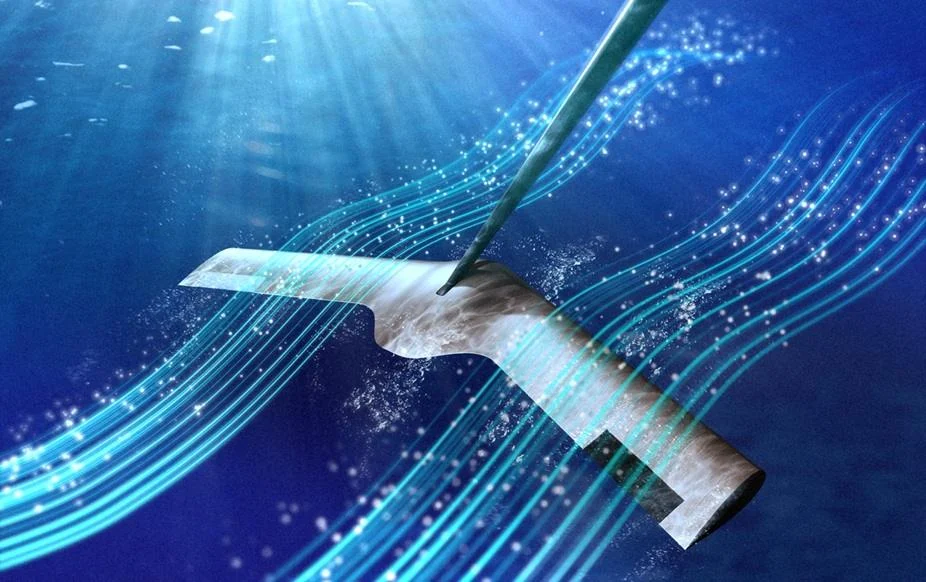
Caudal Energy, originally known during its incubation phase as "Porpoise Power," has developed an alternative mechanism. Rather than using rotating blades, the company’s technology utilizes oscillating hydrofoils—or fins—that mimic the vertical thrust and efficiency of a whale or dolphin’s tail. This bio-inspired design allows the system to extract energy from "mid-flow" tidal environments, characterized by peak flows of three knots or higher. By functioning efficiently in these less extreme but far more common flow conditions, Caudal Energy’s technology vastly expands the potential map for tidal energy deployment globally.
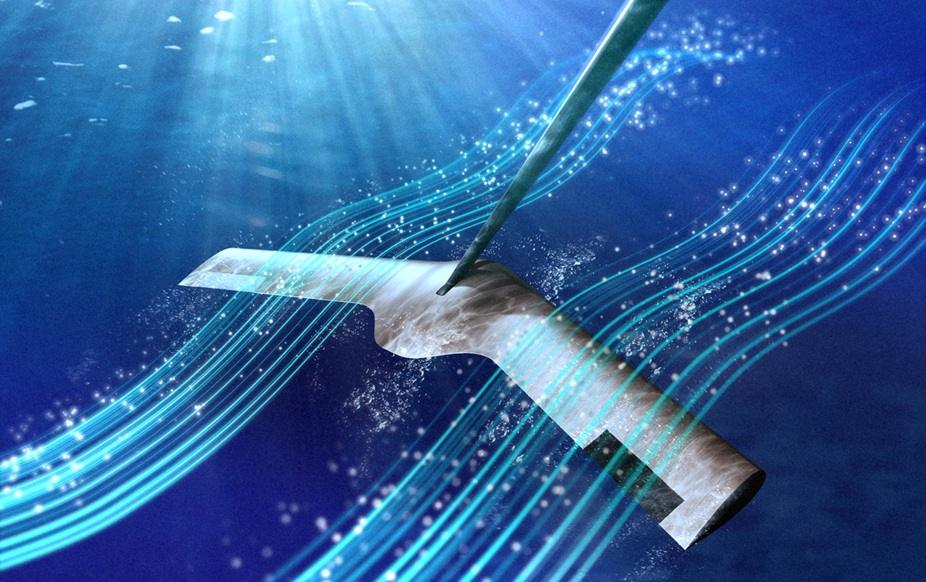
The hydrodynamic advantages of oscillating fins include a larger "swept area" relative to the structural footprint and a reduction in the tip-vortex losses common in rotary systems. Moreover, the slower, more natural movement of the fins is expected to have a lower impact on marine life, addressing one of the primary environmental concerns associated with large-scale tidal arrays.
Strategic Financial Backing and Investor Confidence
The successful seed round reflects growing investor appetite for "long-duration" and "predictable" renewable technologies. As national grids become increasingly saturated with intermittent solar and wind power, the demand for stable, predictable "baseload" renewables has intensified.
Oxford Science Enterprises, a lead investor in the round, has a long history of backing high-science spinouts from the university. Andy Straiton, Investment Lead at OSE, emphasized that Caudal Energy’s value proposition lies in its commercial viability. "Caudal Energy is addressing one of the most important challenges in the transition to renewable energy: how to provide predictable, scalable generation that complements intermittent power sources," Straiton stated. He noted that the company’s approach is designed around the economics of large-scale deployment, citing simpler installation and lower operational complexity as the key drivers that could bring tidal energy to cost-parity with offshore wind.
Empirical Ventures, co-leading the round, brings expertise in deep-tech and engineering-heavy startups. The inclusion of Zero Carbon Capital and Creator Fund—early backers of the company—demonstrates continued confidence in the technology’s progression from a laboratory concept to a field-ready prototype. New participants like Kibo Invest and Oxford Innovation Finance further broaden the company’s institutional support as it moves toward industrial-scale applications.
A Chronology of Development: From Oxford Research to 2028 Deployment
The journey of Caudal Energy is rooted in advanced academic research. The underlying physics of the oscillating fin system were refined at the University of Oxford, focusing on how to maximize energy capture while minimizing the structural load on the platform.

- 2020–2023 (Research & Incubation): The core technology was developed within the University of Oxford’s engineering labs under the name Porpoise Power. Researchers focused on computational fluid dynamics (CFD) and small-scale tank testing to prove the efficiency of the oscillating foil mechanism.
- 2024 (Company Formation): Caudal Energy was officially spun out as a private entity, securing initial pre-seed interest and rebranding to reflect its focus on "caudal" (tail-based) propulsion and energy capture.
- 2025–2026 (Engineering & Modeling): With the newly secured £4.3 million, the company will expand its engineering team, focusing on high-fidelity modeling and the construction of larger-scale prototypes. This phase will involve rigorous testing in controlled marine environments to validate durability and power output.
- 2027 (Demonstration Phase): The company plans to initiate sea trials of a modular, grid-connected unit. This phase is critical for securing insurance and debt financing for larger projects.
- 2028 (Commercial Deployment): Caudal Energy has set a target for its first full-scale commercial deployment. The company aims to partner with utility providers and industrial energy consumers to integrate its tidal systems into the broader energy mix.
John Kennedy, CEO of Caudal Energy, highlighted the practical focus of the company’s roadmap. "Our approach combines smarter hydrodynamic design with modular deployment architecture to create a system designed for real-world performance," Kennedy explained. "By unlocking the potential of mid-flow tidal sites, we believe Caudal can dramatically expand where tidal energy can be deployed and how commercially competitive it can become."
The Economic Case for Tidal Stream Energy
The global potential for tidal energy is estimated to be over 1,200 terawatt-hours (TWh) per year. However, the sector has lagged behind wind and solar due to the "Levelized Cost of Energy" (LCOE). Historically, tidal energy has been more expensive because of the bespoke nature of each installation and the high costs of maritime operations.
Caudal Energy’s modular architecture is specifically designed to drive down these costs. By using a system that can be manufactured in components and assembled or maintained without the need for specialized, heavy-lift vessels, the company aims to reduce the "Balance of Plant" costs. Furthermore, because the tides are governed by the gravitational pull of the moon and sun, the power output is 100% predictable years in advance. This predictability reduces the need for expensive battery storage or backup gas-fired "peaker" plants, providing a hidden economic benefit to grid operators.
In the United Kingdom, which possesses some of the world’s most significant tidal resources, the government has begun to provide more dedicated support through the Contracts for Difference (CfD) scheme. This policy framework provides a guaranteed price for renewable electricity, helping nascent technologies like Caudal’s bridge the gap to commercial maturity.
Environmental Implications and Marine Integration
Beyond the carbon-neutral benefits of renewable energy, Caudal’s technology is being scrutinized for its environmental footprint. Traditional turbines have raised concerns regarding "strike risk" for fish and marine mammals. The oscillating fin design, however, operates at lower frequencies and mimics natural biological movements, which researchers suggest may be more easily avoided by marine fauna.

Additionally, the modular, low-profile nature of the Caudal system means it has a negligible visual impact on the horizon, a common point of contention for near-shore wind farms. This makes it a more socially acceptable alternative for coastal communities and protected maritime areas.
Future Outlook: A Multi-Trillion Dollar Opportunity
As the global energy transition accelerates, the race to find the "missing piece" of the renewable puzzle continues. While wind and solar will provide the bulk of future energy, the inherent volatility of weather-dependent sources creates a demand for stable alternatives. Caudal Energy is positioning itself as a leader in this niche, transforming the rhythmic power of the ocean into a steady stream of electricity.
The 2028 commercial target is ambitious, but with the backing of Oxford’s scientific ecosystem and a fresh injection of capital, Caudal Energy is well-positioned to move tidal power from a fringe alternative to a mainstream utility. The success of this venture could not only provide the UK with a new exportable technology but also offer coastal nations around the world a path toward true energy independence through the untapped power of their own shores.
