

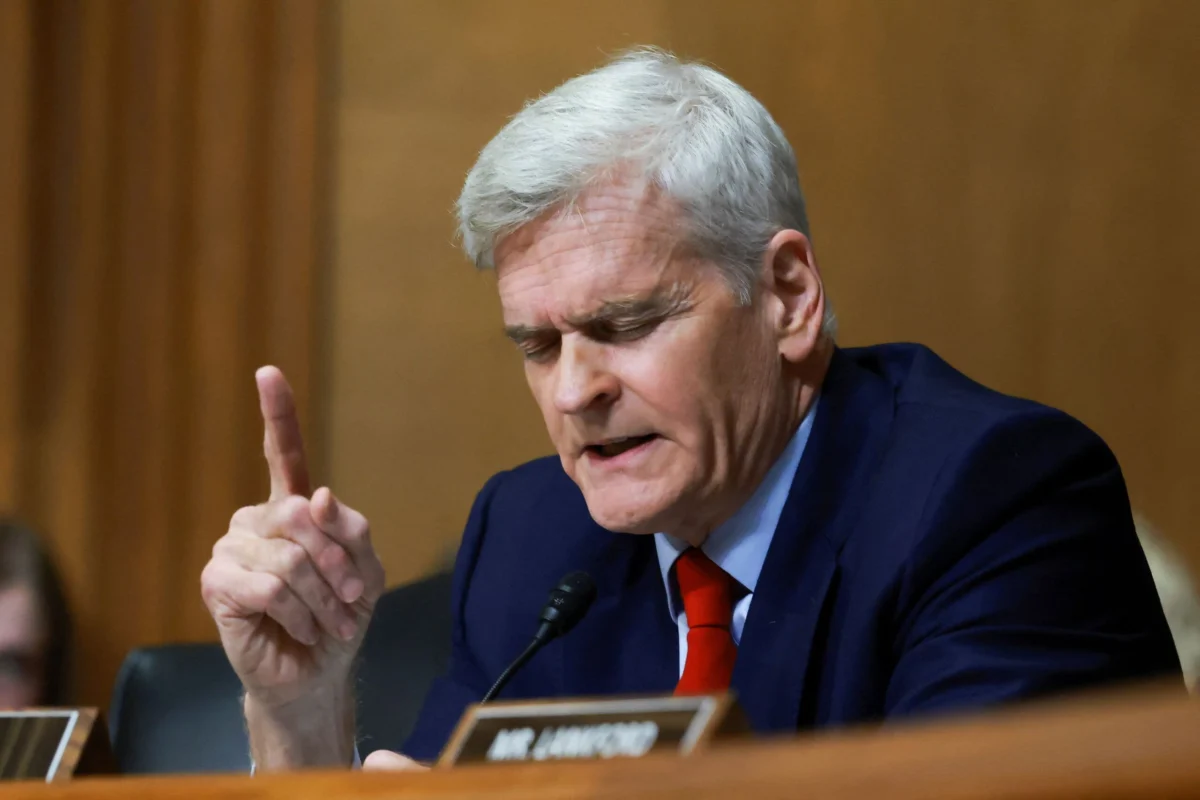
U.S. Senator Bill Cassidy (R-LA) publicly articulated profound reservations regarding the suitability of Federal Housing Finance Agency chief Bill Pulte to assume the critical role of acting Director of National Intelligence (DNI). Speaking on Tuesday, September 2, 2025, at CNBC’s CEO Council Summit, Senator Cassidy conveyed widespread dismay among his Senate colleagues following President Donald Trump’s unexpected announcement of Pulte’s appointment earlier that day. The Louisiana Republican, who had recently failed to secure a runoff position in his state’s Republican primary after President Trump endorsed a challenger, Representative Julia Letlow (R-LA), underscored Pulte’s apparent lack of pertinent experience, a sentiment that resonated with other prominent figures within his party and the broader intelligence community, raising immediate questions about the integrity and effectiveness of the nation’s top intelligence coordination office.
Cassidy’s Scathing Assessment and Senate Shockwaves
Senator Cassidy’s critique was unequivocal and direct, reflecting a palpable sense of alarm within the legislative body. "Nothing here suggests he’s competent in the job for which he’s been appointed," Cassidy stated, elaborating on the consensus among his peers. He vividly described the reaction as akin to an "OMG" moment, indicating the sheer surprise and concern that swept through the Senate. The senator’s remarks highlighted several critical deficiencies in Pulte’s resume for such a sensitive and demanding position. "He has no military background, no intelligence background, he’s going to… keep his other job, and he’s not even sure he has a security clearance," Cassidy detailed, outlining a stark contrast between Pulte’s profile and the established qualifications typically expected of a DNI.
This public condemnation from a Republican senator, particularly one who had recently faced a primary challenge supported by the sitting President, underscored the depth of the concern. While Cassidy’s political standing might have afforded him greater latitude to speak freely without immediate fear of reprisal, his comments were widely interpreted as reflecting a deeper institutional apprehension rather than mere personal grievance. The setting of his remarks, at a high-profile CEO Council Summit, amplified their reach and impact, bringing the debate over Pulte’s qualifications into sharp public focus.
The Pivotal Role of the Director of National Intelligence
To fully grasp the magnitude of Senator Cassidy’s concerns, it is crucial to understand the foundational importance and intricate responsibilities of the Director of National Intelligence. The DNI position was established in 2004 through the Intelligence Reform and Terrorism Prevention Act, a legislative response to the intelligence failures that preceded the September 11, 2001, terrorist attacks. The primary mandate of the DNI is to serve as the head of the U.S. Intelligence Community (IC), overseeing and integrating the work of 18 diverse intelligence agencies, including the CIA, NSA, FBI, and various military intelligence branches.
The DNI’s core functions include:
- Advising the President: Providing daily intelligence briefings and serving as the principal intelligence advisor to the President, the National Security Council, and the Homeland Security Council.
- Budget Authority: Managing and executing the National Intelligence Program (NIP) budget, which allocates billions of dollars across the IC.
- Intelligence Integration: Ensuring timely and accurate intelligence sharing and collaboration among the various agencies, preventing information silos.
- Strategic Planning: Developing and implementing strategic plans for the IC, setting priorities, and ensuring the community meets evolving national security challenges.
- Foreign Intelligence Relationships: Representing the U.S. Intelligence Community in its interactions with foreign intelligence entities.
Given these immense responsibilities, the DNI is typically an individual with an extensive background in intelligence operations, military leadership, foreign policy, diplomacy, or national security administration. Past DNIs have often been career intelligence professionals, high-ranking military officers, or seasoned diplomats with deep expertise in global affairs and complex organizational management. The role demands not only profound subject matter expertise but also exceptional leadership, discretion, and the ability to maintain impartiality in delivering intelligence assessments, regardless of political pressures.
Bill Pulte’s Unconventional Background Under the Microscope
The stark contrast between the traditional DNI profile and Bill Pulte’s professional background lies at the heart of the controversy. Bill Pulte is widely recognized as a real estate heir, investor, and philanthropist, notably through his "Pulte Prize" and highly visible "Twitter philanthropy." He has cultivated a significant social media presence, often engaging directly with political figures and advocating for specific causes. While his philanthropic endeavors and business acumen are acknowledged, his career has primarily been rooted in the private sector and, more recently, in leading the Federal Housing Finance Agency (FHFA).
The FHFA, where Pulte serves as chief, is an independent federal agency responsible for regulating and overseeing Fannie Mae and Freddie Mac, the government-sponsored enterprises (GSEs) that play a critical role in the U.S. housing finance market. While this role involves significant financial oversight and regulatory expertise, it bears little resemblance to the intricacies of intelligence gathering, analysis, covert operations, or counterterrorism efforts that define the DNI’s domain.
Senator Cassidy’s concerns about Pulte retaining his FHFA position while serving as acting DNI further exacerbate the issue. Such an arrangement raises immediate questions of potential conflicts of interest, divided loyalties, and, perhaps most critically, the practical feasibility of effectively performing two demanding, full-time federal leadership roles simultaneously. Each position requires immense dedication and focus, and attempting to manage both could compromise the effectiveness of either or both agencies.
Moreover, the senator’s pointed remark about Pulte being "not even sure he has a security clearance" is deeply troubling. A top-secret security clearance, often with Sensitive Compartmented Information (SCI) access, is a fundamental prerequisite for anyone holding a senior national security position, let alone the DNI. The absence of such a clearance, or even uncertainty about its status, suggests a rushed, potentially ill-considered appointment that overlooks basic procedural requirements essential for protecting classified information and ensuring the DNI can immediately access and process critical intelligence. This particular detail underscored for many critics the perception that the appointment prioritized factors other than direct qualifications and readiness.
A Chorus of Congressional and Intelligence Community Concerns
Senator Cassidy was not an isolated voice in expressing dismay over Pulte’s appointment. Senator John Cornyn (R-TX), another prominent Republican who also faced a contested primary loss recently, publicly stated earlier on the same day that he did not believe Pulte was qualified for the DNI role. The convergence of concerns from two experienced Republican senators, both of whom had recently navigated challenging political landscapes within their own party, lent significant weight to the growing apprehension. Their willingness to challenge a presidential appointment from their own party, particularly in such a critical national security role, highlighted the seriousness of their reservations.
Beyond Capitol Hill, warnings from "intelligence community veterans" were quick to emerge. These veterans, often speaking anonymously due to the sensitive nature of their past work, articulated profound concerns about the potential for politicization of intelligence. They cautioned that an unqualified DNI, especially one perceived to be primarily loyal to the President rather than to the principles of objective intelligence, could risk eroding the non-partisan nature of the IC. This erosion, they warned, could manifest in several ways:
- Compromised Intelligence Quality: Pressure to tailor intelligence assessments to fit political narratives could lead to skewed or incomplete information reaching policymakers, potentially resulting in flawed national security decisions.
- Damage to Morale: Career intelligence professionals, dedicated to objective analysis and expertise, could experience significant demoralization if they perceive their work is being undervalued or politicized by a leader lacking relevant experience.
- Risk to International Partnerships: The U.S. Intelligence Community relies heavily on trust and information sharing with allied nations. An DNI perceived as unqualified or overtly political could undermine this trust, jeopardizing crucial international intelligence cooperation.
- Weaponization of Intelligence: Concerns were raised that an DNI could potentially use the perch to target "Trump’s domestic foes," a thinly veiled reference to fears that intelligence capabilities might be repurposed for political score-settling rather than genuine national security threats.
These warnings from seasoned professionals underscored the deep-seated fear that the DNI role, designed to be the apolitical head of the IC, could instead become a vehicle for partisan agendas, with potentially catastrophic consequences for national security.
The Perilous Precedent of "Acting" Appointments
A significant aspect of the concern surrounding Pulte’s appointment revolved around his status as "acting" DNI. The use of acting officials allows a President to immediately fill vacancies in executive branch positions without requiring Senate confirmation, thereby bypassing the Senate’s constitutional "advise and consent" role. While this mechanism can be useful for short-term transitions, federal law, specifically the Federal Vacancies Reform Act of 1998, generally limits how long an individual can serve in an acting capacity (typically 210 days, with extensions under certain circumstances).
However, as Senator Cassidy pointed out, "The problem with acting is sometimes people act forever." He referenced Julie Su, who served as acting Labor Secretary during the Biden administration for an extended period, highlighting how temporary appointments can become de facto permanent, effectively circumventing the Senate’s oversight responsibilities. This practice raises serious constitutional questions regarding the separation of powers and the erosion of checks and balances.
The implications of a prolonged acting DNI are particularly troubling:
- Weakened Congressional Oversight: Without the formal confirmation process, senators lose a crucial opportunity to publicly scrutinize a nominee’s qualifications, temperament, and policy views. This diminishes Congress’s ability to ensure that critical national security positions are filled by truly competent and independent individuals.
- Instability and Uncertainty: An acting DNI, lacking the full mandate of Senate confirmation, may face challenges in asserting authority, making long-term strategic decisions, or commanding the full respect and loyalty of the vast intelligence community. This can lead to instability and uncertainty within the IC.
- Undermining the System: Persistent reliance on acting officials in sensitive roles can undermine the very structure of governance, setting a precedent that sidesteps established processes and potentially allowing less qualified individuals to hold immense power indefinitely. Senator Cassidy’s warning that "Sometimes things that are not permanent become quite permanent" encapsulated this deep institutional apprehension.
Broader Implications for National Security and Governance
The controversy surrounding Bill Pulte’s acting DNI appointment carries profound implications for U.S. national security, the integrity of the intelligence community, and the broader framework of democratic governance.
Impact on the Intelligence Community:
The core effectiveness of the IC relies on its reputation for objectivity, professionalism, and expertise. An appointment like Pulte’s, perceived as lacking these fundamental attributes, could significantly damage morale among career intelligence professionals. It risks fostering cynicism, leading to a potential brain drain if experienced individuals feel their expertise is undervalued or if the community becomes overly politicized. Furthermore, international intelligence partners, who rely on the perceived neutrality and competence of the U.S. IC, might become hesitant to share sensitive information if they believe the DNI is not a credible, non-partisan figure.
Congressional Oversight and Checks and Balances:
The Senate’s "advise and consent" role for presidential appointments is a cornerstone of the U.S. system of checks and balances. Bypassing this process through extended acting appointments weakens Congress’s constitutional authority and diminishes its ability to ensure accountability in the executive branch. This could lead to a less transparent and less accountable intelligence apparatus, particularly concerning the use of intelligence resources and the oversight of classified programs.
U.S. Credibility on the Global Stage:
How the U.S. staffs its most critical national security positions is observed closely by allies and adversaries alike. An appointment perceived as based on political loyalty rather than merit could signal a weakening of U.S. resolve or competence in safeguarding its national interests. This could embolden adversaries and sow doubt among allies regarding the reliability and professionalism of American leadership.
The Trump Administration’s Approach to Appointments:
This appointment aligns with a broader pattern observed during the Trump administration, where loyalty has often been prioritized over traditional experience in key roles, particularly within the intelligence and national security apparatus. This approach has historically led to tension with established institutions, often termed the "deep state," and has fueled debates about the proper balance between presidential prerogative and the need for independent, expert leadership in critical government functions. The DNI role, specifically created to ensure independent intelligence coordination, makes it particularly vulnerable to such pressures.
Political Context and Future Outlook
The timing of this controversial appointment in early September 2025, likely in the run-up to a major election cycle, adds another layer of complexity. During periods of heightened political activity, the integrity and independence of the intelligence community become even more crucial, as intelligence assessments can directly influence public opinion and policy debates.
The fact that both Senator Cassidy and Senator Cornyn chose to speak out after their respective primary losses suggests a potential dynamic where some Republican lawmakers, no longer constrained by the immediate need to appease the presidential base for re-election, might feel more emboldened to voice dissent on matters of principle. This could indicate a broader, albeit often privately held, discomfort within the Republican caucus regarding certain administrative decisions.
Should President Trump decide to formally nominate Pulte for the DNI position, it would almost certainly ignite a protracted and contentious confirmation battle in the Senate. Such a battle would likely see fierce opposition from Democrats and potentially a significant number of Republicans, forcing senators to take a public stand on the qualifications and politicization of national security roles. The President’s decision to make such an appointment, despite the obvious lack of traditional qualifications, could be interpreted as a strategic move to demonstrate executive power, reward loyalty, or appeal to a segment of his base that distrusts established institutions.
The broader context of Senator Cassidy’s remarks, made during a week when he was also speaking at a Senate Finance Committee hearing on President Trump’s 2026 healthcare agenda (as indicated by the photo caption from September 4, 2025), illustrates his continued engagement in legislative affairs even amidst personal political setbacks. This provides a backdrop of active governance against which his strong criticism of the DNI appointment stands out, highlighting the urgency and seriousness with which he viewed the matter.
Conclusion
Senator Bill Cassidy’s forceful condemnation of Bill Pulte’s appointment as acting Director of National Intelligence underscores a significant moment of tension and concern within the U.S. political landscape. The core issues – Pulte’s apparent lack of relevant experience, the potential for politicization of a critical national security role, and the problematic precedent of extended acting appointments – converge to create a formidable challenge to the integrity and effectiveness of the nation’s intelligence apparatus.
As the U.S. navigates an increasingly complex global environment, the leadership of its intelligence community is paramount. The bipartisan unease expressed by senators like Cassidy and Cornyn, coupled with warnings from intelligence veterans, signals a growing demand for competency, impartiality, and adherence to established processes in filling such vital roles. The unfolding saga of Bill Pulte’s appointment will undoubtedly serve as a critical test of congressional oversight, presidential accountability, and the resilience of the institutions designed to safeguard American national security.
