


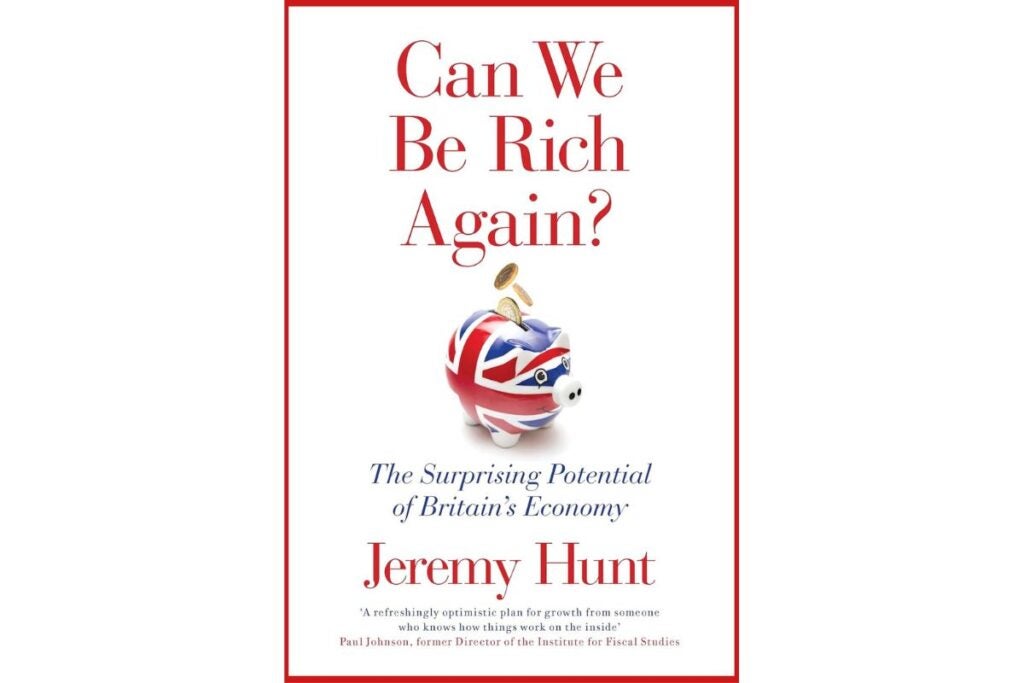
Former Chancellor of the Exchequer Jeremy Hunt’s latest book, Can We Be Rich Again? The Surprising Potential of Britain’s Economy, presents a detailed economic vision for the United Kingdom, emerging from a period of significant public service that saw him hold a record tenure as Health Secretary, a stint as Foreign Secretary, and conclude as the nation’s top financial minister from 2022 to 2024. While often described as possessing competence, stamina, and ambition, Hunt has historically been perceived as lacking the charismatic "stardust" that propels political figures to leadership. This perceived deficit may have contributed to his previous unsuccessful bids for the Conservative leadership in 2019 and 2022. Now, as a knighted backbencher under the age of 60, Hunt is presenting a policy-driven narrative that, according to its reviewers, reads as a potential comeback manifesto, prompting crucial questions about its viability as a governmental blueprint and its effectiveness in projecting a more relatable and inspirational image of its author.
The book, a sequel to Can We Be Great Again? (2025), which explored Britain’s global standing, and a precursor to a planned third volume on democratic reform, is framed as a comprehensive economic strategy. Its didactic structure, characterized by clear pronouncements, crisp chapters replete with graphs and bullet points, and concluding summaries, mirrors the precise and methodical approach often associated with Treasury operations. While Hunt candidly acknowledges the collaborative nature of the work, thanking a "galaxy of economic thinkers and former colleagues," the book’s presentation undeniably reflects the familiar, often perceived as austere, persona of its author.

A Grounded Economic Philosophy
At its core, Hunt’s argument champions the principle that "countries with lower overall levels of tax grow faster." However, he pragmatically asserts that significant tax reductions for the UK are contingent upon achieving a considerably higher growth rate, a necessary step to avert further escalation of the public debt-to-GDP ratio. The book outlines a multifaceted approach to achieving this higher-growth, lower-tax equilibrium, proposing a suite of reforms designed to invigorate the British economy.
These proposed reforms encompass several key policy areas:
- Housing and Planning Reform: Accelerating housebuilding through streamlined planning processes is identified as a critical component for economic expansion and affordability.
- Welfare Modernization: The book advocates for welfare reforms aimed at incentivizing greater workforce participation, thereby boosting productivity and economic output.
- Public Sector Efficiency: Hunt stresses the importance of enhancing the efficiency of public services to optimize resource allocation and reduce expenditure.
- Energy Policy: A dual approach is proposed, focusing on lowering energy bills for consumers and businesses while simultaneously advocating for increased oil and gas extraction from the North Sea, a move aimed at energy security and economic benefit.
- Devolution of Power: The book supports granting more autonomy and power to elected mayors, particularly in regional economic development initiatives.
- Pension Fund Investment: Hunt proposes redirecting a greater proportion of UK pension fund assets towards domestic ventures and infrastructure projects, aiming to stimulate investment and job creation.
- Entrepreneurial Ecosystem: The need for more fertile conditions for entrepreneurs is highlighted, with suggestions for fostering innovation and business growth.
- Educational Enhancement: Improving educational standards across the board is presented as a fundamental pillar for long-term economic prosperity and a skilled workforce.
While the individual policy proposals may not present entirely novel concepts, Hunt’s strength, as identified by reviewers, lies in his ability to weave these disparate strands into a cohesive and persuasive narrative. He posits that a government committed to tackling these interconnected policy areas, even acknowledging that some initiatives may not yield immediate success, could potentially achieve a 10% growth boost over a decade. Such an uplift, he estimates, would translate to an increase of approximately £4,000 in living standards for the average family. Furthermore, this projected growth would generate a substantial financial bonus of £120 billion for the Exchequer, providing the incumbent Chancellor with crucial fiscal flexibility to reduce debt, lower taxes, or invest in enhanced public services.
International Comparisons and Economic Parallels
Hunt enlivens his arguments with striking international comparisons, drawing parallels between figures and policies in different jurisdictions to underscore his economic propositions. One notable example contrasts the approach of Labour’s Shadow Chancellor, Rachel Reeves, with that of Tate Reeves, the Governor of Mississippi. The latter has implemented significant personal tax cuts, reducing them to the state’s lowest historical level. This policy, according to the book, has been accompanied by a robust economic growth averaging 3% annually since the pandemic, a stark contrast to the UK’s growth rate of approximately 1% during the same period. This comparison serves to highlight the potential economic benefits of a proactive, lower-taxation strategy.
Another compelling comparison is made between the powers afforded to elected mayors in the UK and their counterparts in the United States. Hunt contrasts the limited fiscal authority of Andy Street, the former Mayor of the West Midlands (2017-2024), who managed approximately £800 per household in public transport and project spending – with the majority of UK tax revenue directed centrally – against the broader fiscal powers of Steve Adler, the former Mayor of Austin, Texas. Adler, with control over "many local taxes," could direct £8,000 per household. The book notes that Austin’s economy experienced remarkable growth of 53% during the seven years that the West Midlands saw only a 3% increase, suggesting a correlation between local fiscal autonomy and economic dynamism. While acknowledging that mayoral success is multifactorial, Hunt implies that greater devolved financial control could unlock significant regional economic potential in the UK.
The book also touches upon the critical area of investment, where Hunt made a tangible impact as Chancellor through the "Mansion House Compact." This initiative aimed to encourage UK pension funds to increase their domestic investments. Hunt draws a parallel with Australia’s simplified personal pension pot system, which not only promotes greater saving but also generates returns that can, over a 40-year working life, double the initial investment, significantly outperforming British pension fund equivalents. This highlights a potential avenue for stimulating domestic capital and boosting long-term individual wealth accumulation.
A Glimpse into the Author’s Persona
Beyond the policy prescriptions, Can We Be Rich Again? offers a window into Jeremy Hunt’s personal journey, revealing moments that offer a more nuanced perspective on his character, diverging from his public image. While the book’s structure is often described as didactic, akin to an extended PowerPoint presentation, there are passages that infuse it with a degree of personal reflection and relatability.
Hunt recounts quiet evenings with his wife, Lucia, and their Labrador, Poppy, reflecting on the profound impact of walking down the grand Downing Street staircase, lined with portraits of former Prime Ministers, which "always made my heart miss a beat." These personal anecdotes, while seemingly minor, aim to humanize a figure often perceived as solely defined by his policy decisions.
He shares a moment of vulnerability during England’s 2018 World Cup bid, where he found himself seated between football icon David Beckham and Prince William in a Geneva hotel suite. Hunt admits to feeling "petrified my lack of knowledge would be exposed," a candid reflection of self-doubt that humanizes his high-stakes political career.

Perhaps more poignant is his recollection as Health Secretary during a doctors’ strike. Hunt describes being unable to "hide the tears in my eyes" upon hearing that support for the strike remained solid. The gesture of a junior minister bringing in a pot plant to cheer him up serves as a small but telling illustration of the emotional toll of his ministerial responsibilities.
More entertaining, and potentially more strategically valuable for a political comeback, is Hunt’s recounting of his pre-political entrepreneurial ventures. His early attempts included selling Frank Cooper’s Oxford Marmalade to Japan, a venture that revealed the Japanese appreciation for English preserves, albeit not for breakfast. This was followed by the creation of college guides for foreign students in London. His most significant entrepreneurial success came with Hotcourses, described as "the world’s largest database of school and college courses," which was sold in 2017, making him the wealthiest member of the Cabinet at the time. This backstory of building a successful business from the ground up offers a compelling narrative of ambition, innovation, and financial acumen that resonates beyond the confines of parliamentary politics.
The Path Forward: Policy and Personality
The overarching question surrounding Can We Be Rich Again? is whether it effectively positions Jeremy Hunt for a potential future leadership bid. Reviewers suggest that if his policy trilogy is indeed a preparatory strategy for another run at the Conservative leadership, Hunt would be well-advised to emphasize his entrepreneurial background more prominently, potentially at the expense of the more conventional, bullet-pointed policy analyses.

The book’s strengths lie in its substantive economic proposals, its rigorous analysis, and its attempt to connect policy with tangible outcomes for the average citizen. However, its perceived dryness in presentation may hinder its ability to captivate a wider audience or to project the inspirational qualities often sought in a national leader.
The book’s publication marks a significant moment in the ongoing discourse about Britain’s economic future. Hunt, a seasoned politician with extensive experience at the highest levels of government, is using this platform to articulate a vision for growth and prosperity. Whether this vision, coupled with a more personal narrative, is sufficient to re-energize his political career and capture the public imagination remains to be seen. The underlying message, however, is clear: Jeremy Hunt sees himself as a contender, and Can We Be Rich Again? is his detailed argument for why he should be taken seriously.
Can We Be Rich Again? The Surprising Potential of Britain’s Economy by Jeremy Hunt is published by Swift Press, priced at £25. This article originally appeared in Spear’s Magazine Issue 100.
