

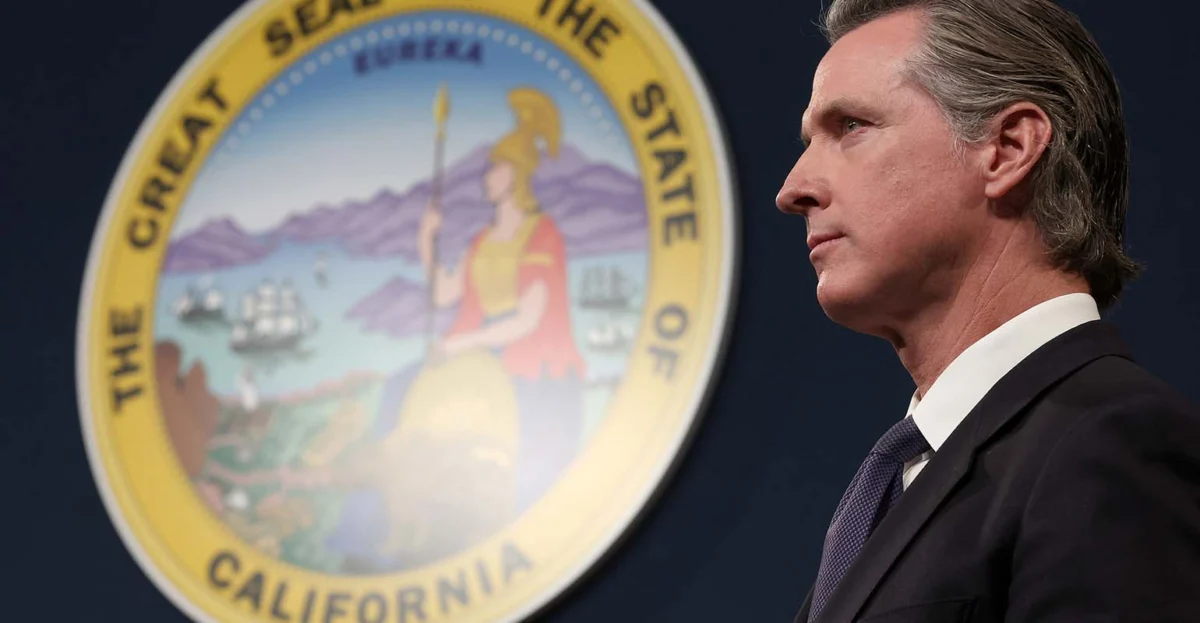
California Governor Gavin Newsom is advocating for a federal tax on billionaires, a significant policy pivot that comes as a controversial California wealth tax measure is set to appear on the November ballot. Newsom, who has been vocal about his opposition to the state-level initiative, argues that taxing the nation’s wealthiest individuals should be a national endeavor, not a piecemeal state effort. This move positions the governor at the forefront of a national debate on wealth inequality and taxation, with potential implications for his own political future.
The California wealth tax, which seeks to impose a 5% tax on net worth exceeding $1 billion, was narrowly approved for the November ballot after proponents, including the Service Employees International Union-United Healthcare Workers West (SEIU-UHW), met a crucial deadline. Governor Newsom, along with a coalition of billionaires and progressive groups, had reportedly been working to prevent the measure from reaching voters, with some accounts suggesting private assurances of an agreement to withdraw the initiative. However, these efforts ultimately proved unsuccessful, leaving the state to confront a potentially seismic fiscal and political battle.
Background: The Genesis of the California Wealth Tax
The proposed California wealth tax emerged as a response to a projected budget shortfall and concerns over the state’s funding for healthcare services. The initiative, spearheaded by SEIU-UHW, aims to generate an estimated $100 billion over a decade. The tax would apply to a billionaire’s total net worth, encompassing assets such as company stock, real estate, and even art collections. This aggressive approach to taxing extreme wealth has ignited passionate debate, pitting labor unions and progressive advocates against some of the world’s wealthiest individuals and business interests.
The idea of a wealth tax is not new in progressive circles. Senator Elizabeth Warren and Senator Bernie Sanders have long championed federal wealth tax proposals, though these have historically faced significant legislative hurdles. Critics argue that implementing and enforcing a wealth tax presents considerable practical and legal challenges, including the difficulty of accurately valuing private assets and the potential for constitutional challenges.
Newsom’s Strategic Shift: A Federal Solution
In a detailed Substack post released on Friday, Governor Newsom articulated his vision for a nationwide approach to taxing the ultra-wealthy. He proposed a federal tax on individuals with a net worth exceeding $100 million, alongside reforms to inheritance tax rules and measures to close loopholes that allow wealthy individuals to borrow against their assets without triggering immediate tax liabilities. While Newsom did not specify a precise tax rate for his proposed federal wealth tax or detail its operational mechanics, his statement signaled a clear strategic alignment with federal solutions over state-specific mandates.
"It is time for a national billionaires’ tax," Newsom declared in his Substack post. "The fight belongs at the federal level, where this broken system was created in the first place." This statement suggests a belief that systemic issues of wealth concentration and tax avoidance require a coordinated federal response, rather than fragmented state-level interventions that could lead to economic distortions and legal complexities.
The California Wealth Tax Measure: A High-Stakes Showdown
The decision to advance the California wealth tax to the ballot sets the stage for a costly and highly visible political contest. Opponents, including a powerful coalition of billionaires and business groups, are prepared to spend significant sums to defeat the measure. Their arguments often center on the potential for capital flight, where wealthy residents and businesses might relocate to states with more favorable tax environments, thereby diminishing the state’s tax base and economic vitality.
Among the most vocal opponents is a group linked to Google co-founder Sergey Brin, who has reportedly relocated to Nevada and has contributed over $80 million to organizations opposing the wealth tax. Brin’s substantial financial backing underscores the intensity of the opposition and the willingness of some of the world’s richest individuals to defend their assets against new forms of taxation. Other prominent figures, such as Chris Larsen, co-founder of Ripple, are also actively funding anti-wealth tax measures.
The coalition opposing the tax extends beyond tech billionaires. It includes organizations like Planned Parenthood Affiliates of California and various labor unions who argue that the proceeds of the wealth tax might disproportionately benefit specific groups while potentially harming the state’s overall fiscal health. They contend that the measure could undermine funding for essential public services, including education, healthcare, public safety, and infrastructure projects.
Political Maneuvering and Strategic Implications
Governor Newsom’s public stance against the California wealth tax, coupled with his call for a federal solution, has been characterized by political analysts as a strategic move designed to navigate a complex political landscape. By advocating for a national approach, Newsom may be attempting to distance himself from the divisive state-level initiative while positioning himself as a leader on a prominent progressive issue.
"For Newsom, it’s the worst of all worlds, because it puts him squarely in the middle of a national Democratic debate about equity, taxation and affordability," commented Steven Maviglio, a veteran Democratic strategist in California. "His announcement might deflect from that a bit." This suggests that Newsom’s pivot could be a calculated effort to manage public perception and preemptively address potential criticisms related to his position on wealth taxation, especially if he harbors presidential ambitions for 2028.
The SEIU-UHW, however, remains committed to the ballot measure. Dave Regan, the union’s president, stated that while "cursory conversations" with the governor occurred, they were unsuccessful because Newsom’s camp was unwilling to consider measures that directly impacted billionaires. This underscores a fundamental disagreement on the approach to wealth taxation and the urgency of addressing healthcare funding needs.
Broader Implications: The National Wealth Tax Debate
The battle over the California wealth tax is expected to be one of the most expensive ballot measure campaigns in U.S. history, potentially setting new spending records. The outcome will not only determine the fate of wealth taxation in California but also serve as a significant indicator of broader voter sentiment regarding the taxation of extreme wealth nationwide.
Recent polling data offers a mixed picture. A May poll from the Public Policy Institute of California indicated that 54% of likely voters supported the wealth tax. However, this contrasts with the recent rejection by San Francisco voters of a proposal to increase taxes on large businesses with highly-paid CEOs, suggesting a nuanced public opinion that can be swayed by specific proposals and the influence of opposing campaigns.
The debate over wealth taxation also intersects with discussions about economic growth and capital mobility. Critics of wealth taxes often raise concerns about their potential to drive investment and wealthy individuals out of states that implement them. Proponents, such as Representative Ro Khanna of California, argue that such concerns are exaggerated and that taxing the wealthiest is essential for addressing economic inequality and funding vital public services. Khanna has pointed to the emergence of the world’s first trillionaire, Elon Musk, as evidence of the escalating need for wealth redistribution mechanisms.
Future Outlook and Potential Challenges
Newsom’s proposal for a federal wealth tax, while aligning with the long-held goals of progressive Democrats, faces formidable obstacles in the current political climate. Federal wealth tax proposals have historically struggled to gain traction in Congress, and significant legal and constitutional questions would need to be addressed. The precise mechanisms for valuing and taxing such vast fortunes remain a subject of intense debate among economists and legal scholars.
However, the governor’s initiative could inject new momentum into the national conversation on wealth taxation. By framing the issue as a federal imperative, Newsom might be attempting to build broader support and create a more conducive environment for such policies in the future.
The California wealth tax battle, regardless of its outcome, is poised to have far-reaching consequences. It will test the resolve of both proponents and opponents, shape the discourse on economic fairness, and potentially influence the trajectory of tax policy at both the state and federal levels. The considerable financial resources dedicated to this campaign highlight the profound stakes involved for the wealthiest individuals and the broader public interest in how wealth is taxed and distributed in the United States.
Chronology of Key Events:
- October [Year – inferred]: The California wealth tax proposal is first floated as a means to address healthcare funding shortfalls.
- Early 2026: Governor Newsom and other stakeholders engage in discussions and lobbying efforts to prevent the wealth tax from qualifying for the ballot.
- June 19, [Year]: Backers of the California wealth tax propose a compromise, reducing the tax rate from 5% to 2%, which Governor Newsom rejects.
- June 20, [Year]: The deadline for submitting ballot measures for the November election passes, with the California wealth tax officially qualifying for voter consideration.
- June 21, [Year]: Governor Gavin Newsom announces his support for a federal wealth tax on billionaires and individuals with over $100 million in net worth, publicly opposing the California measure.
- November [Year]: The California wealth tax measure will be put before voters.
Supporting Data and Analysis:
- Estimated Revenue: The proposed 5% California wealth tax on net worth exceeding $1 billion is projected to generate approximately $100 billion over a decade.
- Tax Rate: The initiative seeks a one-time 5% tax on the net worth of billionaires.
- Polling Data: A May poll by the Public Policy Institute of California indicated 54% support among likely voters for the wealth tax.
- Opposition Spending: Reports indicate that Google co-founder Sergey Brin has spent over $80 million to fund groups opposing the wealth tax.
- Capital Flight Concerns: The debate includes arguments about potential economic consequences, with opponents citing instances of wealthy individuals relocating from California. For example, Sergey Brin reportedly moved to Nevada.
Official Responses and Related Parties:
- Governor Gavin Newsom: Advocates for a federal wealth tax, arguing that taxing billionaires should be a national effort. He opposes the state-level initiative.
- SEIU-UHW: The union behind the California wealth tax, which pushed the measure onto the ballot, stating their belief that taxing billionaires is essential.
- Billionaire Opponents: Including Sergey Brin and Chris Larsen, who are actively funding campaigns to defeat the wealth tax.
- Progressive Allies: Such as Senator Bernie Sanders and Representative Ro Khanna, who support the concept of wealth taxation and have proposed federal measures.
- Political Strategists: Like Steven Maviglio and Dan Schnur, who analyze Newsom’s political positioning and the implications of his policy stance.
Broader Impact and Implications:
The California wealth tax initiative and Governor Newsom’s call for a federal counterpart highlight a significant and ongoing national conversation about economic inequality, tax fairness, and the role of government in addressing wealth concentration. The outcome of the California vote could influence future ballot measures and legislative efforts concerning wealth taxation across the country. Furthermore, it underscores the growing political influence of both progressive movements advocating for wealth redistribution and the powerful economic interests seeking to maintain the status quo. The high-stakes nature of this debate, involving substantial financial commitments from all sides, signals its importance in shaping both California’s fiscal future and the broader landscape of economic policy in the United States.
