

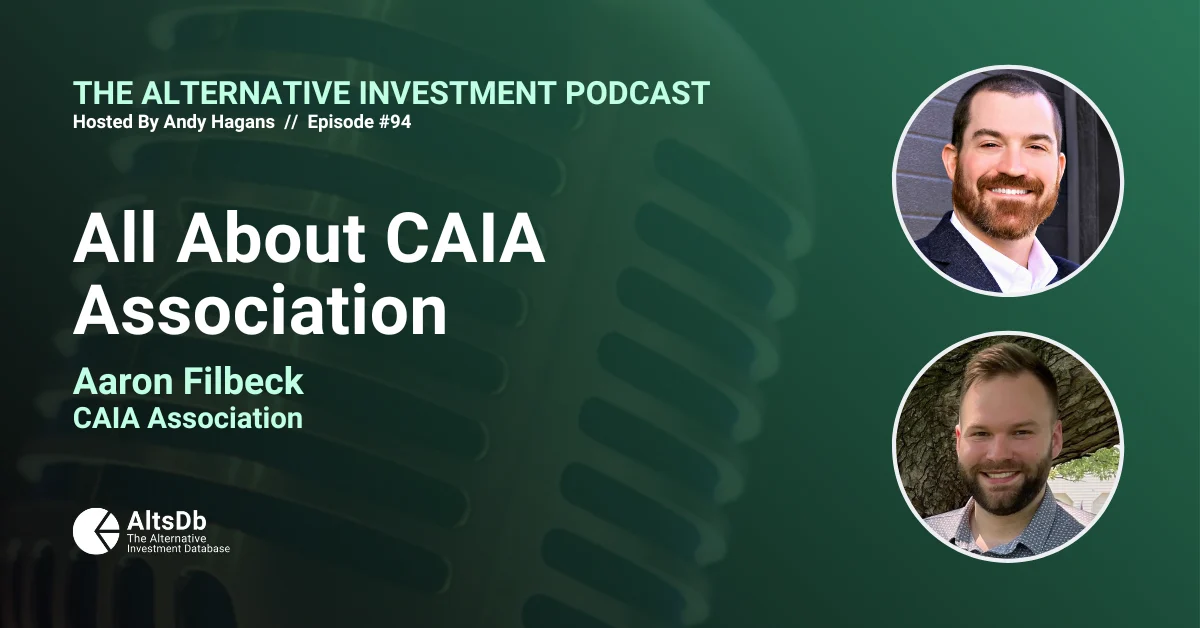
The burgeoning landscape of alternative investments presents a significant opportunity for financial advisors to enhance client portfolios and drive improved business outcomes. However, the inherent complexity of these asset classes, often described as a "beast" by industry professionals, continues to pose a substantial challenge, with a notable education gap persisting within the advisor community. To bridge this divide and foster a more informed approach to alternative investments, the CAIA Association, a global professional body dedicated to advancing knowledge and transparency in the alternatives industry, is actively engaged in developing and disseminating crucial educational resources.
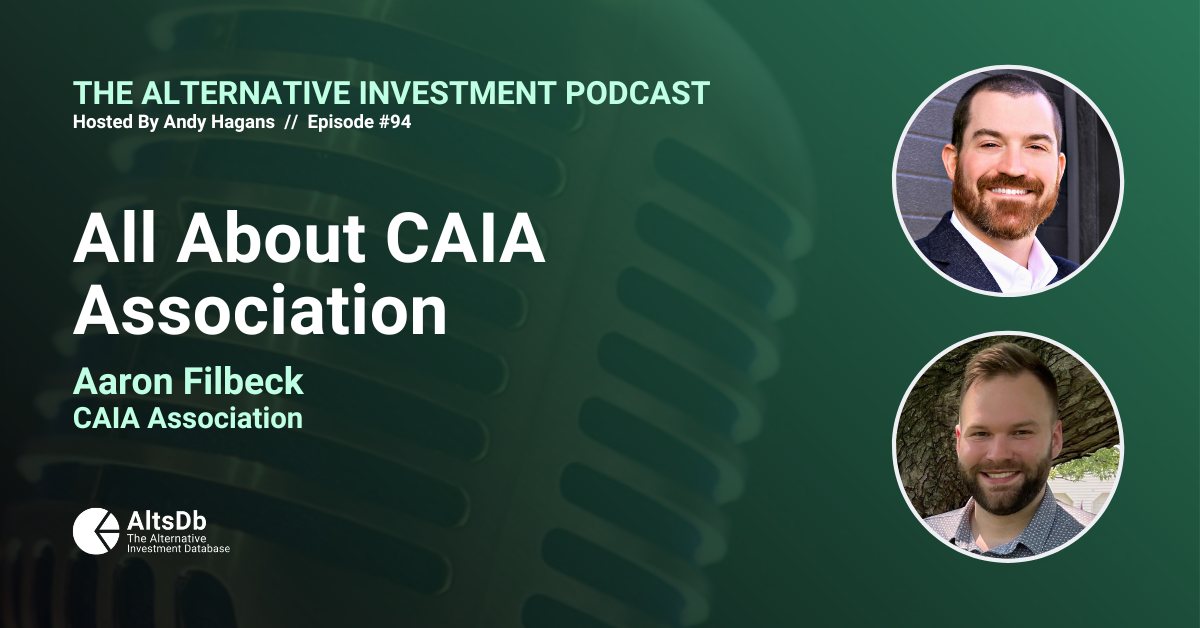
Aaron Filbeck, Managing Director and Head of UniFi at CAIA, recently shared insights into the organization’s mission and its multifaceted approach to empowering financial advisors. In a discussion on "The Alternative Investment Podcast," hosted by Andy Hagans, Filbeck elaborated on how CAIA is working to demystify alternative investments, ultimately aiming to improve outcomes not only for clients but for society at large.
The Growing Importance of Alternative Investments
Alternative investments, encompassing a broad spectrum of assets beyond traditional stocks and bonds, have gained considerable traction among institutional investors and, increasingly, among retail investors. This shift is driven by the potential for diversification, enhanced risk-adjusted returns, and access to asset classes that can offer uncorrelated performance to public markets. Categories such as private equity, venture capital, real estate, hedge funds, infrastructure, and private debt are no longer niche offerings but integral components of sophisticated investment strategies.
Data from Preqin, a leading alternative assets data provider, consistently highlights the significant growth in assets under management (AUM) for alternative asset classes. Over the past decade, global AUM in private equity alone has more than doubled, reaching trillions of dollars. This expansion signifies a fundamental shift in how wealth is managed and a growing reliance on these investment vehicles.
Addressing the Advisor Education Challenge
Despite the increasing prevalence of alternatives, a persistent challenge remains: the lack of comprehensive education among many financial advisors. Many advisors, particularly those focused on retail clients, may lack the specialized knowledge required to adequately understand, evaluate, and recommend alternative investments. This knowledge deficit can lead to missed opportunities for clients or, more critically, the misallocation of capital due to a misunderstanding of risks and complexities.
"Honestly, since I’ve started hosting this show, this is the single topic that I think has come up with every single guest in the entire history of my podcast, is the need for more education in our space," stated Andy Hagans, host of "The Alternative Investment Podcast." This sentiment underscores the pervasive nature of the education gap within the industry.
CAIA Association: A Global Leader in Alternative Investment Education
The CAIA Association plays a pivotal role in addressing this educational imperative. Founded in 2002, CAIA has established itself as a global standard-setter for professionals in the alternative investment industry. Its core mission revolves around creating greater alignment, transparency, and knowledge for all investors.
"We’re a global professional body dedicated to creating greater alignment, transparency and knowledge for all investors," explained Aaron Filbeck. "But we have a particular focus on the world of alternative investments." The organization boasts a diverse membership of approximately 13,000 individuals spread across over 100 countries, representing a wide array of stakeholders including limited partners (LPs), general partners (GPs), advisors, regulators, and distribution professionals.
CAIA’s approach to education is multifaceted, encompassing formal educational programs, thought leadership, and advocacy. This comprehensive strategy aims to elevate the industry’s overall understanding and proficiency in alternative investments.
The CAIA Charter Program: Building Foundational Expertise
The flagship offering of the CAIA Association is the CAIA Charter program, a rigorous two-level examination process designed to equip professionals with a deep understanding of institutional-quality alternative investments. This program is not merely about product knowledge; it’s about fostering an allocator’s mindset.
"The focus of the program is on what we deem kind of the institutional quality alternative investments that are in the marketplace today," Filbeck elaborated. "So, as we kind of look at what are the big asset owners and institutional investors allocating towards, within their portfolios, the endowments, the pensions, the sovereign wealth funds, and so on."
Level I of the CAIA Charter introduces candidates to various alternative strategies, including private equity, real assets, hedge fund strategies, and structured credit. It delves into the fundamental risk-return profiles of these investments. Level II then builds upon this foundation, shifting the focus to portfolio construction, risk management, investment and operational due diligence, and ESG considerations from an allocator’s perspective.
The program typically requires candidates to invest between 200 to 250 hours of self-study per level, totaling 400 to 500 hours for completion. While often pursued by institutional investors and those directly involved in investment decision-making, the CAIA Charter is also highly valued by financial advisors seeking to enhance their expertise and credibility in the alternatives space. The designation signifies a commitment to a high standard of knowledge and ethical practice.
UniFi by CAIA: Democratizing Alternative Investment Education for Wealth Management
Recognizing the specific needs of the private wealth management industry, CAIA launched UniFi by CAIA. This learning platform is specifically designed to educate asset managers, intermediaries, and individual advisors on the nuances of alternative investments.
"UniFi by CAIA is a learning platform that was announced by CAIA Association last year, so 2022, and is really designed to educate the private wealth management industry on alternatives," Filbeck explained. The platform offers a more accessible and online-centric learning experience compared to the in-depth CAIA Charter program.
UniFi currently features a flagship certificate program, "Fundamentals of Alternative Investments," a 20-hour course providing a comprehensive overview of various alternative strategies. The platform is also expanding its offerings with a series of micro-credentials, shorter, more focused modules that delve deeper into specific topics. For instance, upcoming micro-credentials will cover private debt and digital assets, reflecting the evolving landscape of alternative investments.
This approach allows financial professionals to acquire knowledge that is directly applicable to their client interactions and portfolio construction, without necessarily requiring the extensive time commitment of a full charter program. The emphasis is on enabling advisors to be conversant, ask informed questions, and effectively communicate the role of alternatives within client portfolios.
The Financial Data Professional (FDP) Charter: Bridging Finance and Data Science
In addition to its focus on alternative investments, CAIA Association also offers the Financial Data Professional (FDP) Charter. This program addresses the increasing intersection of data science and financial services, a trend that is profoundly reshaping investment strategies across all asset classes.
"The program is really the intersection of data science and financial services," said Filbeck. "And so, as you’ve probably seen maybe from some of your podcast guests or just in the industry more broadly, the rise of kind of data science, data analytics, computer programming, computer science, and that intersection with finance, you know, new training strategies, new ways to kind of look at risk management, that has become a very, very popular tool."
The FDP Charter aims to equip financial professionals with a better understanding of data science and its applications in finance. It bridges the gap between "data nerds" and "finance nerds," enabling better communication and collaboration within investment firms. This is crucial as data analytics, machine learning, and artificial intelligence are increasingly being employed in areas ranging from algorithmic trading in hedge funds to opportunity identification in private equity real estate.
Progress and Future Outlook
The journey to address the alternative investment education gap has been ongoing, with significant progress made over the past decade. The initial wave of "liquid alts" in the early 2010s, while an attempt at democratization, was often product-led and lacked sufficient educational underpinnings. However, the subsequent evolution, particularly with the rise of private capital, has seen a more thoughtful approach to education.
"I would say that we’ve done a much better job than we did, but I think there’s still a lot of ground to cover in terms of providing education," Filbeck noted. He emphasized that the focus is shifting from product-centric introductions to a client-objective-driven approach. The ultimate goal is to ensure that advisors understand not just what alternative investments are, but why they matter and how they can improve client outcomes.
Looking ahead, several educational trends offer optimism. The advancement of technology has made educational delivery more accessible and palatable through online platforms, videos, and interactive content. Furthermore, Filbeck observes a growing willingness among financial professionals to acknowledge their knowledge gaps and actively seek out educational resources. This proactive engagement, driven by client demand and a recognition of the evolving market, is a positive sign for the industry.
"And so, here, we get a lot of people reaching out and saying, ‘Hey, I have this gap. You know, our team has this gap and we really need, you know, to get upskilled on this particular area’," he stated. This growing demand for education is a testament to the industry’s commitment to professional development and client-centricity.
Conclusion
The CAIA Association, through its rigorous CAIA Charter program, its accessible UniFi platform, and its forward-looking FDP Charter, is at the forefront of equipping financial professionals with the knowledge and skills necessary to navigate the complex world of alternative investments. As the industry continues to embrace these asset classes, the commitment to education remains paramount, ensuring that advisors can effectively leverage alternatives to build more robust portfolios and deliver superior outcomes for their clients. The journey is far from over, but the intentional efforts by organizations like CAIA are paving the way for a more informed and sophisticated investment landscape.
