

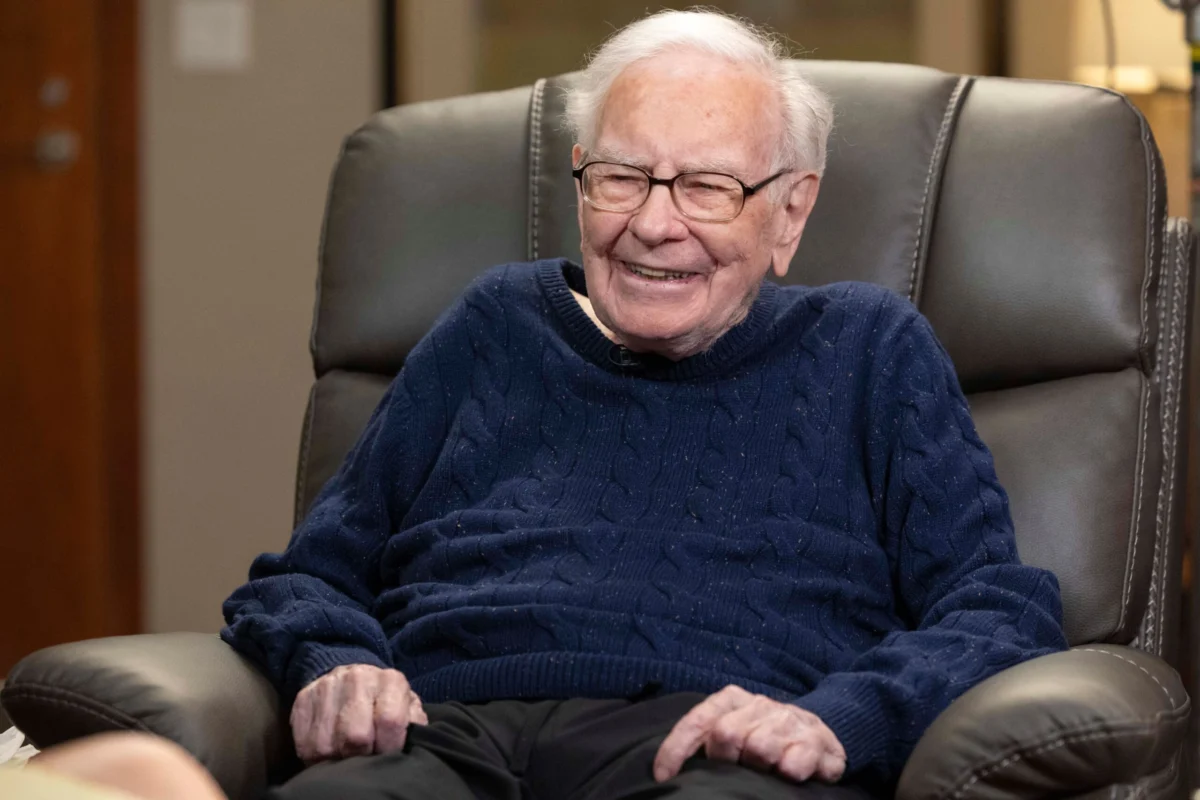
Berkshire Hathaway, the conglomerate helmed by legendary investor Warren Buffett, has recently experienced a notable period of underperformance relative to the broader market, while simultaneously finding itself a recurring asset within the actively traded investment portfolio of former President Donald Trump. This confluence of events highlights not only the current dynamics affecting one of the world’s most scrutinized companies but also broader discussions surrounding investment ethics in public office and fundamental economic philosophies. Despite Buffett’s continued active leadership at the age of 96, Berkshire’s shares have shown limited movement, trailing the benchmark S&P 500 by a significant margin.
Berkshire Hathaway: Navigating a Shifting Market Landscape
As of the latest reporting, Berkshire Hathaway’s Class B shares have lagged the S&P 500 by 12.2 percentage points year-to-date, with the S&P 500 up 12.7% for the year. This underperformance has drawn attention, particularly given Berkshire’s long-standing reputation for outperforming the market over extended periods. While analysts often attribute market movements to a myriad of factors, several specific explanations have emerged regarding Berkshire’s current trajectory, as noted by financial publications like Barron’s.
One prominent factor is the lingering uncertainty surrounding the leadership transition to Greg Abel, who has been designated as Buffett’s successor for the CEO role. Abel, who currently oversees Berkshire’s non-insurance operations, was named Vice Chairman for non-insurance business operations in 2018, with the succession plan formally announced in 2021. While highly regarded for his operational prowess, the market naturally grapples with the eventual shift from a singular, iconic figure like Buffett, whose investment acumen and capital allocation skills have defined Berkshire for decades. Investors may be questioning whether Abel will maintain the same aggressive capital deployment strategy or if the company’s investment philosophy will subtly evolve under new stewardship. This inherent uncertainty, while not necessarily negative, can create a cautious sentiment among institutional investors.
Another frequently cited reason for the stock’s subdued performance is Berkshire’s substantial and continually growing cash position. As of June 30, Berkshire reported a staggering $365.5 billion in cash and equivalents, a figure that, even after accounting for rail cash and subtracting T-Bills payable, stood at $359.2 billion. While this cash hoard provides immense financial flexibility and acts as a war chest for future opportunities, it also represents a significant drag on returns if not deployed efficiently. Buffett himself has often lamented the difficulty of finding "elephant-sized" acquisitions—deals worth $100 billion or more—that meet his stringent criteria for value and fit within Berkshire’s diverse portfolio. In an environment where asset valuations remain elevated, the opportunity cost of holding such a vast sum in low-yielding assets can weigh on overall performance. Despite this, Berkshire did repurchase $4.5 billion of its own shares in Q2 2026, a move Buffett typically favors when he believes the stock is trading below its intrinsic value, but this amount represents only a fraction of the available cash.
The company’s steadfast refusal to pay a dividend also continues to be a point of discussion for some investors. Unlike many large, mature corporations, Berkshire Hathaway has historically eschewed regular dividend payouts, with Buffett famously arguing that he can generate higher returns by reinvesting profits back into the business or through share repurchases. While this strategy has undeniably contributed to Berkshire’s long-term compounding success, it can deter income-focused investors who prioritize regular distributions. In a market where yield is often sought, particularly from stable, blue-chip companies, Berkshire’s no-dividend policy may limit its appeal to a segment of the investment community.
Finally, the absence of a giant, transformative acquisition—one on the scale of $100 billion or more—is also seen as a factor. For years, investors have speculated about what Berkshire’s next major move might be. While the company continues to make strategic, smaller-to-mid-sized investments and expand its existing operating businesses, the market often anticipates a blockbuster deal that could significantly boost future earnings and growth. The current market environment, characterized by high valuations and intense competition for quality assets, makes such colossal acquisitions increasingly challenging, even for a company with Berkshire’s financial might.
Donald Trump’s Investment Portfolio: Berkshire Hathaway and the Ethics of Political Trading
In a separate but equally intriguing development, Berkshire Hathaway’s shares have been actively traded within the investment portfolio associated with former President Donald Trump. According to his disclosure form covering the month of June for the U.S. Office of Government Ethics, Berkshire Hathaway was involved in five of the 1,051 transactions listed. Four of these transactions specified Berkshire’s Class B shares, while one simply listed "Berkshire Hathaway Inc." The activity included three purchases and two sales, with a June 18 purchase of between $1 million and $5 million ultimately making Trump a net buyer of Berkshire shares for the month. His 2025 annual report had previously indicated holdings of Berkshire shares valued between $1 million and $5 million.
The frequent trading activity within Trump’s portfolio, as detailed in these extensive public disclosures, has been a subject of ongoing scrutiny. A Bloomberg report, after reviewing thousands of trades in earlier disclosures, described the patterns as bearing the "hallmarks of overlapping portfolio-management strategies, often index-based and much of it likely automated, and all of it difficult to disentangle." This aligns with statements from the Trump Organization, which has consistently maintained that third-party financial institutions independently manage the trading activities. These institutions reportedly utilize "automated, model-based portfolios and direct indexing strategies," with no input from the former president or his family members. The stated intent behind such arrangements is to create a firewall that prevents conflicts of interest and avoids even the appearance of impropriety, a critical concern for public officials.
However, despite these claims of automated management, the active trading of individual stocks by high-profile public figures, including presidents, top administration officials, and members of Congress, continues to fuel a broader ethical debate. Critics argue vehemently that elected officials and those in positions of significant power should not be permitted to own or trade individual stocks. The primary concern is the potential for conflicts of interest, where policy decisions, legislative actions, or access to non-public information could directly or indirectly influence the value of their personal investments. Even if no direct manipulation occurs, the mere "appearance of impropriety" can erode public trust in government institutions.
This debate has gained considerable traction, leading to calls for stricter regulations, including outright bans on stock trading for lawmakers and their immediate families. Proponents of such bans argue that index funds or diversified mutual funds offer a sufficient and conflict-free avenue for investment, removing the temptation or perception of leveraging public office for personal financial gain. The timeline of this debate has seen several legislative proposals, such as the "Ban on Congressional Stock Trading Act," introduced in various forms over recent years, underscoring the bipartisan concern about the issue. The ongoing revelations of active trading by politicians, regardless of the claims of automated management, serve to keep this critical discussion at the forefront of good governance advocacy.
Warren Buffett’s Enduring Views on Global Trade: "Trade Should Not Be a Weapon"
Beyond market performance and political finance, Warren Buffett’s insights into global economics remain highly influential. In a 2025 discussion, Buffett unequivocally stated that "trade should not be a weapon," offering a nuanced perspective on international commerce, particularly in the context of the controversial tariffs imposed during the Trump administration. While not explicitly naming President Trump’s policies, such as the tariffs on steel, aluminum, and various Chinese goods, Buffett’s remarks clearly advocated for a collaborative, rather than confrontational, approach to global trade.

His stance builds upon a long-held philosophy, which he illustrated by revisiting his own 2003 proposal for "import certificates" outlined in a Fortune article. Buffett explained that these certificates, while having some similarities to tariffs in their aim to limit trade imbalances, were fundamentally distinct. His 2003 idea was designed to balance imports against exports, preventing the growth of enormous trade deficits, and included provisions to assist developing nations. The core objective was to achieve balanced trade, which he believes is universally beneficial. He clarified that this differs from tariffs, which he has characterized as "an act of economic war" when applied unilaterally and without the goal of broad-based balance.
Buffett emphasized the fundamental economic principle of comparative advantage: "It will continue to be better for cocoa to be raised in Ghana, and coffee in Colombia, and a few things… We should be looking to trade with the rest of the world, and we should do what we do best, and they should do what they do best." This underscores his belief in specialization and efficient global resource allocation, which ultimately leads to greater overall prosperity.
His philosophical argument extends beyond mere economics to include geopolitical considerations. He asserted, "Trade should not be a weapon… it’s a big mistake, in my view, when you have seven and a half billion people that don’t like you very well, and you’ve got 300 million that are crowing in some way about how well they’ve done." This statement reflects a broader vision where global economic cooperation fosters goodwill, reduces international tensions, and ultimately contributes to greater safety and stability for all nations. Buffett posits that the more prosperous the rest of the world becomes, the more prosperous and secure the United States will be, countering protectionist sentiments that often view international economic gains as zero-sum. Economists largely agree with Buffett’s long-standing advocacy for free and balanced trade, highlighting the risks of retaliatory tariffs, supply chain disruptions, and reduced consumer choice that often accompany protectionist policies. His consistent message is that mutual prosperity, achieved through fair and open trade, is a far more effective strategy than using economic leverage as a tool of coercion.
Berkshire Hathaway’s Financial Snapshot: A Deep Dive into the Numbers
A closer look at Berkshire Hathaway’s financial health and portfolio composition reveals the underlying strength of the conglomerate, even amidst its recent market underperformance. As of August 28, 2026, the Class A stock (BRK.A) closed at $757,985.01, while the more accessible Class B shares (BRK.B) were priced at $505.00. The company’s trailing twelve-month (TTM) price-to-earnings (P/E) ratio stood at 12.70, which is often considered conservative compared to the broader market, particularly growth-oriented sectors. This P/E ratio, while reflecting the market’s current valuation of Berkshire’s earnings, is often viewed by value investors as an attractive entry point, especially given the quality of its underlying businesses.
Berkshire’s colossal market capitalization reached $1,081,295,529,555, cementing its position as one of the largest publicly traded companies globally. This valuation reflects the vast array of businesses under its umbrella, ranging from insurance (GEICO, National Indemnity) and energy (Berkshire Hathaway Energy) to manufacturing, retail, and transportation (BNSF Railway).
The aforementioned cash position of $365.5 billion as of June 30, 2026, represents a slight decrease of 8.0% from March 31, 2026. Delving deeper, the "excluding Rail Cash and Subtracting T-Bills Payable" figure of $359.2 billion (down 3.8% from March 31) provides a clearer picture of the highly liquid, deployable capital. This cash hoard, predominantly held in U.S. Treasury bills, offers both a defensive cushion during economic downturns and a strategic advantage for opportunistic acquisitions or investments when market conditions are favorable. However, as discussed, its sheer size also presents a challenge in finding sufficient avenues for high-return deployment.
In the second quarter of 2026, Berkshire repurchased $4.5 billion of its own shares. Share buybacks are a key component of Buffett’s capital allocation strategy, executed when he believes Berkshire’s stock is trading below his estimate of its intrinsic value. These repurchases effectively reduce the number of outstanding shares, thereby increasing each remaining share’s proportionate ownership of Berkshire’s earnings and assets, thus enhancing shareholder value over time.
Berkshire’s top equity holdings, as disclosed in its 13F filing on August 14, 2026, for the quarter ending June 30, 2026, continue to be dominated by a concentrated portfolio of high-quality, market-leading companies. These holdings represent Buffett’s long-term conviction in businesses with strong competitive advantages and predictable earnings. Key positions typically include technology giant Apple Inc., which often constitutes the largest single holding; financial institutions like Bank of America and American Express; consumer staples stalwarts such as The Coca-Cola Company; and energy sector players like Chevron and Occidental Petroleum. More recently, Berkshire has also built significant positions in Japanese trading houses, reflecting a diversification into international markets and a bet on undervalued global conglomerates. These equity investments, carefully selected for their durability and long-term growth prospects, form a significant portion of Berkshire’s market value and contribute substantially to its overall earnings.
Broader Implications and Forward Outlook
The recent performance of Berkshire Hathaway, the active trading of its shares by a former president, and Warren Buffett’s steadfast advocacy for balanced global trade collectively paint a vivid picture of the intricate forces at play in today’s financial and political landscapes. Berkshire stands at a strategic crossroads, navigating the dual challenges of managing an immense cash pile and preparing for an eventual leadership transition, all while striving to maintain its long-term market outperformance. The market’s current cautious stance reflects these complexities, prompting investors to closely watch for future capital allocation decisions and Greg Abel’s evolving role.
Concurrently, the scrutiny over Donald Trump’s investment activities, particularly involving individual stocks like Berkshire, underscores a pressing national debate about the ethical boundaries for public officials’ financial dealings. This discussion extends beyond any single individual, touching upon fundamental principles of transparency, accountability, and preventing the perception of conflicts of interest that could undermine democratic institutions. The momentum for legislative reform in this area continues to grow, suggesting that future policies may impose stricter limitations on how politicians manage their personal wealth.
Finally, Warren Buffett’s consistent articulation of a pragmatic and globally-minded trade philosophy offers a vital counterpoint to protectionist sentiments. His arguments for trade as a tool for mutual prosperity rather than a weapon resonate deeply in an increasingly interconnected and sometimes fractured world. As global supply chains face ongoing disruptions and geopolitical tensions simmer, Buffett’s voice serves as a powerful reminder of the long-term benefits of international cooperation and economic interdependence.
In essence, the narrative surrounding Berkshire Hathaway, its influential leader, and its unexpected connection to the highest echelons of political power, highlights enduring themes in finance, governance, and global relations. How these threads unfold will undoubtedly shape not only the future trajectory of one of America’s most iconic companies but also the broader ethical framework governing public service and the principles guiding international commerce.
