

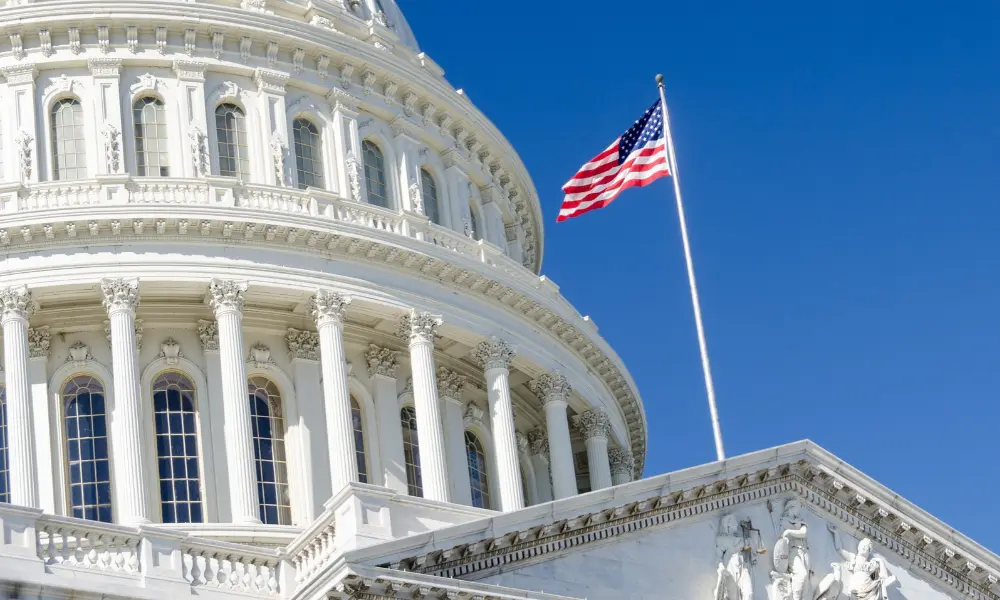
The financial markets experienced a notable shift in sentiment following the US midterm election results, which saw Democrats secure majorities in both the Senate and the House of Representatives on November 3rd. This outcome, reported by Reuters, has signaled a period of potential political gridlock for the remainder of President Donald Trump’s final term. The initial market reaction was characterized by a sharp downturn in artificial intelligence (AI)-related shares across Asian markets, though European and US futures later showed signs of recovery.
Initial Market Tremors and Sectoral Divergence
The immediate aftermath of the election results saw a palpable nervousness ripple through global financial circuits. US stock futures experienced a dip, declining by as much as 2 percent overnight, according to Reuters. This initial sell-off was particularly pronounced in sectors heavily associated with artificial intelligence. The concern appears to stem from a perceived increased likelihood of stricter regulatory oversight on AI technologies, a shift that could impact the growth trajectory of companies heavily invested in this burgeoning field.
However, as the European trading session commenced, a degree of stabilization and even a modest rebound began to emerge. MSCI’s All-World index registered a gain of 0.13 percent, while Europe’s STOXX 600 index climbed 0.5 percent. US stock futures also managed to edge into positive territory, indicating that the initial panic had somewhat subsided, and investors were recalibrating their positions.
Bonds Emerge as a Safe Haven
In stark contrast to the volatility in tech stocks, the bond market demonstrated significant strength. The yield on the 10-year US Treasury note saw a notable decline, falling three basis points to 4.92 percent, and at one point dipping as low as six basis points to 4.89 percent overnight. This movement in bond yields is a classic indicator of investors seeking refuge in safer assets, a trend often observed during periods of political uncertainty or anticipated shifts in economic policy.
Prashant Newnaha, senior rates strategist at TD Securities in Singapore, commented to Reuters, "Bonds are coming out as the clear winner as markets put the AI trade on the chopping block and embrace the higher possibility that further tax cuts are put on ice and government spending slows." This analysis suggests that the market is pricing in a scenario where a divided government might lead to a more conservative fiscal approach, potentially curbing inflation and creating a more favorable environment for fixed-income investments.
Dollar Weakens as Global Currencies Gain Traction
The US dollar also experienced a broad weakening against major currencies. The euro gained 0.4 percent, trading at US$1.133, and the British pound rose by 0.5 percent to US$1.348, according to Reuters. The dollar’s depreciation was also evident against other safe-haven currencies, falling 0.6 percent against the Swiss franc to 0.8163 and 0.4 percent against the Japanese yen to 158.12. This trend often accompanies a decrease in global risk appetite or a shift in monetary policy expectations.
Broader Election Context and Political Implications
The election results themselves represent a significant political development. Democrats’ success in securing majorities in both chambers of Congress was a feat that many analysts and pollsters had not widely predicted at the outset of the year. Deborah Cunningham, chief investment officer for global liquidity markets at Federated Hermes, described it to Reuters as a "double victory in the US midterm elections that few saw coming at the onset of the year." She further noted that the outcome leaves the federal government divided on most policy issues, a condition that often leads to legislative staltering or compromise.
Kristina Hooper, chief market strategist at Man Group, offered a perspective to the Financial Times, suggesting that the decisive nature of the Democratic victory removed a significant "tail risk." She elaborated, "This is a resounding blue sweep that should preclude any material challenge to the election results." This sentiment implies that the clarity of the outcome, even with a divided government, reduces uncertainty surrounding the legitimacy of the elections and potential political instability.
The AI Regulation Question: A New Frontier for Government Scrutiny?
While a divided government has historically been viewed as beneficial for stocks due to the potential for fewer significant policy changes, the current environment presents a nuanced picture, particularly for the technology sector. Priya Misra, a portfolio manager at JPMorgan Asset Management, shared with the Financial Times that the traditional interpretation might not apply this time. "Normally a divided government is good for stocks as it means fewer policy changes, but this time, I wonder if the Democrats might push through AI regulation," she speculated.
This concern about potential AI regulation has had a tangible impact on specific companies. Shares in Tesla and SpaceX, both with significant ties to advanced technologies and speculative growth, experienced notable declines. On Europe’s Tradegate platform, these shares fell by approximately 4.5 percent to 5 percent. This decline was more pronounced than that of other large technology stocks, which saw reductions ranging from about 0.3 percent to 0.9 percent, as reported by Reuters. The sharp drop in these prominent tech names underscores the market’s sensitivity to potential regulatory headwinds in the AI space.
SoftBank’s Vulnerability and Data Center Concerns
The broader anxieties surrounding the tech sector and its future regulatory landscape appear to have hit SoftBank particularly hard. The Japanese investment conglomerate, known for its substantial investments in technology companies, shed as much as 10% of its value. This significant decline can be attributed to the confluence of factors: the general market unease surrounding AI regulation and specific concerns about the oversight of data center infrastructure.
Data centers are the physical backbone of the digital economy, housing the servers and networking equipment that power everything from cloud computing to artificial intelligence. As the digital footprint expands and the reliance on these facilities grows, so too does the scrutiny from governments and regulators. Potential new regulations concerning data privacy, energy consumption, cybersecurity, and even the physical security of these critical infrastructure sites could pose significant operational and financial challenges for companies that own or heavily rely on them. SoftBank, with its extensive portfolio of tech ventures, is inherently exposed to these evolving concerns.
A Look Back at Pre-Election Market Performance
To contextualize the post-election market movements, it’s worth noting the performance of major US indices leading up to the election. On Tuesday, the day before the results were finalized, the S&P 500 closed up 0.36 percent at 7,568.92. The Nasdaq Composite saw a more robust gain of 0.83 percent, closing at 25,372.01. The Dow Jones Industrial Average, however, experienced a slight decline of 0.38 percent. This indicates a generally positive, albeit mixed, sentiment in the market prior to the definitive election outcome.
Broader Implications for the Tech Industry and Investment Landscape
The current market reaction highlights a potential paradigm shift in how investors are evaluating technology stocks, especially those at the forefront of AI development. The era of unfettered growth may be giving way to a period where regulatory compliance and responsible innovation become paramount. For companies like Tesla and SpaceX, their valuations have often been driven by future growth potential and disruptive innovation. However, the prospect of increased government oversight could temper these expectations and necessitate a recalibration of risk premiums.
For SoftBank, the significant share price drop underscores the vulnerability of highly leveraged investment firms in volatile market conditions. Its strategy of investing in high-growth, often unprofitable, tech companies means it is particularly susceptible to shifts in investor sentiment and regulatory climates. The focus on data center oversight also signals a growing awareness of the tangible, physical infrastructure underpinning the digital economy and its potential for regulatory intervention.
The coming months will likely see increased dialogue and debate surrounding AI regulation. Policymakers will grapple with questions about data governance, algorithmic bias, job displacement, and national security implications of advanced AI. The market will, in turn, closely monitor these developments, adjusting valuations and investment strategies accordingly. The rally in bonds and the retreat in certain tech segments suggest that investors are favoring stability and predictability over speculative growth in the immediate post-election environment, especially in light of emerging concerns about the oversight of critical digital infrastructure.
