

Against a persistent backdrop of inflationary pressures, yields on longer-term U.S. Treasury bonds have continued their ascent, a development economists and financial analysts warn will keep borrowing costs elevated across the economy, particularly impacting long-term fixed-rate loans such as residential mortgages. This trend underscores a broader market discomfort with the trajectory of future inflation and the Federal Reserve’s ongoing battle to bring price stability back to its mandated target.
On Tuesday, the yield on the benchmark U.S. 30-year Treasury bond briefly surged to 5.323%, marking a 19-year high, before paring some gains to settle just below 5.3%. Concurrently, the 10-year Treasury yield, a critical benchmark widely used for pricing fixed mortgage rates and other longer-term consumer and corporate loans, climbed above 4.7%. These figures represent a significant increase compared to levels below 4% observed before the commencement of the Iran War at the end of February, highlighting the profound impact of geopolitical events on global energy markets and, subsequently, domestic inflation expectations.
The Underlying Drivers: Persistent Inflation and Geopolitical Tensions
The primary catalyst for these rising bond yields is the market’s growing apprehension over persistently high inflation. The annual rate of inflation, as measured by the Consumer Price Index (CPI), stood at 3.4% in July. While a moderation from its peak in mid-2022, this rate remains considerably above the Federal Reserve’s long-term target of 2%. Before the onset of the Iran War in January, the annual inflation rate was 2.4%, indicating a substantial acceleration in price growth influenced by the conflict.
Lawrence Yun, chief economist for the National Association of Realtors, articulated this sentiment clearly: "The higher bond yields on long-dated securities, like the 30-year Treasury, clearly indicate discomfort over persistently high inflation in the future." This discomfort stems from a confluence of factors, including robust consumer demand, a resilient labor market, and, critically, elevated energy prices. The Iran conflict has disrupted global oil supplies, pushing crude oil and gasoline prices higher, which then filters through the economy via transportation costs and manufacturing inputs, exacerbating inflationary pressures. The Fed’s aggressive monetary policy tightening, including 11 rate hikes since March 2022, has aimed to cool the economy and bring inflation down, but the market’s reaction suggests that more evidence is needed to convince investors that the inflationary cycle is truly behind us.
Treasury Yields Explained: A Benchmark for Borrowing
Treasury yields represent the return an investor receives for lending money to the U.S. government. They are influenced by a complex interplay of factors including inflation expectations, the Federal Reserve’s monetary policy, economic growth forecasts, and global demand for safe-haven assets. Long-term yields, such as those on 10-year and 30-year bonds, are particularly sensitive to inflation expectations because bond investors demand a higher return to compensate for the erosion of their purchasing power over extended periods.
When inflation is perceived to be higher and more persistent, investors require higher yields to lend money. This, in turn, increases the cost of borrowing for the U.S. government, and critically, sets a floor for interest rates across the entire financial system. Financial institutions use Treasury yields as a benchmark when setting rates for a wide array of loans, from mortgages to corporate debt, due to their perceived safety and liquidity. Historically, the 10-year Treasury yield has served as a reliable indicator for 30-year fixed mortgage rates, typically moving in tandem, albeit with some spread reflecting risk premiums and market specific factors. The current ascent of these yields signals a fundamental shift in market sentiment regarding the long-term economic outlook and the efficacy of current anti-inflationary measures.
Direct Impact on the Housing Market: Mortgage Rates Surge

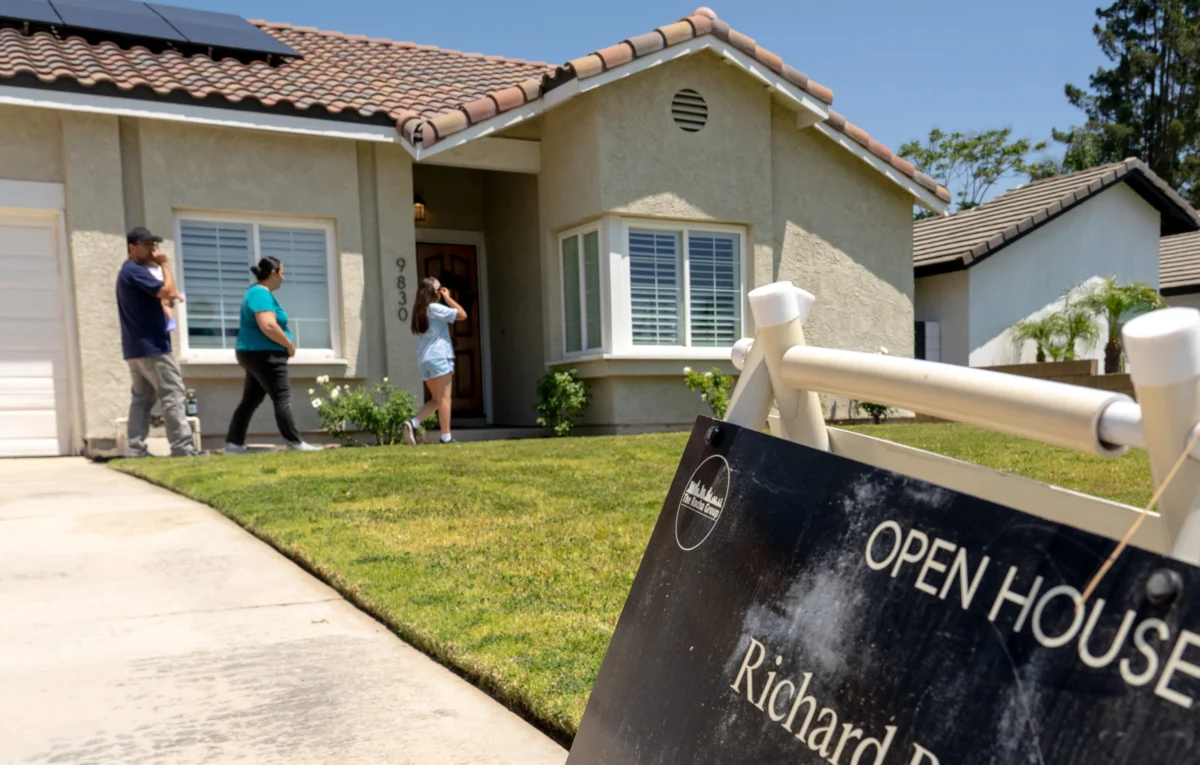
The most immediate and tangible impact of surging Treasury yields is felt in the housing market. Since 15- and 30-year fixed-rate mortgages typically follow the lead of Treasury rates, the recent climbs have directly translated into higher mortgage costs. As of Tuesday, the average rate for a 30-year, fixed-rate mortgage had risen to 6.75%, up from 6.69% at the close of the previous week, according to Mortgage News Daily. This trajectory marks a significant increase from the historically low rates seen during the pandemic and even from the beginning of the year. For instance, the average 30-year fixed mortgage rate dipped below 3% at various points in 2020 and 2021, and was around 6% earlier in the year.
"The impact on mortgage rates is directly related to higher bond yields," Yun reiterated, emphasizing the direct correlation. "Independent of the Federal Reserve policy, higher inflation and higher overall long-term borrowing costs will mean higher mortgage rates." This situation presents a formidable challenge for prospective homebuyers, as increased interest payments significantly reduce purchasing power and elevate monthly housing expenses. A buyer securing a $400,000 mortgage at 6.75% will pay approximately $2,600 per month in principal and interest, whereas at 4%, the payment would be closer to $1,900, illustrating the substantial increase in cost.
Jeff DerGurahian, LoanDepot’s chief investment officer and head economist, observed that while recent "favorable economic data provided only temporary relief," the persistent challenge lies in energy prices stemming from the Iran conflict, which remain "an important part of the inflation picture." He elaborated, "Longer-term bond investors may need more evidence that the post-pandemic inflation cycle is truly behind us and that the economy is returning to a slower-growth, slower-inflation environment before 10- and 30-year Treasury yields move meaningfully lower." This indicates that relief for mortgage rates is unlikely in the near term, solidifying the expectation that consumers should not anticipate any meaningful decline in mortgage rates for the foreseeable future.
Broader Ripple Effects on Consumer Credit
The impact of rising bond yields extends beyond the housing market, creating ripple effects across various consumer lending products. Rates on car loans, credit cards, and certain types of student debt are also directly or indirectly tied to broader market interest rates, meaning that monthly payments for these loans could also see increases.
"It typically is an immediate pass-through to some consumer rates," explained Brett House, an economics professor at Columbia Business School. He noted that "variable and some fixed-rate borrowing will reset rates on a daily basis," making these products particularly sensitive to market fluctuations. Renewed worries about the Federal Reserve’s interest rate policy trajectory and inflation expectations can directly weigh on variable credit card rates, which are closely pegged to the prime rate – itself heavily influenced by the federal funds rate set by the Fed. The average APR for new credit card offers has already surpassed 20%, a multi-decade high, and continued upward pressure from bond yields could push these rates even higher, making revolving debt more expensive for consumers.
Auto loan rates are similarly susceptible to these broader economic factors. Jessica Caldwell, head of insights at Edmunds, highlighted this connection: "Auto loan rates don’t move in a vacuum, but sustained pressure on Treasury yields inevitably pushes up borrowing costs across the financing spectrum." She pointed out that "With average new-vehicle APRs already stuck around 7% and used vehicles at 10.6%, consumers are already paying heightened interest." Caldwell warned that "If higher bond yields keep interest rates elevated, auto lenders will have little choice but to maintain or even bump up APRs, further stretching consumer budgets." This scenario could lead to a slowdown in vehicle sales, as affordability becomes a major barrier for many households.
While federal student loan rates are fixed for the life of the loan once disbursed, new borrowers face higher rates determined annually based on the 10-year Treasury note auction in May. For the upcoming academic year, rates for new federal student loans have indeed risen, reflecting the higher Treasury yields observed earlier in the year. This means that future generations of students will face higher costs of education financing, adding another layer of financial burden.
The Federal Reserve’s Stance and Future Outlook
The Federal Reserve has been on an aggressive campaign to tame inflation, raising the federal funds rate from near zero to a range of 5.25%-5.50% over the past year and a half. This policy aims to slow economic activity and reduce demand, thereby easing price pressures. While the federal funds rate directly influences short-term borrowing costs, its impact on long-term bond yields is more indirect, primarily through shaping market expectations about future inflation and the central bank’s commitment to its 2% target.

The current rise in long-term yields suggests that the market believes either inflation will be more entrenched than previously thought, requiring the Fed to keep rates higher for longer, or that the market itself is demanding a higher premium for future inflation risk. Should inflation prove more stubborn, the Fed may be compelled to resume rate hikes or at least maintain its current restrictive stance for an extended period, further reinforcing the elevated borrowing cost environment. Conversely, a significant and sustained decline in inflation, coupled with signs of economic cooling, would be necessary for yields to meaningfully retreat.
Expert Perspectives and Consumer Strategies
The current economic landscape presents significant challenges for consumers. Ted Rossman, a principal consumer finance analyst at Money Management International, a nonprofit credit counseling agency, encapsulated the dilemma: "Of course, higher borrowing costs are meant to fight inflation, but there’s a potential double whammy for consumers. When prices are high, and borrowing costs are high — as they are now — you feel like you’re getting squeezed from all sides."
In this environment, experts suggest certain strategies for consumers to navigate today’s elevated rates. For mortgage seekers, Lawrence Yun recommends considering shorter-term mortgage options, such as seven-year adjustable-rate mortgages (ARMs). These loans lock in fixed mortgage payments for the initial seven years before adjusting based on market rates. "These shorter-duration loans are ideal for those who are more certain they will move to another home within that seven-year timeframe," Yun noted. ARMs typically offer a lower initial interest rate compared to their 30-year fixed counterparts, providing a temporary reprieve from higher costs for those with shorter-term housing plans.
Beyond mortgages, financial prudence becomes paramount. Consumers with variable-rate debt, particularly on credit cards, are advised to prioritize paying down these balances aggressively to minimize interest accrual. Exploring balance transfer cards with introductory 0% APR periods, if credit scores permit, could offer a temporary escape from high interest rates, though careful planning is required to pay off the balance before the promotional period ends. For auto loans, comparing offers from multiple lenders and considering certified pre-owned vehicles could help mitigate some of the higher financing costs. Budgeting rigorously and building emergency savings are also crucial steps to enhance financial resilience in an environment characterized by both high prices and high borrowing costs.
Economic Implications and the Road Ahead
The sustained elevation of bond yields and borrowing costs carries significant implications for the broader economy. Higher mortgage rates dampen housing demand, potentially leading to slower home price appreciation or even declines in certain markets, and reducing economic activity associated with home sales (e.g., renovations, moving services). Increased costs for auto loans and credit card debt can curb consumer spending, which is a major driver of economic growth. Businesses also face higher borrowing costs, which can deter investment, expansion, and hiring, potentially leading to a slowdown in economic growth or even a recession.
For the U.S. government, higher Treasury yields mean increased costs to service its national debt, potentially straining fiscal budgets and diverting funds from other public investments. The current environment underscores a delicate balancing act for policymakers: combating inflation without triggering a severe economic downturn. The path forward will likely be characterized by continued vigilance from the Federal Reserve, close monitoring of inflation data and geopolitical developments, and a market that remains sensitive to any signals regarding the durability of price pressures. Until there is clear and convincing evidence that inflation is firmly on a downward trajectory toward the Fed’s 2% target, the era of elevated borrowing costs appears set to persist, challenging consumers and businesses alike.
