

John Roe and Amra Balic, Global Co-Heads of Investment Stewardship at BlackRock, have released the firm’s annual "Global Voting Spotlight," detailing BlackRock Investment Stewardship’s (BIS) comprehensive approach to proxy voting for the 2025/26 proxy year. This report, rooted in BlackRock’s fiduciary duty, outlines the firm’s voting decisions across more than 154,000 management and shareholder proposals at over 12,000 companies in 56 voting markets. The core of BIS’s methodology is a financially material-based approach, reflecting an independent judgment of what serves the long-term financial interests of its clients. BlackRock emphasizes that it does not coordinate its voting decisions with other shareholders or follow external proxy research firms’ recommendations.
Executive Summary of Voting Performance and Strategy
The 2025/26 proxy year saw BIS engage with a significant volume of proposals, with the vast majority concerning routine corporate matters such as director elections and board-related items. Consistent with its established practice, BIS supported management on approximately 88% of all proposals voted globally. This high level of alignment underscores BlackRock’s assessment that corporate boards and management teams are generally acting in accordance with shareholders’ long-term financial interests.
Director elections, a critical component of corporate governance, received substantial attention. BIS supported approximately 91% of the nearly 68,000 director election proposals globally. The primary reasons for opposing director elections remained consistent with prior years, centering on issues of director independence, executive compensation, board composition, and director overcommitment.
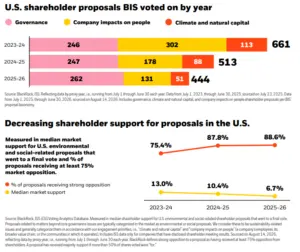
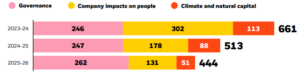
Shareholder proposals, which represent a small fraction (less than 1%) of the total proposals voted on by BIS, saw a lower support rate of approximately 9% globally. Governance-related proposals, particularly those aimed at strengthening minority shareholder rights, garnered the most support. Conversely, proposals concerning climate and natural capital, and company impacts on people, experienced a decline in both submission and investor support for the second consecutive year.

BlackRock also highlighted its commitment to expanding client choice in stewardship. The BlackRock Voting Choice program, an industry-leading initiative, allows eligible clients to direct proxy votes. This program has seen significant adoption, with client assets representing $923 billion in index equity AUM actively exercising this option, out of a total of $3.96 trillion eligible for Voting Choice.
Global Engagement and Voting Activity: A Quantitative Overview
The scope of BlackRock’s investment stewardship activities in the 2025/26 proxy year was extensive. Globally, BIS voted on a total of 154,110 proposals across 12,296 companies in 56 voting markets.
Figure 1: Regional Engagement Summary (July 1, 2025 – June 30, 2026)
| Region | Engagements | Companies Engaged | Companies Engaged Multiple Times | Markets Engaged |
|---|---|---|---|---|
| Americas | 1,204 | 976 | 202 | 7 |
| APAC | 883 | 653 | 173 | 14 |
| EMEA | 555 | 389 | 100 | 24 |
| Total | 2,642 | 2,018 | 475 | 45 |
These engagements were strategically focused on five key BIS priorities:
- Strategy, purpose, and financial resilience: 2,292 engagements
- Board quality and effectiveness: 1,629 engagements
- Incentives aligned with financial value creation: 1,074 engagements
- Climate and natural capital: 706 engagements
- Company impacts on people: 901 engagements
It is noted that many engagement conversations cover multiple topics, meaning the sub-totals for priorities may not add up to the total number of engagements. Approximately 70% of the value of BlackRock’s clients’ equity assets were engaged through these stewardship activities.
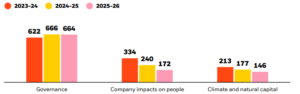
Figure 4: Global Voting Activity by Region (July 1, 2025 – June 30, 2026)
| Region | Proposals Voted | Meetings Voted | Companies Voted | Markets Voted |
|---|---|---|---|---|
| Americas | 41,715 | 4,886 | 4,403 | 9 |
| APAC | 67,223 | 8,801 | 5,471 | 13 |
| EMEA | 45,172 | 2,987 | 2,422 | 34 |
| Total | 154,110 | 16,674 | 12,296 | 56 |
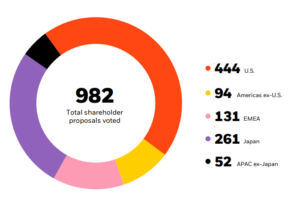
Figure 5: Proposal Category Breakdown
| Proposal Category | Proposals Voted | Share of Total |
|---|---|---|
| Director elections and board related proposals | 75,413 | ~49% |
| Executive compensation proposals | 18,705 | ~12% |
| Shareholder proposals | 982 | <1% |
| Total proposals voted | 154,110 |
Management Proposals: A Focus on Board Effectiveness and Executive Alignment
BlackRock’s approach to management proposals is deeply rooted in the belief that effective boards are foundational to long-term financial value creation. Boards composed of qualified, engaged directors with relevant expertise provide crucial oversight and contribute to strategic decision-making.
Director Elections:
Out of the 154,000+ proposals voted on, nearly 68,000 were related to director elections. BIS supported approximately 91% of these, reflecting confidence in the overall alignment of boards and management with shareholder interests. The primary areas of concern leading to opposition were:
- Board Independence: This was the most frequent reason for not supporting director elections globally. Ensuring an independent board is critical for objective oversight and decision-making that prioritizes shareholder value.
- Executive Compensation: Misalignment between executive pay and company performance remains a key concern.
- Board Composition: Issues related to the diversity of skills, experience, and perspectives on the board can impact its effectiveness.
- Director Overcommitment: Directors serving on too many boards can dilute their focus and effectiveness for any single company.
Figure 7: Reasons for Not Supporting Director Elections (Governance Concerns)
| Concern | Americas | APAC | EMEA | Total |
|---|---|---|---|---|
| Board independence | 645 | 935 | 239 | 1,819 |
| Executive compensation | 152 | 3 | 441 | 596 |
| Board composition | 289 | 29 | 194 | 512 |
| Overcommitment | 175 | 66 | 250 | 491 |
Executive Compensation:
Executive compensation is viewed as a critical tool for driving long-term financial value. BIS meticulously reviews compensation policies to ensure they reward successful strategy execution, encourage appropriate risk-taking, and align executive and shareholder interests through equity ownership. In the 2025/26 proxy year, BIS supported approximately 84% of compensation-related management proposals globally (15,780 out of 18,705). Support was generally high when companies clearly articulated the link between compensation policies and long-term financial interests.
Where concerns about misaligned compensation practices arose, BIS not only voted against compensation proposals but also considered withholding support for members of compensation committees or equivalent board roles. Globally, BIS did not support 1,063 director election proposals at 596 companies due to executive compensation concerns.
Case Study: Rivian Automotive Inc.
In the Americas, BIS supported approximately 90% of compensation-related management proposals. A notable example of dissent occurred at Rivian Automotive Inc. in June 2026, where BIS did not support a "Say on Pay" proposal. The firm’s assessment indicated a misalignment between executive compensation and company performance, a sentiment echoed by shareholders who approved the proposal with approximately 67% support.
Strategic Transactions: Navigating a Dynamic Global Landscape
The 2025/26 proxy year witnessed significant activity in strategic transactions, including mergers, acquisitions, and spin-offs. This trend was driven by companies seeking to optimize portfolios, enhance market positions, and drive long-term growth amidst rapid technological change, geopolitical shifts, and evolving regulatory environments. Global M&A volume reached $3.2 trillion in the first half of 2026, a 44% increase year-over-year.
BIS evaluated these proposals through a company-specific lens, prioritizing their potential impact on clients’ long-term financial interests. Notable examples include:
- North America: BIS supported the proposed combination of Union Pacific Corporation and Norfolk Southern Corporation, which aims to create the first transcontinental rail network in the United States, pending regulatory approval.
- Europe: Support was given to the merger of Anglo American plc and Teck Resources Limited, both significant mining entities.
- APAC: BIS endorsed Sembcorp Industries Ltd.’s acquisition of Alinta Energy and PT Telkom Indonesia’s partial spin-off of its wholesale fiber connectivity business as part of a multi-year restructuring.
These strategic moves underscore the ongoing efforts by companies to adapt and create value in a complex global marketplace.
Shareholder Proposals: Governance Gains Traction, ESG Faces Headwinds
Shareholder proposals, though constituting a small percentage of total votes, often signal areas of shareholder concern. BIS maintains a case-by-case approach, focusing on a proposal’s potential to enhance long-term financial value.
Theme 1: Governance Proposals See Increased Support
Governance-related shareholder proposals continued to receive the highest levels of investor backing, with median market support rising to 23.6% from 20.4% in the previous year. BIS most frequently supported proposals aimed at strengthening minority shareholder rights, such as those advocating for simple majority voting. These proposals are seen as crucial for aligning corporate governance structures with the long-term financial interests of shareholders.
Theme 2: Environmental and Social Proposals Decline in Volume and Support
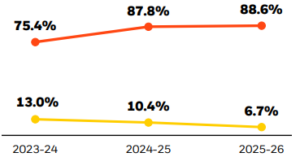
Globally, shareholder proposals concerning climate and natural capital, and company impacts on people, saw a decline for the second consecutive year. This trend was largely attributed to fewer submissions at U.S. companies, which are the primary source of such proposals. Investor opposition in the U.S. remained high, with nearly 90% of environmental and social proposals facing at least 75% market opposition, and median market support falling from 10.4% to 6.7%.
Theme 3: Rollback Proposals Receive Minimal Backing
Proposals seeking to reverse or limit company efforts on sustainability-related risks, while still present, received minimal shareholder support, with median market backing around 1%. BIS did not support any of these proposals, evaluating them based on their potential impact on long-term financial value, the balance of costs and benefits, and the merits of the proponent’s request.
BlackRock’s Voting Record on Shareholder Proposals:
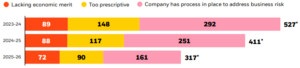
BIS supported approximately 9% of shareholder proposals globally in the 2025/26 proxy year. Governance matters accounted for the largest portion of supported proposals (approximately 13%), particularly those enhancing minority shareholder rights. For climate and natural capital, and company impacts on people proposals, BIS supported only one out of 318, citing concerns about them being overreaching, lacking economic merit, or addressing issues already managed by companies.
Case Studies: Strengthening Shareholder Rights
BIS’s support for governance proposals was evident in its backing of shareholder proposals at Five Below, Inc. and Starbucks Corporation, requesting the adoption of simple majority voting standards. These proposals received overwhelming shareholder support (90% and 98% respectively). Similarly, BIS supported a proposal at Norwegian Cruise Line Holdings Ltd. for board declassification, which aims to improve shareholders’ ability to evaluate board performance annually. The firm also expressed support for well-structured proposals that grant shareholders the right to act outside of company-initiated meetings, such as through the ability to call special meetings or act by written consent.
Expanding Client Choice: BlackRock Voting Choice and Climate Stewardship
BlackRock continues to innovate in offering clients greater control over their proxy voting.
BlackRock Voting Choice: Launched in January 2022, this "pass-through" voting program provides eligible clients with increased participation in the proxy voting process. As of June 30, 2026, the program is available to client assets representing $3.96 trillion of BlackRock’s total index equity Assets Under Management (AUM), with clients representing approximately $923 billion actively utilizing this option.
Climate and Decarbonization Stewardship Program: Introduced in July 2024, this program specifically targets funds with explicit climate and decarbonization objectives. It applies to funds across BlackRock’s index and active platforms where governing bodies have approved its application. Separately managed accounts can also opt into this program. Funds and SMAs utilizing these guidelines represent $208 billion of clients’ index equity AUM.
In conclusion, the BlackRock Investment Stewardship’s 2025/26 Global Voting Spotlight reveals a deeply entrenched commitment to its fiduciary duty, prioritizing the long-term financial interests of clients. The report details a systematic approach to proxy voting, characterized by extensive engagement, a financially material-based assessment of proposals, and a clear emphasis on corporate governance and executive accountability. While BlackRock consistently supports management on routine matters, its independent judgment is applied rigorously to ensure alignment with sustainable value creation, demonstrating a nuanced and data-driven stewardship strategy in the global investment landscape.
