

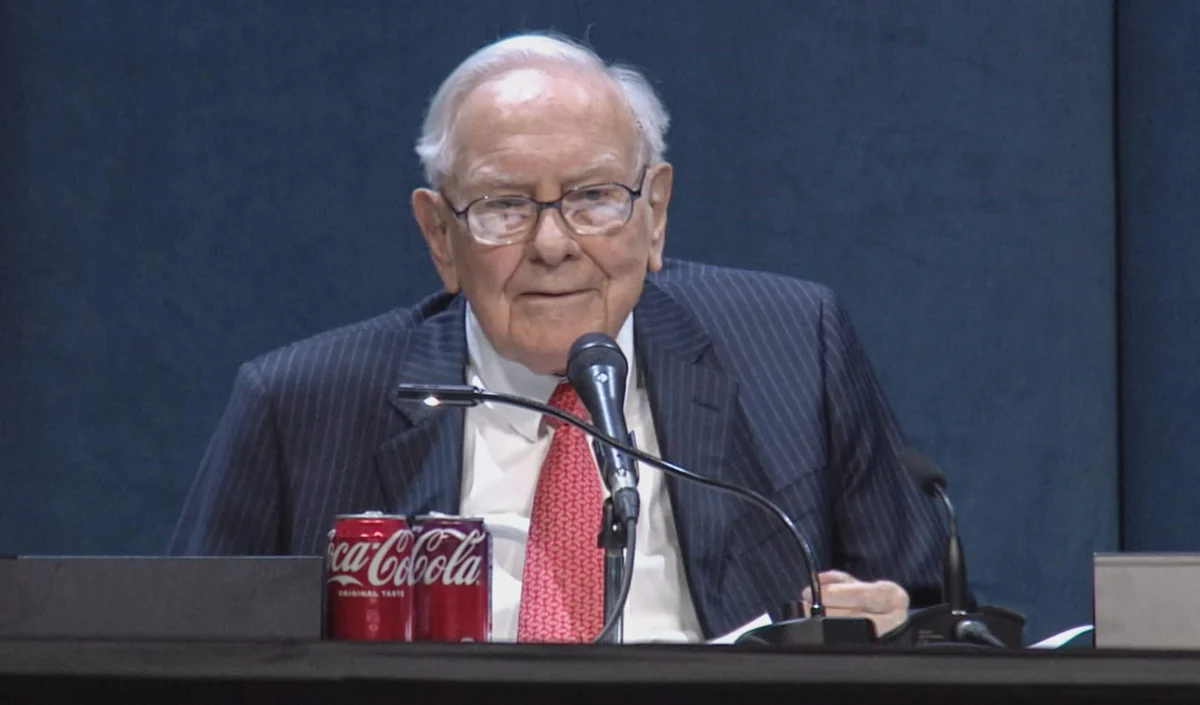
Berkshire Hathaway, the venerable conglomerate led by the "Oracle of Omaha" Warren Buffett, finds itself navigating a challenging market environment in 2026, with its shares significantly underperforming the benchmark S&P 500 index. This divergence, now marking the largest gap year-to-date, underscores a broader market dynamic characterized by the explosive growth of technology stocks, particularly those tied to artificial intelligence, contrasting sharply with Berkshire’s traditionally conservative, value-oriented investment philosophy. Simultaneously, the company faces a complex regulatory battle through its BNSF Railway subsidiary, opposing a major proposed merger in the freight rail sector, further highlighting its multifaceted engagement across various industries.
Berkshire Hathaway’s Investment Performance: A Tale of Two Markets
The month of May 2026 saw the S&P 500 surge by a robust 5.1%, closing Friday at a fresh record high. This remarkable ascent was primarily fueled by a cadre of red-hot technology stocks, which have captivated investor enthusiasm with the promise of future AI profits and the massive infrastructure spending required to realize this potential. In stark contrast, shares of Berkshire Hathaway remained largely unchanged throughout May, leading to a substantial widening of the performance gap against the broader market. As of the latest figures, Berkshire’s widely held B shares are now trailing the S&P 500 by an unprecedented 16.3 percentage points year-to-date, marking the most significant underperformance observed in 2026.
This recent downturn follows a period earlier in the year where Berkshire had maintained a slight lead. At the end of March, the conglomerate boasted a modest winning margin of 1.8 percentage points over the S&P. However, the subsequent two months witnessed a dramatic shift: the S&P 500 zoomed more than 35% higher in April and May, while Berkshire Hathaway’s shares experienced an almost 11% decline. This sharp reversal has prompted market observers to re-evaluate the traditional relationship between Berkshire and the broader market. According to a chart analysis by 22V Research, as reported by CNBC.com, Berkshire’s relative performance ratio versus the S&P has plummeted to its lowest levels since 2007. The firm noted to clients, "Berkshire Hathaway was a good bellwether for the S&P, but that relationship appears to be changing," suggesting a potential decoupling of their historical correlation.
The AI Phenomenon and Berkshire’s Stance
The current market landscape is heavily influenced by the burgeoning excitement surrounding artificial intelligence. Expectations for substantial AI-driven profits and the enormous capital expenditures required to build the necessary infrastructure have propelled tech stocks, which dominate the market-capitalization-weighted S&P, to unprecedented heights. Companies perceived as leaders in AI development or enablers of AI technology have seen their valuations soar, often based on future growth potential rather than immediate earnings.
Berkshire Hathaway, true to its long-standing principles, maintains a notably conservative investment posture with minimal direct exposure to the high-flying AI sector. The conglomerate’s portfolio is characterized by a significant cash reserve, nearing $400 billion as of March 31, 2026, and a collection of solidly profitable, though not necessarily spectacular, operating companies spanning insurance, energy, manufacturing, and consumer goods. This cautious approach mirrors Warren Buffett’s historical aversion to speculative investments in nascent technologies, a strategy that famously shielded Berkshire from the excesses of the dot-com bubble in the late 1990s.
Concerns regarding an "AI bubble" are not new; the concept already has its own Wikipedia page, and prominent figures like Michael Burry have drawn parallels to the dot-com era’s speculative fervor. Warnings about a potential bubble have been voiced for months by various analysts and tech leaders, including OpenAI’s Sam Altman. Should these enthusiastic AI investments indeed prove to be a bubble, Berkshire’s inherent caution and substantial liquidity could position it favorably to capitalize on a market correction, much as it did after the dot-com bust.
However, a subtle shift may be underway within Berkshire’s equity portfolio. Greg Abel, widely seen as Warren Buffett’s successor, appears to have sanctioned a decidedly un-Buffett-like move by tripling the company’s stake in Alphabet (GOOGL) during the first quarter of 2026. This significant increase brings Berkshire’s Alphabet holding to almost $22 billion, making it the fifth-largest equity holding in the portfolio. While still a relatively small portion of Berkshire’s overall assets, this investment in a leading technology company with substantial AI endeavors could signal a nuanced evolution in the conglomerate’s investment strategy under Abel’s increasing influence, perhaps acknowledging the undeniable long-term impact of AI without abandoning core value principles.
Historical Context: Lessons from the Dot-Com Era
Berkshire’s current underperformance relative to a tech-driven market evokes strong parallels to the late 1990s. During the dot-com bubble, Warren Buffett famously steered clear of speculative internet stocks, preferring instead to invest in businesses he understood deeply, such as Coca-Cola. His rationale, articulated in a 1999 interview from the CNBC archives, was rooted in predictability and certainty. Buffett stated, "I think it’s much easier to predict the relative strength that Coke will enjoy in the soft drink world than the strength – the amount of strength – that Microsoft will possess in the software world."
He emphasized his unwillingness to "bet" on industries outside his "circle of competence," even acknowledging the potential for massive payoffs. "But we are perfectly willing to trade away a big payoff for a certain payoff," Buffett explained, highlighting Berkshire’s fundamental commitment to risk aversion and predictable returns. This philosophy, consistently applied, ultimately proved prescient when the dot-com bubble burst in the early 2000s, leaving many tech investors with significant losses while Berkshire’s value-oriented holdings remained resilient.
Charlie Munger, Buffett’s long-time business partner, echoed this sentiment, expressing skepticism about the ultimate longevity and depth of interest in rapidly expanding technological fields. His concern about "how far the whole field can go" and the potential for a "surfeit of anybody’s interest" beyond a certain point reflects a cautious view on market saturation and sustained growth in highly dynamic sectors. This historical perspective is particularly relevant today as discussions about an "AI bubble" gain traction, suggesting that the lessons from past speculative manias remain pertinent for prudent investors.
The Succession and Strategic Shifts

Berkshire Hathaway shares have been on a downward trajectory since their all-time closing high in May of last year, a period that coincided with Buffett’s revelation of his plan to step down as CEO at the end of 2025. This 12% decline since the peak suggests that the market may be reacting to the impending leadership transition, perhaps introducing a degree of uncertainty or anticipating subtle shifts in strategy under Greg Abel. While Buffett’s investment philosophy and capital allocation principles are deeply ingrained in Berkshire’s culture, Abel’s operational background and potentially more pragmatic approach to certain sectors, as hinted by the Alphabet stake increase, could gradually alter the conglomerate’s profile. The market’s perception of this transition, coupled with the current underperformance, adds another layer of complexity to Berkshire’s immediate outlook.
Regulatory Delay for Railroad Merger Opposed by Berkshire’s BNSF
Beyond its investment portfolio, Berkshire Hathaway is actively involved in a significant regulatory battle through its BNSF Railway subsidiary. The U.S. Surface Transportation Board (STB), the federal regulator with final authority over major railroad mergers, has announced a pause in its review of the proposed $85 billion merger between Union Pacific (UNP) and Norfolk Southern (NSC). This monumental transaction, if approved, would create the country’s first transcontinental freight railroad, fundamentally reshaping the competitive landscape of the U.S. rail industry.
The STB’s decision to pause the review stems from concerns that "several aspects of the revised application… are unclear or underdeveloped and require supplementation at this stage." This marks the second significant hurdle for the merging parties, who had already been forced to file a revised application in April after their initial proposal was rejected in January 2026. The regulator is demanding more comprehensive information by late July on how the tie-up would impact competition, signaling a thorough and rigorous scrutiny process. The delay suggests that a final decision may not be reached until the fall of 2027, prolonging uncertainty for the involved companies and the broader industry.
Berkshire’s BNSF has been a vocal and consistent critic of the proposed merger from its inception, arguing vehemently that it is inherently anti-competitive. BNSF is a key member of the "Stop the Rail Merger Coalition," a formidable alliance recently formed by rival railroads, numerous customers, and powerful labor unions. This coalition collectively contends that consolidating two of the nation’s largest freight railroads would lead to reduced competition, higher shipping costs, and diminished service quality for businesses and consumers across the country. Their concerns highlight potential impacts on supply chain efficiency, market access for various industries, and the overall health of the competitive freight ecosystem.
In a strategic move to counter the proposed alliance, BNSF announced a "collaboration" with CSX in August of last year. This partnership aims to provide "seamless, efficient, coast-to-coast solutions to ship between the western and eastern U.S.," offering an alternative transcontinental service without the need for a full merger. This collaboration underscores BNSF’s proactive approach to maintaining competition and offering viable options in the face of potential industry consolidation. Despite speculation that Berkshire might counter the UNP-NSC deal with a bid to acquire CSX outright, Warren Buffett swiftly dismissed such rumors, telling CNBC a few days later that Berkshire was not in the market to buy any railroad, reinforcing the company’s selective acquisition strategy.
Berkshire Hathaway’s Financial Snapshot (as of May 29, 2026)
- BRK.A stock price: $710,900.00
- BRK.B stock price: $474.48
- BRK.B P/E (TTM): 14.13
- Berkshire market capitalization: $1,022,973,515,650
- Berkshire Cash as of March 31: $397.4 billion (Up 6.5% from Dec. 31)
- Excluding Rail Cash and Subtracting T-Bills Payable: $380.2 billion (Up 3.0% from Dec. 31)
- Share Repurchases: Berkshire repurchased $234 million of its shares in Q1 2026.
The substantial cash pile, approaching $400 billion, remains a focal point of discussion among investors and analysts. While it provides immense financial flexibility and a cushion against economic downturns, it also represents a significant drag on overall returns during periods of robust market growth, particularly when investment opportunities that meet Berkshire’s stringent criteria are scarce. The decision to repurchase a relatively modest $234 million in shares during Q1 2026 indicates a continued, albeit cautious, approach to capital allocation, prioritizing intrinsic value over aggressive buybacks.
Berkshire’s Top Equity Holdings (as of March 31, 2026)
Berkshire Hathaway’s equity portfolio, as disclosed in its 13F filing on May 15, 2026, continues to be dominated by a concentrated group of companies, reflecting its long-term investment horizon. While the full list is extensive, the top holdings, based on market value, provide insight into the sectors and companies that align with Berkshire’s value investing principles. These include significant stakes in Apple, Bank of America, American Express, Coca-Cola, and now, a substantially increased position in Alphabet. The inclusion of Alphabet as the fifth-largest holding, following the Q1 increase, marks a notable evolution within a portfolio traditionally weighted towards established, less technologically volatile sectors.
The current period presents a complex duality for Berkshire Hathaway: navigating a booming, tech-driven market where its conservative stance leads to underperformance, while simultaneously engaging in a high-stakes regulatory battle to preserve competition in a critical industry. As Warren Buffett prepares to cede the CEO role, the decisions made now will undoubtedly shape Berkshire’s trajectory for years to come, potentially testing the enduring relevance of its core investment philosophy against the backdrop of rapidly changing global markets.
(This is the Warren Buffett Watch newsletter, news and analysis on all things Warren Buffett and Berkshire Hathaway. You can sign up here to receive it every Friday evening in your inbox.)
For any questions or comments about the newsletter, please contact [email protected]. (Please note, questions or comments cannot be forwarded to Warren Buffett directly.) If you are not yet subscribed, you can sign up here. Additionally, Buffett’s insightful annual letters to shareholders are highly recommended reading and are collected here on Berkshire’s website.
— Alex Crippen, Editor, Warren Buffett Watch
