

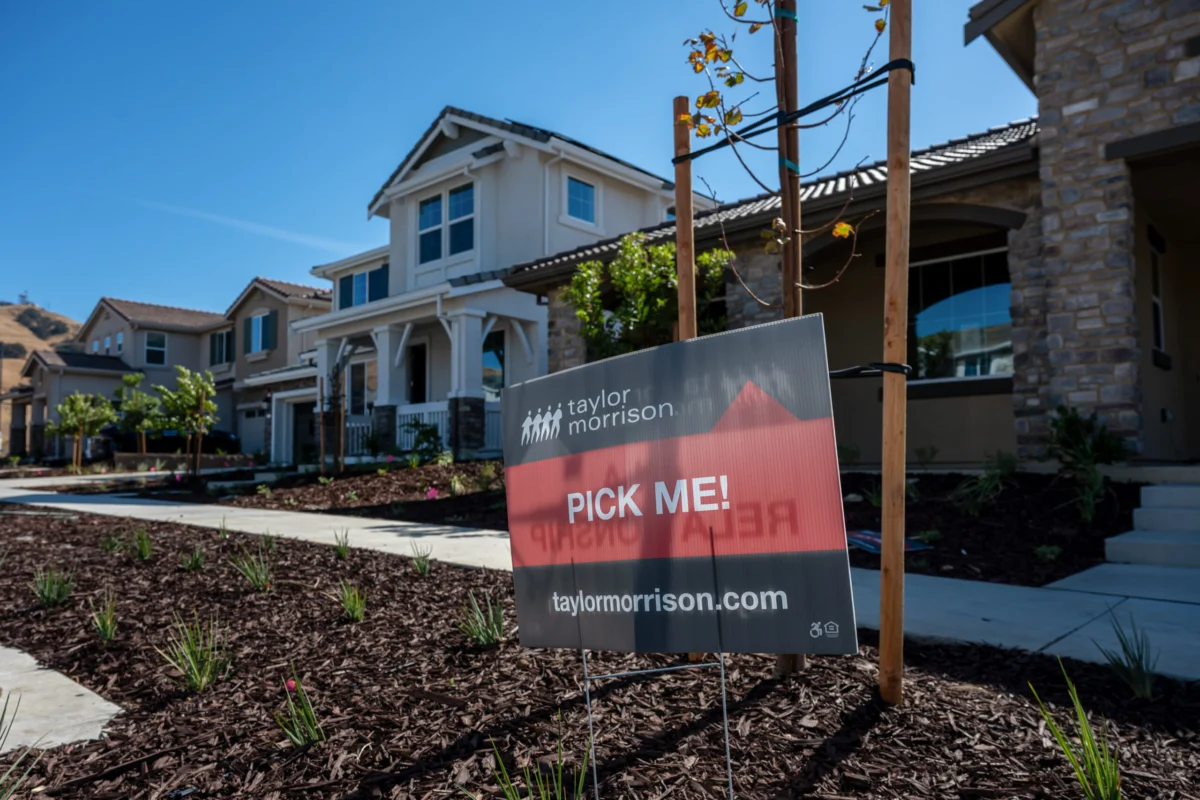
The financial world was met with considerable surprise following the Sunday announcement of a megadeal: Warren Buffett’s Berkshire Hathaway, a conglomerate renowned for its astute long-term investments, has agreed to acquire Taylor Morrison Home, one of the nation’s top 10 publicly traded homebuilders. This monumental transaction, valued at $6.8 billion, sent ripples through an industry grappling with unprecedented challenges, yet it also sparked a consensus among experts that the move is strategically sound and potentially indicative of a turning point for the beleaguered U.S. housing market.
The Anatomy of a Megadeal: Financial Details and Strategic Premium
The acquisition, which sees Berkshire Hathaway securing the nation’s sixth-largest publicly traded builder, represents a significant vote of confidence in the future of residential construction. The $6.8 billion offer translates to a substantial 24% premium over Taylor Morrison’s closing price on May 29, underscoring Berkshire’s willingness to pay for strategic value. When factoring in Taylor Morrison’s existing debt, the total enterprise value of the company is estimated at approximately $8.5 billion. This robust valuation highlights not just the immediate financial appeal, but also the perceived underlying long-term asset value and growth potential that Berkshire Hathaway identifies in the homebuilding sector. For a company like Berkshire, known for its disciplined approach to capital allocation and its preference for strong, well-managed businesses with enduring competitive advantages, such an investment signals a deep conviction in Taylor Morrison’s operational strength and the eventual recovery of the housing market.
A Market in Flux: The Challenging Backdrop for Homebuilders
This landmark acquisition unfolds against a backdrop of considerable instability and economic headwinds that have plagued the U.S. housing market for the better part of two years. The industry has been wrestling with a complex interplay of factors, including persistently high and volatile mortgage rates, which have soared from historical lows during the pandemic to levels not seen in over two decades. The Federal Reserve’s aggressive campaign of interest rate hikes, initiated in early 2022 to combat surging inflation, pushed the benchmark federal funds rate to its highest level in 22 years, directly impacting borrowing costs for prospective homebuyers. This, in turn, has significantly eroded affordability, sidelining many potential purchasers and dampening demand.
Simultaneously, homebuilders have contended with elevated costs for construction materials, a legacy of pandemic-induced supply chain disruptions and robust demand in previous years. Lumber prices, though off their peak, remain higher than pre-pandemic levels, while the costs of concrete, steel, and other essential building components have continued to climb. Labor shortages, particularly for skilled trades, have further exacerbated cost pressures and extended construction timelines, making it difficult for builders to ramp up supply efficiently. Consumer confidence, a critical driver of major purchases like homes, has also remained weak amidst ongoing inflationary pressures, economic uncertainty, and geopolitical anxieties. The article specifically references the war with Iran, which, through its potential impact on energy prices and global economic stability, has "dealt a blow to the housing market," adding another layer of complexity to an already fragile environment. These combined challenges have collectively slowed the pace of new construction and sales, casting a shadow over the industry’s near-term outlook.
Taylor Morrison’s Journey and Strategic Alignment with Long-Term Vision
Just 15 months prior to this surprising announcement, Taylor Morrison Home had unveiled an ambitious, multiyear growth plan, reflecting a forward-looking strategy despite nascent market uncertainties. The company, under the leadership of CEO Sheryl Palmer, had positioned itself for significant expansion. In an interview with CNBC’s "Squawk on the Street" on Monday following the deal, Palmer acknowledged the market shifts since their initial plan, stating, "We’ve certainly seen some shifts in the market, so the targets we put out, we stand behind. The timing certainly might have been at risk."
However, Palmer expressed immense excitement about the strategic fit with Berkshire Hathaway, emphasizing the rare alignment of their respective operational horizons. "I think one of the things we’re so excited about is homebuilding runs in five-, seven-, 10-year cycles. Berkshire thinks in probably seven-, 10-[year] and longer cycles. That alignment is very rare." This perspective underscores a fundamental difference between public market pressures for quarterly results and Berkshire’s famed patient, long-term investment philosophy. For Taylor Morrison, becoming part of the Berkshire Hathaway family offers a stable platform, shielding it from the short-term market volatility and allowing it to execute its growth strategies with a longer runway, unencumbered by the immediate demands of public shareholders. This strategic convergence of cyclical industry realities with enduring capital patience is often cited as a hallmark of Berkshire’s successful acquisitions.
Expert Perspectives: Decoding the Investment Rationale
The consensus among industry analysts is that Berkshire’s move, while unexpected, is a shrewd one, predicated on a belief in the cyclical nature of the housing market and the eventual rebound of undervalued assets. Margaret Whelan, founder and CEO of Whelan Advisory, a firm specializing in homebuilder M&A, articulated this sentiment clearly: "What it says is that very sophisticated buyers think the valuations have bottomed." She further elaborated that "sophisticated buyers would wait and buy later or pay less if they thought the market was still going down." This suggests that Berkshire Hathaway, known for its deep analytical capabilities, has assessed the current market conditions and determined that homebuilder valuations have reached a trough, presenting an opportune moment for acquisition before an anticipated recovery.
Whelan also highlighted the forward-looking nature of stock valuations. "Stock values anticipate fundamental turns," she explained, implying that "the housing market itself is probably starting to bottom here soon, which is good, because I don’t think anyone really knew that when we don’t know what’s going on with the rates." This perspective suggests that while current market indicators might still be negative, the smart money is already looking past the immediate challenges towards future improvement.
John Burns, founder and CEO of John Burns Research and Consulting, echoed this view, emphasizing the "long-term thinkers" aspect of the deal. He acknowledged that the outlook for the housing market over the next few years isn’t bright, leading to a "punishment" of homebuilder stocks. However, he stated, "But long-term thinkers like Berkshire Hathaway and the Japanese companies are seeing that as a platform to buy great companies for the long term, and it’s really that simple." This analysis aligns perfectly with Warren Buffett’s renowned strategy of investing in fundamentally sound businesses during periods of market distress, when their intrinsic value is obscured by short-term headwinds.
A Broader Trend: Institutional Confidence in U.S. Housing

Berkshire Hathaway’s acquisition of Taylor Morrison is not an isolated incident but rather fits into a broader pattern of institutional investors, particularly from overseas, demonstrating increasing confidence in the long-term prospects of the U.S. housing market. Over the past few years, U.S. homebuilders have become attractive targets for Japanese buyers, a trend that underscores the perceived stability and growth potential of the American residential sector. Sumitomo Forestry, a prominent Japanese housing and timber company, recently finalized a substantial $4.5 billion deal to purchase Tri Pointe Homes, another significant player in the U.S. market. This acquisition alone highlighted the growing appetite for American assets. All told, Japanese companies now collectively own 33 homebuilders operating across various regions of the United States, representing a significant foreign direct investment into the sector.
This influx of foreign capital is driven by several factors. Japanese companies, facing a shrinking domestic market due to demographic shifts and an aging population, are actively seeking growth opportunities abroad. The U.S. market, with its relatively stable economy, growing population, and persistent housing supply deficit, presents an attractive alternative. Furthermore, many U.S. homebuilder stocks have been valued at or below their book value due to the challenging short-term outlook, making them appear as compelling bargains to long-term oriented investors. As John Burns noted, "Many [homebuilder] stocks are valued at or below book value right now because of the short-term outlook for the industry, which is exactly the time that long-term oriented investors can find great bargains."
The ongoing consolidation trend is also evidenced by other recent M&A attempts. Dream Finders Homes, for instance, recently made an offer of approximately $704 million to acquire Beazer Homes. However, Beazer’s board ultimately rejected the bid, asserting in a public release that it "significantly undervalued" the company. This rejection, even amidst a challenging market, suggests that some homebuilders believe their intrinsic value is higher than current market sentiment or opportunistic bids might suggest, further emphasizing the potential for a market turnaround.
Chronology of a Pivotal Period for Housing
The current state of the housing market, leading up to Berkshire’s landmark acquisition, can be traced through a series of significant events and indicators:
- Early 2022: The Federal Reserve begins an aggressive series of interest rate hikes to combat inflation, pushing mortgage rates steadily upward from historic lows.
- Late 2022 – Early 2023: Mortgage rates breach 6% and continue to climb, significantly impacting affordability and buyer demand. Homebuilder sentiment enters negative territory.
- February 2025: Taylor Morrison announces an aggressive multiyear growth plan, reflecting confidence in its long-term strategy despite emerging market shifts.
- Throughout 2025 – Early 2026: Geopolitical tensions, including the war with Iran, contribute to economic uncertainty, impacting consumer confidence and potentially energy costs. Construction costs remain elevated due to supply chain issues and labor shortages.
- March 2026: News emerges of a "shopping spree" by Japanese companies, with 33 U.S. homebuilders now under their ownership, highlighting foreign investor interest in the undervalued sector. Sumitomo Forestry completes its $4.5 billion acquisition of Tri Pointe Homes.
- April 2026: Government readings indicate new home sales are 11.3% lower year-over-year. Both single-family housing starts and building permits also show annual declines, reflecting a slowdown in new construction activity. The National Association of Home Builders/Wells Fargo Housing Market Index remains in negative territory for the second consecutive year.
- May 29, 2026: Taylor Morrison Home’s stock closes at a price reflecting the challenging market conditions.
- Sunday, June 1, 2026 (approx.): Berkshire Hathaway publicly announces its agreement to acquire Taylor Morrison Home for $6.8 billion, representing a 24% premium.
- Monday, June 2, 2026: Taylor Morrison CEO Sheryl Palmer discusses the deal on CNBC, emphasizing the alignment of long-term cycles with Berkshire’s investment philosophy.
This timeline illustrates the prevailing difficulties in the market leading up to Berkshire’s strategic intervention, positioning the acquisition as a forward-looking bet rather than a response to immediate boom conditions.
Implications for the U.S. Housing Market and Beyond
Berkshire Hathaway’s acquisition of Taylor Morrison carries significant implications for the U.S. housing market and the broader investment landscape. Firstly, it sends a powerful signal that highly sophisticated investors believe the housing market is nearing a bottom, if not already there. This could instill greater confidence among other institutional investors and even individual homebuyers, potentially encouraging them to re-enter the market. The premium paid by Berkshire further validates the long-term intrinsic value of homebuilding assets, suggesting that current stock valuations may not fully reflect future growth potential.
Secondly, this deal could ignite a new wave of mergers and acquisitions within the homebuilding sector. As larger, well-capitalized entities like Berkshire Hathaway demonstrate a willingness to invest heavily, other private equity firms, institutional investors, and even larger homebuilders might be prompted to evaluate acquisition targets. This could lead to further consolidation, potentially benefiting smaller, undervalued builders struggling with market volatility by offering them stability and access to greater capital. The increased M&A activity could also contribute to more efficient resource allocation and stronger, more resilient companies within the industry.
Furthermore, the long-term perspective of Berkshire Hathaway, if replicated by other investors, could have a positive impact on housing supply. Shielded from immediate quarterly pressures, builders like Taylor Morrison under Berkshire’s umbrella might be better positioned to invest in land acquisition and development, thereby addressing the nation’s persistent housing supply deficit over the coming years. This patient approach could lead to more stable and predictable growth in housing stock, which is crucial for long-term affordability.
The transaction also underscores the broader appeal of cyclical industries for patient, value-oriented investors. When market conditions are challenging and sentiment is low, asset prices often become disconnected from their true long-term value, creating opportunities for those with the foresight and capital to weather the short-term storms. This deal serves as a testament to the power of counter-cyclical investing.
Looking Ahead: Anticipating the Recovery
Despite the current headwinds, many experts foresee an eventual recovery driven by pent-up demand. Years of underbuilding following the 2008 financial crisis, combined with demographic trends favoring household formation, have created a structural deficit in housing supply. While higher interest rates and economic uncertainty have temporarily suppressed demand, this underlying need has not vanished. Margaret Whelan anticipates a significant rebound: "I think we have pent-up demand," she stated, adding her expectation for geopolitical stability. "I think we’ll be ready for it in ’27, so buying six months early is not that much of a stretch for a company like that."
This perspective suggests that Berkshire Hathaway is strategically positioning itself to capitalize on the anticipated resurgence of the housing market, likely by 2027, well in advance of the broader market sentiment catching up. While the market may "bounce along the bottom" for some time, the long-term strategic bet on Taylor Morrison signifies a profound confidence in the eventual and inevitable recovery of the American dream of homeownership, underpinned by robust demographics and a persistent need for new housing. The acquisition therefore stands not merely as a financial transaction, but as a potent symbol of enduring optimism in the fundamental strength of the U.S. economy and its most significant asset class.
