

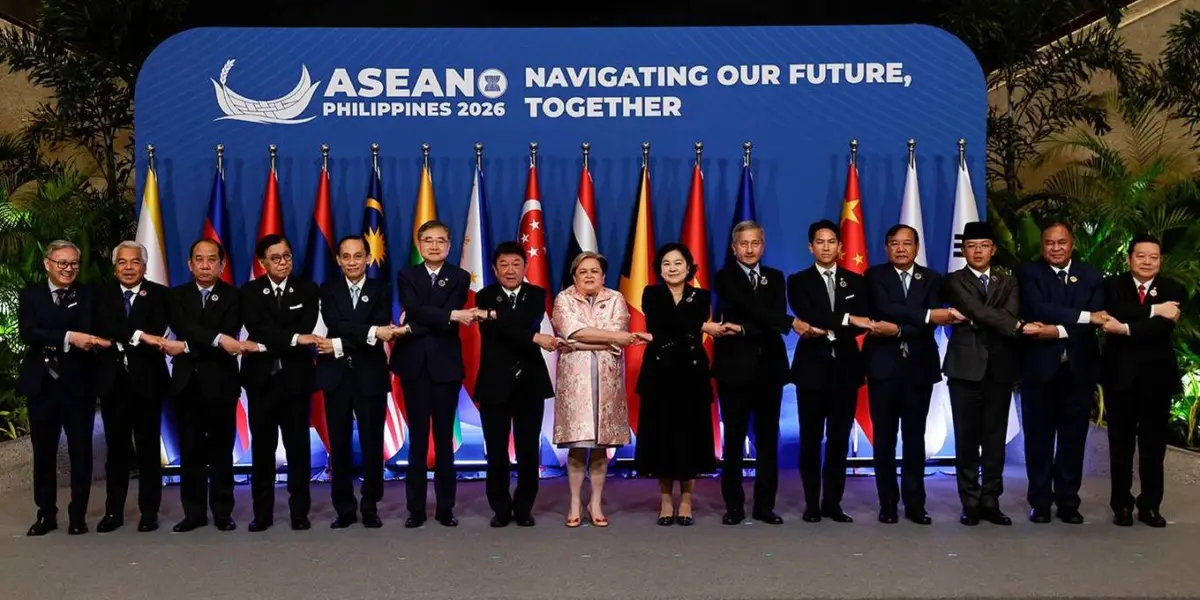
As the Association of Southeast Asian Nations (ASEAN) convenes its 49th Summit, the symbolic linking of arms for the customary family photograph will, this year, serve as a stark visual counterpoint to the deep-seated rifts exposing the bloc’s institutional shortcomings. Set against the backdrop of a rapidly fracturing global order, the 10-member organization stands at a critical juncture. It must either leverage its considerable convening authority to translate dialogue into concerted action or risk being relegated to a mere arena for the strategic maneuvers of great powers, its influence diminished and its purpose diluted. The upcoming summit, scheduled to take place in Manila from November 16-18, marks a pivotal moment in ASEAN’s trajectory, occurring as it approaches its 60th anniversary, a milestone that is increasingly overshadowed by internal divisions and a perceived decline in effectiveness.
The Shifting Sands of Global Power and ASEAN’s Dilemma
The current international landscape is characterized by escalating geopolitical competition, a rise in protectionist trade policies, and the erosion of multilateral institutions. Major global powers are increasingly pursuing their own national interests, leading to a fragmentation of the established international order that has underpinned regional stability for decades. This complex environment places ASEAN, a bloc historically committed to consensus-building and non-interference, in a precarious position.
ASEAN’s core strength has always been its ability to bring diverse nations together, fostering dialogue and promoting regional cooperation on issues ranging from economic development to security. However, its decision-making processes, rooted in consensus, often lead to paralysis when faced with complex and contentious issues. This inherent deliberative pace, while designed to ensure inclusivity, has become a significant impediment in an era demanding swift and decisive responses.
The juxtaposition of the upcoming summit with the bloc’s approaching 60th anniversary underscores a growing concern among observers and member states alike: has ASEAN, in its pursuit of unity, become less effective in addressing the pressing challenges of our time? The question is not whether ASEAN has the potential to act, but whether it possesses the will and the mechanisms to translate that potential into tangible outcomes. The choice before the leaders is stark: to evolve and adapt to the new global realities by fostering more robust, action-oriented cooperation, or to continue on a path that risks making the bloc increasingly irrelevant in the face of powerful external forces.
Key Areas of Division and Institutional Strain
Several prominent fault lines have emerged within ASEAN, highlighting the challenges in achieving a unified stance on critical issues. These divisions are not merely diplomatic disagreements; they represent fundamental differences in national interests, threat perceptions, and strategic alignments.
The South China Sea Dispute: A Persistent Sticking Point
Perhaps the most persistent and vexing issue for ASEAN is the territorial dispute in the South China Sea. Several member states – including the Philippines, Vietnam, Malaysia, and Brunei – have competing claims with China over islands, reefs, and maritime zones in this strategically vital waterway. China’s assertive actions, including the construction of artificial islands and the militarization of disputed features, have heightened tensions and raised concerns about freedom of navigation and overflight.
While ASEAN has consistently called for a peaceful resolution based on international law, particularly the United Nations Convention on the Law of the Sea (UNCLOS), progress on a legally binding Code of Conduct (CoC) with China has been slow. The lack of a unified ASEAN position, with some member states maintaining closer economic ties with China and others aligning more closely with the United States, has hampered the bloc’s ability to exert significant leverage. The differing levels of economic dependence on China among member states create a complex web of interests that makes a cohesive strategy difficult to forge. For instance, while Vietnam has been a vocal critic of China’s actions, its economy remains heavily reliant on trade with Beijing. Similarly, the Philippines, despite being a claimant state, has seen its foreign policy shift in recent years, impacting its stance on the issue.
The implications of this ongoing impasse are significant. The militarization of the South China Sea poses a direct threat to regional security and economic stability, impacting crucial shipping lanes that carry trillions of dollars in trade annually. The inability of ASEAN to present a united front weakens its negotiating position with China and emboldens unilateral actions.
Myanmar Crisis: A Test of ASEAN’s Principles
The ongoing political crisis in Myanmar, following the military coup in February 2021, has severely tested ASEAN’s commitment to its core principles of non-interference and consensus. The bloc’s response has been criticized as insufficient, with limited progress in de-escalating the violence and restoring democratic governance.
ASEAN’s Five-Point Consensus, agreed upon in April 2021, called for an immediate cessation of violence, constructive dialogue, mediation by a special envoy, humanitarian assistance, and a visit by the envoy to Myanmar. However, the Myanmar military junta has largely ignored these provisions, leading to widespread condemnation and calls for stronger action from the international community. The exclusion of Myanmar’s military representatives from high-level ASEAN meetings, while a step, has not translated into substantive changes on the ground.
The internal divisions within ASEAN on how to deal with Myanmar are palpable. Some member states, like Indonesia and Malaysia, have been more vocal in their criticism and have pushed for stronger enforcement of the Five-Point Consensus. Others, citing the principle of non-interference, have advocated for a more patient, dialogue-based approach. This divergence in approach has weakened ASEAN’s collective ability to influence the situation, allowing the violence and humanitarian crisis to persist. The prolonged instability in Myanmar also has spillover effects, including refugee flows and potential regional security concerns.
Economic Divergence and the Challenge of Integration
While ASEAN has achieved significant progress in economic integration through initiatives like the ASEAN Economic Community (AEC), persistent economic divergences among member states pose challenges to deeper integration. Disparities in development levels, income, and industrial structures mean that a one-size-fits-all approach to economic policy is often ineffective.
The COVID-19 pandemic further exposed these vulnerabilities, with some economies rebounding more quickly than others. Furthermore, the global trend towards protectionism and the disruption of supply chains have put pressure on ASEAN’s export-oriented economies. The bloc’s ability to effectively navigate these economic headwinds will depend on its capacity to foster more inclusive growth and strengthen intra-regional trade and investment. The challenge lies in harmonizing diverse national economic strategies and regulatory frameworks to create a truly seamless regional market, a goal that remains aspirational for many.
Historical Context: The Evolution of ASEAN
ASEAN was established on August 8, 1967, in Bangkok by Indonesia, Malaysia, the Philippines, Singapore, and Thailand. Its initial objectives were to promote economic growth, social progress, and cultural development in the region, and to promote regional peace and stability through respect for justice and the rule of law in the relationship among countries of the region and adherence to the principles of the United Nations Charter.
Over the decades, ASEAN expanded its membership to include Brunei, Vietnam, Laos, Myanmar, and Cambodia. It has successfully fostered an environment of relative peace and stability, facilitated significant economic growth, and created a framework for regional cooperation on a wide array of issues. Key milestones include the establishment of the ASEAN Free Trade Area (AFTA) in 1992, the ASEAN Community Vision 2025, and the signing of the Regional Comprehensive Economic Partnership (RCEP) in 2020, the world’s largest free trade agreement.
However, the original principles of consensus and non-interference, while crucial for bringing diverse nations together in the early years, have increasingly been seen as a constraint on effective action in the face of contemporary challenges. The growing assertiveness of external powers and the complexity of transnational issues like climate change, cyber security, and pandemics demand a more agile and decisive response than ASEAN’s traditional modus operandi allows.
The Stakes for ASEAN and the Region
The current geopolitical climate presents ASEAN with a stark choice, as articulated by the organization itself: to either transform its convening authority into concerted action or be reduced to an arena for great-power rivalry. The implications of either path are profound.
If ASEAN can successfully navigate its internal divisions and foster more decisive collective action, it can:
- Strengthen Regional Resilience: A more unified ASEAN can better address common challenges such as pandemics, climate change, and economic shocks, enhancing the resilience of its member states.
- Enhance its Diplomatic Clout: A cohesive bloc can exert greater influence on the global stage, enabling it to shape regional and international norms and policies, particularly in areas of critical importance like the South China Sea.
- Maintain Regional Peace and Stability: By presenting a united front on security issues, ASEAN can deter potential aggressors and promote a more stable and predictable regional environment.
- Drive Economic Prosperity: Deeper economic integration and coordinated responses to global economic trends can unlock new avenues for growth and shared prosperity for all member states.
Conversely, if ASEAN succumbs to internal fragmentation and becomes a mere battleground for great-power competition, the consequences could be severe:
- Marginalization of ASEAN’s Voice: The bloc’s ability to shape regional outcomes would diminish significantly, leaving it susceptible to external pressures and dictates.
- Increased Geopolitical Tensions: A divided ASEAN could become a proxy arena for major power rivalries, potentially leading to increased instability and conflict.
- Erosion of Trust and Cooperation: Internal divisions would undermine the very foundation of ASEAN, eroding trust among member states and hindering future cooperation.
- Missed Economic Opportunities: Inability to act collectively on economic matters could lead to missed opportunities for growth and development, widening existing disparities.
The Path Forward: Towards Concerted Action
The upcoming 49th ASEAN Summit provides an opportunity for leaders to confront these challenges head-on. While deep-seated differences will not be resolved overnight, tangible steps can be taken to strengthen the bloc’s effectiveness.
- Reforming Decision-Making Processes: Exploring mechanisms for more agile decision-making, perhaps through weighted voting or qualified majority voting on specific issues, could be considered, though this would represent a significant departure from tradition and require substantial political will.
- Strengthening Implementation Mechanisms: Establishing clearer accountability frameworks and robust monitoring mechanisms for agreed-upon initiatives, such as the Five-Point Consensus on Myanmar, is crucial.
- Prioritizing Key Issues: Focusing on a select number of high-priority issues where a consensus is achievable and where concerted action can yield tangible results would be more effective than attempting to address every challenge simultaneously.
- Leveraging ASEAN’s Convening Power Strategically: Utilizing the bloc’s established platforms for dialogue and engagement with external partners to promote de-escalation and adherence to international law.
- Fostering Strategic Cohesion: Encouraging open dialogue and a greater understanding of diverse national interests to build a more cohesive ASEAN identity and a shared strategic outlook.
The 49th ASEAN Summit is more than just a regular meeting; it is a critical inflection point. The leaders of Southeast Asia have the collective responsibility to ensure that ASEAN remains a relevant and effective force for regional peace, stability, and prosperity. The choice is clear: to embrace the imperative of concerted action and steer the bloc towards a more impactful future, or to allow it to be buffeted by the winds of global rivalry, its potential unfulfilled and its influence diminished. The coming days in Manila will reveal which path ASEAN chooses to tread.
